 FabricKnowledge Lab
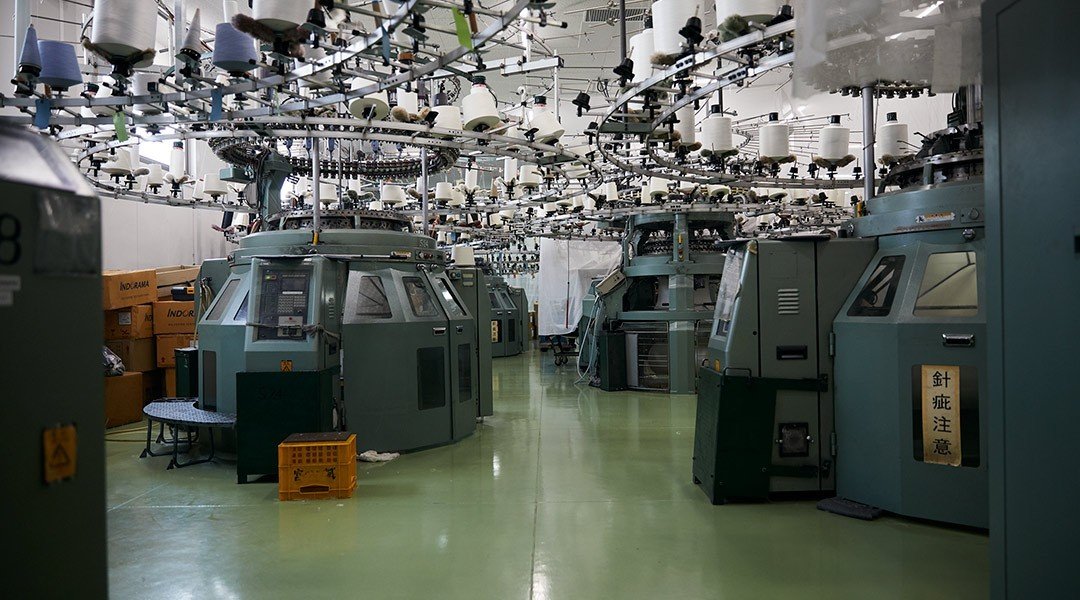
Needles and cams move relative to each other
Woolmark's circular knitting overview describes two machine arrangements. In one, a carriage carrying cams travels around a stationary set of needles. In the other, a needle cylinder rotates past yarn guides and cams. Both arrangements create the relative movement needed to form knitted loops around a circular structure. The distinction concerns the machinery, rather than a different fiber category. Wool can be used within this production approach, but the final material also depends on yarn selection, machine settings and the fabric structure being knitted.
Diameter changes what the tube can become
Circular machines are available in different diameters, allowing them to produce tubes suited to different applications. Smaller formats are associated with products such as socks, stockings and tights. Larger diameters can produce fabric that is subsequently cut and assembled into garments. A circularly knitted tube therefore does not automatically mean a completed item emerges ready to wear. The size of the knitting system and the planned manufacturing sequence determine whether the output functions more like a garment component or a length of material for later cutting and sewing.
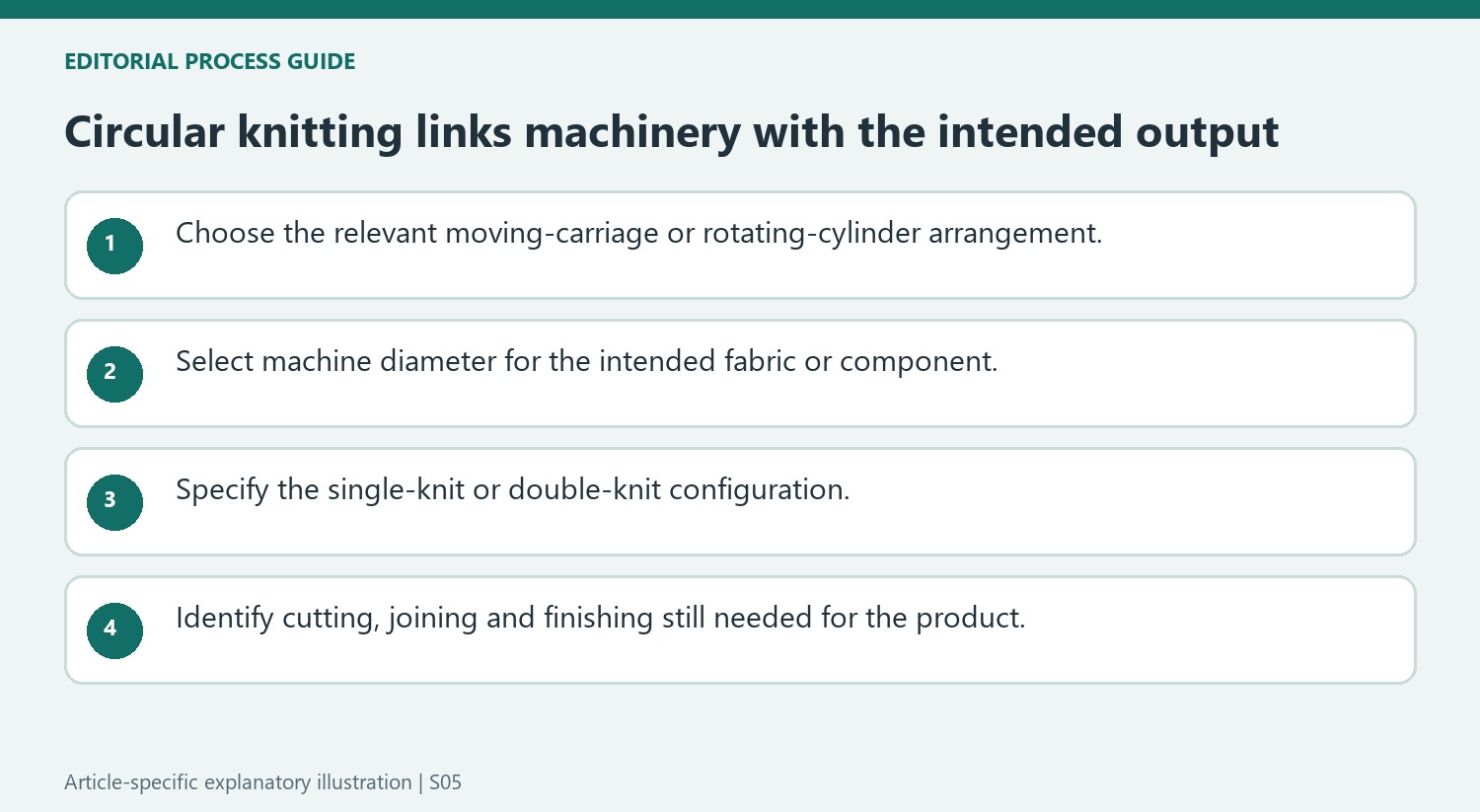
Single, double and seamless need careful reading
The overview distinguishes single-knit and double-knit production and also discusses seamless bodywear technology associated with Santoni. These terms describe particular construction or manufacturing choices, and they should not be treated as interchangeable guarantees about every seam in a finished product. A garment can incorporate circular knitting while still requiring assembly or finishing operations. When comparing production routes, it is useful to ask what the machine produces, which structures it can knit and what work remains afterward. That connects the equipment description to the actual textile form, rather than assuming that all circular knitting delivers the same fabric or level of garment completion.
Relative motion is the common machine principle
The two arrangements in the overview change which major machine part moves, but both establish motion between needles, cams, and yarn delivery. In one case, the carriage travels around a stationary circular needle bed. In the other, the cylinder carries the needles past stationary guides and cams. These are equipment arrangements within circular knitting, rather than two different fiber identities. Wool yarn can be selected for either suitable route, and the finished textile still depends on its full composition and settings. Describing the moving parts helps explain the loop-forming process without implying that every circular machine produces the same weight, stitch pattern, or completed garment shape in a single manufacturing operation.
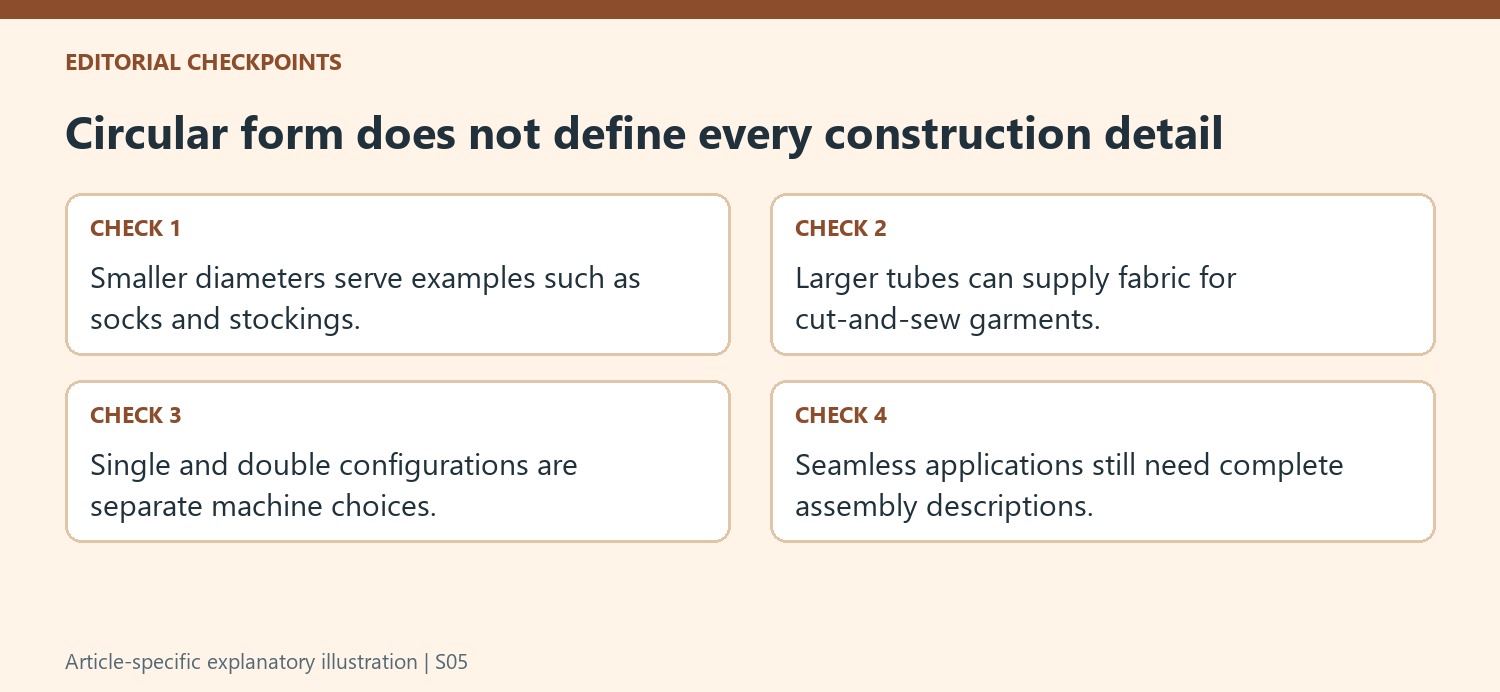
Machine diameter connects the output to later production
The source links smaller diameters with hosiery and larger tubular outputs with fabric intended for cutting and sewing. This relationship makes the planned manufacturing sequence important before equipment is selected. A knitted tube might become a product component or a supply of cloth that is opened and cut into separate pieces. The existence of a circular form does not, by itself, eliminate waste or every later seam. The actual garment pattern determines how the output is used. A clear process description should therefore identify the machine format, the fabric or component it produces, and the subsequent operations. That gives a more concrete account of efficiency than simply calling the result circularly knitted material.
Single and double configurations add another design choice
Woolmark distinguishes single-knit and double-knit machine configurations from the question of machine movement or diameter. The source associates these configurations with different fabric-layer possibilities. They therefore belong in the specification alongside the output format, yarn, and intended structure. Seamless bodywear provides another application, but the complete product can still need finishing and attached components. Specialist uses should be assessed through the actual garment rather than inferred from the equipment name. For a manufacturer, the useful comparison joins these choices together: what the machine is configured to make, what yarn it uses, how the output will be assembled, and which properties must be confirmed on the completed textile and finished product.
References
- CIRCULAR KNIT TECHNOLOGY. The Woolmark Company.






Comments
0