 FabricKnowledge Lab
A membrane within a larger fabric
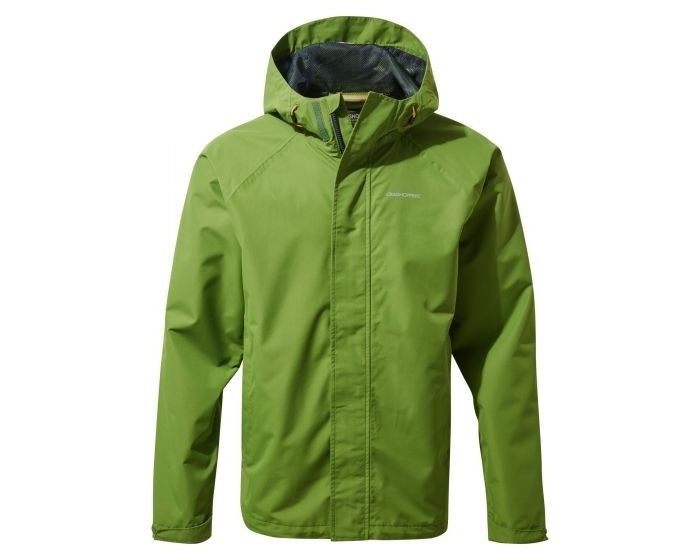
Sewport's eVent overview describes an outdoor material platform associated with microporous expanded polytetrafluoroethylene, often abbreviated to ePTFE. The membrane is combined with other textile layers to make a usable fabric rather than serving as a complete garment on its own. Face and backing materials contribute to the final construction. This distinction matters because a membrane name cannot describe every feature of the shell made from it. Different versions and product designs can use the same broader technology while presenting different specifications to the wearer.
Water resistance and surface treatment have different roles
The source discusses eVent in rainwear, footwear, gloves and other outdoor products. In these applications, the membrane's barrier role needs to be distinguished from a water-repellent treatment on the outer textile. A surface treatment affects how the face fabric interacts with water; it is not simply another name for the membrane. The platform's DirectVenting positioning also concerns moisture movement through its construction. That description should be read alongside the actual product documentation rather than turned into a universal ranking against every other waterproof material. Test methods and specific fabric versions are essential context for numerical comparisons.
Read the garment specification before deciding
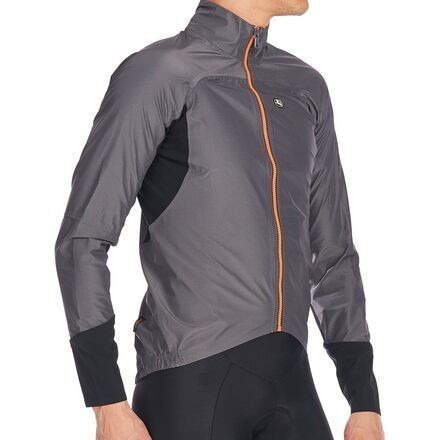
For a finished shell, the useful questions concern the particular laminate, garment construction and care instructions supplied by its manufacturer. A historical account of one membrane chemistry does not establish the composition of every current product carrying the brand name. Likewise, a generic maintenance claim should not override instructions for the actual jacket, shoe or glove. Sewport's overview is useful for identifying the membrane-based approach and its range of applications. Product selection becomes more reliable when that broad explanation is paired with current, item-specific information rather than a single technology label or an unsupported performance comparison.
Keep the historical membrane account tied to its platform
The guide explains eVent through an expanded-PTFE membrane approach and discusses combining that component with other textiles. This is useful context for the platform described by the source. It should not be extended into a complete statement of every present-day product sold under the brand. Technology families can include different versions and intended applications, so a current specification should identify the supplied laminate. A garment label also adds information about face materials and backing that the membrane name alone cannot provide. The most useful comparison starts with identifiable products and their documented constructions, rather than treating an older overview as if it supplied every current material recipe or performance figure.
Interpret barrier and surface observations separately
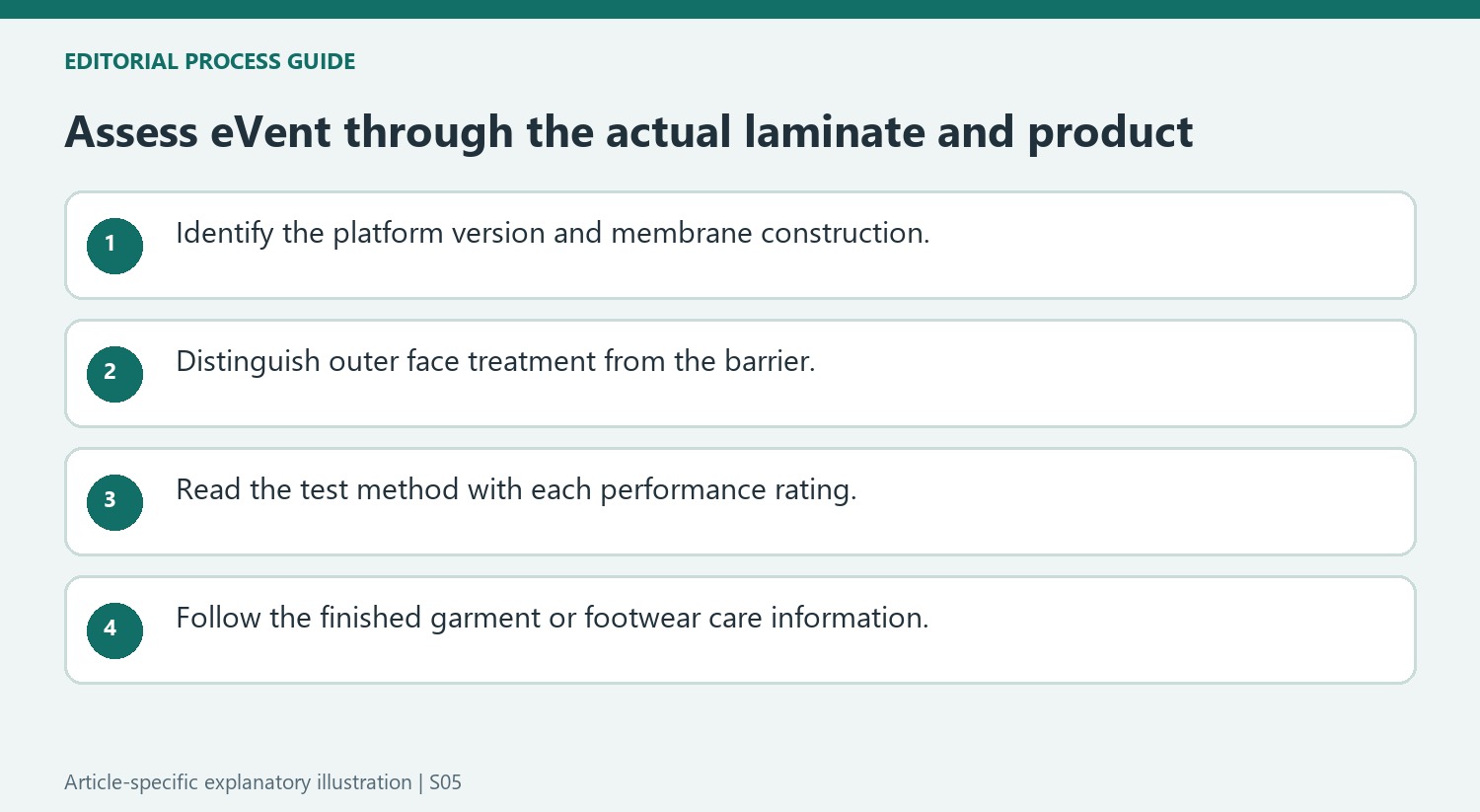
Water beading on an outer face concerns that face and its treatment. The membrane's barrier function concerns another part of the construction, while garment openings and seams add further possible paths. Those distinctions help describe what is being observed in use without assuming that one change at the surface proves a failure everywhere in the system. The source's discussion of DirectVenting belongs to moisture transport through the platform, but does not establish a universal comfort outcome under all activity and weather conditions. Clothing layers, fit, humidity, and exertion remain relevant. The product should therefore be assessed as a complete assembly with specific documentation, rather than through one generic waterproof or breathable label.
Compare test results only with their conditions identified
The overview supplies numerical ratings for several examples, but a number without its method, units, and product version is an incomplete comparison. Resistance to water pressure and movement of moisture vapor describe different measured behaviors. They should not be converted into a single unqualified ranking of every material from two brands. A useful buyer comparison identifies the exact laminate, test information, garment construction, and intended activity. Maintenance likewise belongs to the actual jacket, shoe, or glove and its manufacturer's instructions. This preserves the practical value of the membrane explanation while avoiding unsupported promises about drying, care intervals, or superiority that cannot be established for an unspecified finished item from the broad source alone.




Comments
0