 FabricKnowledge Lab
The category covers more than one recipe
Faux leather is a broad description for materials designed to resemble leather without using the same hide structure. Sewport's guide discusses synthetic versions and newer products marketed with plant-derived inputs. These names do not establish one composition or a uniform environmental profile. A leather-like surface can involve a polymer layer, a supporting textile, colorants, and other ingredients. Even where part of the feedstock is plant based, the complete product may contain manufactured components. A useful description should identify the actual layers and proportions rather than treating the word alternative as a full material specification.
Surface and backing contribute different functions
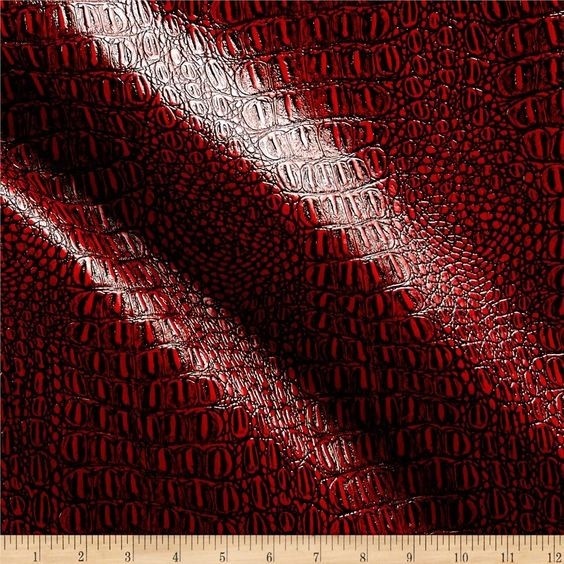
The visible layer creates much of the color, texture, and leather-like appearance, while the support provides structure for handling and conversion into products. Embossing and other finishing can create grain effects, including surfaces that resemble particular animal skins. The appearance is therefore not evidence that the material came from that animal. Nor does the polymer name alone reveal every aspect of durability: the backing, coating thickness, adhesion, and finish contribute to the complete system. Understanding those separate roles helps explain why two faux-leather samples with similar color can behave differently in use.
Clothing and upholstery need different evidence
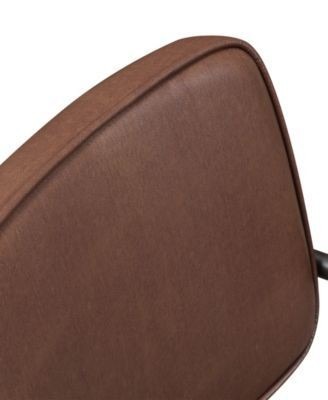
Sewport lists jackets, shoes, bags, belts, watchbands, luggage, and upholstery among applications. These products face different bending, abrasion, moisture, and cleaning conditions. A material selected for a decorative bag panel is not automatically appropriate for a heavily used seat. Likewise, an animal-free composition claim is distinct from evidence about lifetime, recyclability, or biodegradation. For a project, request the complete composition and relevant performance data, then follow the manufacturer's care instructions. The leather-like look describes a design aim, while the layered construction and product testing determine what a particular version is suitable for.
Read the face and backing as a combined material
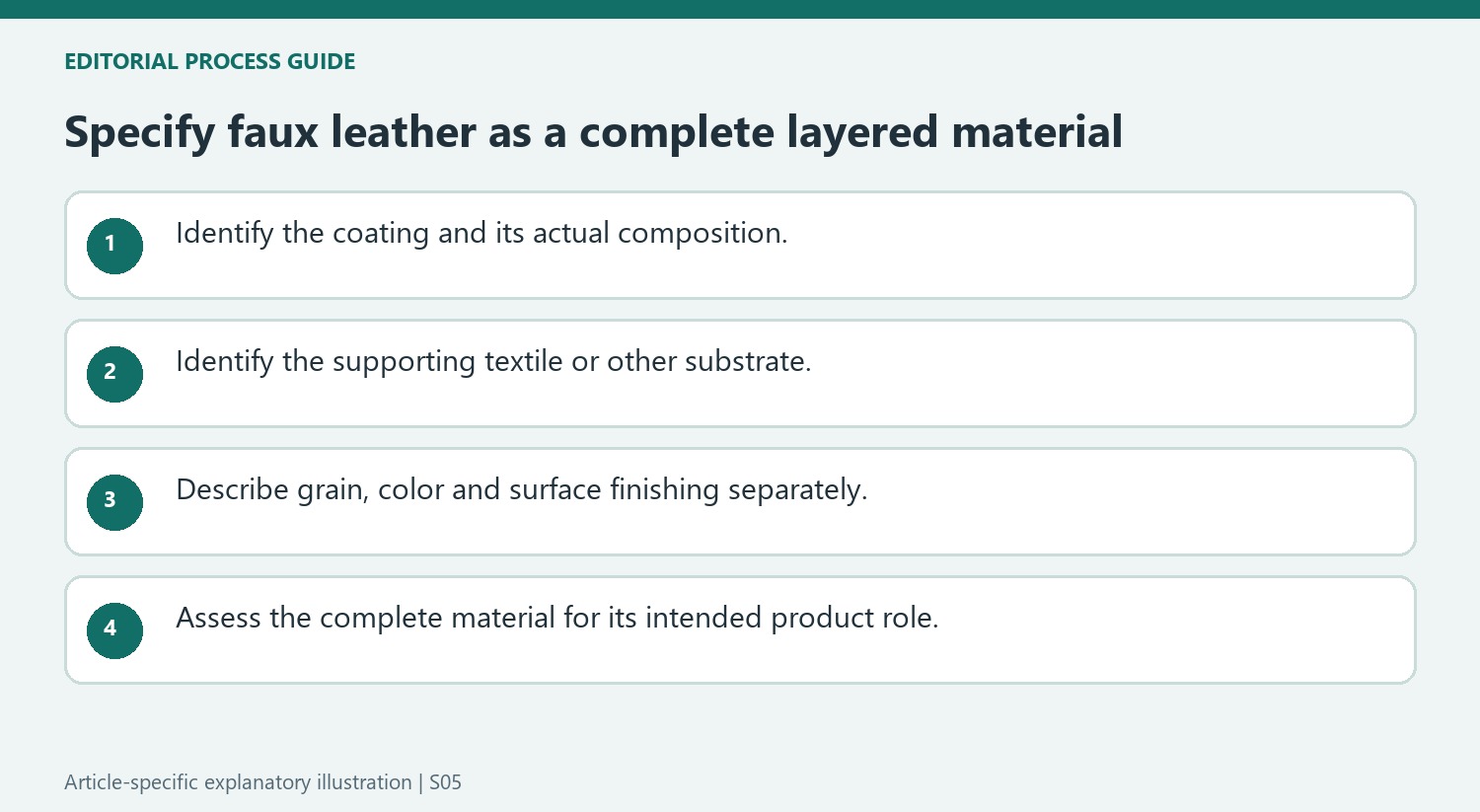
The guide describes a common construction in which a polymer-containing surface is combined with an underlying textile. The face provides the leather-like appearance, while the backing contributes support and handling. Neither layer describes the whole product on its own. A composition statement that names only the coating can leave out a significant part of the material, just as a backing-fiber label alone cannot explain the exposed surface. For comparison, identify both layers and any relevant finish. This makes it easier to understand why two visually similar samples may have different flexibility or performance, and why a leather-like grain is a design effect rather than evidence of an animal hide.
Embossing can change the look without changing the origin
Faux leather can be colored and textured to imitate a variety of surfaces, including grain patterns associated with particular animal skins. The visual result does not establish that the material came from the animal suggested by the pattern. The source's examples make the distinction useful for product descriptions: a patterned synthetic material should be described through its actual composition and intended appearance. The same care applies to the word vegan, which concerns an animal-input claim rather than a complete account of durability or environmental impact. A buyer still needs to know the materials, construction, and relevant performance evidence for the particular jacket, bag, or furnishing under consideration.
Plant-derived inputs need a full finished-material statement
A product marketed with vegetable-based ingredients may still contain a support, binders, coatings, or other manufactured components. The origin of one ingredient does not establish the entire composition or how the completed material behaves after disposal. Similarly, an alternative to leather is not automatically suitable for every use in which leather appears. A seat covering encounters repeated contact and cleaning, while a decorative bag panel can have a different service environment. The practical specification should therefore state the full material system and application guidance. Durability, cleaning suitability, and end-of-life claims need their own support rather than being inferred from either a botanical trade name or a leather-like surface texture.




Comments
0