 FabricKnowledge Lab
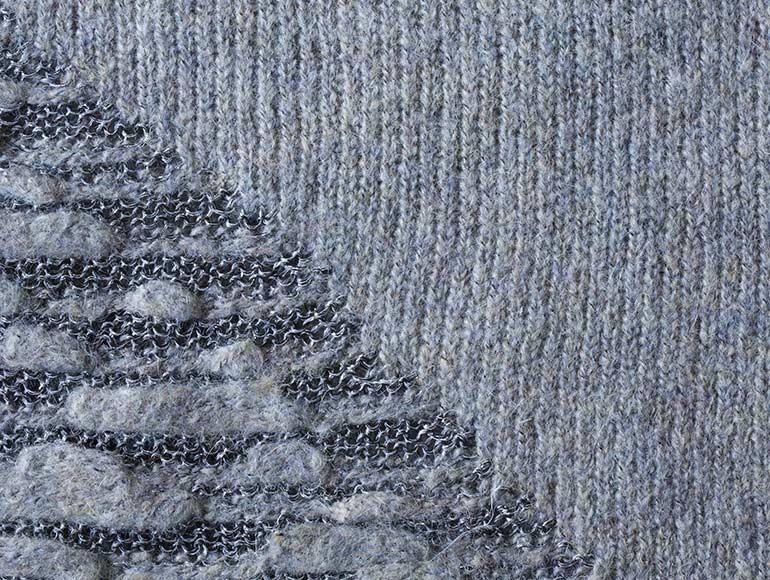
Different areas respond differently to finishing
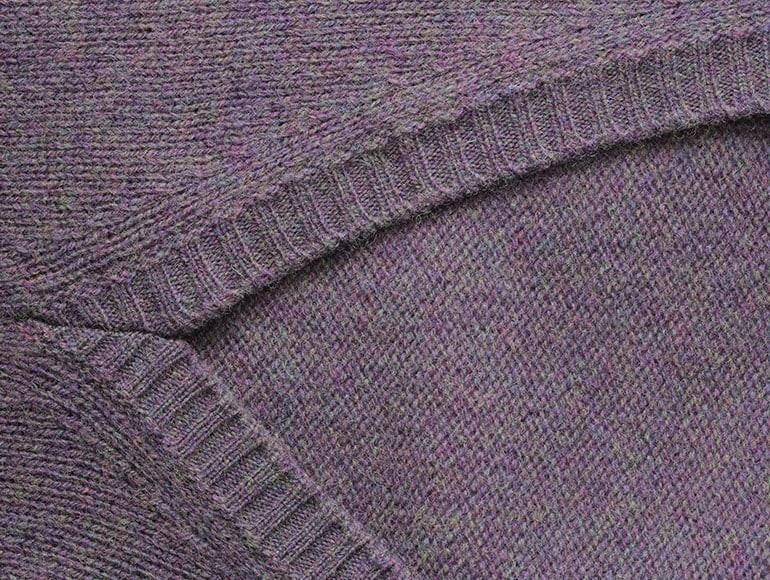
Woolmark's 3D Merino knitwear technique creates a patterned surface by controlling which parts of a knitted textile can felt or mill. A colorless polymer is screen printed onto selected areas, with acid or reactive dye available to add a color design at the same stage. The purpose of the polymer is to limit felting where it has been applied. That means the pattern is not simply a raised image glued onto the surface. It develops from a difference in how treated and untreated regions respond during the subsequent wet process.
Printing and fixation come before the texture develops
The page identifies polyurethane as the protective polymer and describes a thickened print paste that keeps the design from spreading. It gives heat curing or a room-temperature batching stage as ways of fixing the application. Washing then causes the unprinted sections to felt or mill, producing contrast with the protected areas. More extensive treatment can create a seersucker-like effect. These are coordinated manufacturing stages, and their order matters: the selective protection is established first so the later dimensional change follows the intended pattern rather than occurring uniformly across the textile.
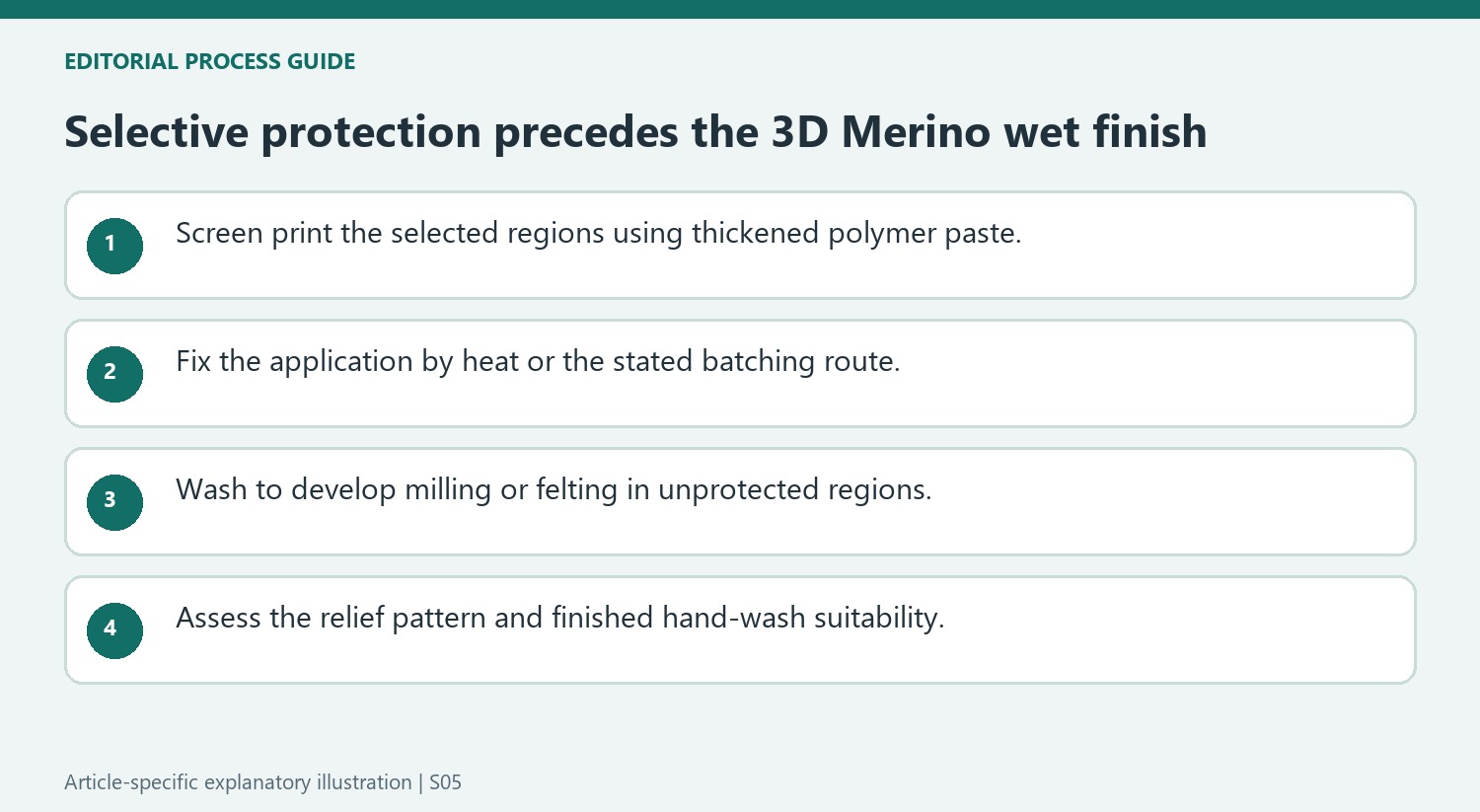
Late-stage patterning still depends on a suitable base
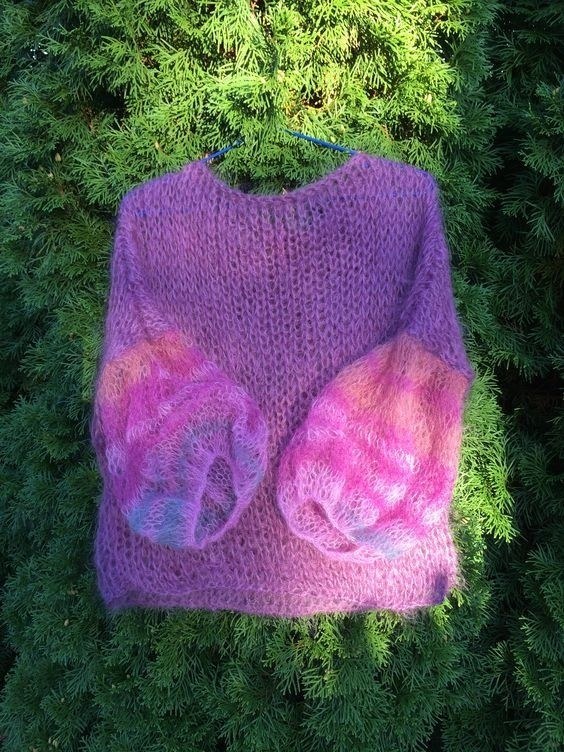
Woolmark lists fully fashioned knitwear and jersey among potential applications and distinguishes worsted from woollen-spun effects. It also says treatment can cover a whole garment or selected accent areas. Those options give designers a way to modify an existing knitted base at a relatively late stage. The actual outcome still depends on yarn, structure, print definition, fixation, and the finishing routine. A clear product description should identify those choices and the resulting care suitability. The method demonstrates controlled material response, rather than proving that every printed wool garment can be safely felted into the same relief pattern.
The printed design controls a later material response
The polyurethane application is described as a means of protecting selected areas against milling or felting. The print paste must therefore hold the intended boundary before the garment reaches the wet stage. Woolmark identifies thickening as the way to limit spreading and loss of definition. This detail links the graphic design with the physical result: an indistinct protected region would not represent the same planned contrast as a clearly defined region. The visible relief develops when untreated areas respond differently during washing. Optional acid or reactive color can add another design layer, but the change in surface form comes from the relationship between protected and unprotected knitted regions.
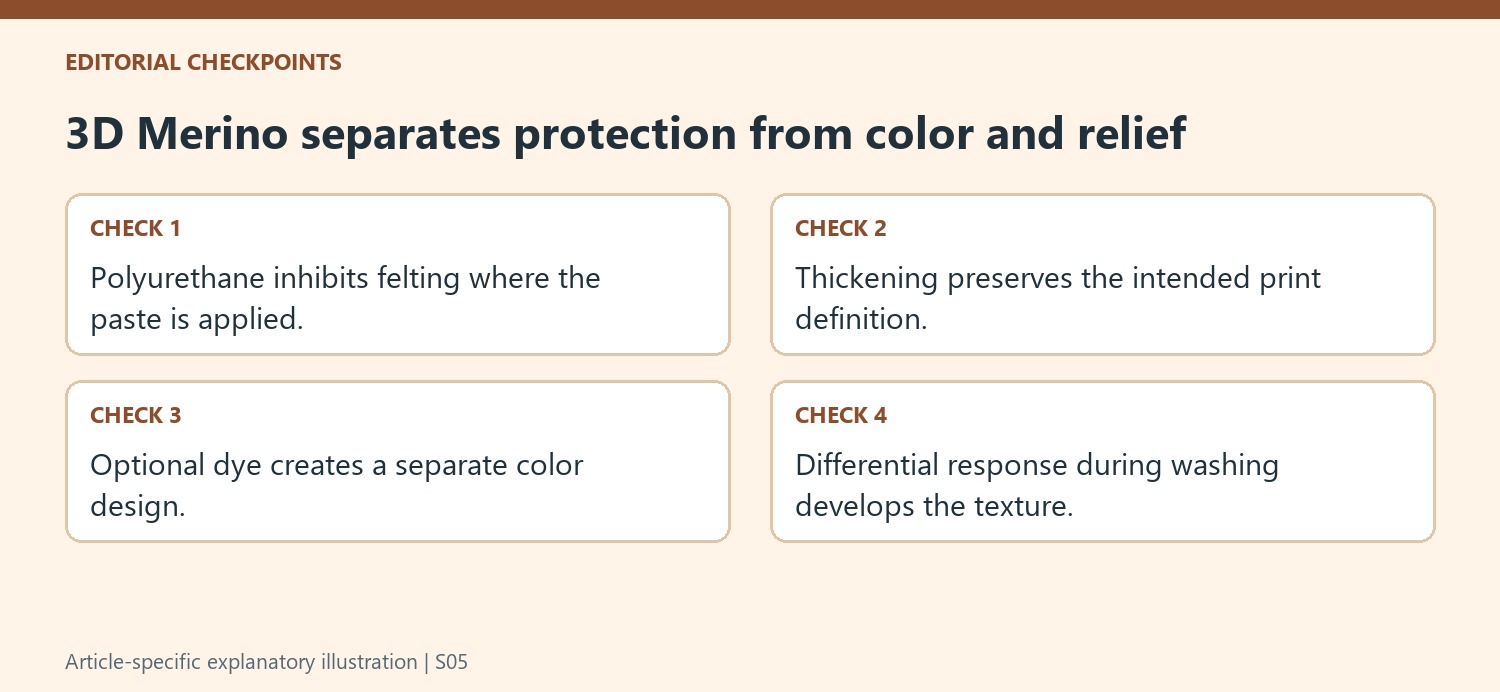
Fixation and washing are separate production stages
The source lists heat curing or batching for ten to twelve hours at room temperature as fixation options. These alternatives appear before the washing stage that develops the differential effect. Their order explains the mechanism: the protective application needs to be established before selected areas are allowed to mill or felt. The page does not present a single household washing recipe for every sweater. It describes a textile-development technique in which base material, paste definition, fixation, and wet processing work together. A production account should preserve that sequence and specify the chosen route. The final pattern is the outcome of coordinated stages rather than a texture that can be predicted from the screen design alone.
Choose the scale and base for the intended effect
Woolmark distinguishes felt-and-unfelt effects on worsted knitwear from milled-and-unmilled patterning on woollen-spun knitwear. It also allows application across a whole garment or only in selected accent areas. Those options give the designer several ways to use the same principle while producing different surfaces. Taking the felting further can create the seersucker-like result described by the page, rather than merely intensifying a printed color. The finished textile needs to be assessed at the chosen level of treatment. The stated durability to hand washing should remain attached to the developed process and actual care information, instead of being expanded into a claim of unrestricted machine washing for every patterned wool garment.
References
- 3D Merino (Knitwear). The Woolmark Company; The Woolmark Company.







Comments
0