 FabricKnowledge Lab
Tanning changes an animal hide
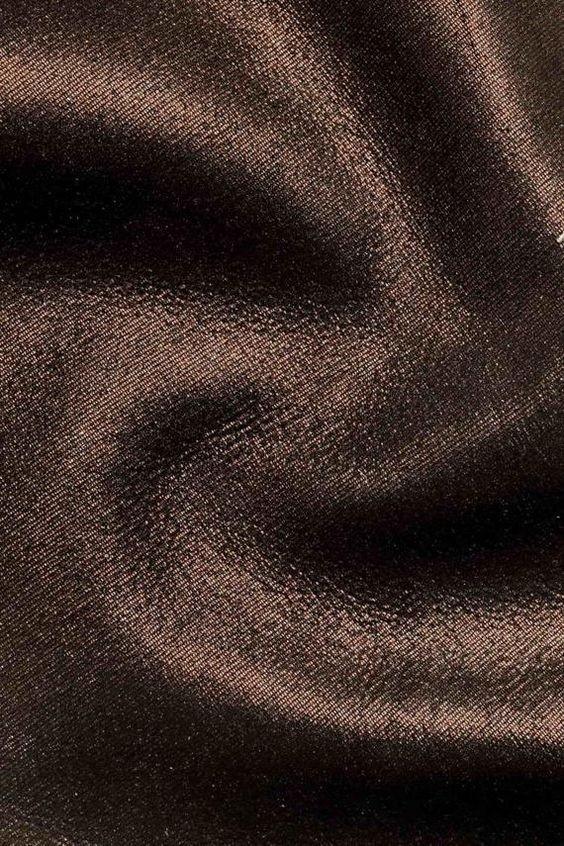
Leather begins as animal skin that has been prepared and tanned to make a usable material. Sewport divides production into preparation, tanning and subsequent processing. Preparation removes unwanted tissue and readies the hide for treatment. Tanning stabilizes the material, with vegetable and mineral methods representing different approaches. Dyeing, softening and surface finishing then influence the appearance and handle of the finished leather. Calling an item leather therefore identifies a broad material family, while leaving many important details about its construction and finish unanswered.
The surface and layer affect the description
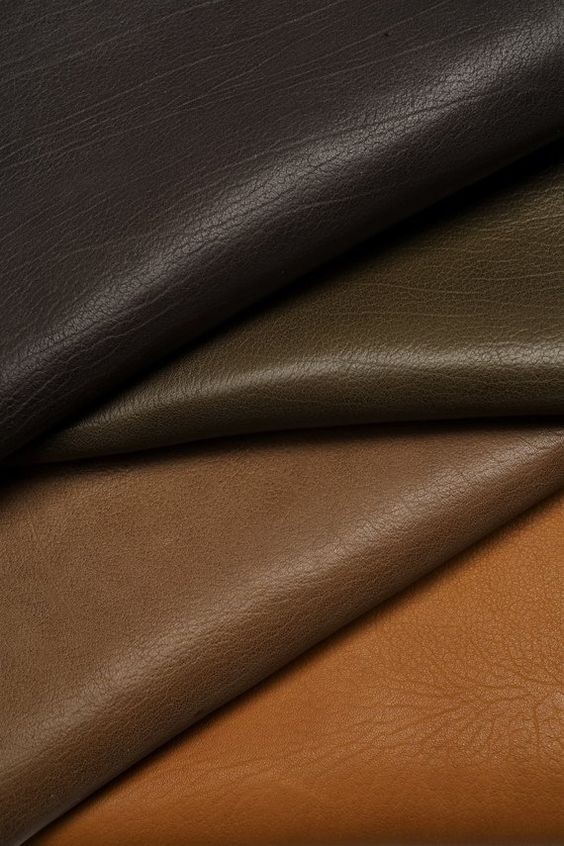
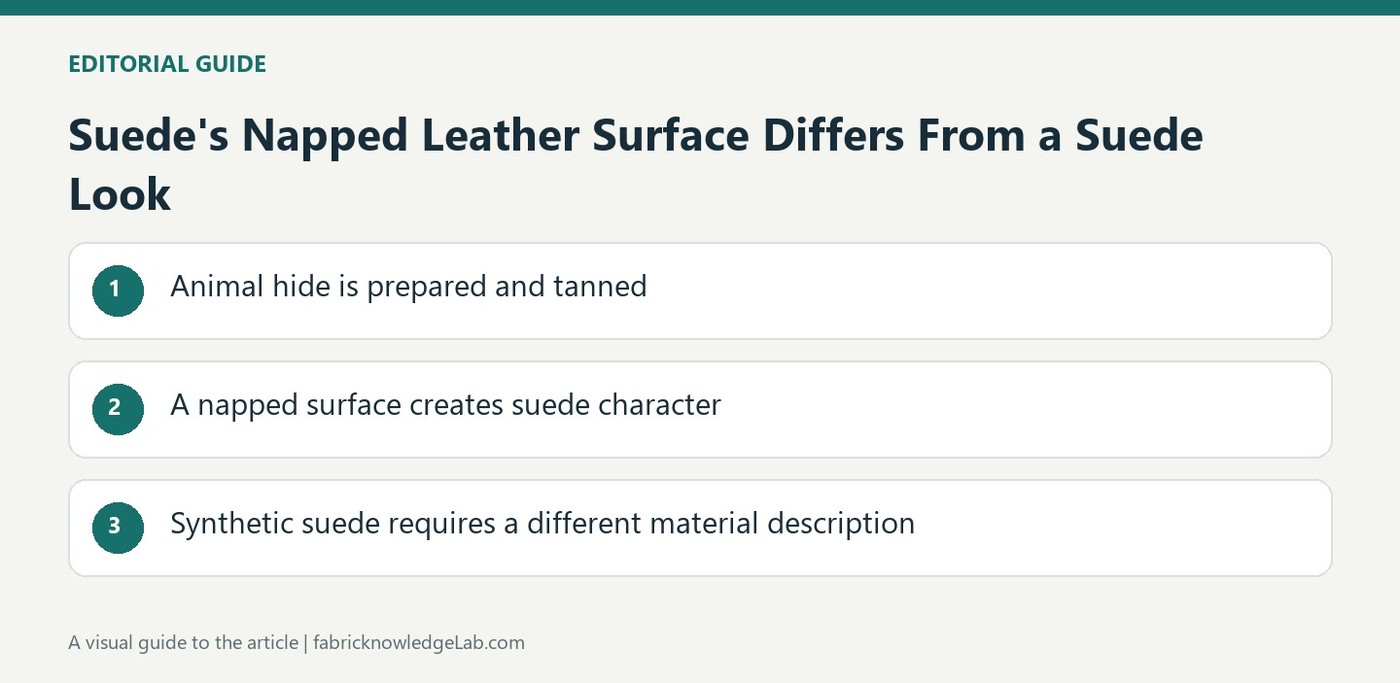
The guide distinguishes full-grain, corrected-grain and split leather. Full-grain leather retains the natural outer grain surface. Corrected-grain material receives surface treatment to alter visible irregularities, while split leather comes from a different layer after the outer portion has been separated. Napped surfaces add another distinction: nubuck and suede have a different appearance and feel from smooth finished leather. These descriptions refer to material structure and treatment, rather than simply color. Two brown leather products can consequently have very different surfaces, thicknesses and intended uses despite looking similar in a photograph.
Bonded and imitation materials need clear labels
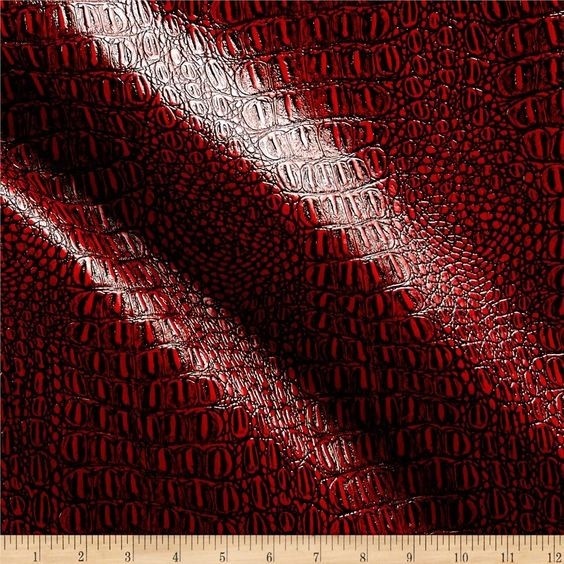
Bonded leather incorporates leather fibers that are combined with a binding material, so it should not be understood as an intact piece of hide. Imitation leather follows another route, using a manufactured material designed to resemble leather. These differences are relevant when comparing footwear, bags, upholstery or outerwear. The material description should be considered alongside the product's construction and care guidance. A generic claim of genuine leather provides less detail than a clear explanation of the layer, finish and composition. Asking for those specifics makes comparisons more useful than relying on a broad quality impression or a country-of-origin claim alone.
Preparation and tanning solve different problems
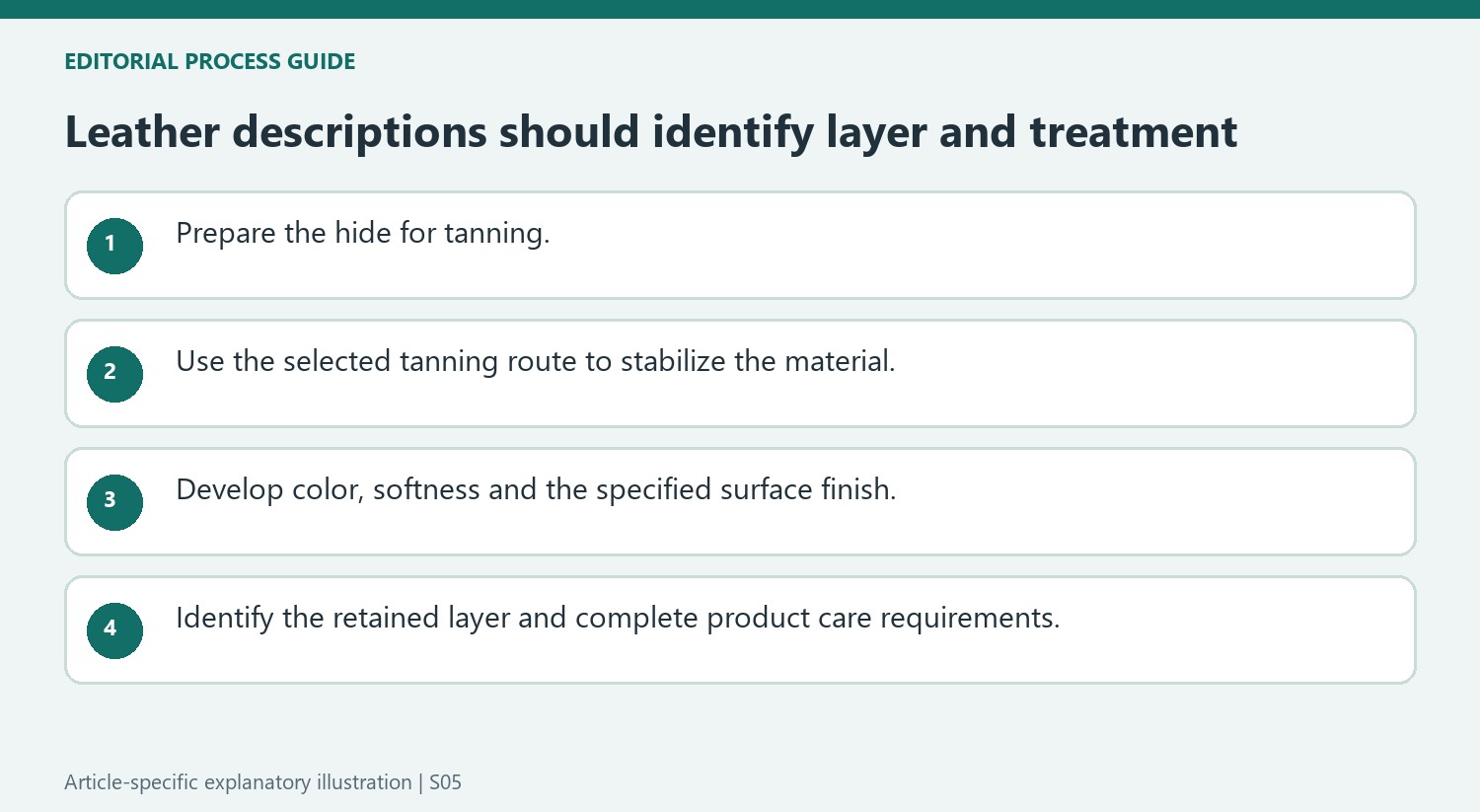
The guide separates preparing the hide from the treatment that makes it a stable leather material. Removing unwanted tissue and readying the hide do not by themselves complete the tanning stage. Likewise, tanning is followed by operations that develop color, softness, and the exposed surface. Keeping these stages distinct helps explain why a finished leather is more than simply dried skin. It also prevents the name of a tanning route from standing in for every later treatment. A useful supplier description identifies the actual process and finish where relevant, rather than relying on a single broad label to explain how the material has been prepared for its intended footwear, garment, or furnishing use.
Layer descriptions are more precise than a general quality impression
Full-grain, corrected-grain, and split descriptions refer to the retained layer and treatment of the surface. They are not just alternative names for brown leather. A full-grain description preserves information about the natural outer surface, while correction changes the visible grain and splitting distinguishes another layer of the hide. Napping adds a further surface choice. These distinctions make comparisons more informative than a broad phrase such as genuine leather, which leaves many construction details unstated. For an actual product, ask which layer is present and how it is finished. The completed bag or shoe also adds thickness, reinforcement, joining, and other components that influence use independently of its color or origin label.
Reconstituted material needs its own composition statement
The guide describes bonded leather as leather fibers joined with binding material. That is a different structure from an intact section of tanned hide, even though both descriptions contain the word leather. An imitation material follows a separate route again, with manufactured components supplying the leather-like appearance. These distinctions matter to a purchaser trying to understand what a product contains. The actual label should explain the material rather than leave the buyer to infer composition from surface grain. Care also belongs to the supplied item, including any coating, lining, or support. A decorative pattern or a claim of natural origin cannot independently establish cleaning suitability or the performance of the complete article.






Comments
0