 FabricKnowledge Lab
Lightweight cloth has measurable limits
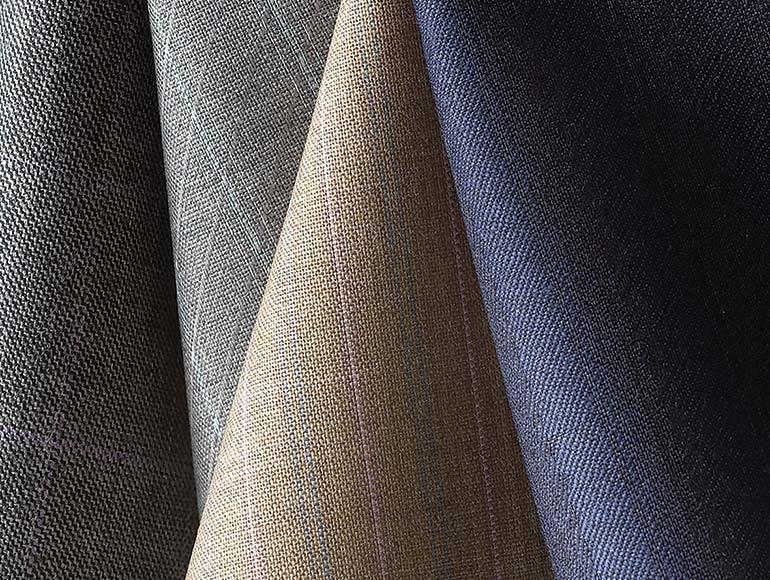
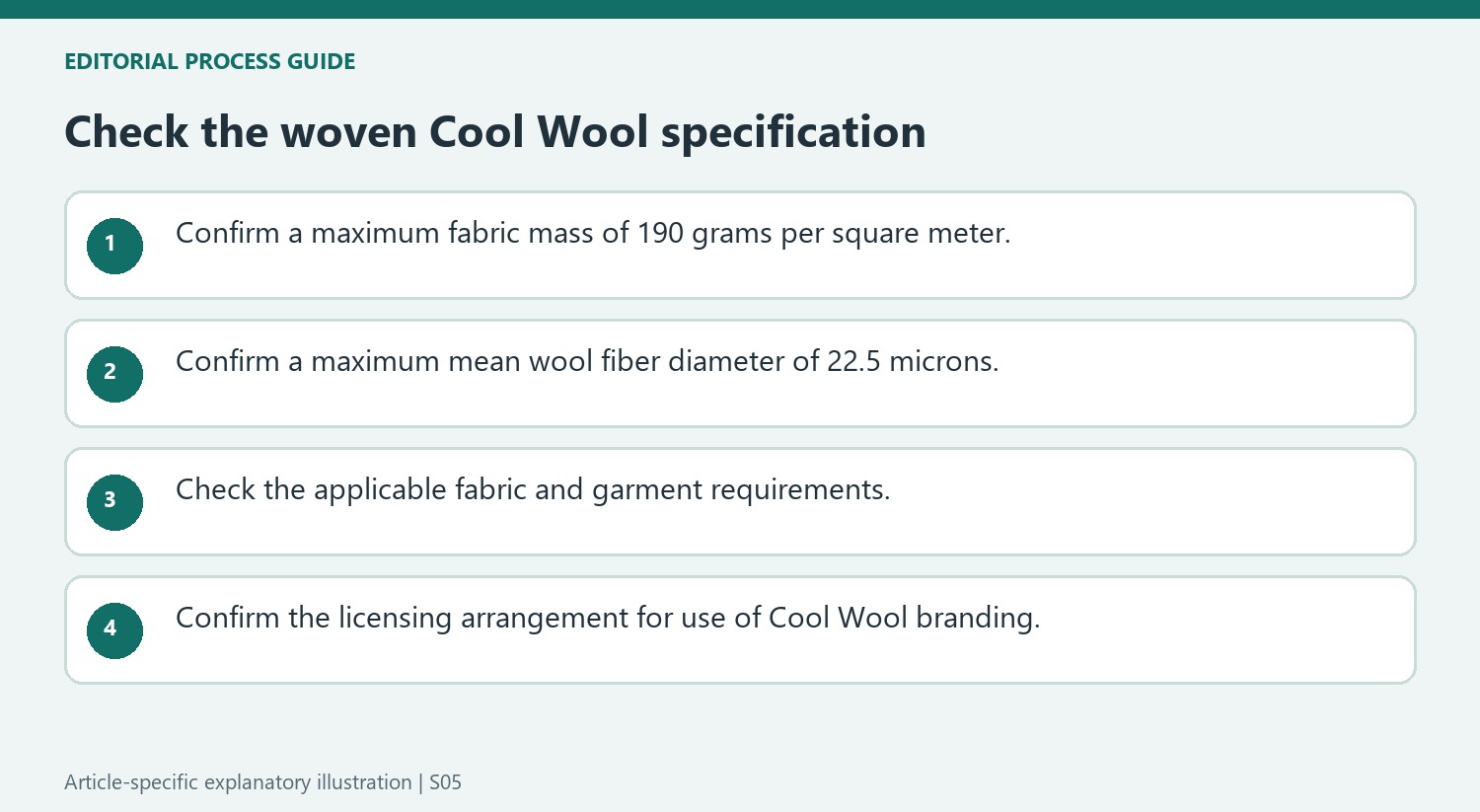
Cool Wool is associated with lighter wool fabrics, but its woven specification is more precise than a general promise of summer comfort. Woolmark describes a maximum fabric mass of 190 grams per square meter and a mean wool fiber diameter no greater than 22.5 microns. These measurements describe different aspects of the material. Grams per square meter refers to the weight of an area of cloth, while microns describe the fibers themselves. Neither figure should be confused with the total weight of a jacket or pair of trousers.
A program with a longer history
The Cool Wool campaign began in the 1980s and was relaunched for the trade in February 2012 with updated specifications. Its purpose was to make lightweight wool a more identifiable option for designers, manufacturers and buyers. The woven program sits within Woolmark and Woolmark Blend licensing arrangements, rather than operating simply as a descriptive phrase that any product can adopt. Fabric and garment requirements form part of that system. Consequently, a lightweight wool sample and a licensed Cool Wool garment are not automatically the same commercial proposition.
Use the specification as a starting point
The two numerical limits help narrow the search for lighter woven Merino materials, especially when comparing tailoring fabrics. They do not describe every feature that affects how a finished garment feels. The weave, garment structure, lining and fit also need attention when selecting cloth for an intended use. A buyer can ask a supplier for the actual fabric mass, fiber specification and applicable licensing information before comparing garments. This keeps the discussion anchored in the supplied textile and its construction, while preserving the useful distinction between a measured program requirement and a broad seasonal marketing claim.
Keep area mass separate from complete garment mass
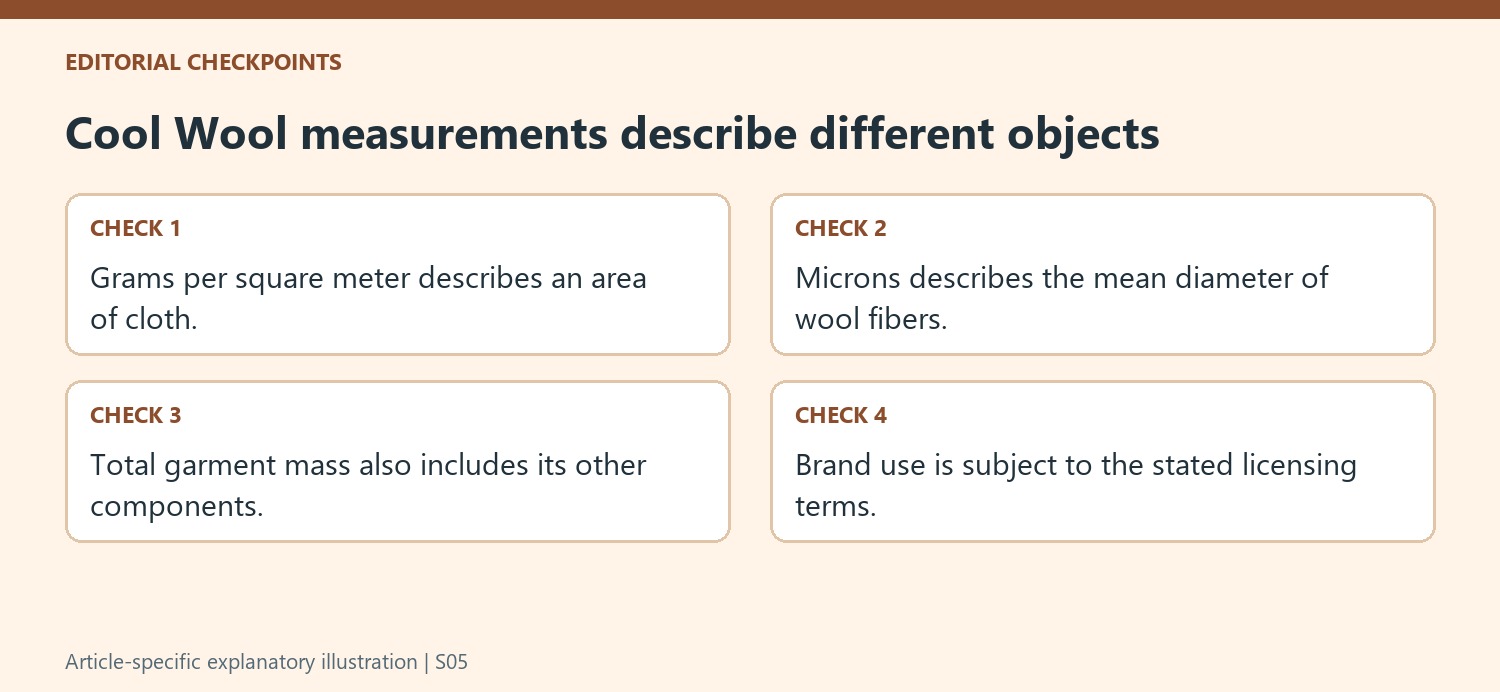
The woven requirement uses grams per square meter, so it describes the mass of a defined area of fabric. A jacket or pair of trousers contains a selected quantity of that cloth and may also include linings, interlinings, fasteners, pockets, and other components. Its total mass therefore cannot be read directly from the fabric limit. This distinction is useful when comparing a lightweight cloth with a lightweight finished garment. Both may be relevant to travel or warmer-weather dressing, but they describe different objects. Ask for the actual fabric figure when assessing the woven specification and examine the complete construction when comparing how two garments are likely to handle or feel in use.
The diameter threshold addresses another part of the cloth
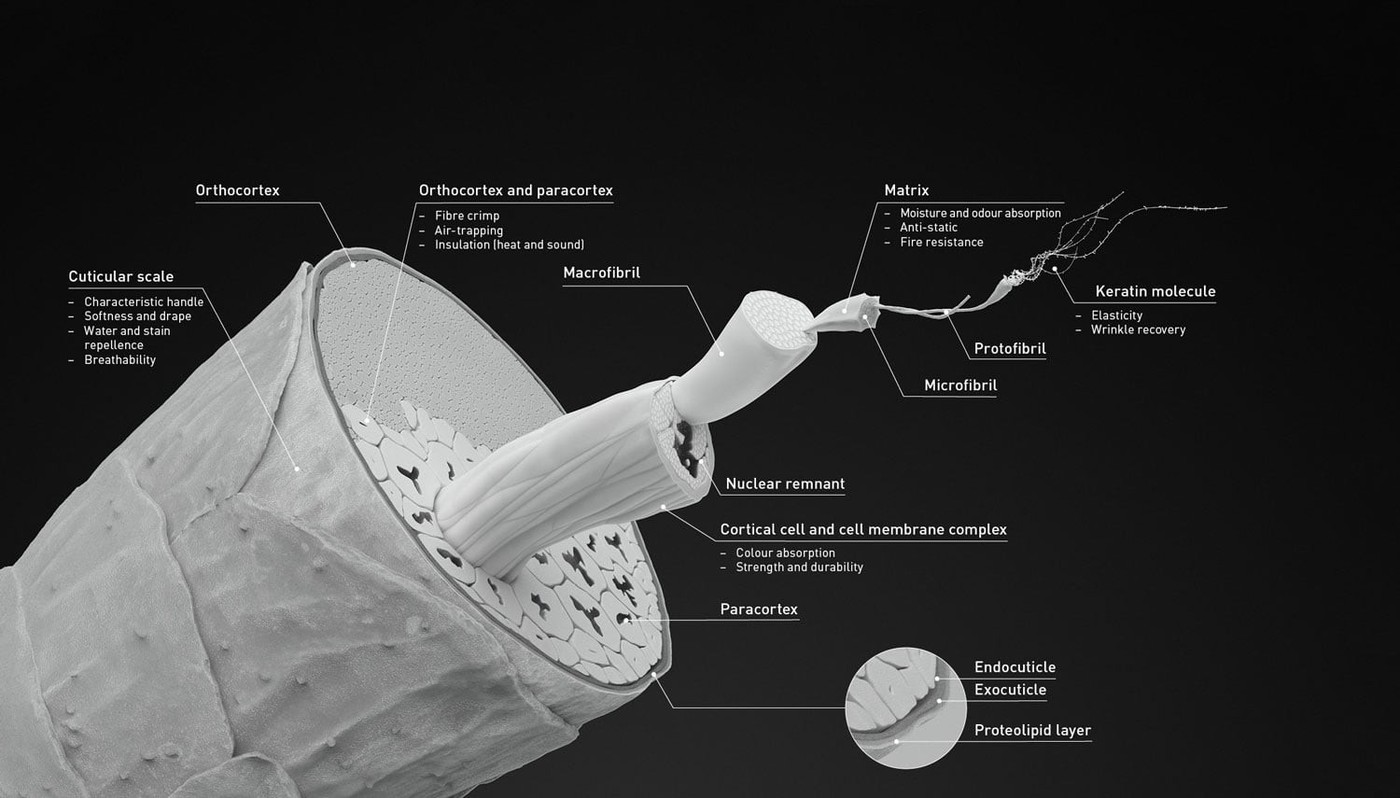
The maximum mean wool fiber diameter of 22.5 microns concerns the wool input, rather than the area mass or thickness of a finished panel. It sits alongside the 190-gram-per-square-meter limit because the program identifies more than one material characteristic. Meeting one numerical condition does not automatically establish compliance with the other. Nor do those two numbers describe every element of the weave, finish, or garment. A supplier's complete information should therefore distinguish the mean fiber diameter, the measured fabric mass, and the applicable fabric or garment requirements. Reading the figures together gives the program definition more precision than a general label suggesting that a wool textile is simply suitable for summer.
Brand use belongs to the licensing arrangement
Woolmark describes Cool Wool as a sub-brand within its Woolmark and Woolmark Blend programs. Its availability is connected to licensed manufacturers and to passing the relevant specifications, with brand and retailer use subject to the applicable arrangements. This is different from a buyer informally describing an unlicensed lightweight sample as cool wool. The history of the campaign explains the promotional aim, while licensing establishes the terms for using the identity commercially. For sourcing, confirm which party is licensed and which product information applies to the offered material. This keeps the measurable cloth characteristics, the completed garment design, and permission to use the program branding clear as related but distinct parts of the purchase.
References
- Cool Wool (Woven). The Woolmark Company; The Woolmark Company.



Comments
0