 FabricKnowledge Lab
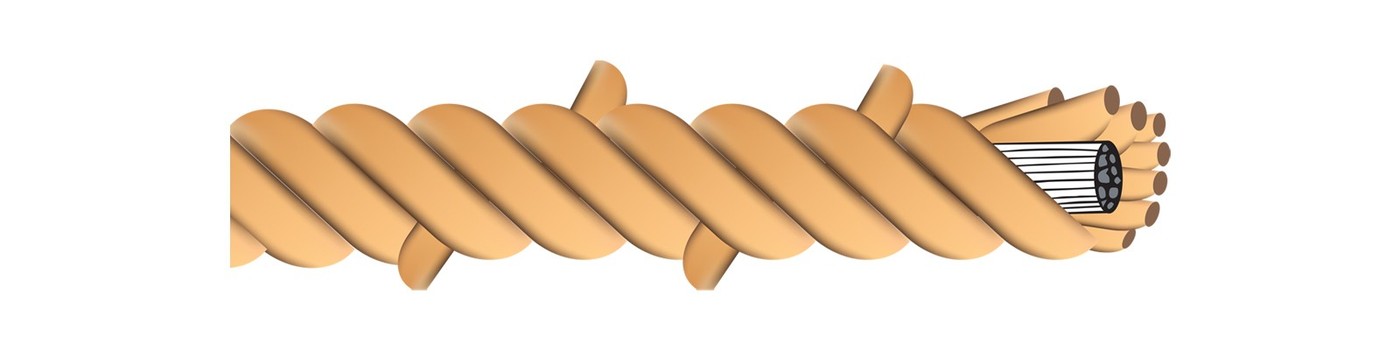
A filament at the center
Woolmark describes filament core spinning as a method of arranging wool or wool-blend fibers around a continuous central filament. The center can use materials such as polyester, polyamide or regenerated cellulose, while an elastane core can add stretch. Single or double roving arrangements provide different ways of covering that core. This structure aims to improve yarn strength while keeping wool prominent at the surface. The result depends on the selected materials and construction, so core spinning describes an architecture rather than a single fixed blend or universal performance level.
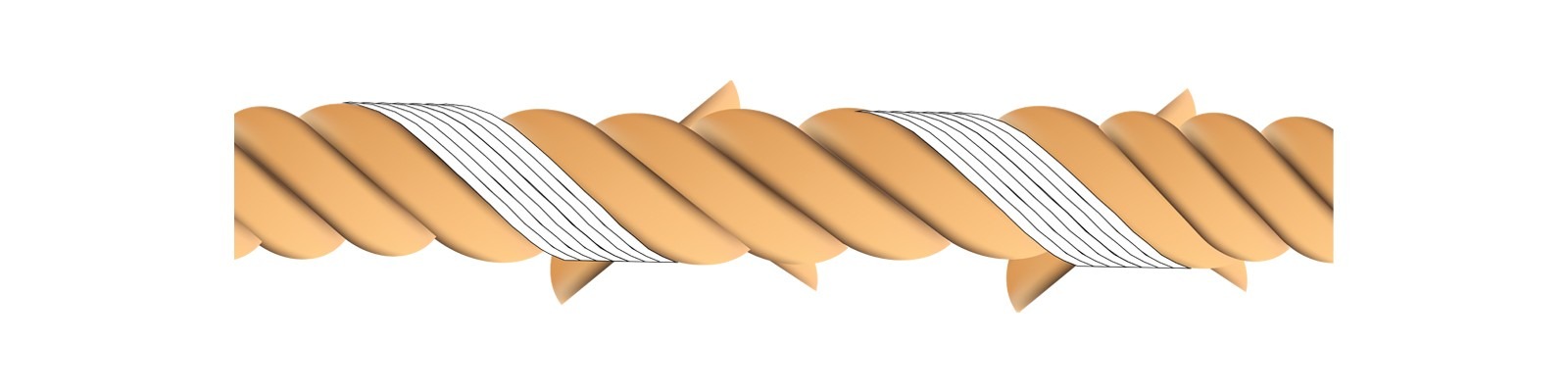
A filament around the outside
Wrap spinning reverses the arrangement: a fine synthetic filament winds around a core of wool or wool-blend roving. Traditional versions use a single wrapping filament, while double wrapping offers another way to manage the yarn. Woolmark associates the newer approach with reduced spirality, improved drape and easier handling. The wrapping filament only partly covers the wool. A relatively small synthetic component can therefore provide reinforcement without making the yarn visually or physically identical to an all-synthetic alternative. Strength, abrasion resistance and surface hairiness are among the characteristics this method is intended to address.
Match the route to the product
The listed applications span circular knits, seamless products, flat-bed knitwear, lightweight woven fabrics and knitted footwear components. These examples require different balances of strength, flexibility and fabric feel. An elastane core may be useful where additional extension is needed, whereas another filament may serve a different purpose. Washability remains conditional: Woolmark specifically connects machine washing to the relevant wool fiber and product specification. The yarn structure alone does not establish a care instruction. A useful comparison therefore includes the spinning route, filament material, wool component and intended fabric, rather than relying on reinforcement as a complete product description.
Core placement and external wrapping reverse the arrangement
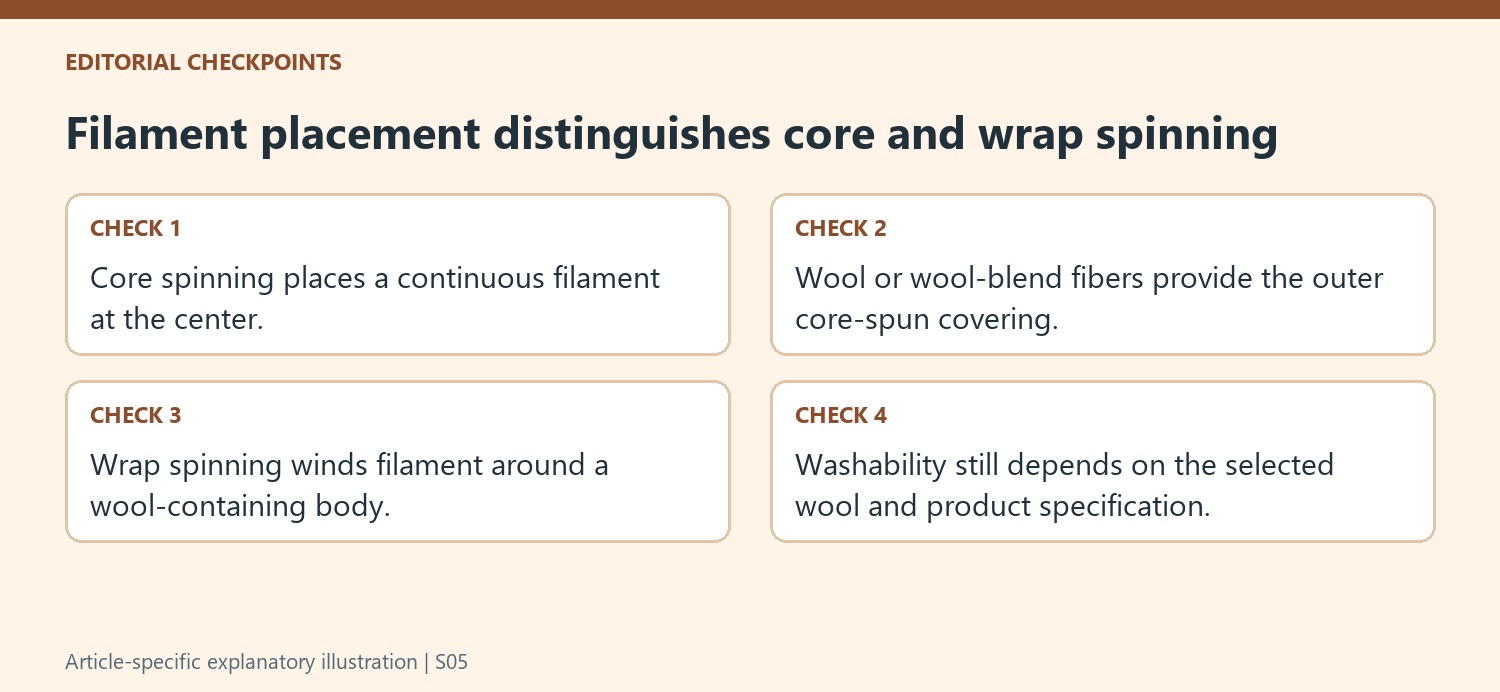
In a core-spun construction, the continuous filament occupies the center and wool or a wool blend surrounds it. In wrap spinning, the wool-containing body is inside and the filament winds around the outside. These are different yarn architectures even when similar fiber names appear in their composition lists. The arrangement affects which component supplies support and how much wool remains at the surface. The source also distinguishes single and double wrapping or roving options. A useful yarn description should therefore state the route and configuration rather than merely call the material reinforced wool. This connects the physical design of the yarn with the strength, handling, or surface characteristics the developer is trying to achieve.
Choose the filament for the intended contribution
The core-spinning overview lists several filament materials and identifies elastane as an option where added extension is needed. That function differs from simply increasing yarn strength with another selected filament. The complete composition and architecture need to be matched to the intended knitted or woven fabric. A lightweight base layer, a stretch garment, and a knitted footwear component can require different balances. The broad application list shows the range of the production family, rather than proving that one yarn recipe serves all of those products. Any additional functional claim should remain attached to the selected filament and tested textile, instead of being assigned to every core-spun wool yarn regardless of its materials.
Reinforcement does not independently establish garment care
Woolmark qualifies machine washability according to the wool fiber used. That condition applies whether the filament sits within the yarn or wraps around it. Adding a synthetic strand is not, by itself, a complete shrink-resistance treatment or a washing instruction for a finished product. Fabric structure, finishing, and garment assembly still need to be considered. The practical specification should identify the wool component, filament material, spinning route, and relevant care evidence together. Strength and abrasion-related benefits can then be discussed as intended contributions of the yarn design, while actual performance and maintenance remain tied to the supplied cloth and the finished article made from it for its specific application.
References
- Filament Spun Yarn Technology. The Woolmark Company.



Comments
0