 FabricKnowledge Lab
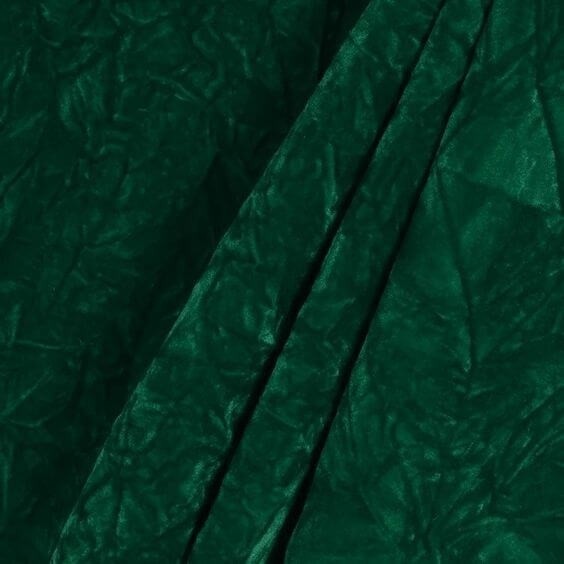
The pile sits above a supporting textile
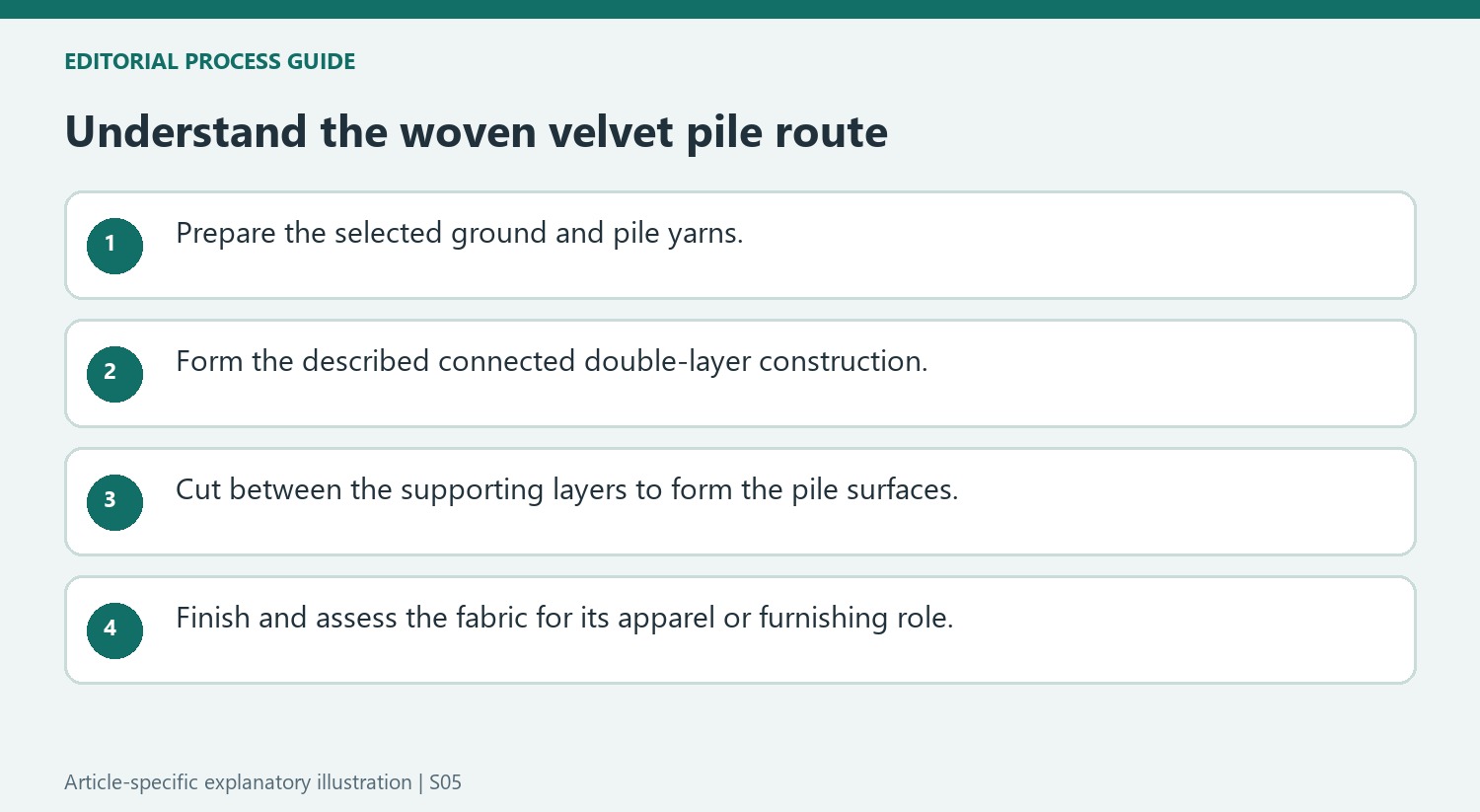
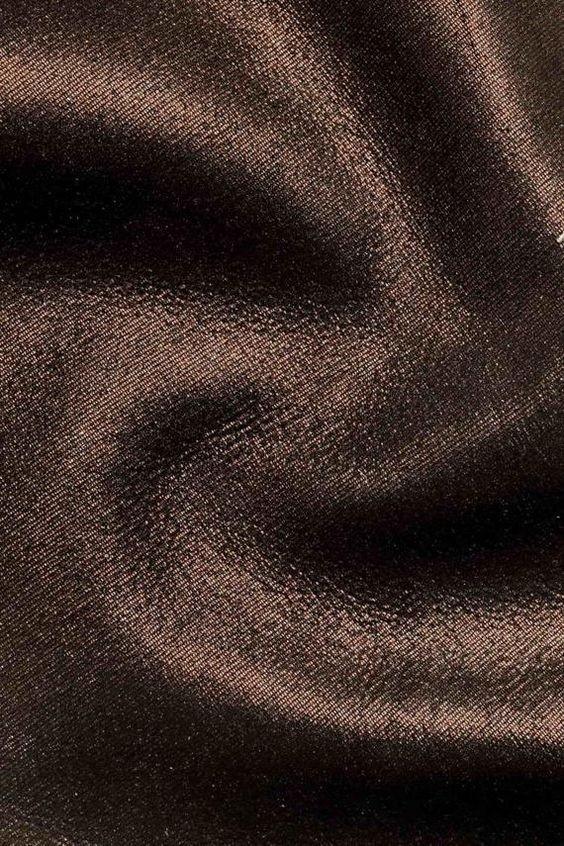
Velvet is recognizable by a dense raised surface that changes both touch and reflected light. Sewport's guide describes a woven production route in which pile yarn connects two fabric layers before the layers are separated. Cutting between them produces the upright yarn ends associated with the soft surface. This is a structural explanation, not a fiber composition. Silk, regenerated cellulose, and other manufactured yarns can be used in velvet-related products, so a luxurious appearance does not establish one raw material or a fixed quality level across every cloth sold under the name.
Finishing creates several kinds of surface
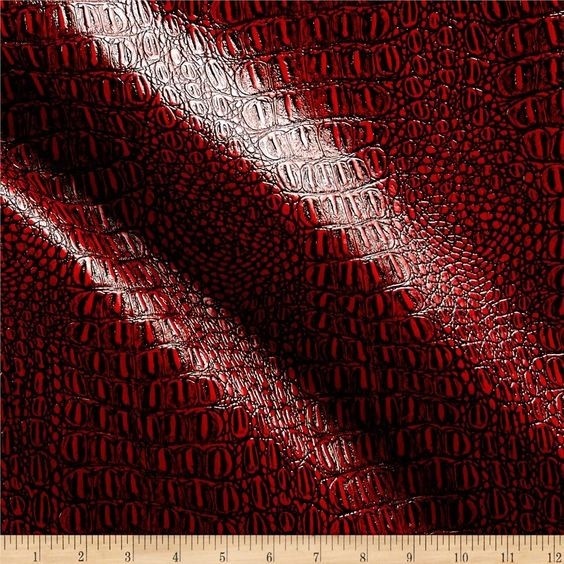
The guide discusses crushed, embossed, and other velvet variations. Crushing changes the direction and arrangement of the pile, giving a less uniform reflection. Embossing compresses selected areas to create a visible and tactile pattern. These effects build on the raised structure rather than merely printing a picture over an ordinary flat weave. A smooth pile, a deliberately irregular surface, and an embossed motif can therefore belong to related fabrics while presenting different appearances. The yarn, ground cloth, density, and finishing still need identification when comparing actual materials for a design.
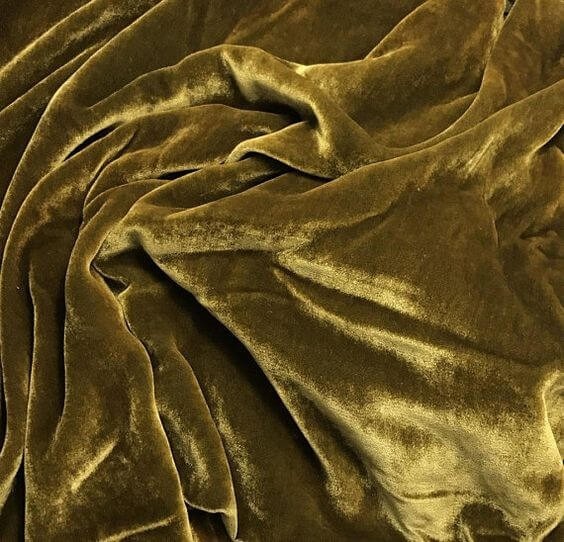
Apparel and furnishing velvets face different demands
Sewport lists eveningwear, curtains, upholstery, cushions, hats, and other products among applications. That range does not make every velvet equally suitable for a heavily used chair or a flowing dress. The ground construction, pile durability, weight, and care requirements differ with the intended role. For practical selection, examine the actual composition and handling information and assess how the pile responds to direction and contact. The fabric name introduces a recognizable surface, while the complete specification determines its use. A rich color and soft touch alone cannot establish washing suitability, abrasion performance, or the lifetime of the finished article.
The ground and pile answer different questions
The production account describes pile yarn linking two supporting fabric layers before the layers are separated. This explains why both the surface and its underlying ground belong in a velvet specification. A soft pile does not reveal how the supporting textile is built, and a rich sheen does not establish fiber content. When comparing two samples, identify the yarn composition and the intended construction rather than assigning quality from appearance alone. The source's broad applications include garments and furnishings, which can use different grounds and surface densities. The shared velvet vocabulary identifies a raised-pile family while leaving important details to be supplied for the actual cloth being selected for a project.
Directional reflection contributes to the finished appearance
Pile orientation affects how light returns from the surface, so changing direction can alter the perceived depth of a color. The guide's crushed and embossed examples show different ways of organizing that raised surface. A crushed finish deliberately creates variation, while an embossed pattern changes selected areas. These effects concern the physical textile surface rather than only a printed color design. For a garment or furnishing project, inspect the sample in more than one orientation and consider how adjoining pieces will appear together. A deliberate surface variation can be part of the intended look; it should be distinguished from a claim that all velvet must present one perfectly uniform reflection from every viewing angle.
Match the velvet to the expected contact
A chair seat, a hanging curtain, and a flowing evening garment encounter different forms of contact and movement. The guide lists all of them, but does not make one velvet universally suitable for every role. Furnishing selection needs evidence relevant to its intended use, while garment selection also considers drape, weight, and handling. The actual fiber blend and finish remain necessary for care decisions. A velvet description should therefore combine the surface type with the full specification and the supplier's application guidance. This is more informative than choosing by softness alone, because a pleasant initial touch cannot establish cleaning suitability or how the pile will respond throughout the finished article's service.




Comments
0