 FabricKnowledge Lab
Decoration formed during weaving
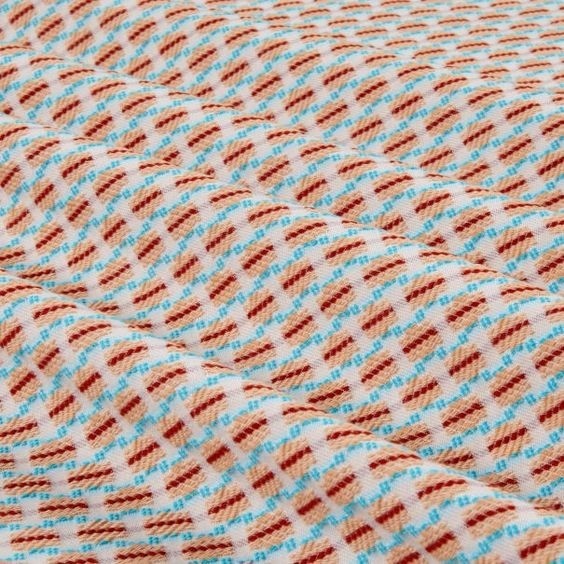
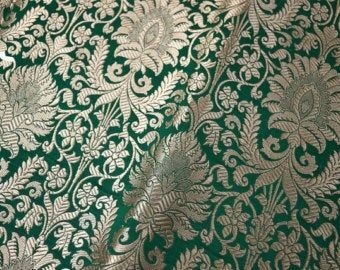
Brocade is recognized for elaborate patterns that seem to rise above the surrounding cloth. Sewport's fabric guide explains the role of supplementary weft yarns in producing that effect. A base fabric provides the underlying structure, while additional yarns form ornamental details. The decoration is therefore part of the weaving process. It differs from a motif printed onto finished cloth or embroidered after the ground fabric has been made. Understanding that distinction helps explain why a brocade can have a noticeable difference between its patterned areas and its background.
Fiber and pattern are separate choices
Silk has a strong historical association with brocade, but the name does not specify silk alone. Cotton, wool and manufactured fibers can also be used, changing the handle, sheen and cost of the finished material. Modern jacquard equipment enables complex designs by controlling yarn movement during weaving. The equipment and the fabric are related concepts, although they are not interchangeable terms: jacquard describes a method of controlling woven patterns, and brocade describes a particular ornamental result. Different colored yarns can emphasize a motif, while some designs achieve their effect through more restrained differences in texture and luster.
Choose applications around the finished cloth
Brocade appears in formal and ceremonial clothing as well as curtains, upholstery and decorative cushions. Those uses draw on its visual richness, but they do not imply that every brocade has the same weight or durability. A dress fabric and an upholstery material may share a decorative approach while serving very different needs. Comparing the composition and intended application is more useful than relying on appearance alone. The key question is how the extra pattern yarns, underlying weave and chosen fibers work together in the particular fabric being considered.
Supplementary yarns create the ornamental layer
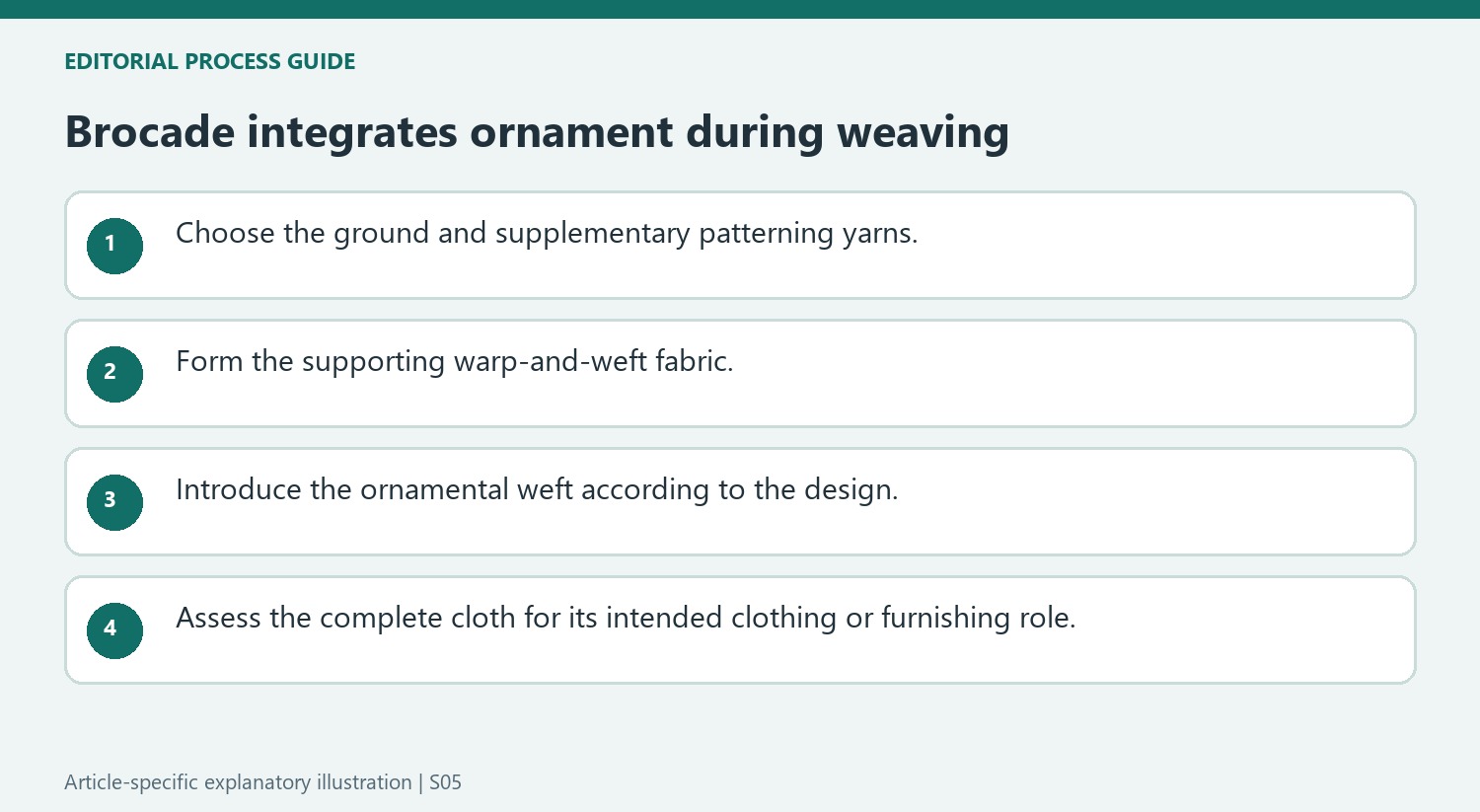
The base warp and weft establish the supporting fabric, while additional patterning weft creates the brocaded design described by the guide. That relationship explains the apparent relief without calling it a separate embroidered decoration. The ornamental yarns are introduced as the cloth is woven. A printed imitation may repeat a similar motif, but the manufacturing route is different. When assessing a sample, distinguish the ground from the pattern yarns and identify the actual fiber composition. A brocade can combine visual richness with many material choices, so the technique name alone does not establish silk content, a particular sheen, or a fixed weight suitable for every finished product.
Jacquard control and brocade are related concepts
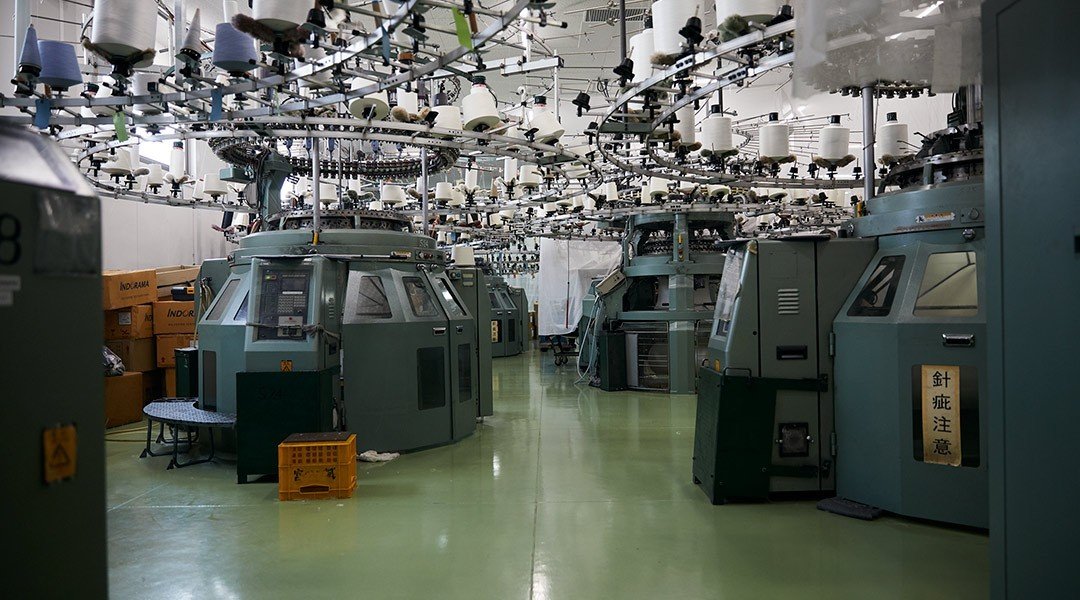
Modern jacquard equipment can control yarn movement to execute complex woven designs. Brocade describes an ornamental fabric outcome, making the equipment and the product related without turning the words into synonyms. The source's examples range from comparatively restrained designs to multicolored ornament. Complexity and color count are therefore separate choices within a broad patterning approach. A useful product description identifies the fabric structure and material rather than simply naming the machine. It should also distinguish woven ornament from an embroidered motif applied afterward. This gives designers a clearer account of how the pattern is made and what is present in the supplied cloth, especially when photographs alone make several techniques look similar.
Let the application set the comparison criteria
Formal clothing and furnishing textiles can both use brocade, but they encounter different demands. A drapery fabric needs a suitable hang, while a structured garment or upholstered surface places other requirements on the material. The guide's application list demonstrates the category's reach rather than a universal approval for every bolt of cloth. Ground construction, pattern yarns, fiber blend, weight, and finish should be considered together. Care likewise comes from the actual item and its components. For selection, begin with the intended product and ask for relevant supplier information. The ornamental surface remains an important design feature, while the complete specification determines whether that appearance is delivered in a suitable material.





Comments
0