 FabricKnowledge Lab
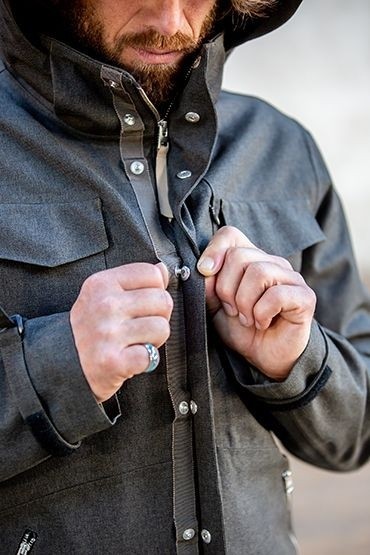
A membrane is one part of the textile system
Sympatex is described by Sewport as a functional material based on polyester-and-polyether chemistry and used in outdoor garments and footwear. The central purpose is to resist liquid water while allowing moisture vapor to move through the barrier. These are different forms of water transport, and neither establishes the insulation value of a complete garment. A winter jacket can add warmth through separate filling and layers, while a lightweight shell uses a different construction. The membrane name therefore identifies a technology component rather than the entire material arrangement of every item that contains it.
Layer placement and joins affect the product
The source discusses using the material in clothing and shoes and describes suppliers delivering forms suited to a manufacturer's design. A membrane must be integrated with face textiles, linings, seams, and other components. Those details influence how the finished product manages water and flexing during use. A material-level barrier claim should not be read as a guarantee that every opening or join in any garment is sealed. Similarly, vapor transfer does not mean a wearer can never accumulate sweat. Activity level, humidity, temperature, and clothing layers remain part of the conditions in which the system operates.
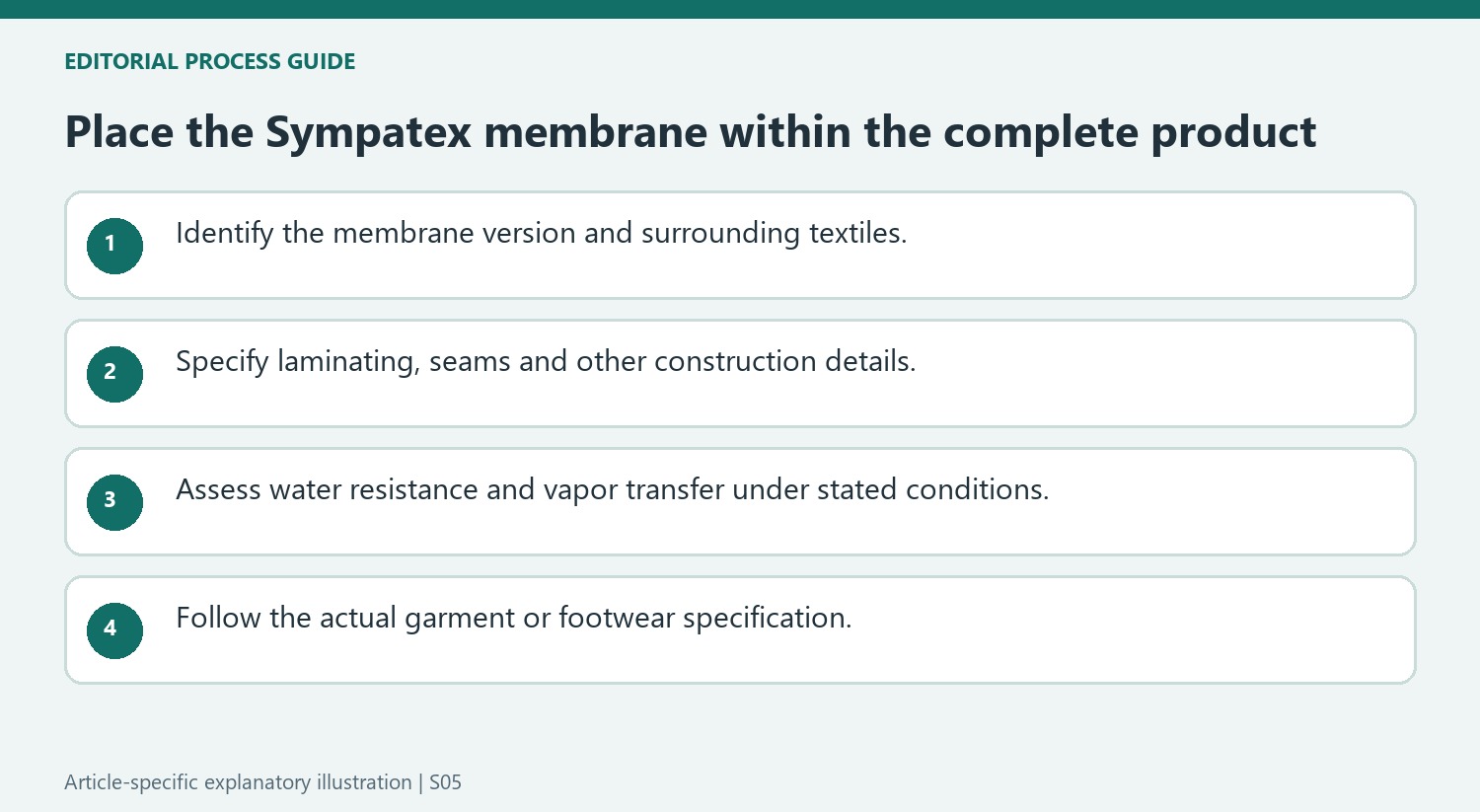
Recycling claims need an actual route and composition
Sewport discusses recyclability and environmental positioning alongside the material's synthetic composition. A polymer being technically recyclable is a different claim from a complete used garment being collected and recycled in practice. Blend partners, adhesives, trims, and the available recovery system can affect the outcome. A useful specification should identify the actual membrane version and complete laminate, the relevant performance evidence, and any documented recycling route. The material platform provides a starting point for functional textile design, while the assembled product and its real end-of-life options determine which broader claims are supported.
Keep water resistance and warmth in different categories
A barrier intended to resist incoming liquid has a different function from the filling or construction that provides insulation. The source discusses both lightweight outdoor clothing and winter applications, making this separation especially relevant. A shell can incorporate a functional membrane without the loft of an insulated coat. Conversely, a winter product can combine a barrier with additional materials selected for warmth. Its performance belongs to that complete arrangement. A useful description identifies which layer performs each role and avoids assigning the warmth of an entire jacket to a thin membrane alone. This also makes comparisons clearer when two products use the same technology name but have different linings, fills, and external fabrics.
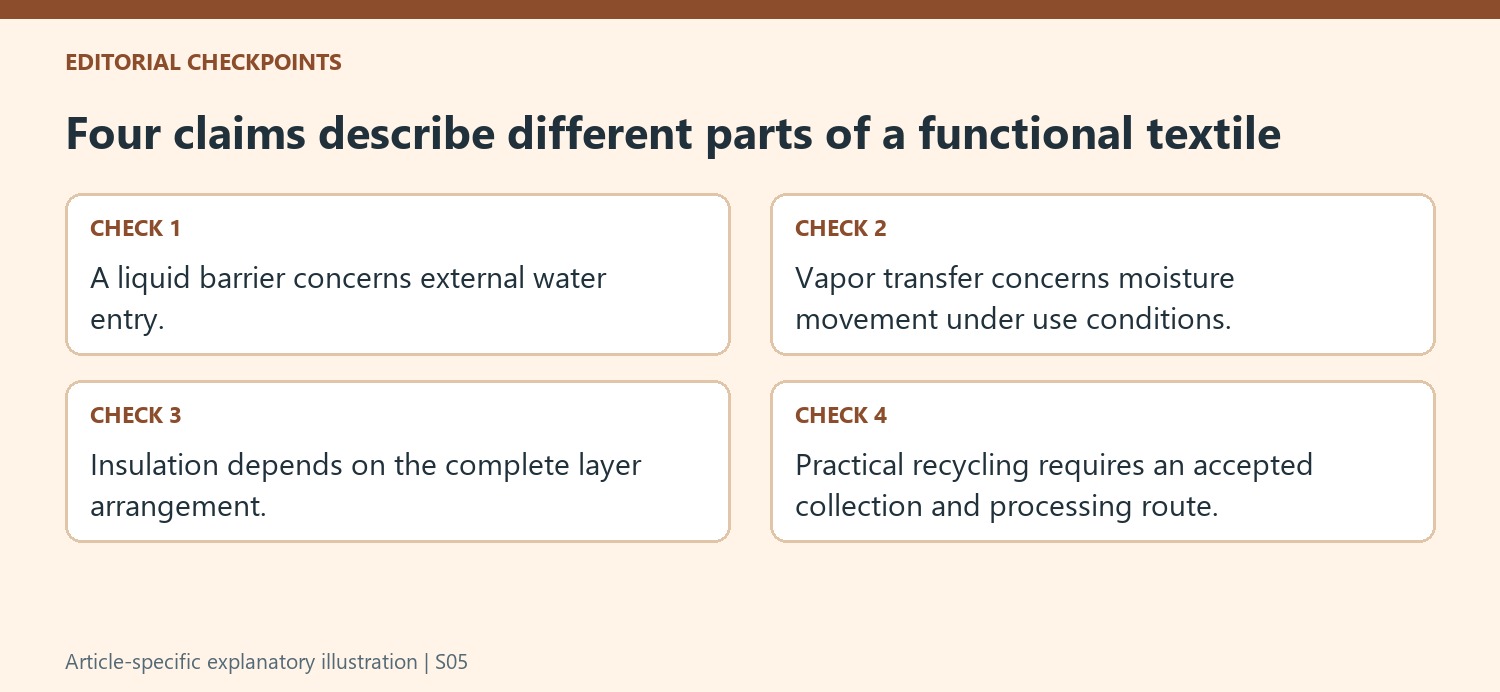
Follow vapor transfer within the complete clothing system
The membrane discussion concerns the movement of water vapor through a barrier. Perspiration can also be present as liquid, so the claim should not be turned into a guarantee that the wearer remains completely dry during every activity. Humidity, temperature, exertion, and the surrounding layers affect the situation. The guide's footwear and clothing examples also place the membrane in different assemblies. An appropriate assessment identifies the complete laminate and the finished item being tested, together with the test conditions. This preserves the useful distinction between resisting external liquid and allowing vapor movement, while avoiding the suggestion that a material name overrides the circumstances in which a person actually uses the garment.
Ask what can actually enter the recycling route
Technical recyclability is a property of a material under an appropriate process. Practical recycling of a used shoe or jacket additionally requires collection, acceptance, and a route able to handle the entire item or separated components. A membrane can be bonded to other textiles and accompanied by adhesives, fasteners, and trims. Those details matter when moving from a material claim to an end-of-life claim for a product. The source's environmental discussion is therefore best read alongside current, product-specific recovery information. A purchaser should identify what is accepted and where it can be returned. The existence of recyclable chemistry does not establish that an ordinary local collection will process the completed garment.



Comments
0