 FabricKnowledge Lab
A fiber built in layers
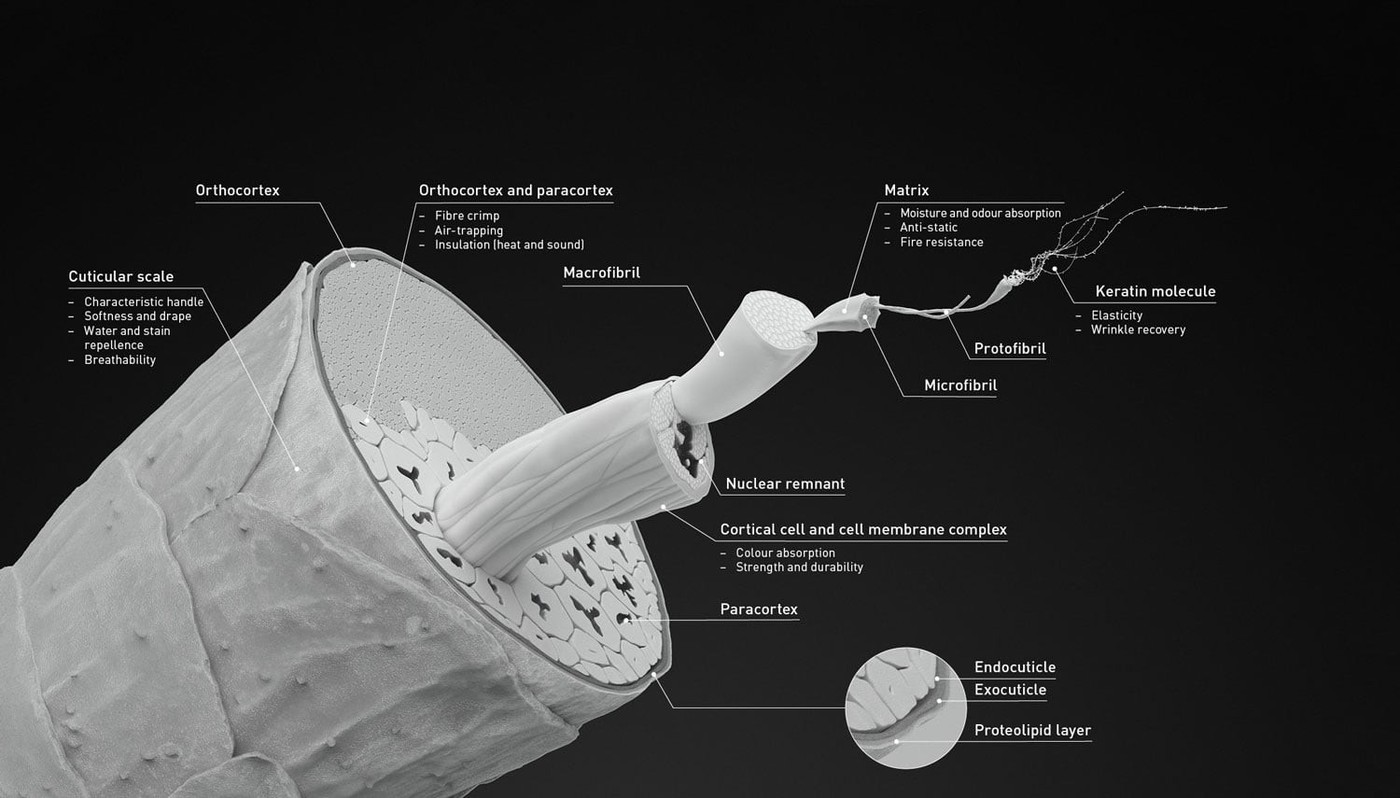
A strand of wool is a complex protein structure rather than a uniform rod. Woolmark describes an outer cuticle made from overlapping scales and an inner cortex containing different kinds of cells. The main protein is keratin, the same broad family of structural proteins found in hair. These layers matter because the behavior of finished wool cloth begins inside each individual fiber. Looking at that structure also helps distinguish a fiber property from a result created by spinning, knitting, weaving or finishing the fabric.
Why the cortex produces crimp
Two cortical cell types, the orthocortex and paracortex, occur alongside one another and respond differently as the fiber develops. Their arrangement contributes to wool's characteristic crimp. That waviness affects how fibers occupy space within a yarn and how a textile can extend and recover. The cortex contains smaller bundles of fibrils, with ordered crystalline regions and less ordered regions serving different roles. The ordered areas support structural integrity, while the less ordered areas allow movement. Wool's flexibility therefore reflects several levels of organization, rather than a single spring hidden inside the strand.
Moisture and diameter need separate explanations
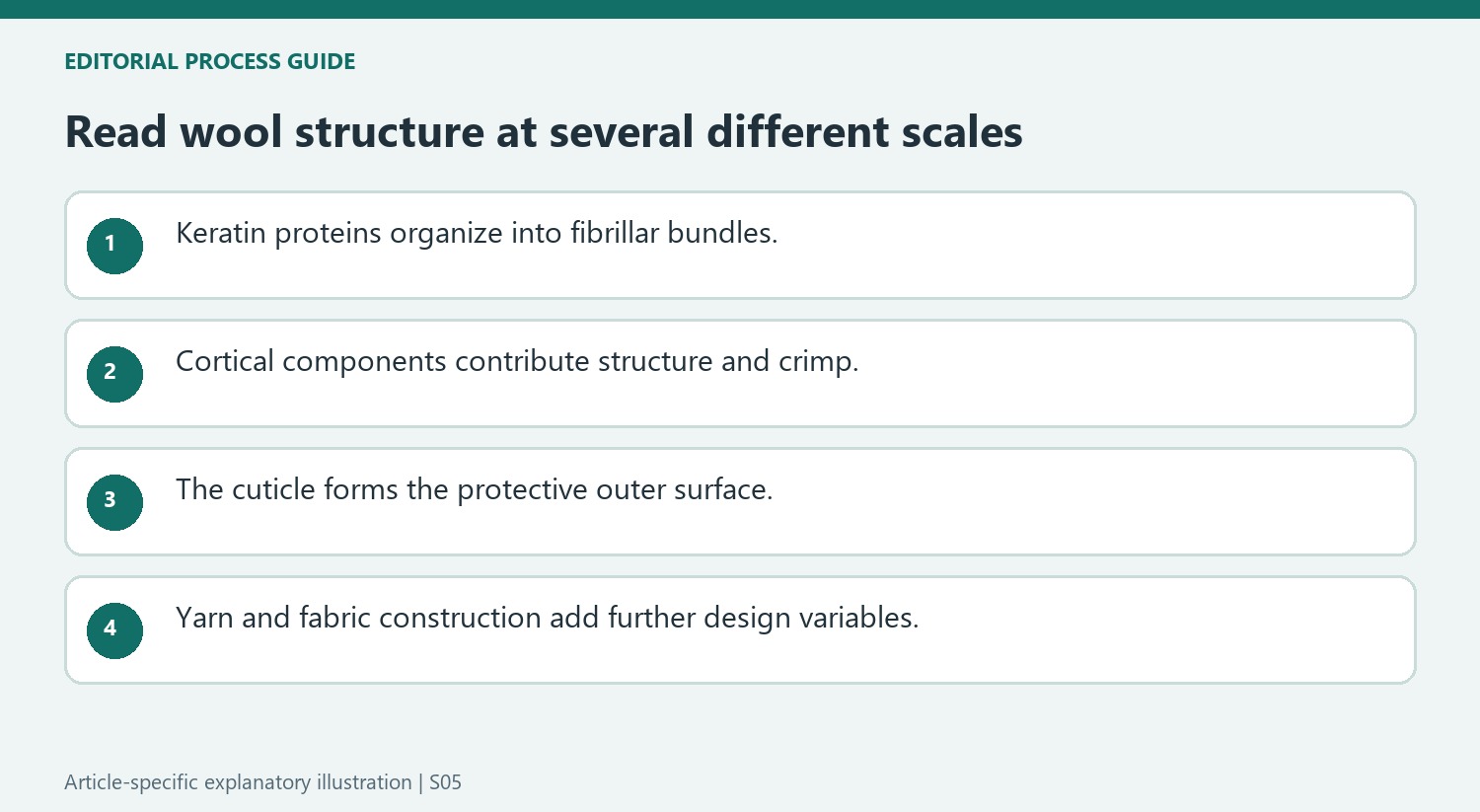
The surrounding protein matrix includes sulfur-rich proteins and contributes to wool's interaction with moisture. This internal behavior helps explain why a wool textile can take up water vapor, although the comfort of a garment still depends on its construction and surroundings. Fiber diameter is a separate measurement, commonly expressed in microns, or millionths of a meter. A fine fiber does not automatically make a thin garment: yarn size, stitch density, fabric layers and finishing also affect thickness. Reading those specifications together gives a clearer picture than treating the word wool as a complete performance description.
The surface and interior interact with water differently
Woolmark distinguishes the outer cuticle from the more moisture-attracting material inside the fiber. That arrangement helps explain how a fiber can resist some surface wetting while also taking up water vapor. It does not make an ordinary wool garment waterproof. The page explicitly separates water resistance from a complete barrier to rain. A knitted fabric also contains spaces between yarns and loops, which belong to the textile structure rather than the internal chemistry of a strand. Keeping those levels separate avoids a common misunderstanding: moisture behavior at the fiber surface does not describe every path water can take through an entire garment, its seams, or its openings during actual use.
Follow the hierarchy from protein to textile
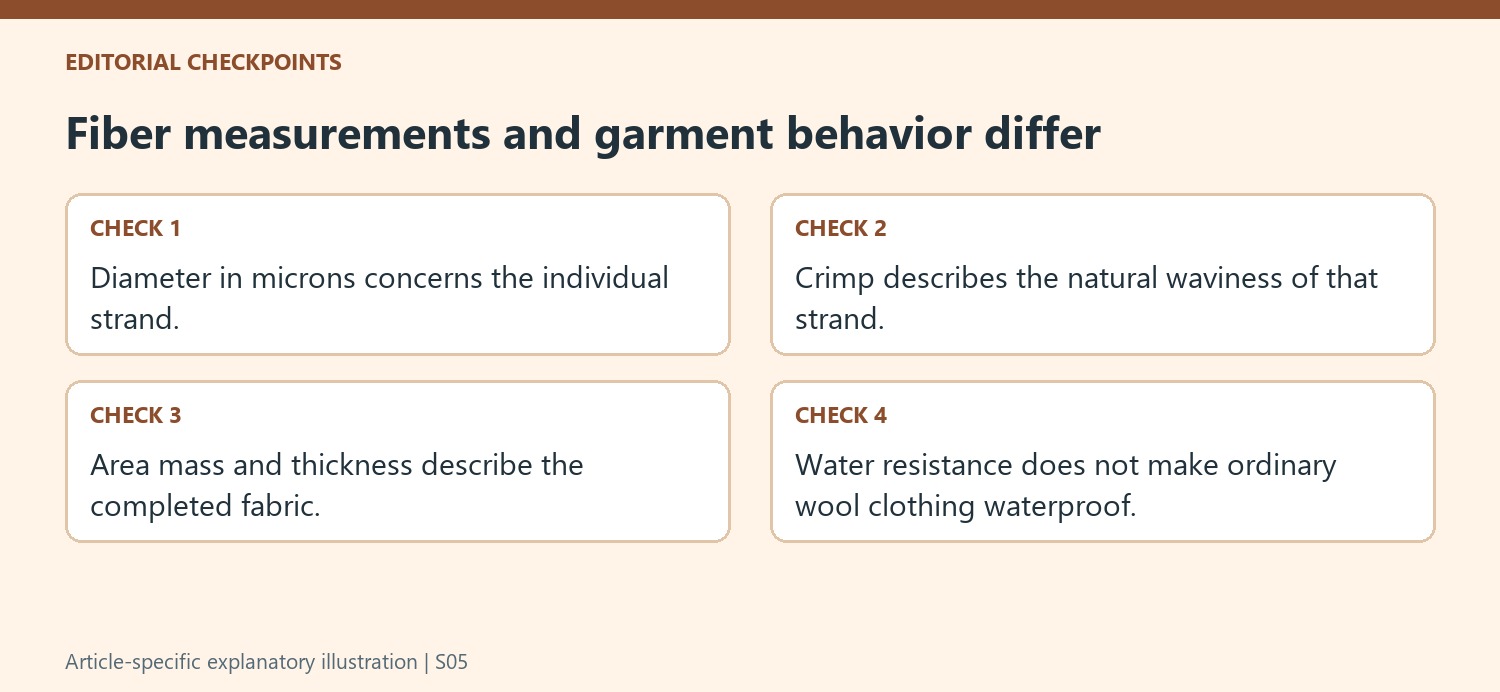
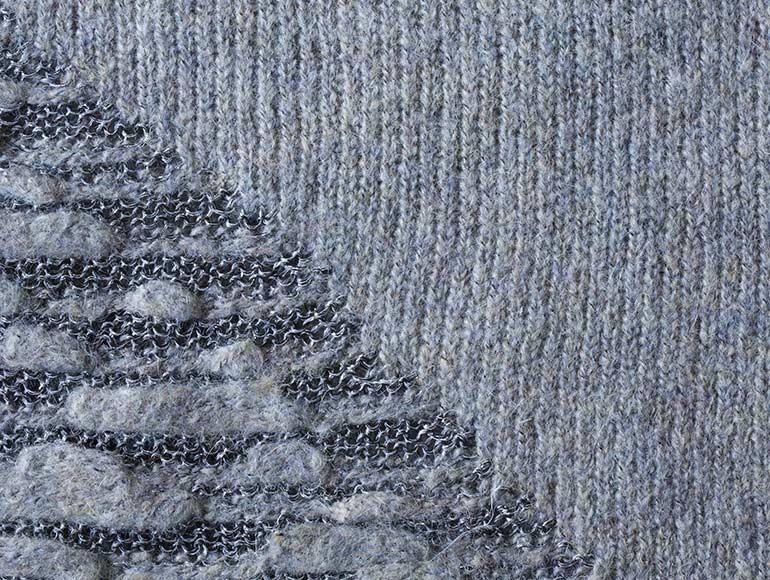
The overview moves through keratin proteins, fibrillar bundles, cortical cells, and the outer fiber casing. Each level helps describe a different part of the strand's behavior. Ordered regions contribute structural integrity, while less ordered regions permit movement and interact with moisture. The visible crimp emerges at the fiber scale from the relationship of cortical components. Yarn then combines many such fibers, and knitting or weaving organizes the yarn into cloth. This hierarchy explains why fabric performance cannot be assigned to one microscopic feature alone. A spring-like molecular or fiber description is a useful mechanism, but the completed textile adds density, geometry, and finishing that also influence stretch, recovery, and handling.
Diameter helps explain feel without specifying garment weight
The page associates fine Merino fibers with bending readily against the skin, helping reduce the prickling sensation associated with broader fibers. This is a diameter argument, measured in microns. It does not establish that every garment containing those fibers is lightweight or suitable for the same season. A dense knit, a layered construction, and a fine single-layer fabric can begin with comparable fiber diameters and end as different products. For practical selection, combine the fiber measurement with yarn size, construction, weight, and the full blend. The structural overview then provides a grounded explanation of material behavior while the actual garment specification identifies how that behavior has been used in a finished item.
References
- What is the Wool Fibre?. The Woolmark Company.



Comments
0