 FabricKnowledge Lab
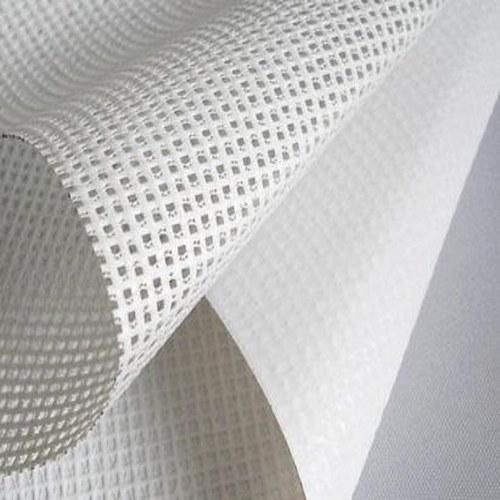
The polymer name does not identify a fabric structure
PTFE stands for polytetrafluoroethylene, a fluoropolymer used in several industrial and consumer material systems. Sewport's guide discusses coatings, threads, expanded membranes, and glass-fiber-based textiles associated with the polymer. Those examples should not be collapsed into one generic cloth. A coated support fabric, a solid component, and a thin expanded membrane can contain the same polymer while having different geometry and functions. Identifying the form is therefore as important as identifying the chemistry when interpreting a product described as PTFE fabric or comparing it with another technical textile.
Expansion changes the physical arrangement
The source traces expanded PTFE to processing that stretches the polymer and introduces a porous structure. That is a change in material form, rather than a new natural fiber being harvested and spun. The guide connects the expanded form with flexible membranes used in outdoor systems. A membrane must then be integrated into a laminate or finished product, where other layers and joins contribute to its performance. The properties of solid PTFE should not be transferred without qualification to every expanded or composite form, especially where porosity and supporting textiles are central to the application.
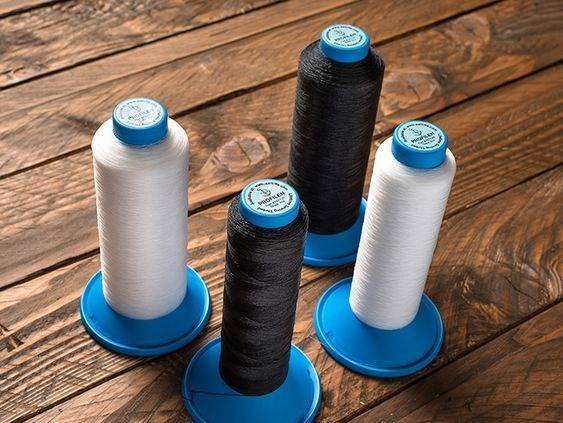
Coatings and reinforcements serve other purposes
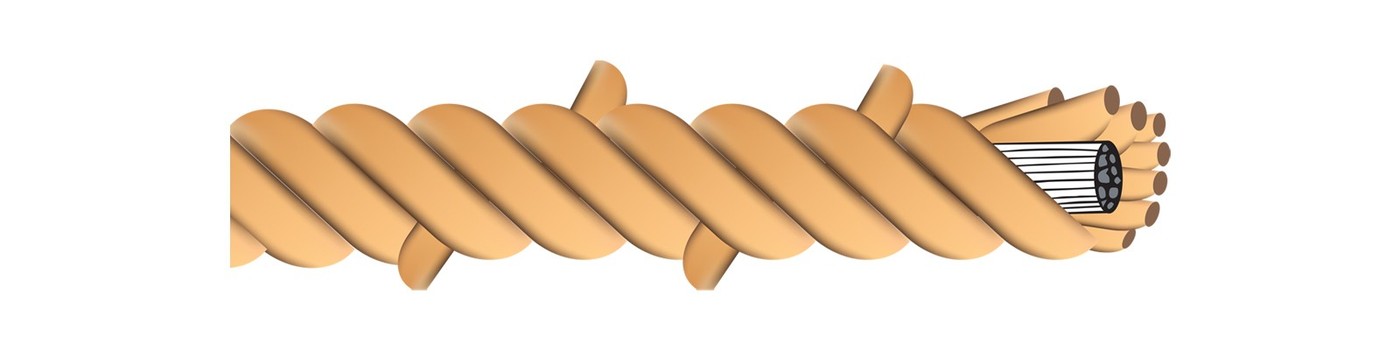
The overview also discusses PTFE-coated glass-fiber material, filter-related uses, sewing thread, and low-friction surfaces. These are distinct engineering applications with their own test and service requirements. A product suitable for one temperature or chemical environment does not establish the limits of another simply because both use PTFE. For a useful specification, identify the supporting material, polymer form, coating or laminate structure, and intended conditions. Broad polymer characteristics provide context, while the actual composite and its tested limits determine suitability. The textile label should make those boundaries clear rather than implying that one material name answers every performance question.
Distinguish a support coating from a membrane
PTFE-coated glass-fiber cloth combines a support with a surface treatment, while an expanded membrane is a different physical arrangement of polymer. The source discusses both within a broad overview, which can make them appear more interchangeable than they are. In a specification, identify the supporting structure and where the polymer is located before comparing claimed properties. A reinforced industrial sheet may be selected for an application unlike that of a thin clothing laminate. The shared chemical name cannot settle the behavior of the support, the openings, or the joins in either product. The actual form connects the material description with the engineering problem it is meant to address.
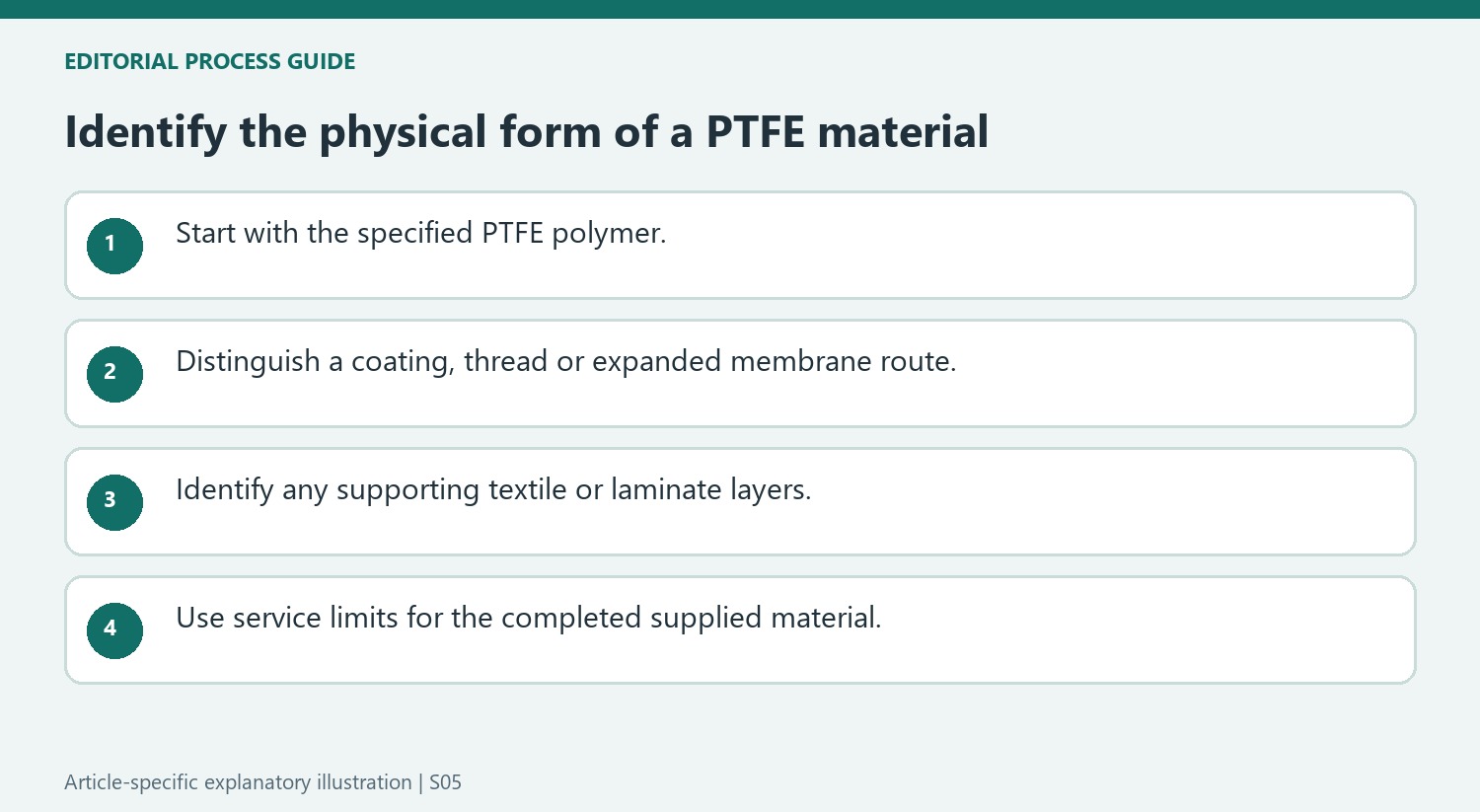
Expansion belongs to the physical structure story
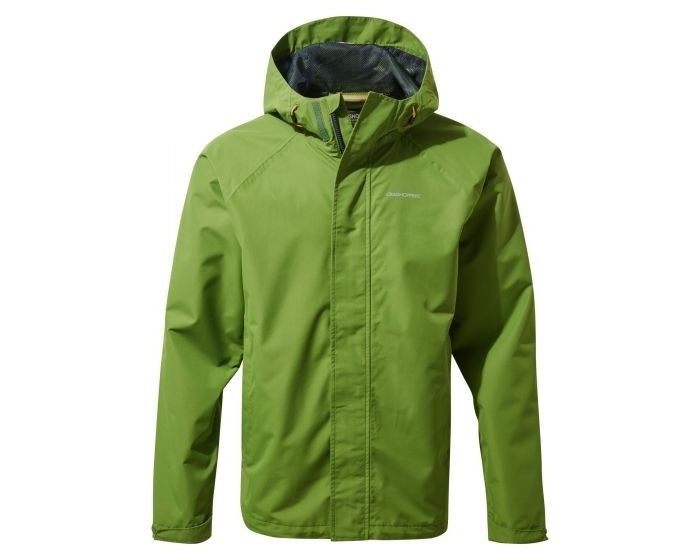
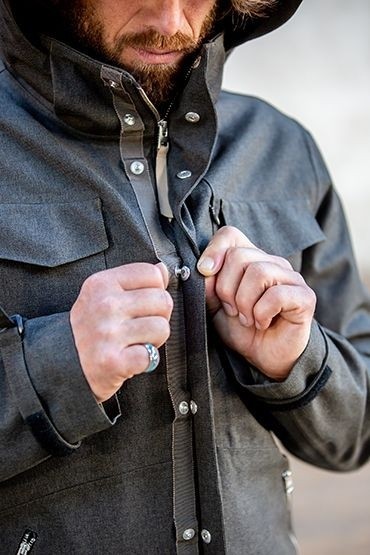
The guide's ePTFE discussion concerns heating and stretching the polymer to produce an expanded structure. The resulting geometry matters to its role in flexible membrane systems. This does not mean every use of PTFE is a porous fabric, nor that every waterproof textile uses this route. A material supplied as a thread or coating requires its own description. For an outdoor garment, the expanded material additionally becomes part of a laminate and a constructed item. Face fabrics, backings, seams, and openings remain relevant. The useful explanation therefore moves from polymer identity to physical form and then to assembly, rather than taking a single property from solid material and assigning it unchanged to every product.
Use service limits for the actual composite
The source associates PTFE with low-friction surfaces and several demanding applications, but a broad polymer overview is not an operating specification. A coated fabric includes a support, treatment, and possibly additional components whose limits need to be considered together. A temperature mentioned for the polymer alone cannot automatically serve as the permitted continuous operating temperature of the completed textile. The same principle applies to chemical exposure and mechanical loading. Identify the supplier's tested material and the intended conditions before choosing it for an industrial use. This keeps the overview useful as a map of material families while leaving engineering suitability to the data for the particular thread, membrane, or coated reinforcement.





Comments
0