 FabricKnowledge Lab
A feedstock name can hide different textile identities
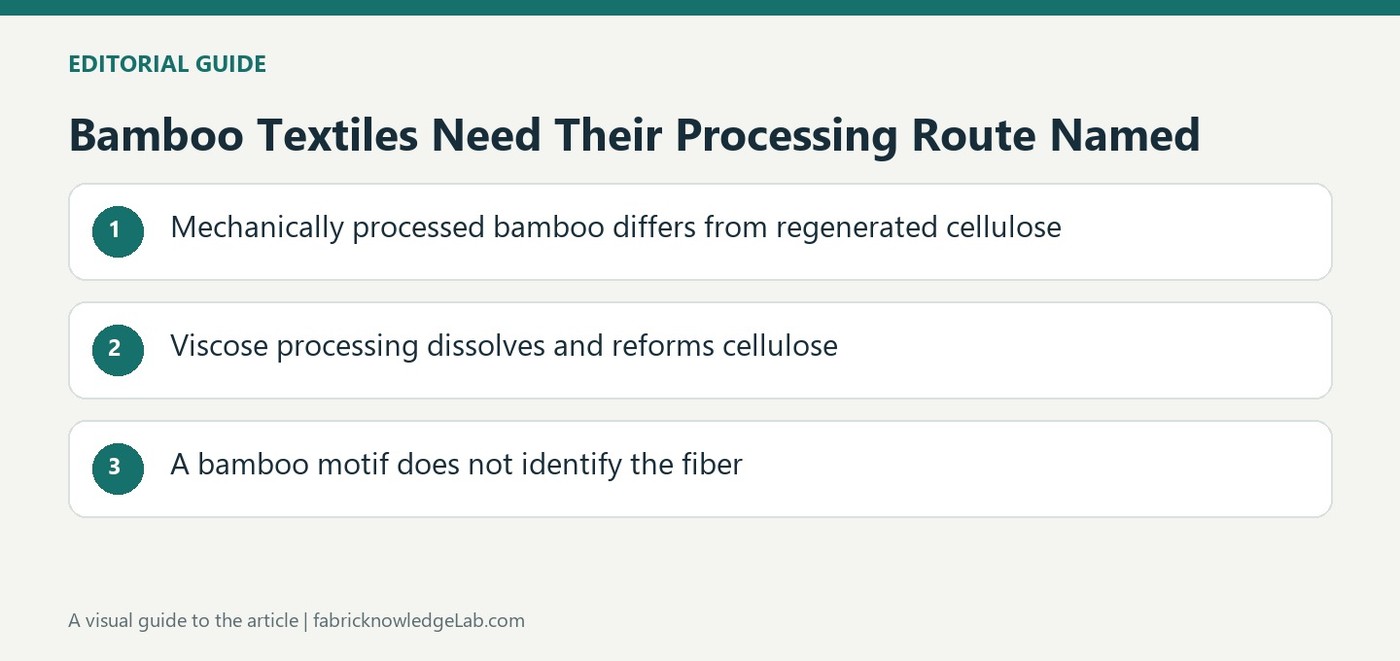
Bamboo fabric is a broad commercial phrase rather than one precise fiber specification. Sewport's guide distinguishes regenerated cellulose made from bamboo-derived pulp from more directly extracted plant-fiber routes. This distinction matters because a finished rayon fiber does not retain the plant's original structural form. The bamboo identifies a source of cellulose, while viscose or another regenerated-fiber term identifies how the textile ingredient was produced. A clear label should therefore name the actual fiber and any blend partners instead of using the plant association as a substitute for a complete composition statement.
The viscose route rebuilds cellulose as strands
The source outlines extracting cellulose, preparing it chemically, forming a spinning solution, and passing it through a spinneret before regeneration and washing. That is a substantial industrial transformation between the bamboo plant and the textile yarn. The guide also discusses other extraction approaches, which should not be treated as identical processes or assumed to produce interchangeable material. Raw-material growth, fiber manufacture, yarn production, and fabric finishing are separate stages. Claims about low agricultural inputs at the plant stage do not independently establish what happens to chemicals, water, or waste during the later conversion.
Product claims need evidence beyond the plant
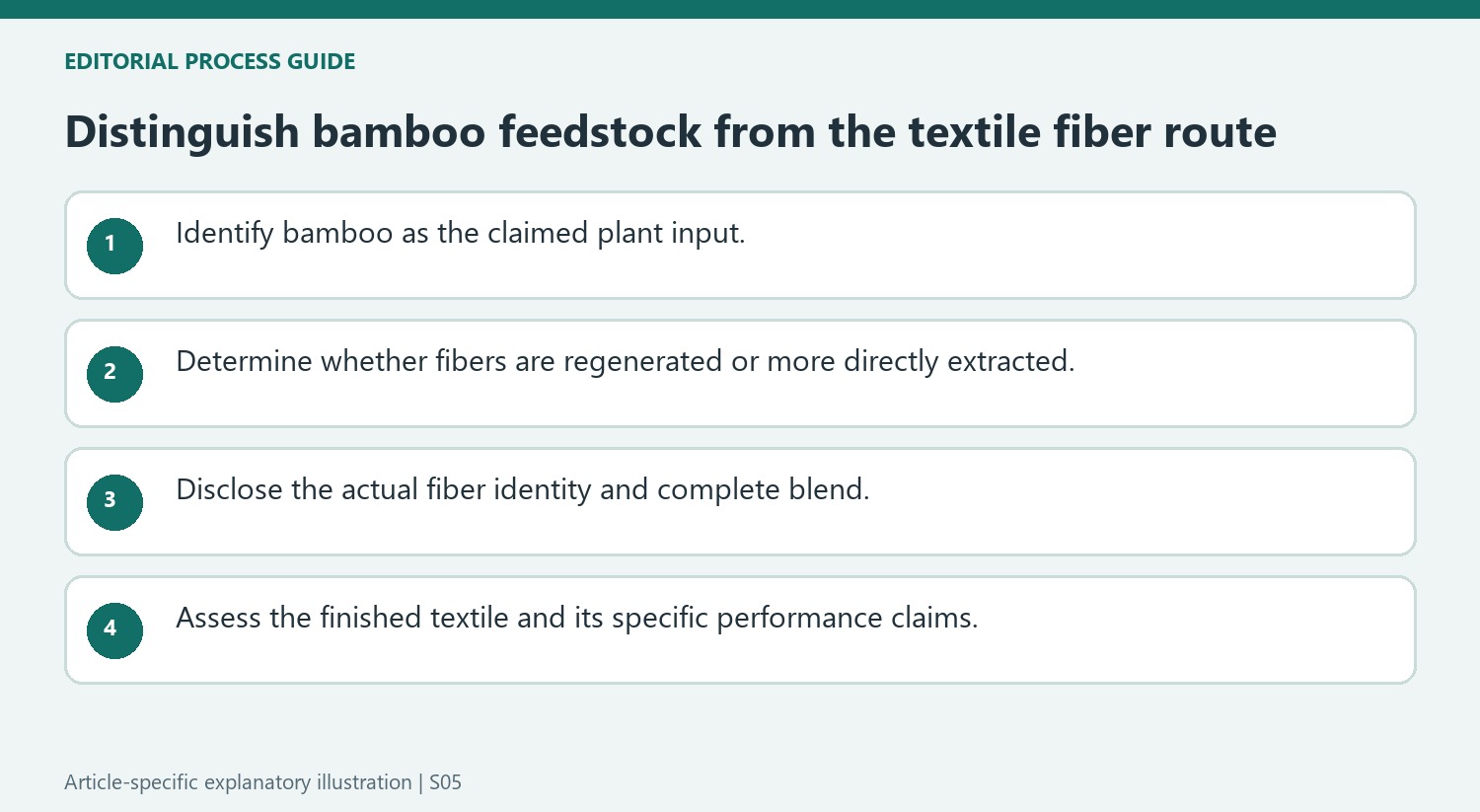
Sewport lists clothing, bedding, and towels among bamboo-related textile applications and questions the transfer of the raw plant's antibacterial reputation to processed fabric. That is a useful distinction: a plant characteristic does not automatically survive fiber regeneration or prove a tested property of the finished garment. The same applies to softness, strength, and environmental descriptions. For a practical comparison, identify the exact fiber route, full blend, construction, and care requirements. Then seek evidence for any specific performance claim. The word bamboo explains part of the input story, while the processing and finished-product specification explain the textile being used.
Name the regenerated fiber after identifying its source
Bamboo-derived pulp can supply cellulose for a regenerated fiber, but the resulting strands should be identified through the actual fiber route. In a viscose example, the plant is not simply combed into ready-made textile threads. Its cellulose passes through substantial processing before being formed and regenerated as filaments. The source also discusses more direct fiber extraction, which belongs to a different route. Those distinctions matter when comparing a label with the story told in marketing. A phrase such as bamboo sheet may describe the feedstock association while leaving the precise fiber and blend unstated. The complete composition should identify what the textile actually contains, not only the plant from which an input originated.
Locate each environmental statement in the production chain
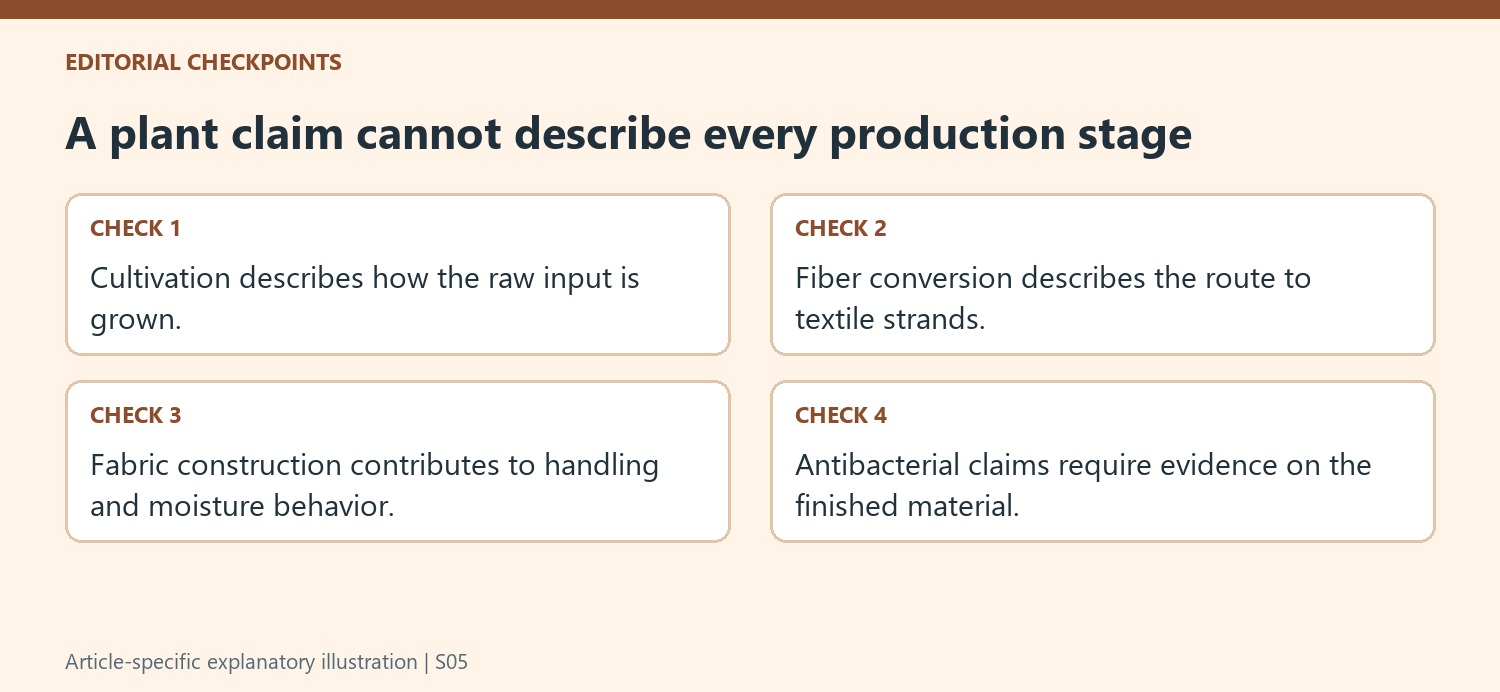
Cultivation, pulp preparation, fiber manufacture, and fabric finishing are separate stages. A claim about rapid bamboo growth therefore does not establish the resource use or waste handling of a viscose plant. The guide discusses process chemicals and alternative recovery approaches, illustrating why factory practice matters after the crop has been harvested. A closed-loop description should identify what is recovered and under which process, rather than promise that no impact exists. Likewise, more direct extraction does not remove the need to describe subsequent dyeing and textile production. Comparing actual materials requires stated boundaries and evidence for the route used, instead of transferring a favorable characteristic of the growing plant to an entire finished garment.
Check finished-fabric claims with finished-fabric evidence
The source questions the assumption that a raw plant's antibacterial reputation automatically applies to processed apparel. That example provides a useful way to read other performance language as well. Softness, moisture behavior, and strength concern the supplied fiber, yarn, construction, and finish in combination. A towel and a shirt can use bamboo-derived cellulose but have different structures and contact conditions. Neither the botanical name nor a high thread count supplies all of that information. Identify the actual material and intended use, then look for the appropriate test supporting any specific claim. Care should follow the completed item rather than an imagined property of an unprocessed bamboo stem.



Comments
0