 FabricKnowledge Lab

A boiled-wool appearance through a different route
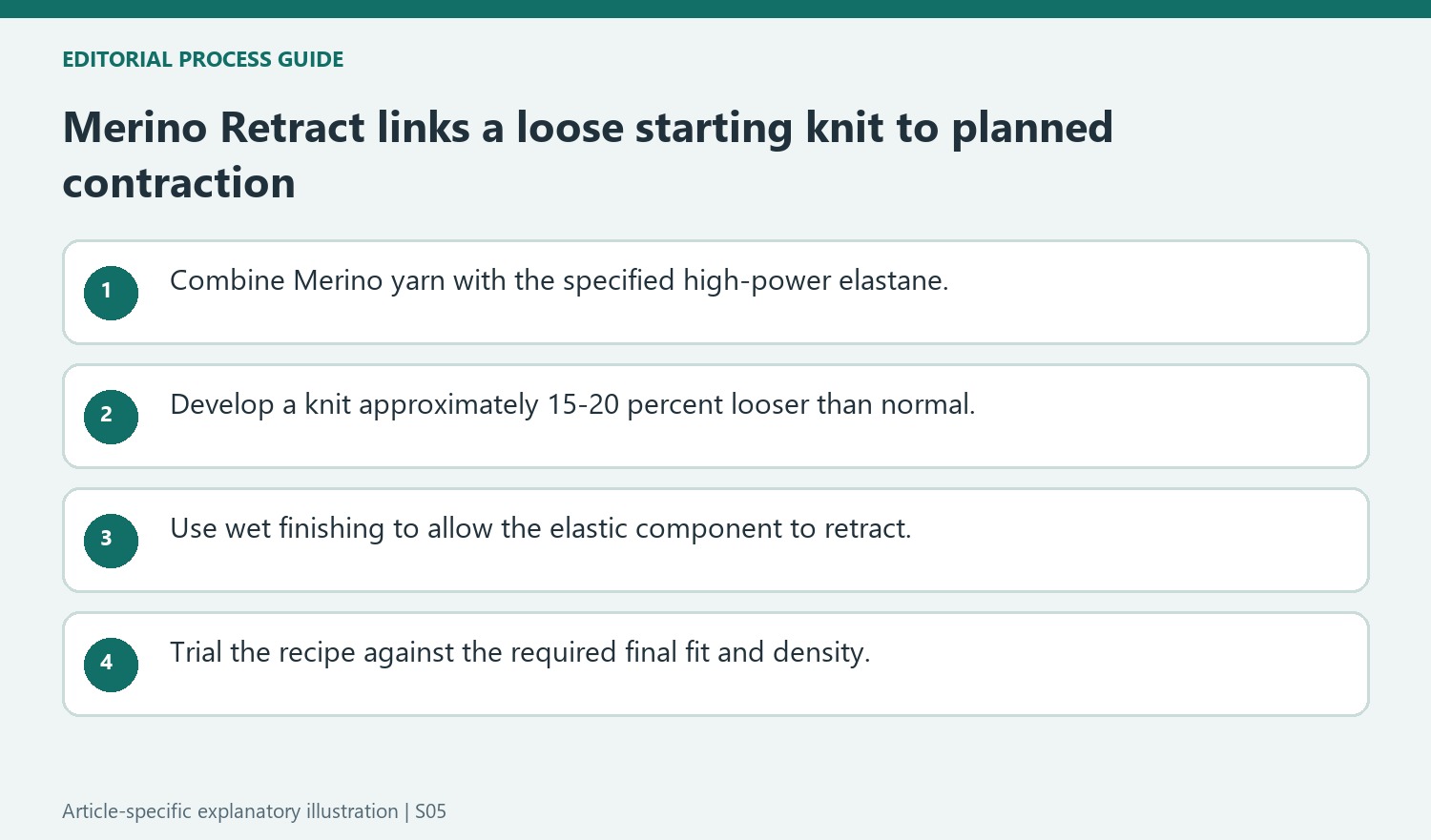
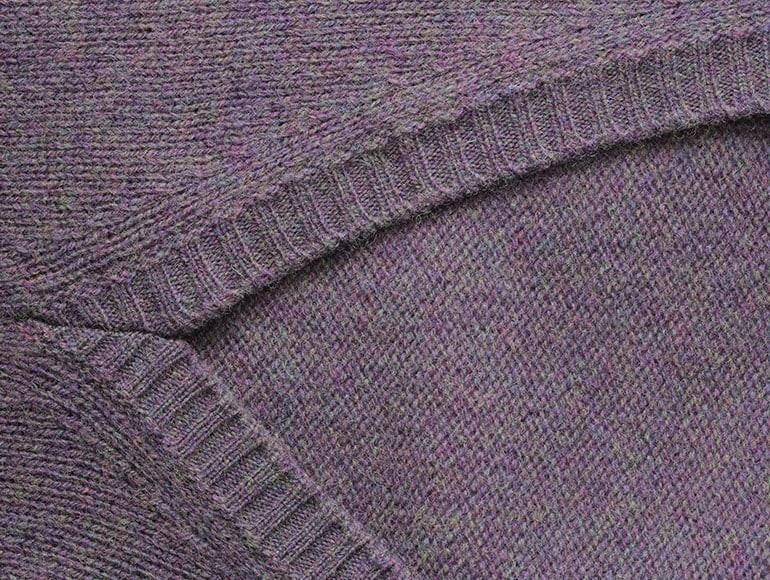
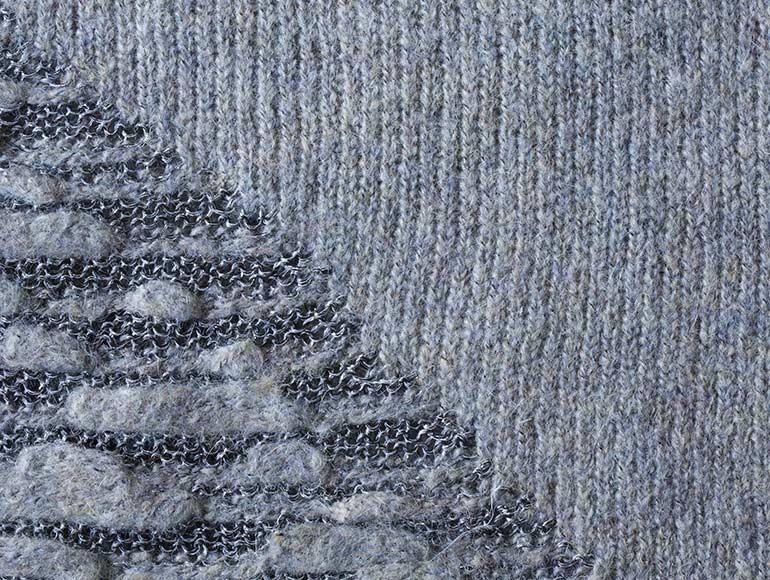
Woolmark describes Merino Retract as a way to create the casual appearance associated with boiled wool while retaining the intended resilience and pilling performance. The mechanism is not simply uncontrolled felting of an ordinary sweater. Merino yarn is combined with high-power elastane before or during knitting, and the later finishing stage allows the structure to contract. The added elastic component is therefore central to the method. A material described through this process should not be assumed to be entirely wool unless its complete composition actually supports that statement.
The starting knit allows room for contraction
The source says the fabric is knitted approximately 15 to 20 percent looser than normal so that retraction during wet finishing does not make it excessively dense. This is a development parameter tied to the described process, rather than a universal instruction for every yarn or knitting machine. The final dimensions depend on the yarns, stitch structure, and finishing routine. Woolmark explicitly notes that several trials are normally needed to establish the right settings, particularly for close-fitting garments. The process therefore links the initial fabric plan with the expected movement during finishing.
Finished care and fit still need confirmation
The page promotes durability and machine washability for the developed product, but the actual garment requires its own validated dimensions and care information. A compact appearance does not reveal how much elastane was used, which finish was applied, or whether another product with a similar texture behaves the same way. For a useful specification, identify the complete yarn combination, starting structure, finishing conditions, and final measurements. The innovation illustrates controlled contraction as a design tool, while testing the finished fabric and garment establishes whether the chosen recipe delivers the required fit and performance.
Plan the finishing movement before knitting
The stated loose-knit starting point makes sense only in relation to the later contraction. Woolmark gives a range of approximately fifteen to twenty percent looser than normal, providing room for the structure to compact during wet finishing. Starting from an already dense fabric would change the outcome of that movement. The number therefore belongs to a development method, not a universal gauge setting that can be copied to any machine. A technician needs to connect the chosen yarn combination, starting dimensions, and finish with the desired final measurements. Close-fitting garments make that relationship especially visible because even a modest dimensional difference can alter the intended silhouette and fit of the finished item.
Elastane supplies a deliberate mechanism for compaction
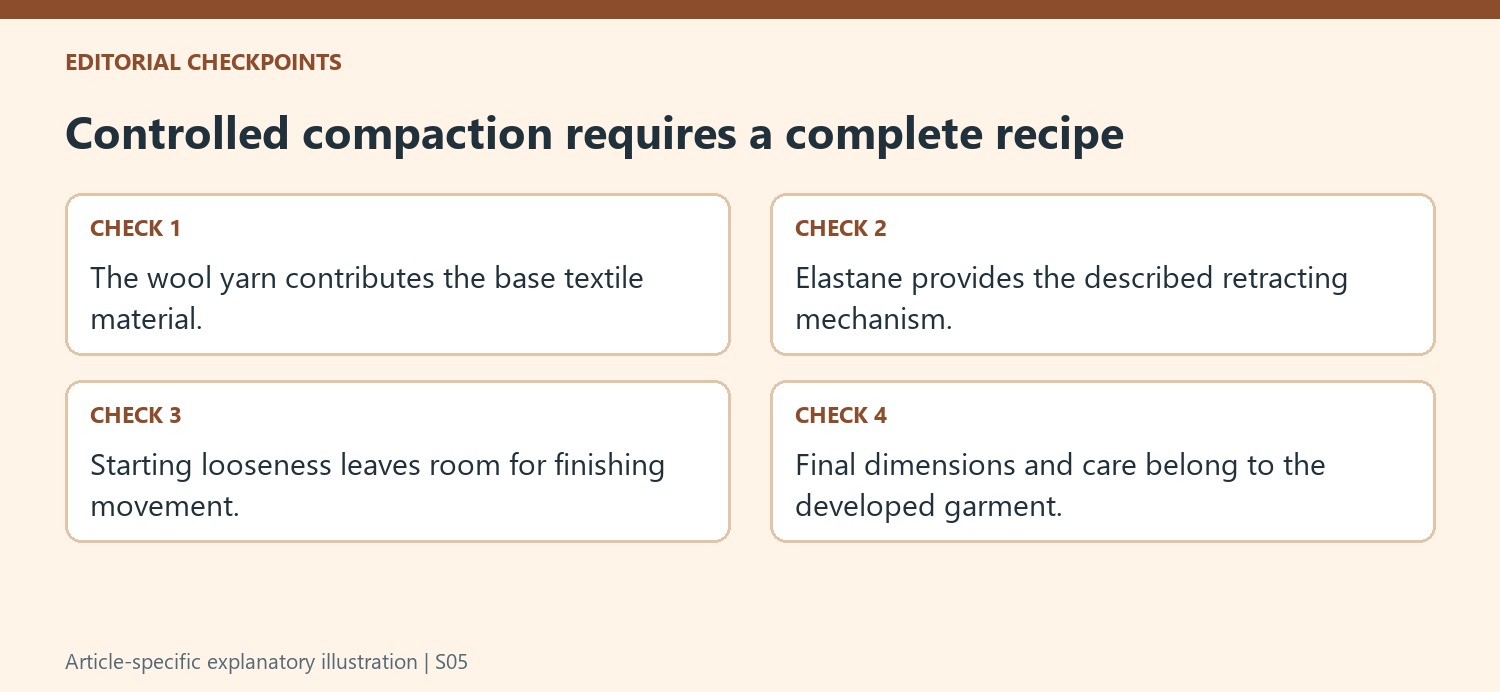
The page identifies high-power elastane as the component that retracts during the wet process. That is a different explanation from assuming that the finished look is simply produced by allowing ordinary wool to felt without control. The elastic yarn is introduced before or during knitting, so its distribution is part of the initial construction. A material description should state that combination rather than presenting the result as an unexplained property of Merino alone. The amount and arrangement of the companion yarn belong to the actual recipe. They help connect the relaxed starting structure with the compacted surface, while the finished textile still needs evaluation for the resilience and appearance intended by the development.
Use trials to establish the complete recipe
Woolmark explicitly says that several trials are normally needed to determine the fabric set and finishing routine. That instruction is substantive: the process joins variables that affect one another, including knitting, elastic retraction, and the final density. A trial should therefore be judged against the required appearance and measurements, rather than only whether the fabric has become smaller. The page's machine-washability and durability claims concern the developed result. They are not a substitute for confirming the care label and final behavior of a new garment made with a different yarn combination. Treat the innovation as a coordinated route to a casual compact look, with the production recipe established for the actual intended item.
References
- Merino Retract. The Woolmark Company; The Woolmark Company.








Comments
0