 FabricKnowledge Lab
Where the barrier sits changes the construction
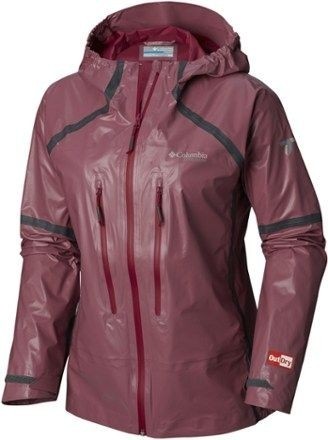
Sewport's OutDry guide focuses on bonding a water-barrier layer directly to parts of an outdoor product rather than leaving an independent liner separated from the exterior. The account discusses jackets, gloves, and footwear, where layer placement affects the space in which water can collect. This is a construction question as much as a material question. A waterproof component, an outer textile, and a complete shoe or garment are different levels of design. Knowing their arrangement helps explain the intended benefit without assuming that one label describes every product's entire structure.
Bonding aims to limit water between layers
The source describes cutting material to the required shape and using heat in the bonding process. The intended result is closer contact between the barrier and the component it protects, reducing the gap associated with some liner constructions. That account can be discussed without adopting the article's guesses about proprietary chemistry. The guide itself says exact chemical details were not disclosed, so an assumed polymer recipe should not be presented as verified fact. A useful product specification should identify the actual laminate or technology version supplied by the manufacturer rather than filling a disclosure gap with an analogy to another brand.
The finished item still needs a defined specification
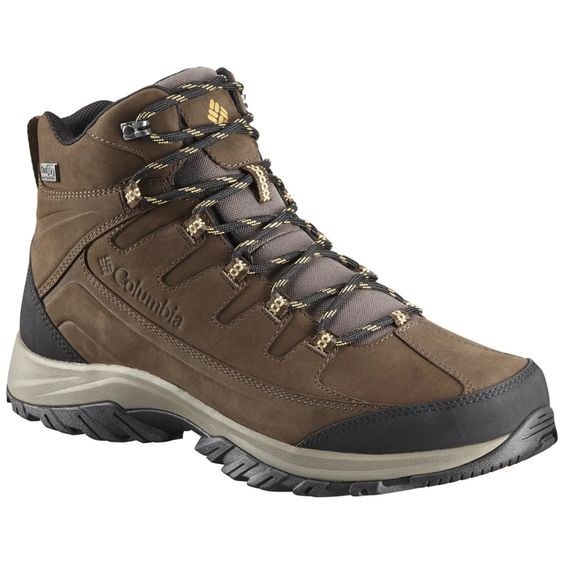
Sewport traces the technology's use across gloves, outerwear, and shoes and discusses its relationship with Columbia's product development. Those applications do not all have identical patterns, seams, or care needs. A shell jacket and a footwear upper also expose their layers to different flexing and wear. For comparison, examine the complete product, barrier placement, joins, and relevant test evidence. The source's most concrete contribution is the placement-and-bonding concept. Performance and maintenance should remain tied to the specific item rather than inferred from a broad claim that a bonded layer prevents every possible route of water entry.
Compare the spaces between the product layers
The construction discussion centers on where water may travel before reaching the barrier. With a separate inner liner, exterior components can be on the wet side of that barrier. Bonding a barrier more directly to the relevant component changes that arrangement and the space between layers. This is the practical concept to follow in the guide, rather than an assumed chemical formula. A useful comparison identifies which components are joined and which part of the assembled product they protect. It should also distinguish water held outside a barrier from water that passes through the barrier itself. Those observations describe different behaviors and should not be reported as the same kind of failure.
A shoe and a shell need different construction descriptions
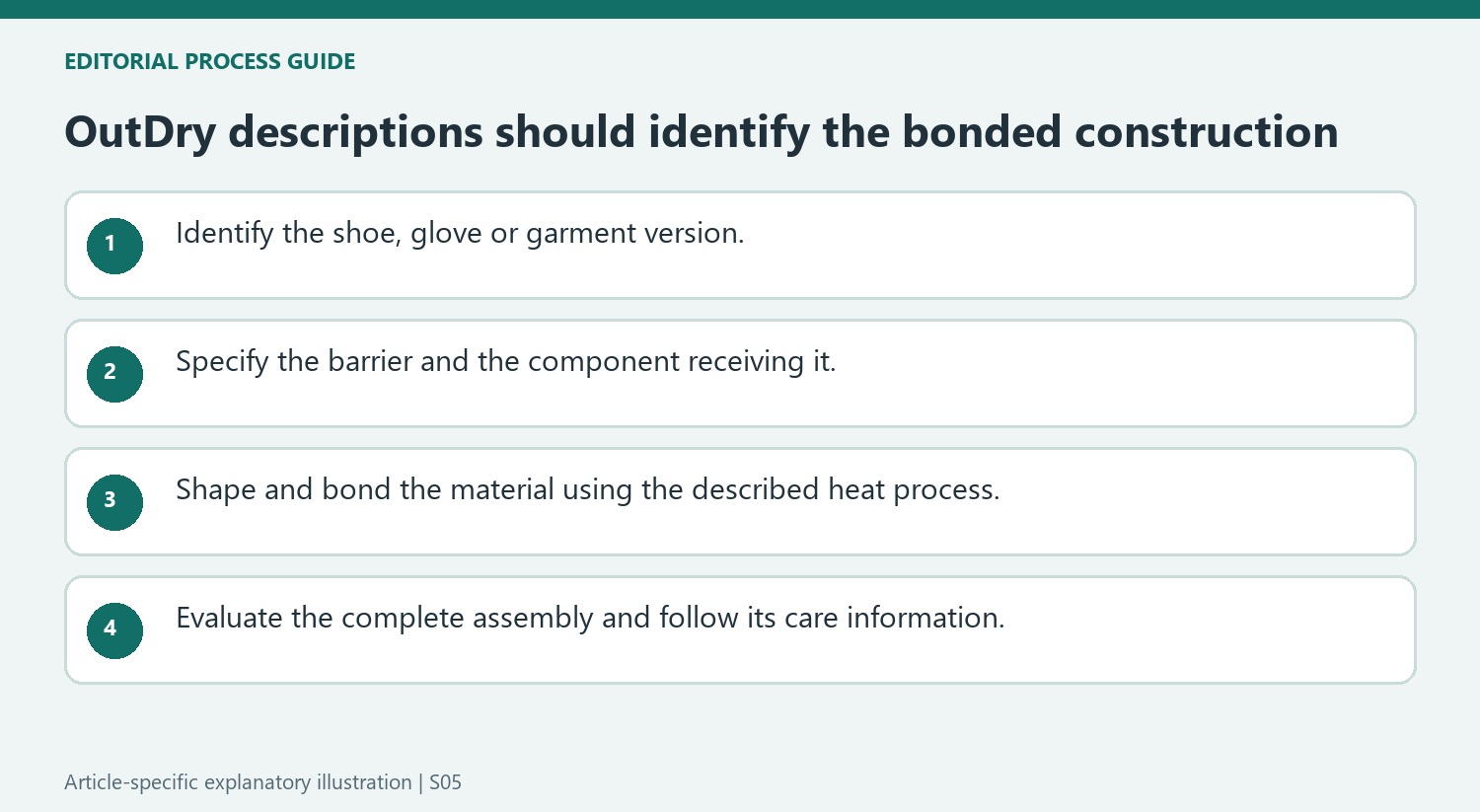
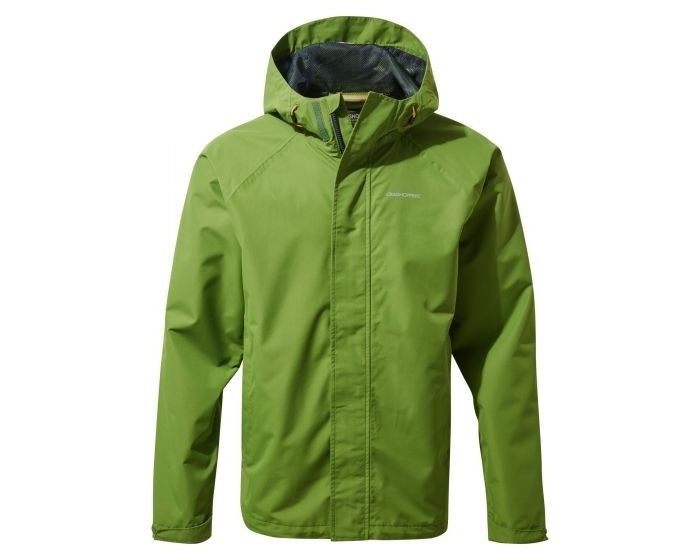
The guide discusses gloves, footwear, and outerwear, but these products cannot be represented by one flat diagram of a jacket panel. A shoe upper has its own shape and joining details, while a glove must accommodate fingers and repeated movement. A shell garment adds closures, openings, and coverage choices. Bonding the selected components is therefore one stage within a complete design. The claimed benefit needs to remain attached to the actual application and technology version. When choosing an item, examine how the barrier is incorporated into that specific product and what its manufacturer states about use. A shared brand name cannot identify all the seams, interfaces, and exposed materials in these different assemblies.
Leave proprietary chemistry identified as undisclosed
Sewport explicitly notes a lack of detailed disclosure about the material recipe, then offers an analogy with other waterproof technologies. The analogy should not be promoted into a verified description of OutDry chemistry. The construction information can stand on its own: the guide describes shaping the material and applying heat during bonding. Environmental comparisons likewise need the actual inputs and process information, rather than calculations built on an assumed polymer. For maintenance, follow the finished product's label and manufacturer guidance, since external textiles, coatings, and attachments also form part of the item. Keeping these boundaries clear preserves the useful placement-and-bonding explanation while avoiding certainty about information the reference does not establish.






Comments
0