 FabricKnowledge Lab
The name can describe different material systems
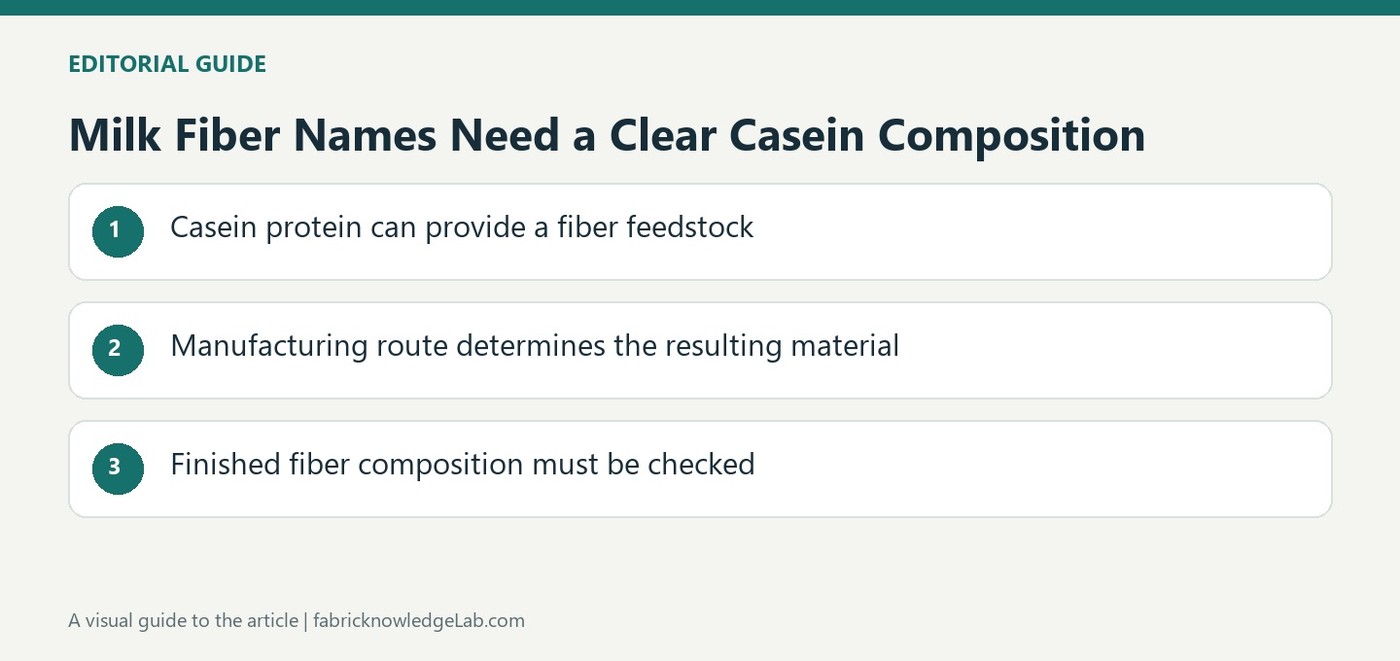
Milk fiber refers to textile material associated with casein, a protein found in milk. Sewport's guide also uses the commercial phrase milk cotton, but that phrase should not be interpreted as proof of a cotton plant fiber. The article distinguishes historical casein fibers, systems involving an additional manufactured polymer, and more recent proprietary developments. Those routes are not interchangeable. A label emphasizing a milk-derived ingredient therefore needs a complete composition statement, identifying how much protein-derived material is present and which other fibers or polymers contribute to the finished textile.
Protein preparation precedes fiber formation
The source describes obtaining and purifying casein before preparing a mixture that can be formed into fibers. Historical routes used an alkaline solution, extrusion through a spinneret, regeneration, and subsequent treatments intended to improve usable properties. Other developments combine casein with acrylonitrile-based chemistry or use proprietary processing. These details explain why milk does not simply contain ready-made textile threads. The protein must be isolated and engineered into a stable form. Claims about one route's chemicals, strength, or environmental performance should remain attached to that route rather than being assigned to every material sold with a similar name.
Softness and waste-input claims need separate evidence
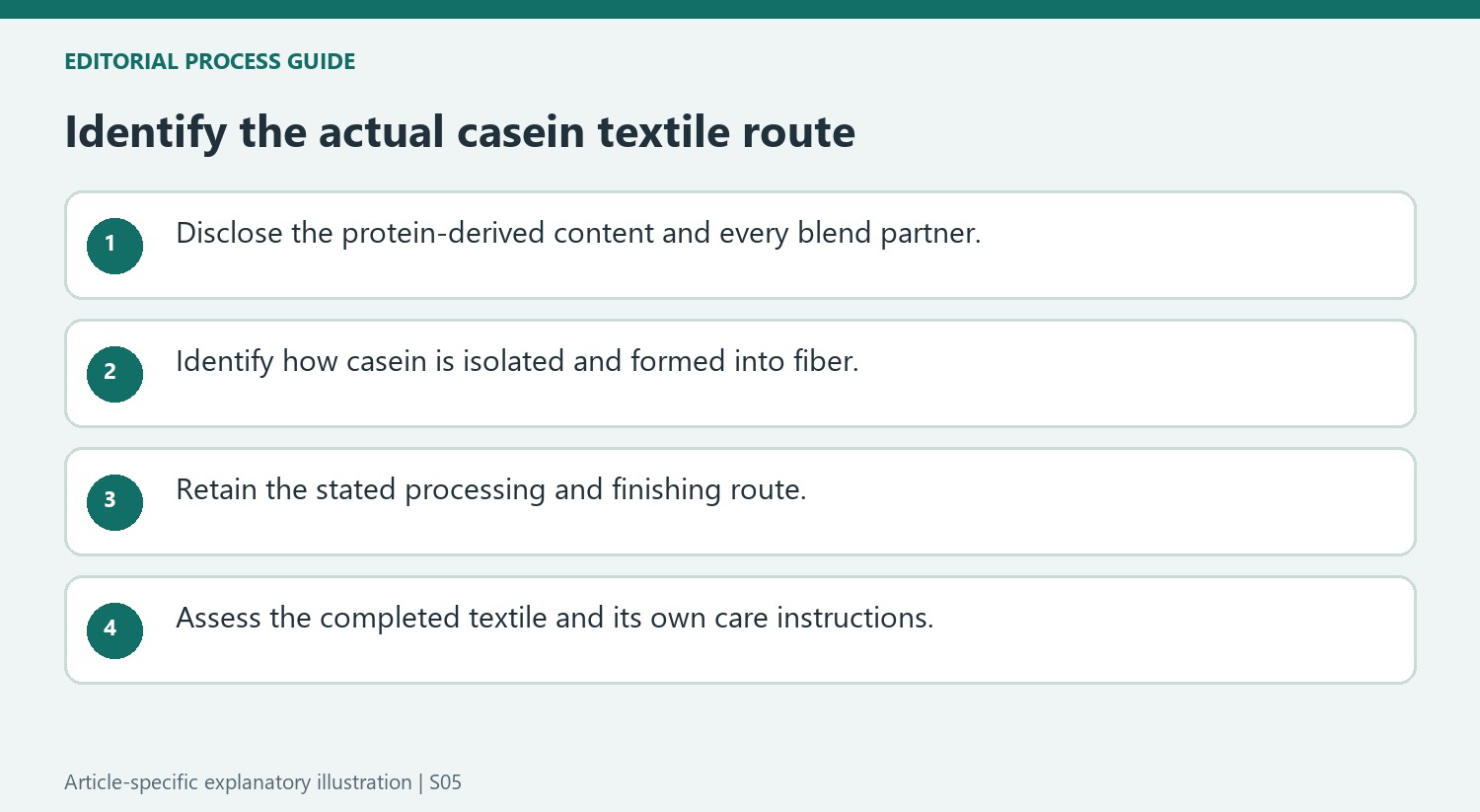
Sewport lists intimate apparel and household textiles among applications and discusses marketing comparisons with silk or cotton. It also describes producers who claim to use dairy waste inputs. A soft handle, a recycled feedstock claim, and a biodegradable-material claim answer different questions. None alone establishes the complete composition or impact of a garment, and animal-derived protein should not be confused with a vegan fiber. For a useful product description, identify the actual casein process and blend, then check the relevant evidence and care instructions for the finished item instead of treating the milk association as a complete specification.
Read the blend before interpreting the trade name
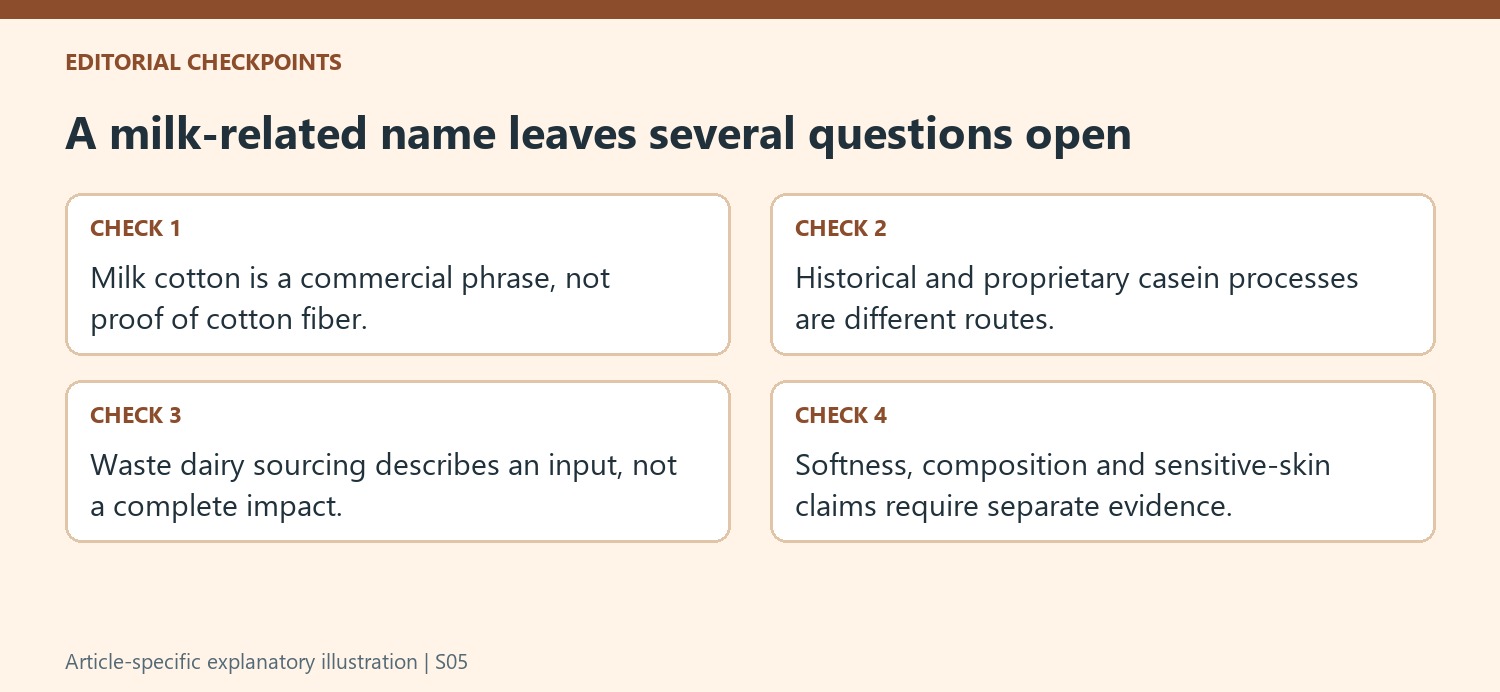
A yarn offered as milk cotton needs a percentage breakdown before it can be compared with a conventional cotton yarn. The word cotton may be part of a commercial description, while the milk connection refers to casein rather than to a plant. A blend can also contain actual cotton, silk, or another manufactured fiber, which introduces a separate contribution to its behavior. For an underwear or bedding application, the useful question is therefore which material touches the skin and in what proportion. Two products with similar names could have substantially different compositions. The guide's historical examples explain the terminology, but a current supplier specification is needed to identify the particular material being purchased.
Separate production chemistry from finished-product assessment
The account describes several ways of turning isolated protein into something that can function as a textile fiber. Those manufacturing stages concern processing conditions and chemical inputs. They should not be collapsed into an unsupported conclusion about the safety of every finished shirt bearing a milk-related label. Equally, a proprietary process description does not establish that every resulting garment is suitable for someone with sensitive skin. Composition, the completed treatment sequence, and appropriate finished-product evidence answer different questions. Where details of a newer process are not disclosed, that gap should remain visible. Historical casein processing can explain the development of the material without supplying a complete specification for an unrelated modern brand.
Match a waste-input claim to its actual boundary
Using milk that cannot enter the food supply describes the origin of an input. The later steps still include isolating protein, forming fibers, preparing yarn, and making a textile. Their resource requirements cannot be inferred simply from the original liquid being a dairy residue. A comparison with silk or cotton also needs an equivalent finished product and a stated basis, rather than a favorable name alone. For consumers, the immediately practical distinction is between the claimed feedstock and the disclosed garment composition. Keep any sourcing statement attached to its producer, then follow the item's own washing instructions. A broad description of casein fiber cannot resolve the care requirements of every blend and finish.




Comments
0