 FabricKnowledge Lab
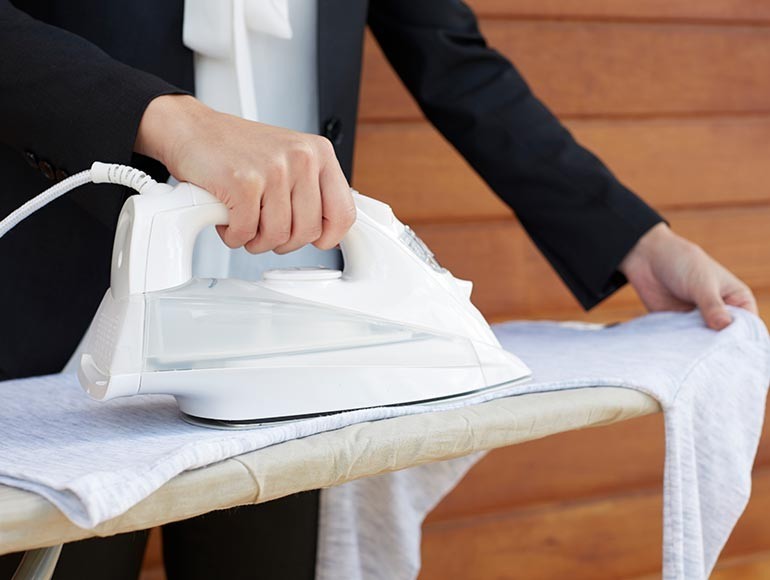
A production treatment targets edge creasing
Woolmark describes Easy-Iron Merino as a finishing approach intended to reduce creasing in fine-gauge wool knitwear, including the edge effect sometimes called crow's footing. The page names a TYCS setting technology and says the finish can be applied to knitted garments or fabrics by several industrial methods. This is a manufacturing intervention, rather than a household instruction to add a chemical treatment to an ordinary sweater. Its purpose is to influence the fabric's behavior during laundering and subsequent handling, with the complete product still requiring its own material and care specification.
An optional polymer changes contact with the iron
The source says a silicone polymer can also be included to reduce friction between the iron and the fabric surface. That optional feature is distinct from the setting treatment that addresses creasing. The account lists little effect on color or handle among the intended attributes, but these statements belong to the described development. They do not establish that every garment advertised as easy iron can tolerate any temperature or pressure. A brand's convenience claim and the actual permitted care conditions answer different questions and should be read together.
Care instructions still govern the finished garment
Woolmark's separate ironing guide says to iron only where the garment's care label permits it. It recommends appropriate wool settings, gentle reshaping, and avoiding heavy pressure or leaving the iron stationary, which can create shine or scorching. It also advises against ironing items labeled do not iron. These instructions concern the finished article, including its dyes, trims, and construction. The practical distinction is clear: a factory finish may reduce creasing or friction, while the sewn-in label defines the treatment suitable for the garment that reaches the wearer.
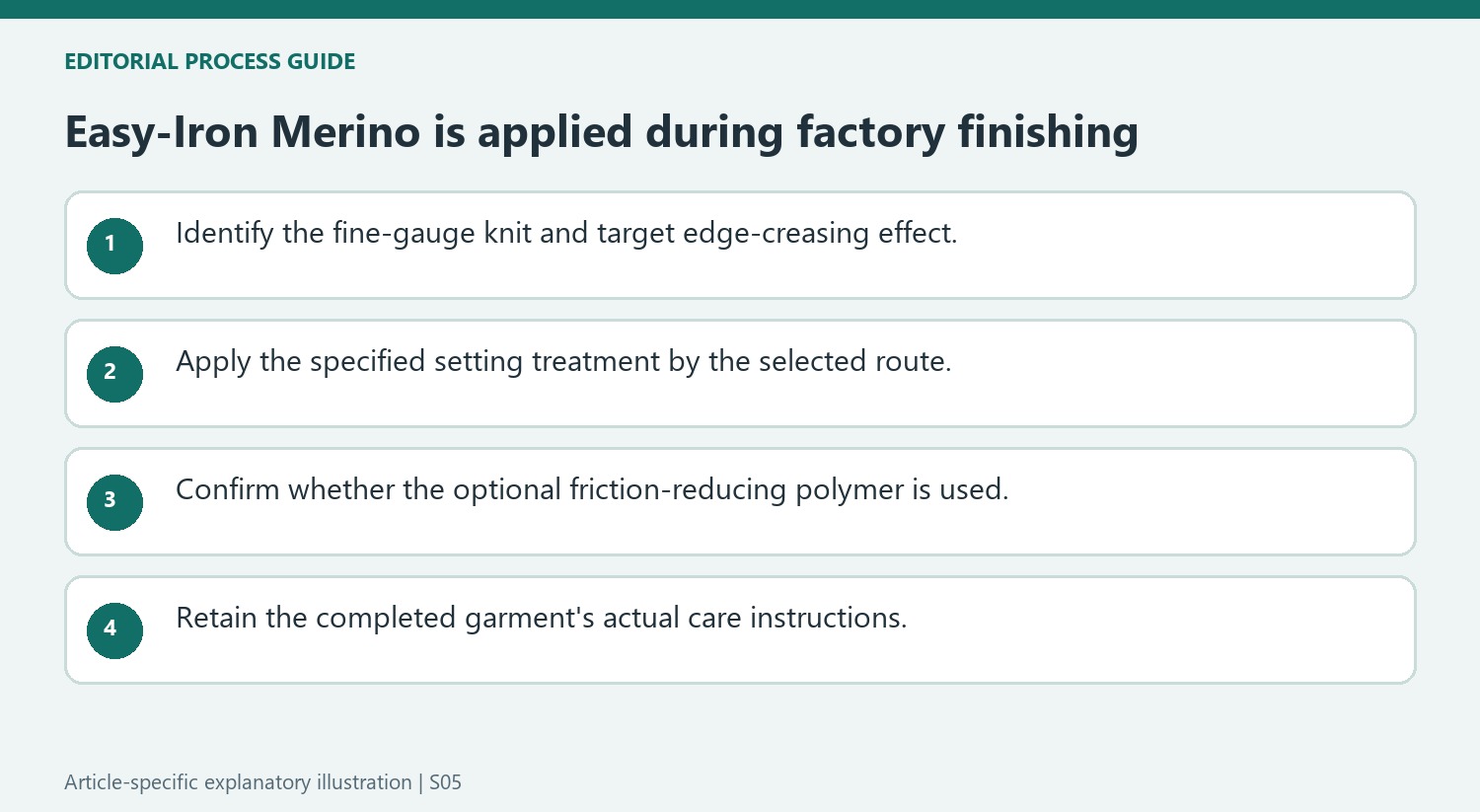
The application point is a factory-finishing choice
The page says the named finish can be introduced to knitted fabric or garments through spraying, dip-hydro, or padding. These are alternative manufacturing routes for applying the developed treatment, not instructions for adding an unspecified product to a domestic wash. The target is a tendency for creases at the edges of fine-gauge Merino knitwear, described as crow's footing. Locating both the application stage and the target effect makes the account more precise than a general promise of wrinkle-free clothing. The base knit still has its own yarn, stitch structure, weight, color, and complete composition. Those details belong beside the finish when identifying the product being developed or supplied.
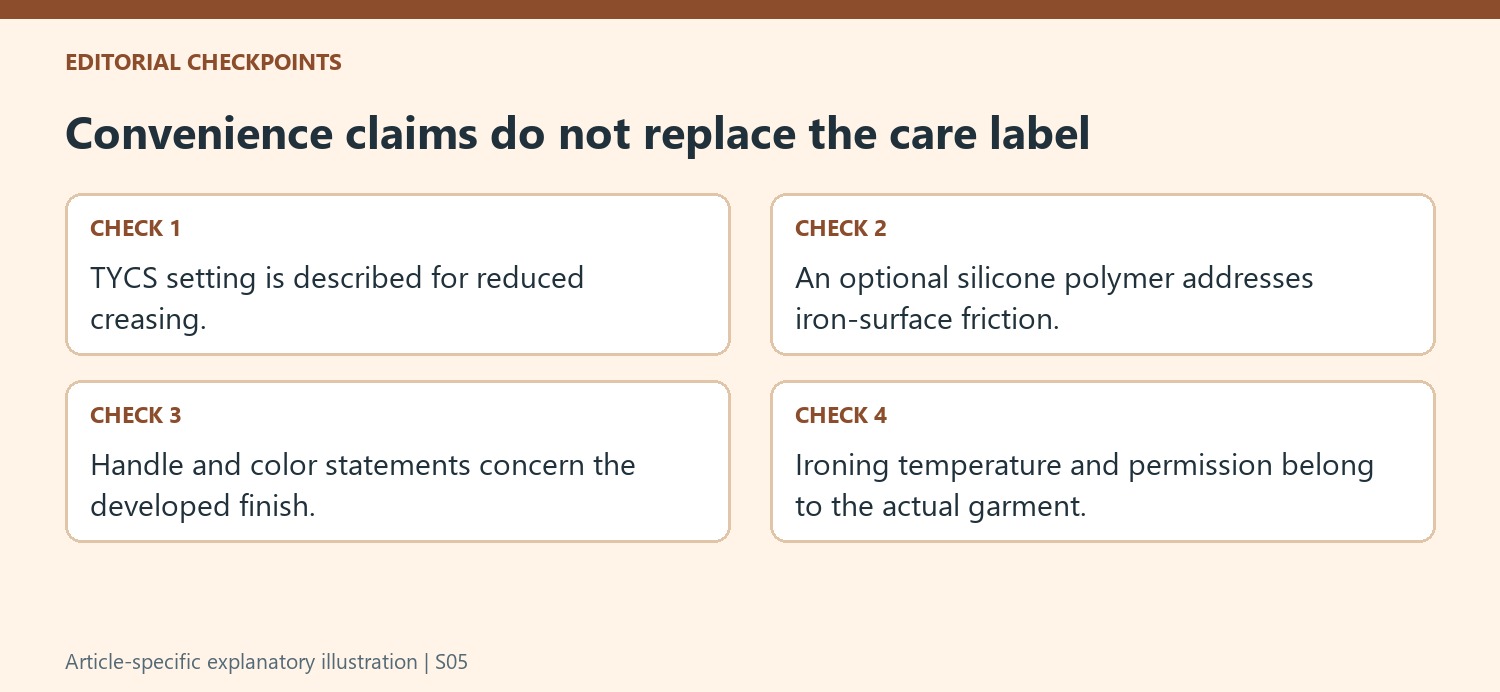
Setting and reduced iron friction are distinct contributions
Woolmark names TYCS setting technology for the crease-related effect and separately says a silicone polymer can be included to reduce friction between iron and fabric. The optional wording matters: the account does not establish that every item using the setting approach necessarily receives the same polymer. The two contributions also concern different observations. A fabric may be less prone to a particular crease pattern, while contact with an iron is a later care interaction. The page's statements about little effect on handle or color refer to the presented development, not to all possible recipes or fabrics. A technical description should identify what was actually applied and evaluated rather than merging every listed option into one universal finish.
Convenience wording does not set the ironing temperature
An easy-iron description tells a customer that a product has been developed for easier handling, but it does not replace the care symbol or instructions for the assembled garment. The separate care guidance cited in the existing account emphasizes permitted settings and avoiding heavy pressure or prolonged contact that can cause shine or scorching. Those are finished-item considerations involving dyes, trims, structure, and other components as well as wool. A buyer should therefore read the convenience claim and care label together. The factory treatment can explain why less creasing or friction is intended, while the label establishes which treatment is appropriate after purchase. Neither description makes every ordinary Merino knit safe to iron under any conditions.
References
- Easy-Iron Merino. The Woolmark Company; The Woolmark Company.
- How to iron wool. The Woolmark Company.



Comments
0