 FabricKnowledge Lab
The treatment enters near the end of processing
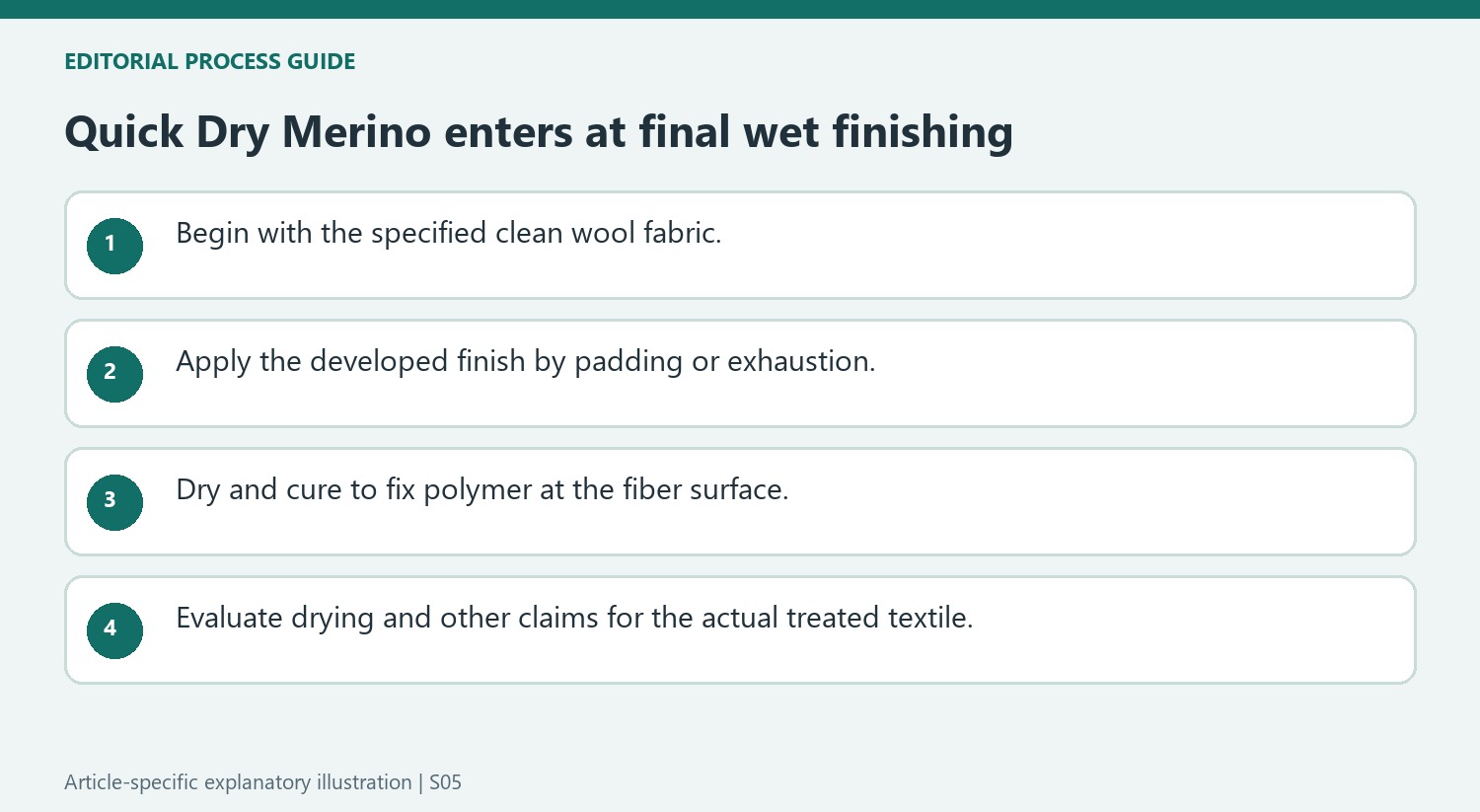
Woolmark's Quick Dry Merino page describes a finishing technique applied to clean fabric during the final wet-processing stage. The treatment can be introduced by padding or exhaustion, two ways of bringing a finishing bath into contact with textile material. This places the intervention after the base fabric has been formed, rather than changing the animal source or turning wool into a different generic fiber. A product description that mentions the technology should therefore identify it as a treatment of wool fabric, alongside the actual composition and construction of the material being finished.
Drying and curing fix the surface treatment
The source emphasizes the drying-and-curing stage because it fixes the polymer to the fiber surface. That step is part of the manufacturing recipe, not simply an instruction to dry a finished garment more vigorously at home. Woolmark reports faster drying after wetting and describes potential reductions in domestic tumble-drying needs, along with cleaning and stain-related benefits. The page's headline reduction is a claim for the treatment described. Its precise relevance to a garment depends on the specified fabric and the conditions used to assess drying, rather than extending automatically to every wool product.
Natural moisture behavior and a finish are different
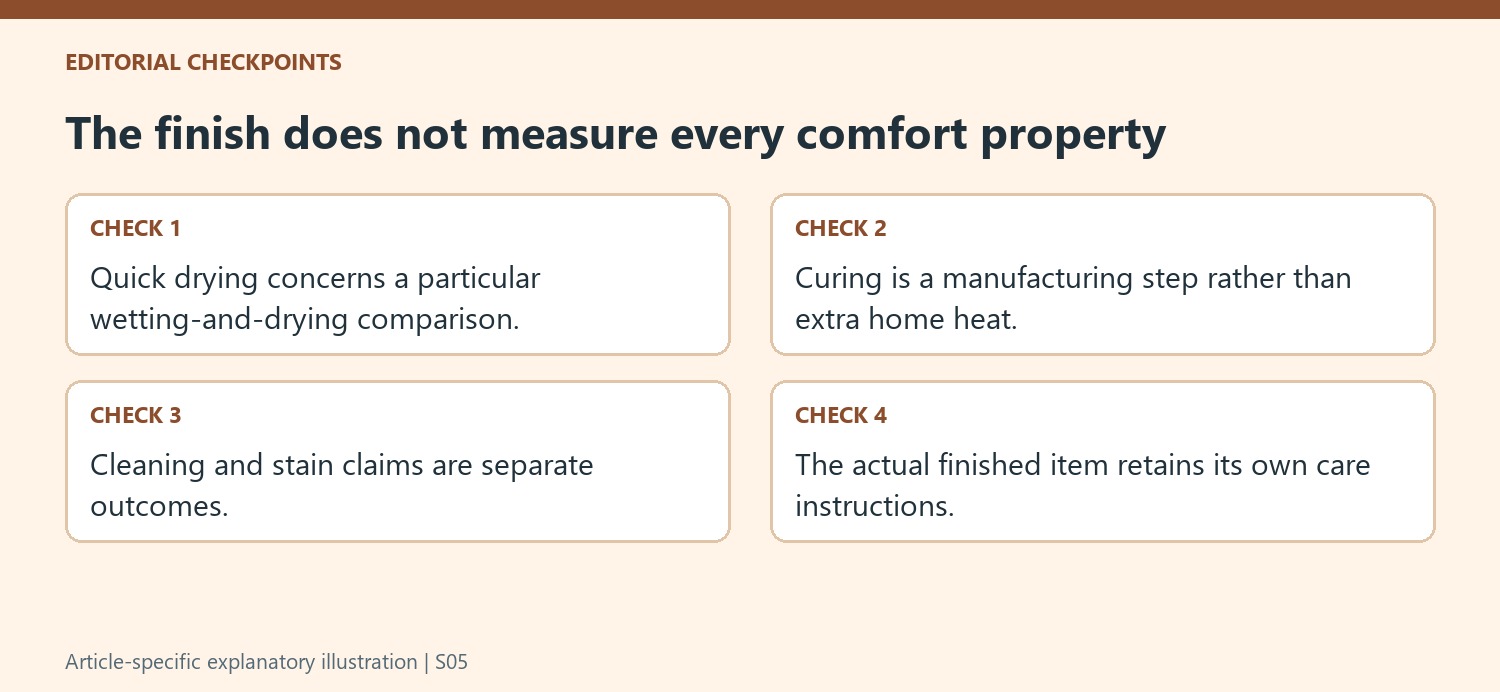
Woolmark's separate breathability account explains that wool absorbs moisture vapor within the fiber and releases it over time. That natural behavior is distinct from adding a surface finish intended to change a fabric's wetting and drying response. Keeping the two mechanisms separate avoids assuming that a quick-dry label measures airflow, warmth, and every aspect of moisture comfort at once. For an actual garment, the useful information includes the treatment, full material composition, fabric weight, and care instructions. The manufacturing finish describes one contribution to performance, while the finished article and its use conditions determine the complete result.
The intervention belongs to fabric finishing
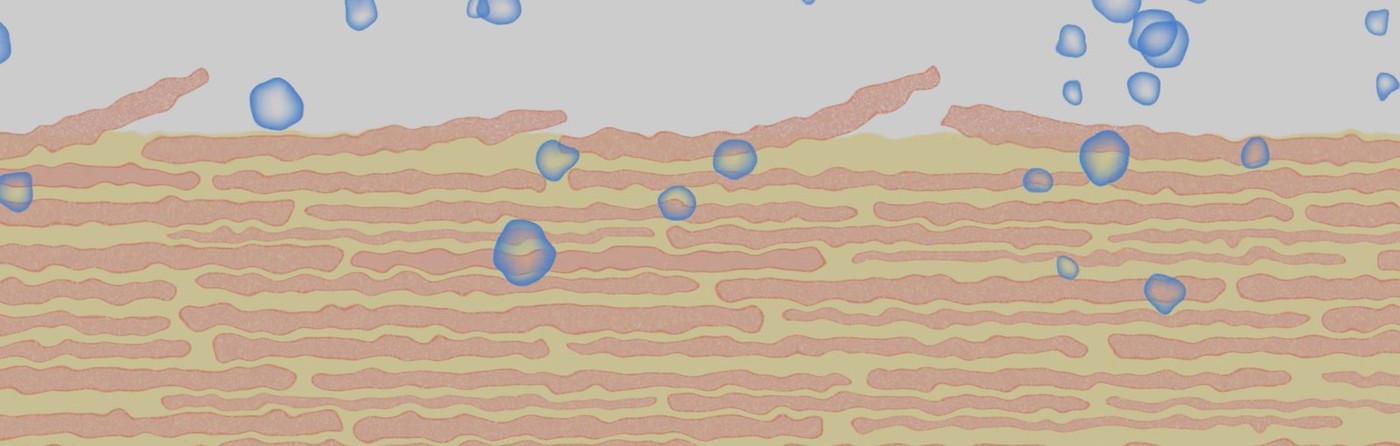
The source places Quick Dry Merino on thoroughly clean fabric near the end of wet processing. Padding or exhaustion brings the finishing system into contact with the textile, after which drying and curing fix the polymer to the fiber surface. That sequence distinguishes the treatment from wool's original fiber characteristics and from a change made during yarn spinning. It also explains why the word finish should appear in a complete product description. The base cloth still has a particular composition, weight, and construction, while the added process is intended to modify aspects of its wetting and drying behavior. Neither the generic wool label nor the treatment name supplies the entire finished-fabric specification.
Curing is a production condition rather than home-care advice
Woolmark emphasizes proper drying and curing because fixation is necessary to the described process. This concerns manufacturing control, not an instruction for a consumer to expose a garment to extra heat. A customer should use the actual product's care label, which accounts for the complete article and its materials. The source's examples include faster drying after a shower of rain and the possibility of less domestic tumble drying, but those are performance claims associated with the developed finish. They do not establish that every wool item should be tumble dried or that all treated constructions reach the same drying time. The relevant comparison needs the actual sample and assessment conditions attached.
Several proposed benefits require separate evaluation
The page lists drying, stain-related, and cleaning benefits together. They describe different outcomes, even when the same finishing system contributes to them. A shorter drying time does not by itself measure stain resistance, and effective washing does not establish airflow or thermal insulation. The headline reduction of up to one-third in drying time is also a conditional maximum claim rather than a fixed result for any garment in any environment. A useful supplier specification would state the treated fabric, test method, comparison, and care requirements for each intended benefit. This preserves the practical interest of the innovation while avoiding an assumption that a quick-dry label is a complete assessment of moisture comfort or overall product performance.
References
- Quick Dry Merino. The Woolmark Company; The Woolmark Company.
- Wool is naturally breathable. The Woolmark Company; The Woolmark Company.



Comments
0