 FabricKnowledge Lab
The fiber specification is central to the evidence
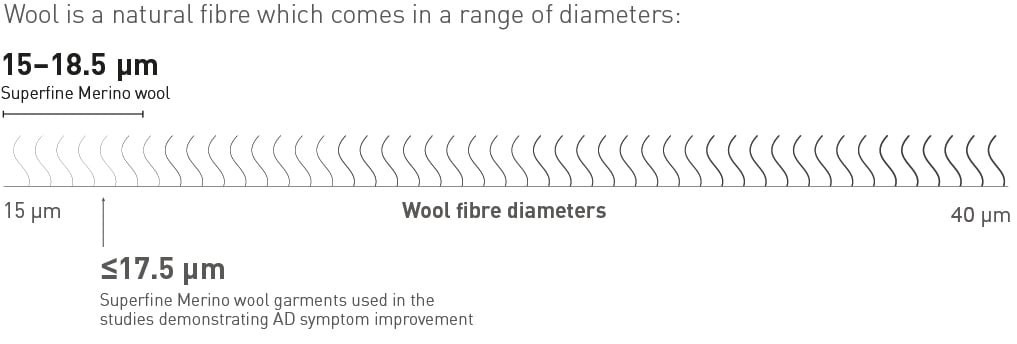
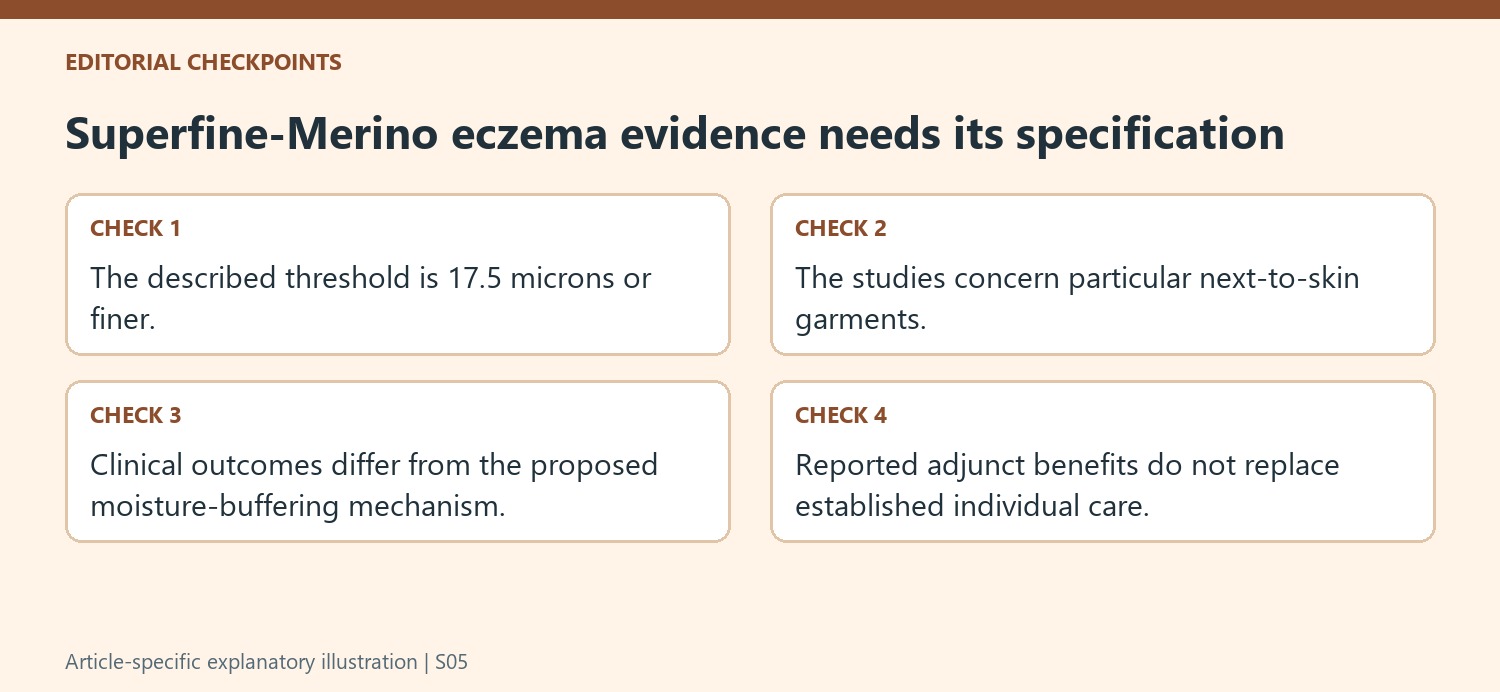
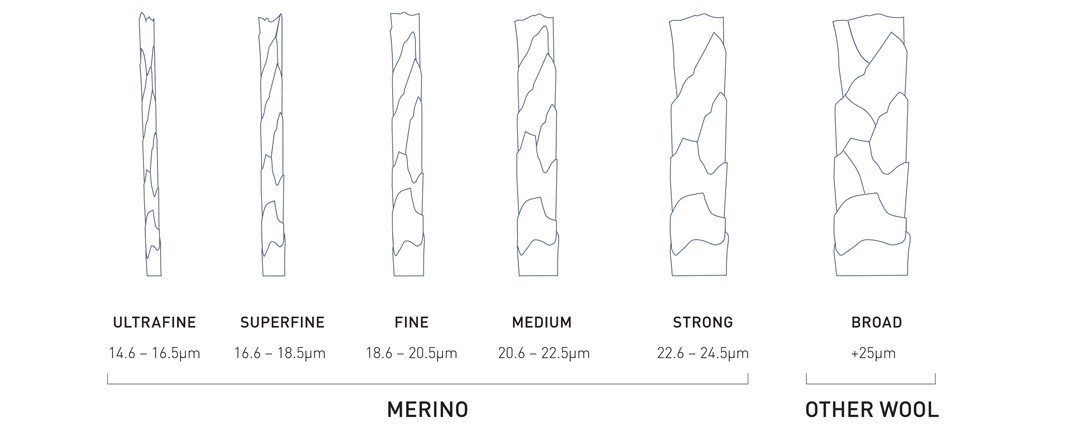
Woolmark's eczema overview discusses studies of superfine Merino garments worn next to the skin by people with atopic dermatitis. The relevant fiber diameter is around 17.5 microns or finer, rather than an unrestricted category of all wool clothing. That distinction is essential because coarse fiber ends can create a prickly mechanical sensation, while finer fibers bend more readily. The article's evidence therefore cannot be applied simply by reading wool on a garment label. The fabric, diameter, surface, and participant group need to remain part of the description of what was actually investigated.
Several studies reported changes in symptoms
The page describes research involving the Murdoch Children's Research Institute, the Queensland Institute of Dermatology, and the University of Louisville. It reports changes in eczema severity measures and participant experiences, including itch, dryness, and quality of life. These are study findings summarized by an industry organization, not a guarantee that every wearer will improve. The account presents superfine garments as a possible adjunct within management of the condition. It should not be rewritten as evidence that clothing replaces prescribed treatment or that a person should ignore an adverse reaction to a particular textile.
A proposed mechanism concerns the skin microclimate
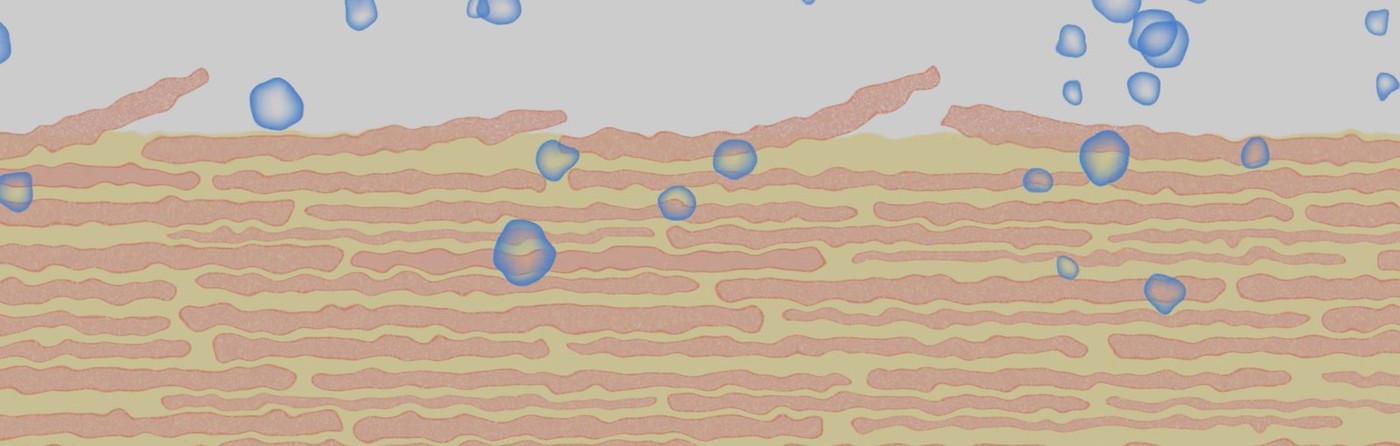
Woolmark links the results with moisture absorption and release, describing a buffering effect in the space between fabric and skin. That is a proposed textile contribution, separate from the clinical outcome measurements. A complete garment may also contain dyes, seams, finishes, or other fibers that affect an individual's experience. The useful reading keeps those layers of evidence distinct: a specified material has certain moisture properties, particular studies reported outcomes, and the individual garment still needs to be comfortable and suitable for its wearer. Broad statements that all wool is irritating or all wool is therapeutic both lose that necessary detail.
The diameter threshold is a specification, not a broad label
The trials discussed in the source concern superfine Merino next-to-skin garments, with a mean fiber diameter of 17.5 microns or finer emphasized in the account. The correct scale is microns, not a garment measurement in millimeters. This narrowing is essential because an ordinary wool label does not identify the same fabric surface as the investigated material. The page distinguishes fine fibers that bend from coarser fibers that can create mechanical prickle. A study of the former cannot be extended automatically to the latter. The useful comparison therefore keeps the fiber specification, finished fabric, garment role, and participant group together instead of generalizing from the broad material family.
The named studies use clinical outcome measures
The article describes work involving Murdoch Children's Research Institute, QIDerm, and the University of Louisville and reports changes in measures including SCORAD, EASI, and ADSI, alongside quality-of-life questionnaires. These are study outcomes, not simply a promotional statement that a fabric feels pleasant. The source also discusses different age groups and mild-to-moderate atopic dermatitis contexts. Those details matter when interpreting what was studied. An industry summary is useful for locating the evidence, but it should not be treated as a personalized prediction of improvement. The garment findings concern an adjunct within management of the condition, rather than proof that wool clothing can replace prescribed treatment or remove the need to address an uncomfortable reaction.
A proposed textile mechanism is distinct from a treatment guarantee
Woolmark describes moisture buffering between fabric and skin as a possible reason superfine garments could influence comfort and the skin microclimate. That mechanism concerns a material interaction, while symptom scores concern the participants' clinical experience. The two can be discussed together without merging them into a universal promise. The finished garment also has seams, dyes, finishes, and potentially other fibers, so its complete specification matters to an individual wearer. A careful reading preserves three levels: the defined material's properties, the reported results of particular trials, and the suitability of the actual item for the person using it. That is more useful than claiming either that all wool is irritating or that every wool garment is therapeutic.
References
- Wool is good for the skin. The Woolmark Company; Download Dr John Su’s EADV Poster.



Comments
0