 FabricKnowledge Lab
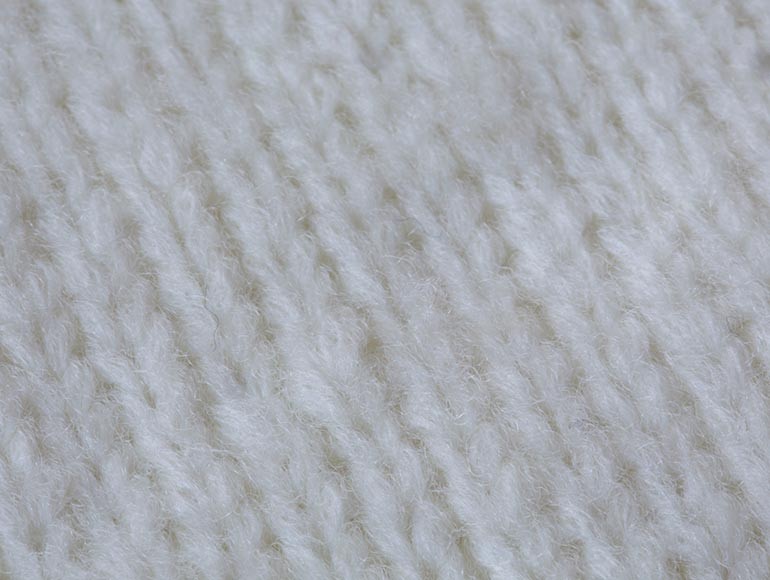
Twist creates a useful trade-off
Ordinary yarn twist helps fibers stay together during knitting and wear, but it also draws them into a more compact arrangement. Woolmark's Merino Air page explains the development in terms of that trade-off. A yarn with less compacted fiber can retain more space for air and offer a bulkier feel, yet reducing twist without another support mechanism can make handling and performance difficult. The innovation therefore does not simply remove an essential production step and assume nothing else changes. It introduces a different structure to provide support while keeping the fiber arrangement comparatively open.
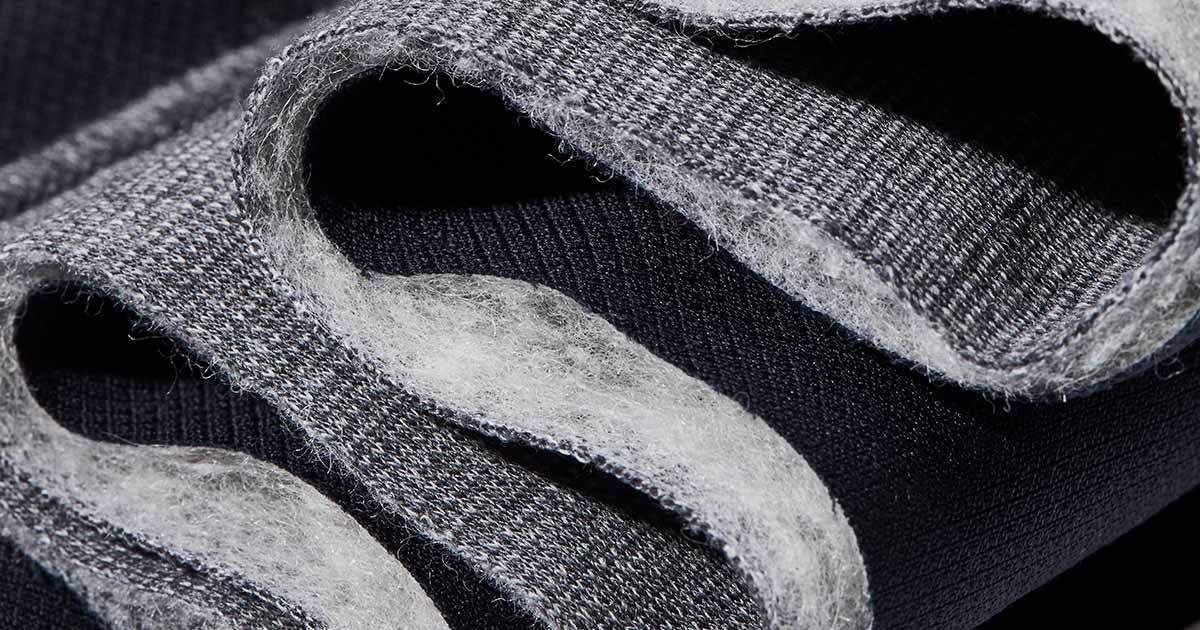
A fine net carries the blown-in wool
The process described uses a very fine knitted tubular net into which wool fiber is blown. The net is itself made from fine wool yarn and supplies the containment needed for later knitting and use. This separates the supporting structure from the fiber filling inside it. Woolmark presents the arrangement as a route to very low or zero twist in the bulk-forming component while maintaining acceptable knitting, pilling, and burst performance. It also notes that mercerised Merino can create a fluffy surface with subtle luster when used in this system.
The intended result is bulk at lower weight
The page identifies coarse-gauge knitwear as an application and emphasizes softness and warmth relative to wool weight. Those statements concern the described yarn construction, rather than a universal rule that every lower-twist wool yarn is stronger or warmer. The finished garment still depends on yarn dimensions, stitch arrangement, density, and finishing. A product developer needs to evaluate those details together with handling and durability. The useful idea is the division of labor within the yarn: a fine tubular support provides cohesion, while the more open fiber body contributes loft and the spaces associated with insulation.
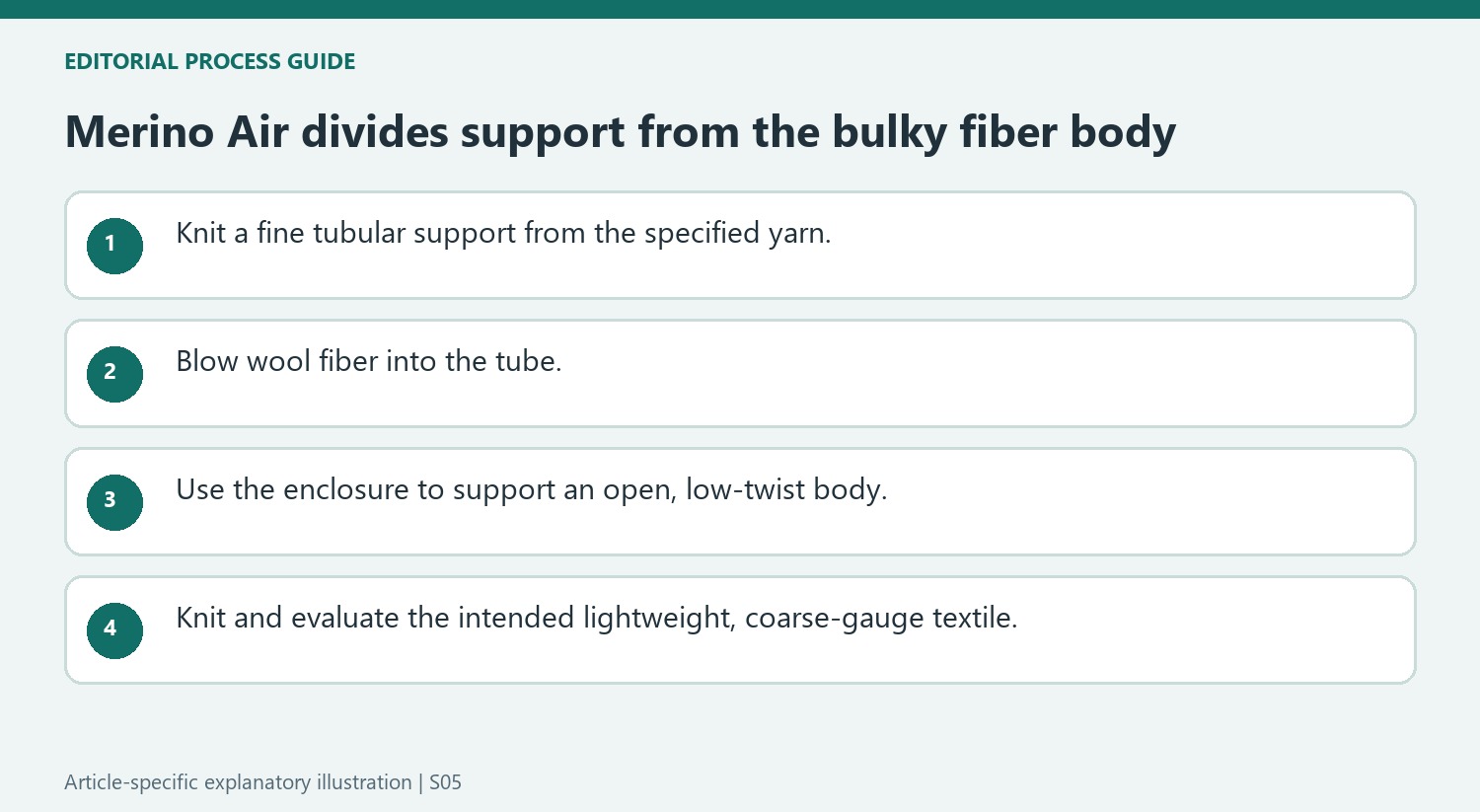
The support and the bulky interior do different jobs
The fine knitted tube contains the blown-in wool and supplies cohesion for subsequent processing. The fiber inside can remain more open because the support does not rely entirely on twisting that bulky mass tightly together. That division of roles explains the innovation more clearly than calling the entire product simply an untwisted ordinary yarn. The source says the net itself can be made from fine pure-wool yarns, allowing a pure-wool construction within the described system. A supplier should still identify the actual supplied yarn, because the technology's feasibility is not proof that every commercial air-spun product on the market has the same support material or composition.
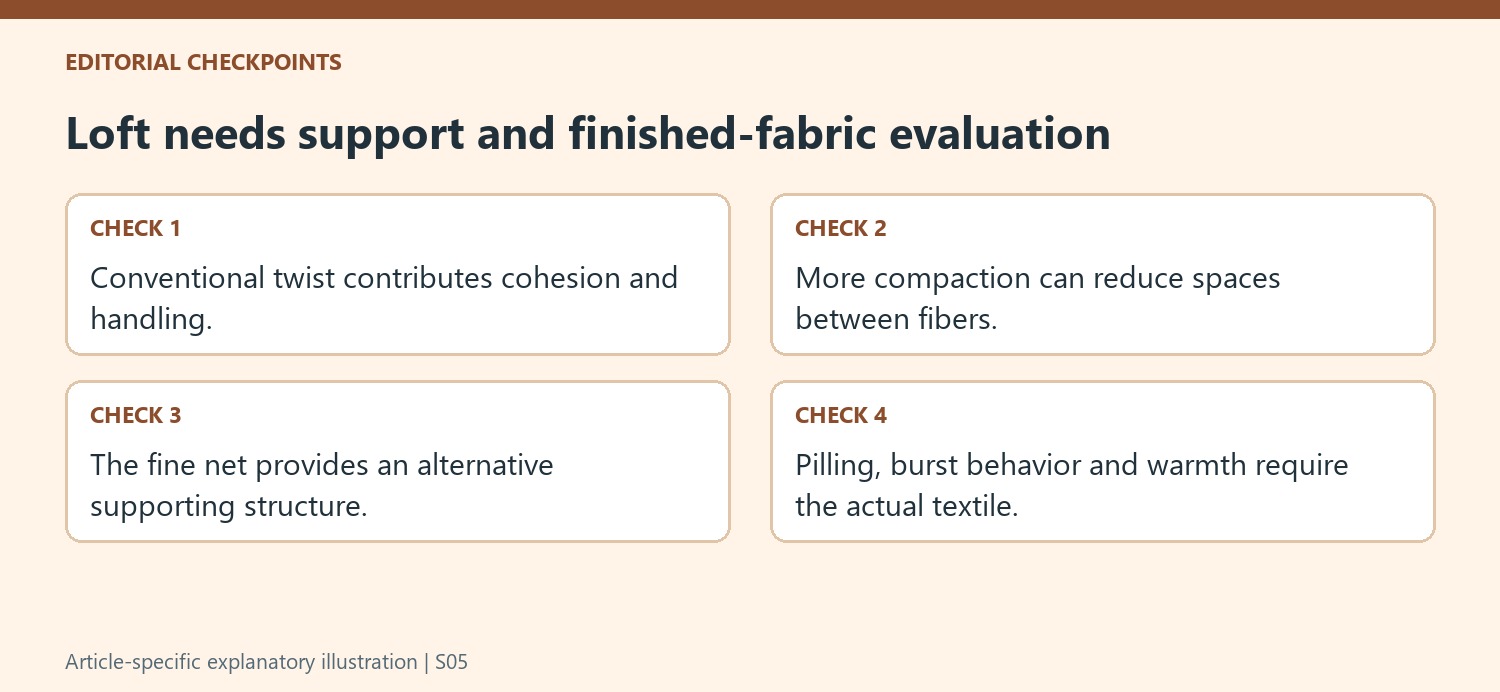
The twist trade-off concerns structure and handling
Woolmark explains that conventional twist can improve yarn integrity and knitting performance while compressing the spaces between fibers. Reducing twist alone would therefore create another production problem if nothing supplied support. Merino Air addresses that problem through the knitted enclosure, rather than assuming a loose mass of fiber will handle like a conventional yarn. The intended benefit is greater bulk and air-trapping space relative to wool weight. That does not establish that every zero-twist or low-twist yarn is automatically warmer, stronger, or more durable. The actual tube, filling, yarn dimensions, and knitted fabric need to work together before the claimed advantage can be evaluated in a finished garment.
Coarse-gauge knitwear is an application rather than a complete result
The source identifies light-to-wear coarse-gauge garments as a target and notes that mercerised Merino can add a fluffy surface with subtle luster. These details show that visual and tactile effects remain choices within the developed yarn system. Stitch arrangement, density, finishing, and garment size still influence the complete item. Pilling and burst performance are also named as requirements the support must help meet, not properties that should be assumed from loft alone. A useful development specification therefore includes composition, support structure, filling, intended knitting conditions, and finished-fabric evidence. The innovation supplies a different way to organize wool; the complete textile and garment determine how that organization behaves in use.
References
- Merino Air. The Woolmark Company; The Woolmark Company.






Comments
0