 FabricKnowledge Lab
One fiber can enter two filling formats
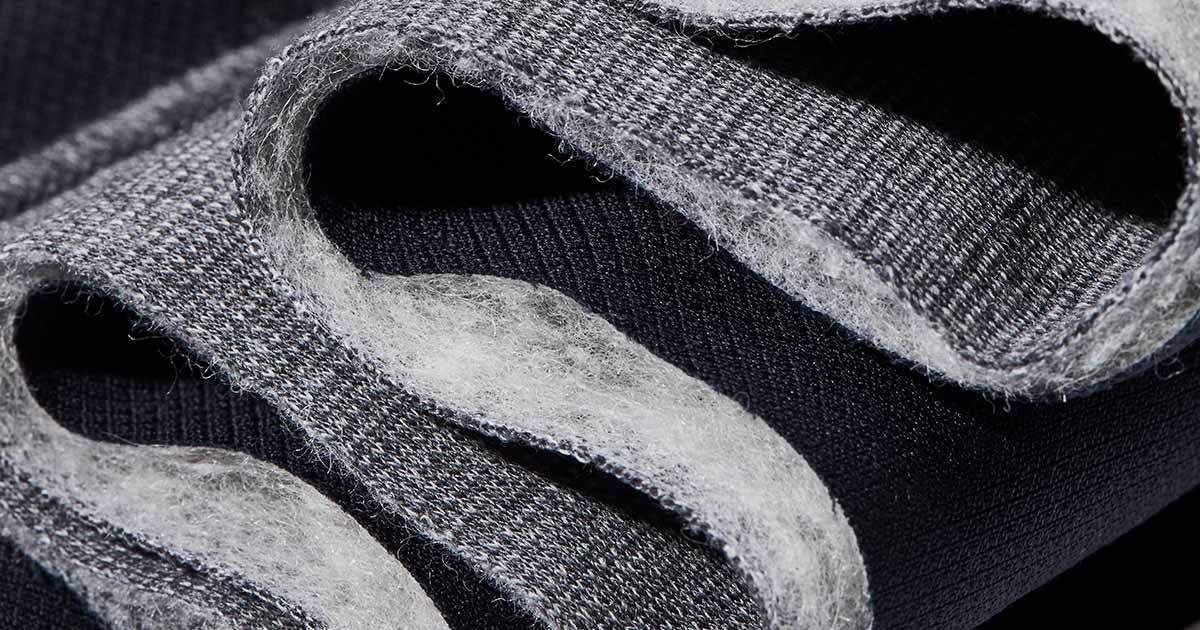
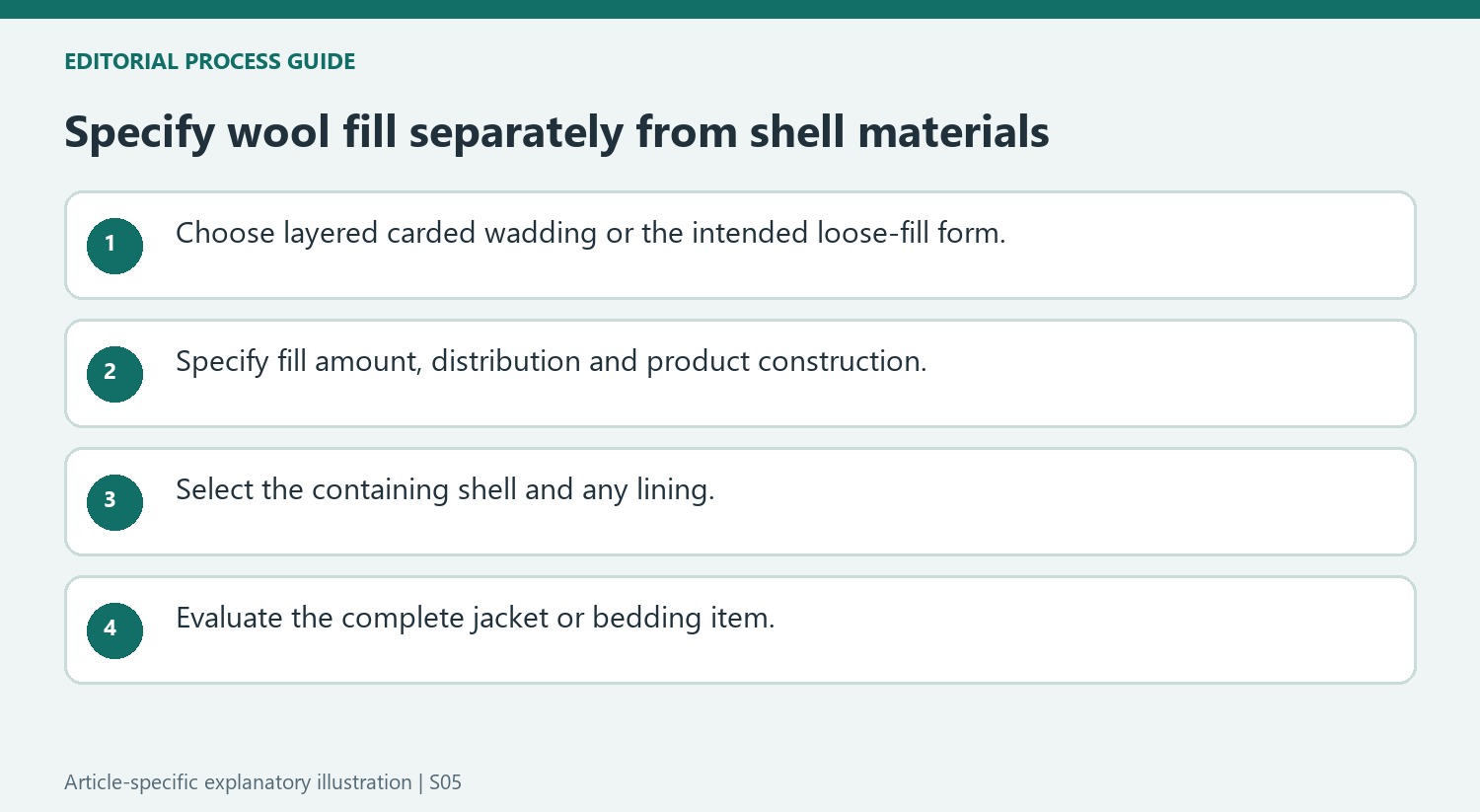
Woolmark's filling overview presents wool as an alternative material for insulated clothing and household products. It distinguishes wadding made from layered carded batts from smaller loose filling forms described as wool nepps or noils. These are different ways of arranging fiber inside a product, not simply different names for a woven wool shell. The distinction matters when comparing a quilted jacket, a comforter, or another filled item. The outer and inner fabrics contain the filling, while the filling structure contributes loft and insulation within the complete construction.
Crimp supports spaces that hold air
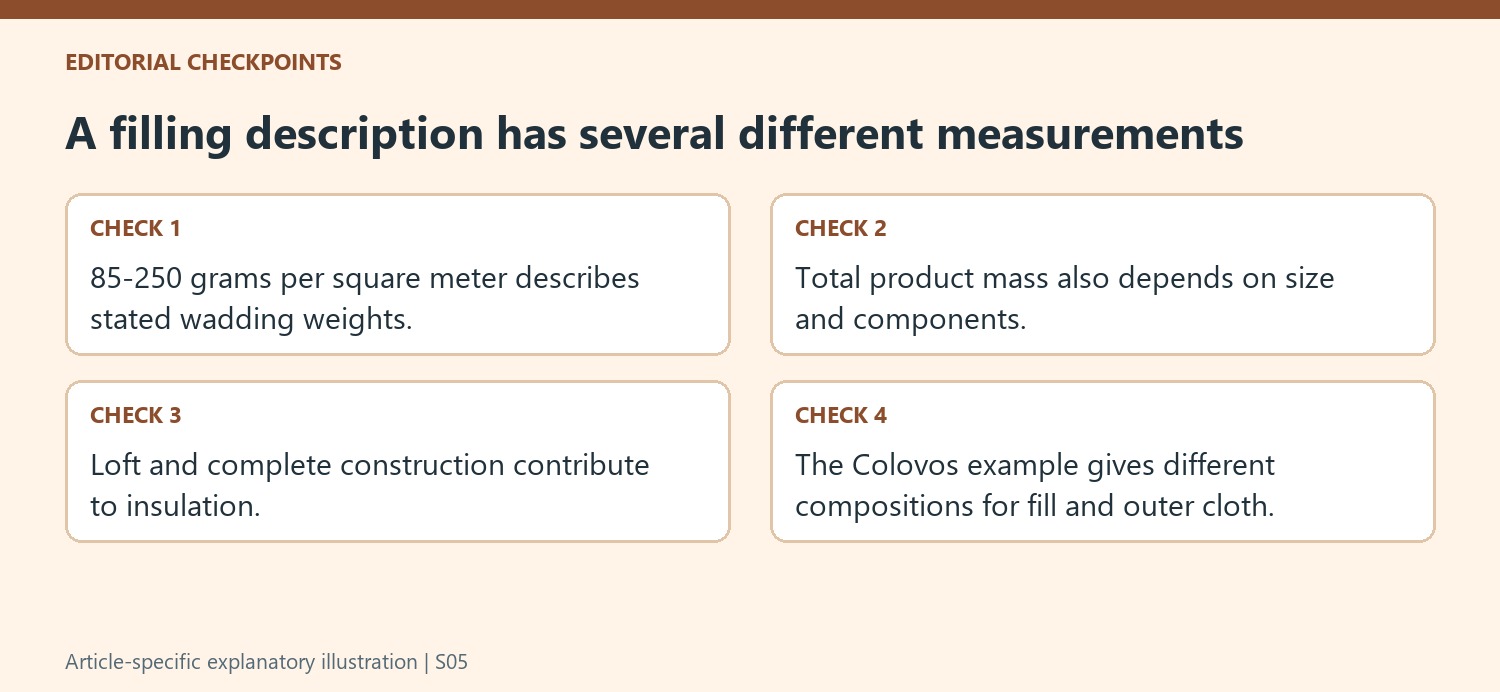
The page connects wool's natural crimp with air pockets and discusses moisture-vapor handling as part of its comfort profile. It lists carded wadding weights from about 85 to 250 grams per square meter, depending on the insulation sought. Those figures describe material per unit area, not the total weight or warmth rating of every garment. The complete result depends on fill quantity, loft, quilting, shell materials, fit, and use conditions. Woolmark's comparison claims should remain attached to the specified development rather than translated into an identical weight saving for any wool-filled product.
A puffer example separates shell from insulation
The source highlights a Colovos puffer with wool insulation and an outer fabric described as 90 percent wool. It also notes an adaptable construction that lets the garment be fastened over the shoulder when not worn normally. This example brings together several distinct choices: fill material, shell composition, and garment design. None can be inferred automatically from the others. A useful specification should identify the fill format and amount alongside the outer textile and care requirements. The fiber provides a material option, while its placement and the complete product construction determine how that option performs.
Carded batts and small loose forms are different formats
The source distinguishes wadding built from layers of carded wool from small loose filling forms called nepps or noils. Those formats organize the fiber differently inside an article. A batt provides a sheet-like input that can be arranged over an area, while loose fill is contained through the product's selected construction. Neither is the same thing as the woven or knitted fabric on the outside of a jacket. Keeping the fill format separate from shell composition helps a buyer understand what is being supplied. The source's application list spans clothing and bedding, but that breadth does not establish one universal fill quantity or assembly method for every product.
Basis weight is not a complete warmth rating
The page gives wadding examples from 85 to 250 grams per square meter. That describes mass over a stated area, rather than the total weight of a comforter or an independent temperature rating for a jacket. The quantity used, loft, distribution, quilting, surrounding textiles, and garment fit all influence the complete construction. Woolmark also promotes a weight comparison with polyester, but the comparison needs its sample and test basis rather than becoming a fixed saving for any wool-filled item. A development team should retain the actual wadding specification and evaluate the finished article. This makes the material measure useful without asking it to predict every aspect of insulation under every condition.
The Colovos example includes separate design decisions
The featured puffer is described with 100 percent wool insulation and an outer fabric containing 90 percent wool. Those are two different composition statements for two parts of the garment, not an assertion that the entire assembled jacket is exclusively wool. Its over-the-shoulder fastening arrangement is a third feature, allowing another way to carry the garment when the wearer becomes warm. That construction choice does not come automatically with the filling material. The example is useful because it connects a defined fill, a defined outer textile, and an adaptable design. A complete product description should preserve each role and add the actual care instructions rather than relying on one general label for the whole system.
References
- Wool Fill Alternative. The Woolmark Company; The Woolmark Company.



Comments
0