 FabricKnowledge Lab
Fineness and length are separate design variables
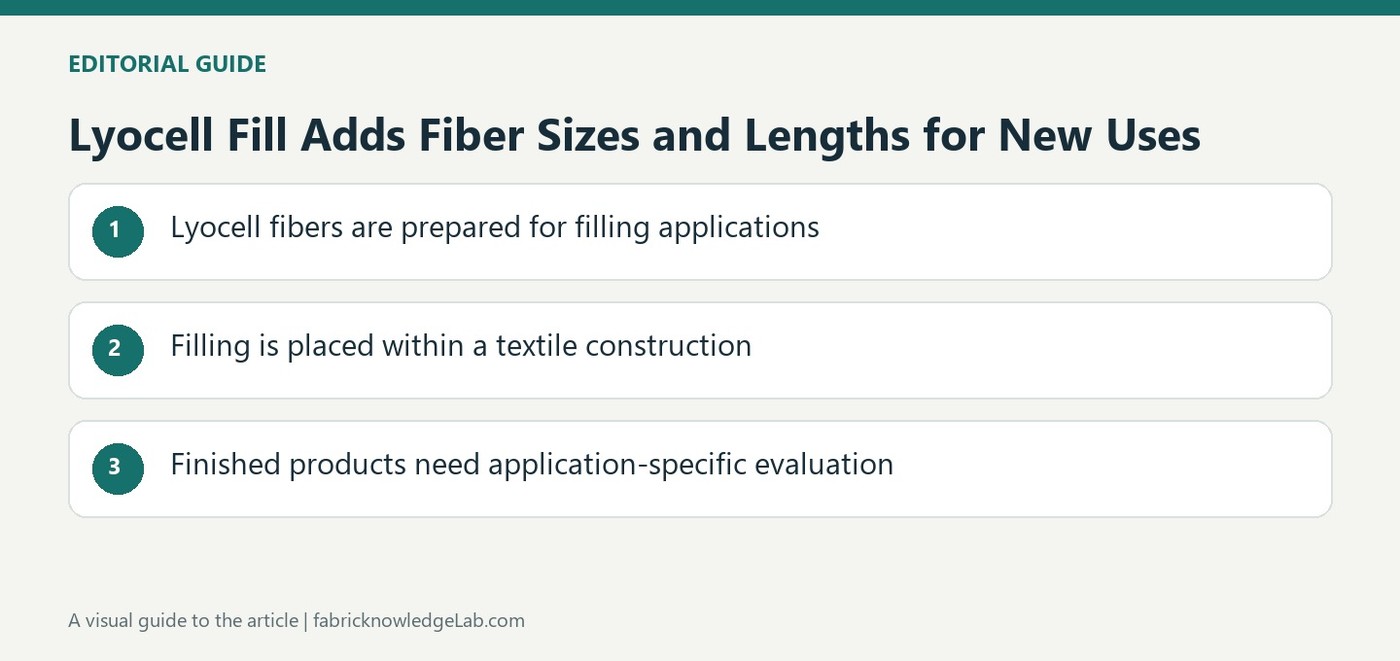
Lenzing's Lyocell Fill announcement describes an expanded range of cellulose fibers for filling home textiles and clothing. The stated portfolio includes two linear densities and several cut-length options. Linear density concerns fiber fineness, while cut length concerns the length of the individual pieces supplied to processing. Keeping the measurements separate helps explain why a producer offers more than one version. A pillow, jacket, comforter, and stuffed toy can use different filling equipment and structures, so they may require different fiber dimensions even when all use material within the same branded range.
Different formats support carding and blow filling
The report identifies a finer 1.7-dtex option and an established 6.7-dtex fiber. It discusses 60-millimeter material and additional shorter options, while distinguishing what was available from what was planned at the announcement stage. Fine fibers are positioned for softer, lighter applications and compatibility with blow filling, while the coarser range continues in carded and other filled products. The source also discusses blending with polyester, down, feathers, or silk. These combinations mean the fiber name alone does not establish the composition of a complete pillow or insulated garment.
Comfort claims belong to the finished filling system
Lenzing connects the cellulose structure with moisture absorption and release and describes potential contributions to thermal comfort and shape retention. It also references certifications and production-impact information. Those are distinct claims that need their relevant scope attached. A finished product's warmth, support, drying behavior, and durability depend on the fiber mixture, amount, distribution, shell, and construction. The expanded range offers more material choices to developers, rather than one uniform filling result. A clear specification should identify the actual dimensions, blend, process, and product tests used for the intended application.
Two dimensions allow different kinds of processing choices
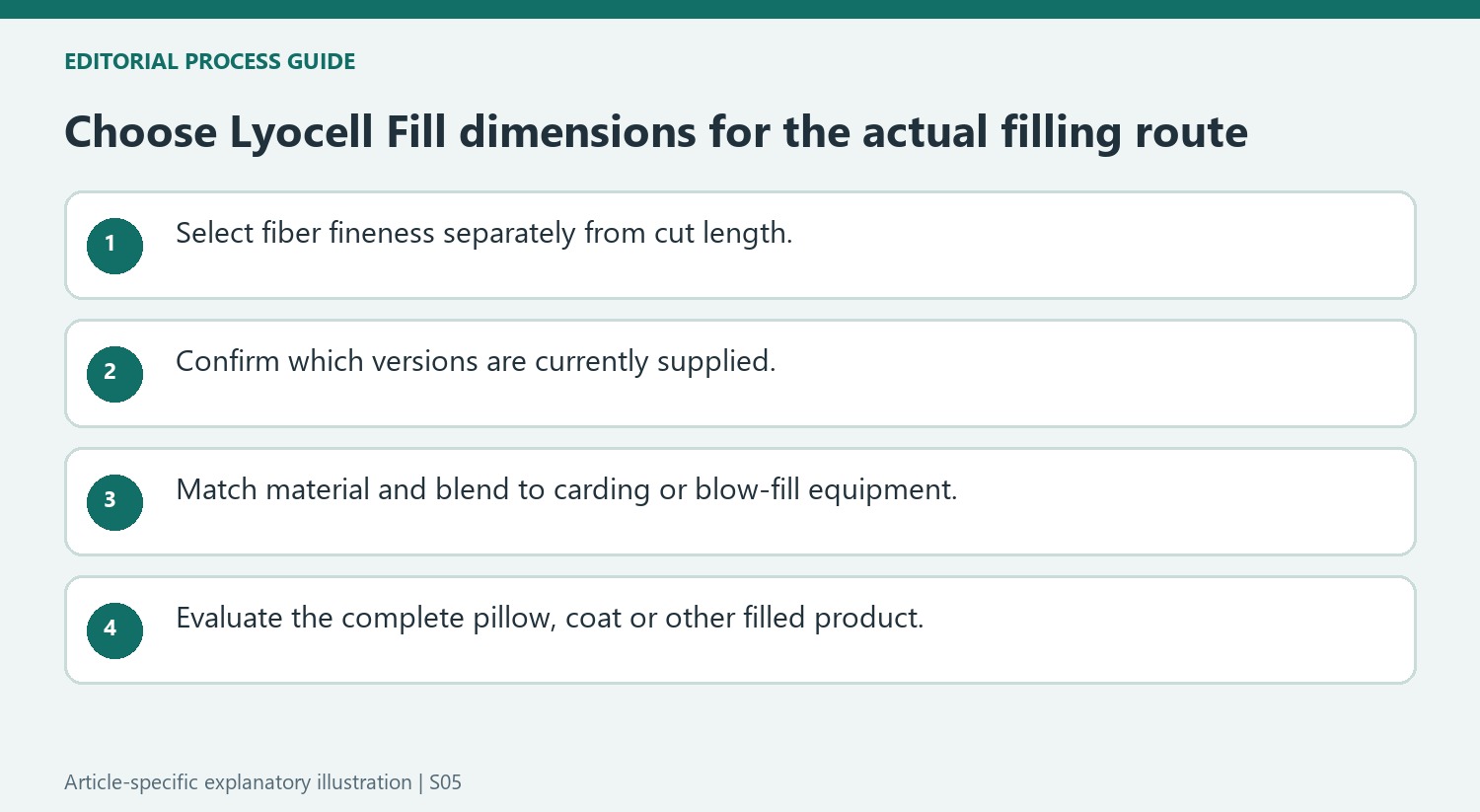
The announcement separates linear density from cut length. Its 1.7-dtex and 6.7-dtex values describe fiber fineness, while the millimeter values describe the lengths supplied to filling operations. A shorter fiber is not automatically a finer fiber, and a finer fiber does not establish one finished pillow thickness. These independent variables give developers more combinations to investigate for their equipment and product. The source positions the finer option for softer, lighter applications and discusses both carding and blow filling. The useful technical point is the expanded choice of inputs, rather than an assumption that every version performs identically once placed inside a jacket, quilt, toy, or pillow.
Availability should retain the announcement's time context
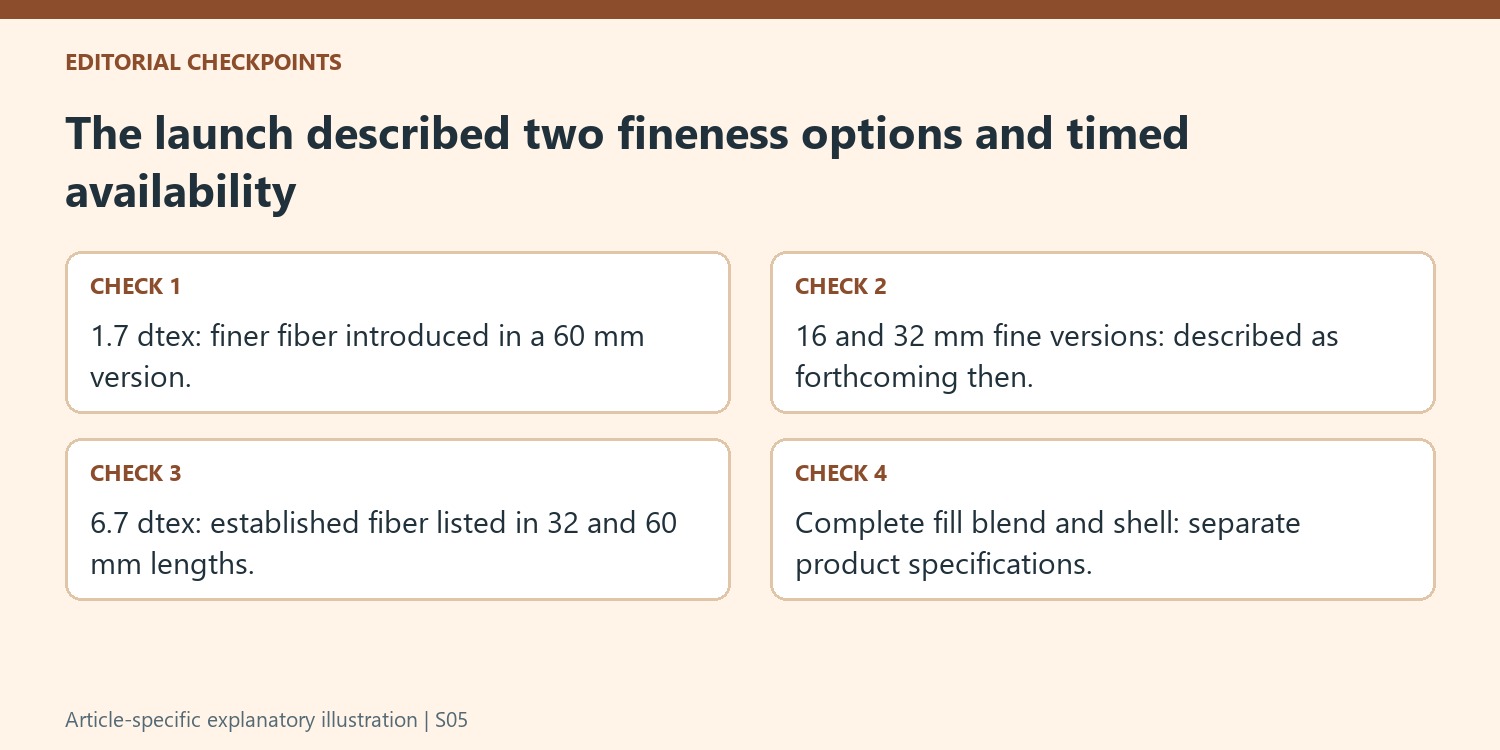
The report identifies the finer 1.7-dtex fiber in a 60-millimeter version, with 16- and 32-millimeter options described as forthcoming. It lists the established 6.7-dtex option in 32- and 60-millimeter lengths. These are not all presented as equally available at the same moment. The planned introduction at Heimtextil in January 2025 places the story in a particular historical context. A developer using the article later should confirm the current supplied range rather than converting a launch plan into an automatic statement about present stock. Keeping availability, dimension, and intended application together preserves the practical detail of the announcement without losing its timing. A supplier can confirm the current dimensions and suitable equipment, while the article remains a record of what the company introduced and planned at that stage of the range’s development.
A filling blend needs the complete product composition
Lenzing mentions compatibility with polyester, down, feathers, and silk as well as different filling technologies. Those examples mean a product containing Lyocell Fill is not necessarily a single-fiber cellulose article. The shell, sewing thread, blend proportions, amount of fill, and internal construction also remain part of the product. Moisture-control and shape-retention statements should therefore be assessed within that complete system. The source's environmental and certification references likewise need their covered fiber and boundary attached, rather than becoming a certificate for every pillow or coat. The portfolio expansion supplies more material options; the actual finished specification and testing establish support, loft, warmth, durability, and appropriate care for a particular application.


Comments
0