 FabricKnowledge Lab
Moisture handling and odor are connected
Woolmark's odor-resistance page describes wool as hygroscopic, meaning it takes up moisture from its surroundings. Near the body, that behavior can influence the amount of moisture remaining at the skin-facing surface. The article connects this with the conditions in which odor develops during wear. However, perspiration is a normal temperature-regulation process, and the material should not be described as preventing the body from sweating. The useful distinction is between how much a person perspires and how a textile interacts with moisture and odor after they reach the clothing system.
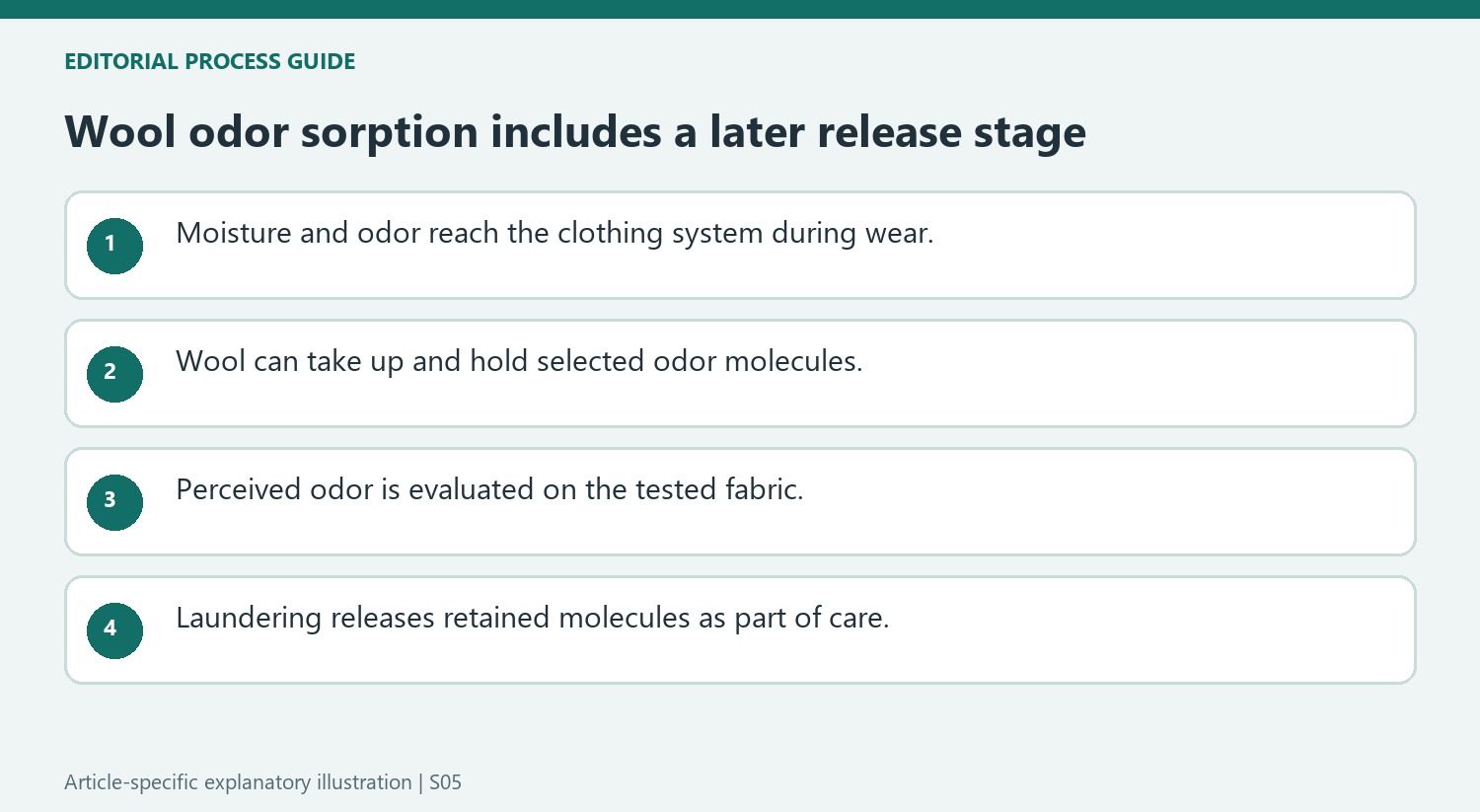
Sorption does not mean the molecules vanish
The source explains that wool can bind and hold odor molecules within the fiber, with a substantial release occurring during laundering. This gives odor resistance a different meaning from simply destroying every odor-producing substance. A garment can smell less intense to a wearer while still retaining molecules that need to be removed through care. Woolmark also discusses comparisons with cotton and polyester and cites trained odor assessments. Those results concern the specified fabrics and evaluation methods, so the reported differences should remain attached to the relevant research rather than becoming a guarantee for every blended or finished textile.
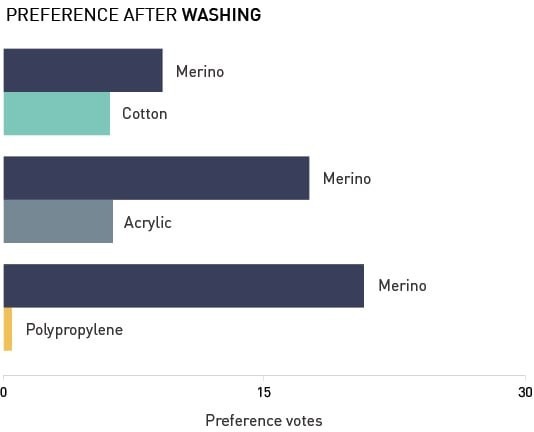
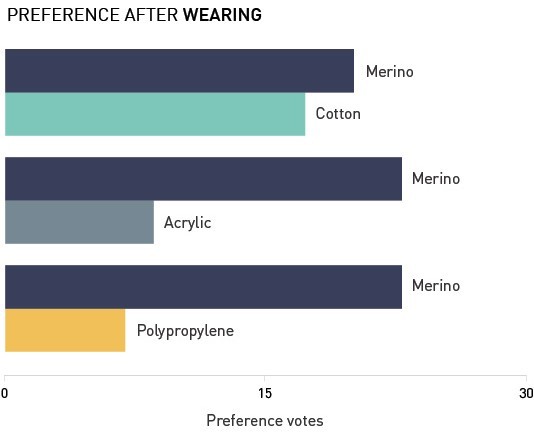
Socks illustrate why washing remains part of performance
The page highlights sock-wear trials that assessed odor after use and after washing. These are separate observations: retaining less noticeable odor during wear does not automatically establish how a product will smell once laundered and dried. Yarn, blend, finishing, and the actual washing process can influence the complete result. For sportswear or travel clothing, the source offers a material reason to consider wool, but it does not prescribe a fixed number of wears for every person. Follow the finished garment's care guidance and consider soil, moisture, and use conditions alongside odor when deciding when laundering is needed.
Absorbing an odor molecule is different from destroying it
The source describes wool holding odor-related molecules within the fiber and releasing a substantial amount during laundering. That provides a more precise explanation than assuming the garment permanently eliminates every substance that contributes to smell. Lower odor perceived during wear can coexist with molecules retained in the textile. Washing therefore remains part of the performance story. The same distinction applies to moisture: wool's ability to take up water vapor does not mean a wearer ceases to perspire. Perspiration remains a normal body process, while the textile influences what happens to moisture and odor within the clothing system. This separation avoids overstating the material's role in an ordinary activity such as exercise.
After-wear and after-wash assessments answer different questions
Woolmark cites CSIRO sock trials that considered odor following wear and following laundering. The two observations should remain distinct because a material's behavior in use does not automatically establish the outcome of every wash process. The page also cites trained-assessor comparisons reporting lower odor intensity in tested wool fabrics than in polyester and cotton. Those percentages are tied to the study fabrics and method, not a universal score for every sock or shirt containing wool. Full composition, yarn, construction, finish, and the actual care process remain relevant. A useful product description identifies which result it is invoking rather than borrowing an after-wear finding as proof of an unrelated washing claim.
Freshness is one consideration within garment care
The article connects odor resistance with possible benefits for sports and travel, where garments may be worn for extended periods. That interest does not prescribe an identical wash interval for every person or situation. A visibly soiled item, a damp garment, and an apparently fresh base layer present different care considerations. The finished product's instructions also account for its dyes, construction, and any other materials. A buyer can reasonably consider odor behavior alongside comfort and practical care without treating it as permission to ignore those other factors. The source's most useful contribution is the connection between fiber sorption and perceived odor, with laundering and actual use conditions retained as necessary parts of the account.
References
- Wool is naturally odour resistant. The Woolmark Company; The Woolmark Company.








Comments
0