 FabricKnowledge Lab
A darker shade is not only a dye-quantity question
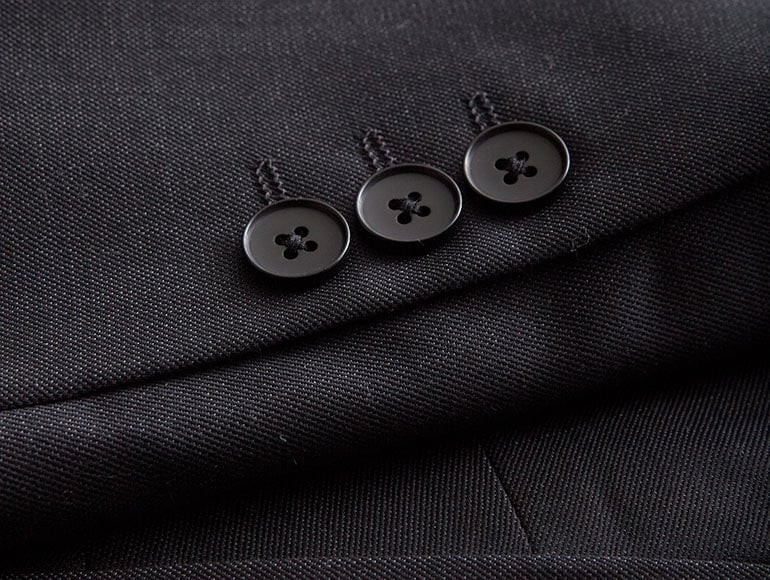
Woolmark's Super-Dark Merino page addresses the demand for deep black and navy shades in formal fabrics. It identifies two routes to a darker appearance: increasing the color absorbed by the fiber and reducing the white light reflected from its surface. The development combines those approaches rather than relying only on adding more dye. This distinction is useful because a textile's visible depth of color depends on both absorption and reflection. Two fabrics containing similar colorant amounts can look different if their surface structures and reflected light are different.
Preparation and a later polymer act at separate stages
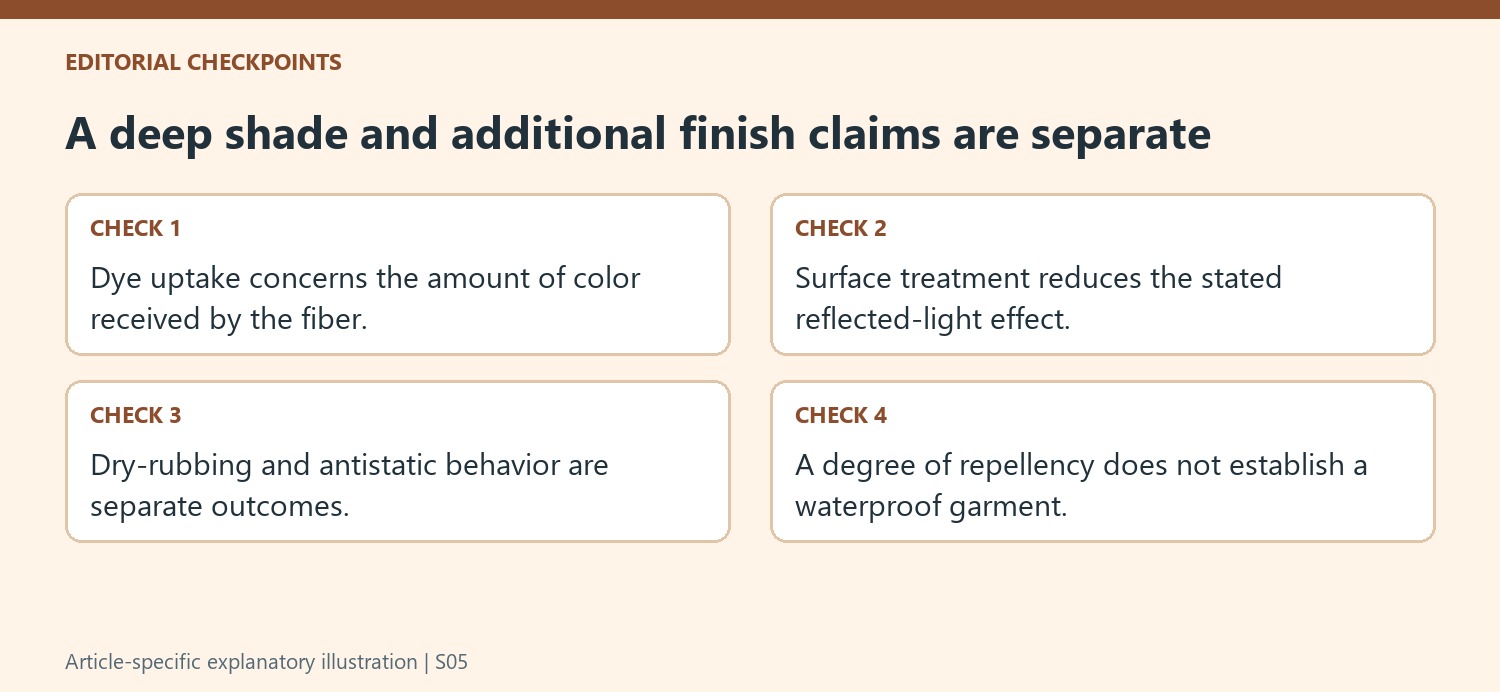
The account describes Kroy-Deepin preparation that makes the wool surface more receptive to reactive dyes. After dyeing, a special low-refractive-index polymer containing differently sized particles is applied to reduce specular reflection. These are coordinated stages with different purposes. One concerns the uptake of dye, while the other changes how light returns from the surface. The page presents this as a route to deep shades without relying on large quantities of traditional chrome dyes. A production description should identify the actual treatment and dyes rather than equating every dark wool fabric with the named process.
Additional effects still need a product context
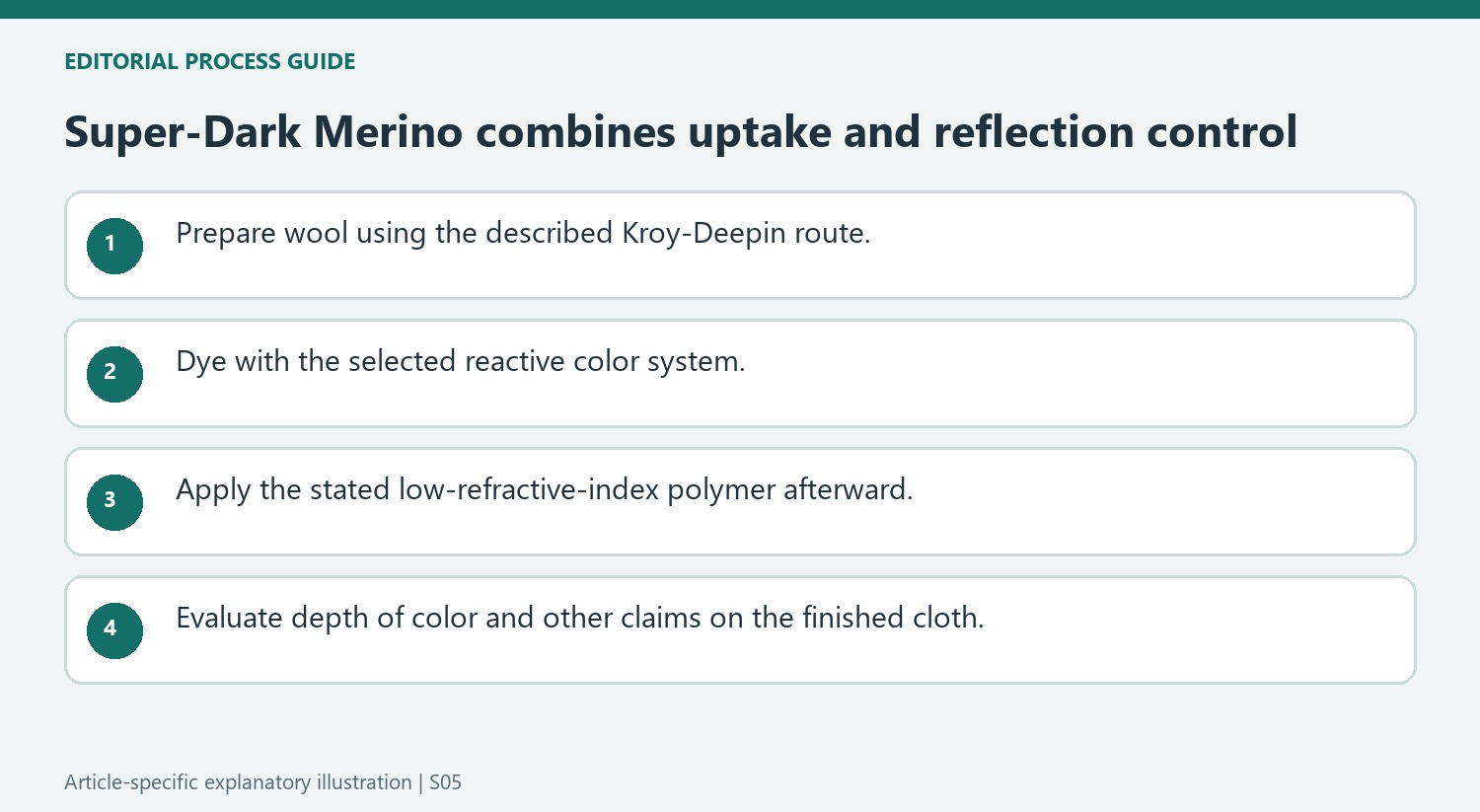
Woolmark also lists changes involving dust attraction, dry-rubbing colorfastness, and a degree of water repellency from the polymer. Those statements describe the presented development, not a complete specification for every finished garment. A dark appearance does not independently establish care suitability, weather protection, or durability. For a fabric buyer, the useful information is the combination of color target, yarn and weave, treatment, and relevant testing. The process explains how a deeper visual effect can be created; the finished cloth's composition, handle, and performance determine how it should be used and maintained.
Color depth includes what the surface reflects
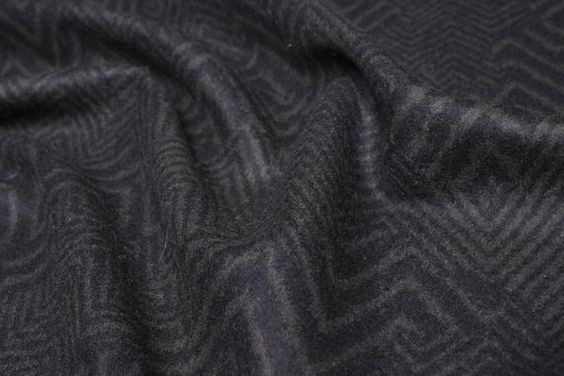
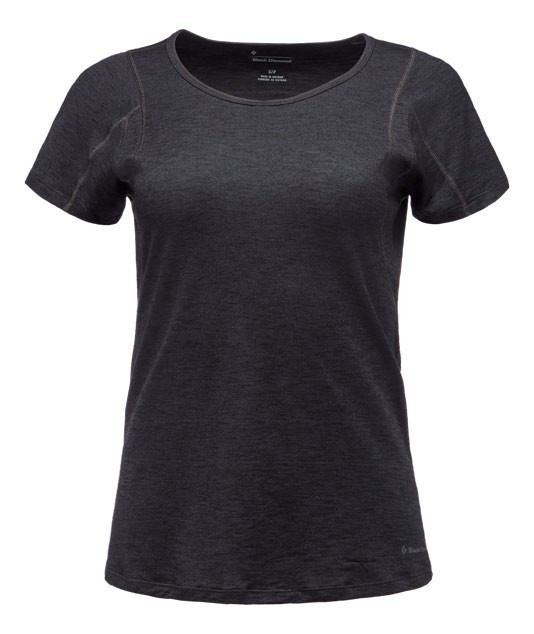
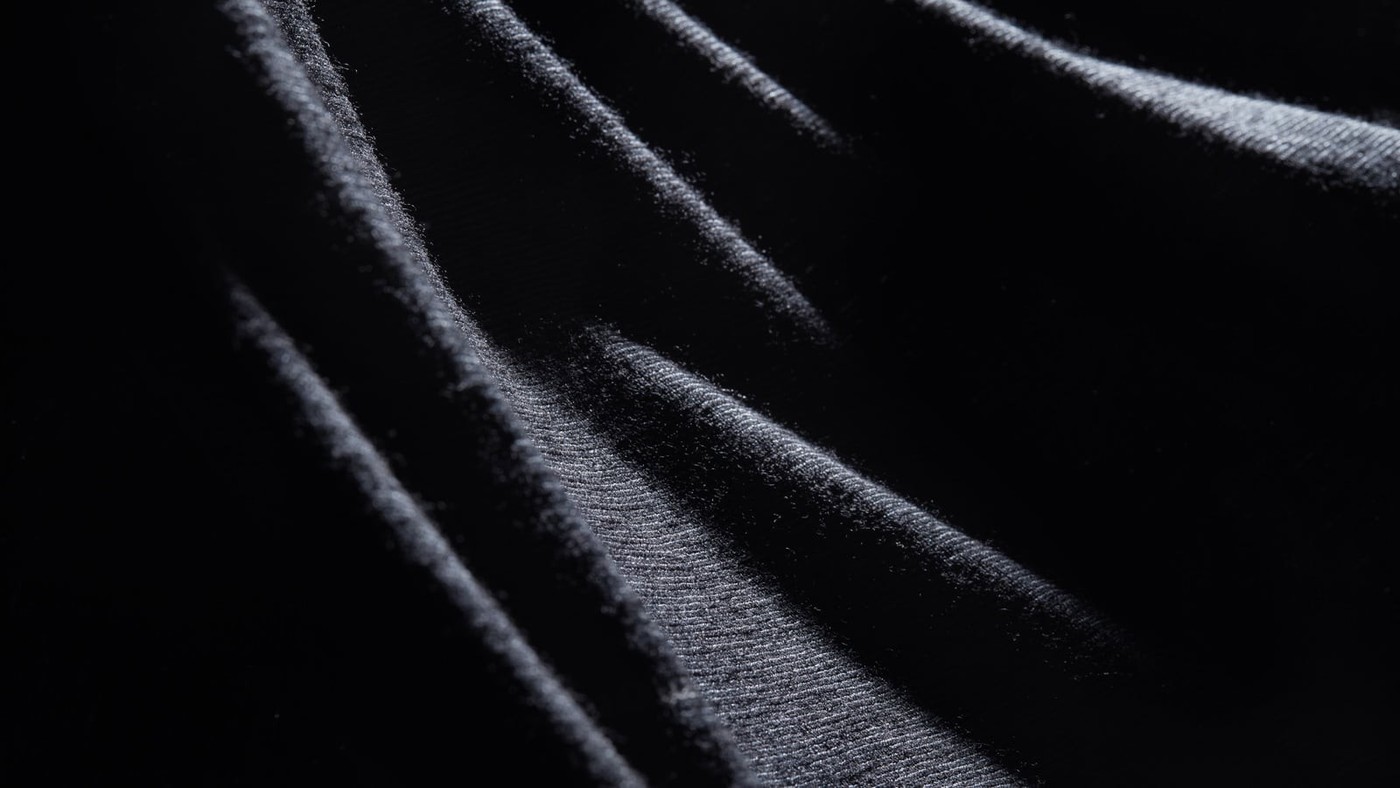
Woolmark explains the visual target through two contributions: absorbing more color and reducing the white light returned from the surface. This gives a reason why simply increasing dye quantity is not always the complete answer to a deeper black or navy. The surface can affect how dark a cloth appears even when the dye level is held as a comparison point. In the named development, Kroy-Deepin preparation and a later polymer treatment address those two contributions at different stages. The source does not suggest that every deep-colored wool fabric uses this route. A supplier should identify the actual treatment rather than inferring a manufacturing system from an attractive photograph of a black textile.
The polymer follows dyeing rather than replacing it
The page describes preparing the wool to receive reactive dyestuff, then applying a low-refractive-index polymer with differently sized particles after dyeing. The second operation is intended to reduce specular reflection, not to replace the dye with an unrelated black coating. These sequential roles are useful to keep visible in a manufacturing description. Woolmark gives a normal luminance value of 15 and a Super Black example of 10, illustrating the darker result reported for the development. Those numbers belong to that comparison and should not be used as universal readings for all black cloth. The actual fabric, measurement conditions, and process specification would need to accompany a technical evaluation.
Additional listed effects are distinct from the color target
The source also associates the polymer with some water repellency, improved dry-rubbing colorfastness, and enhanced antistatic behavior that can reduce attraction of dust or fluff. These statements concern different outcomes and should not be treated as proof of complete weather protection or universal durability. A fabric could have a very deep appearance while requiring specific care or serving only a particular garment role. For a buyer selecting formalwear cloth, the useful information includes composition, yarn, weave, finish, handle, and relevant performance evidence. The named process explains one route to an intense dark shade, while the complete textile and assembled garment establish use, cleaning, and any additional claims.
References
- Super-Dark Merino. The Woolmark Company; The Woolmark Company.









Comments
0