 FabricKnowledge Lab
The study compared specified material systems
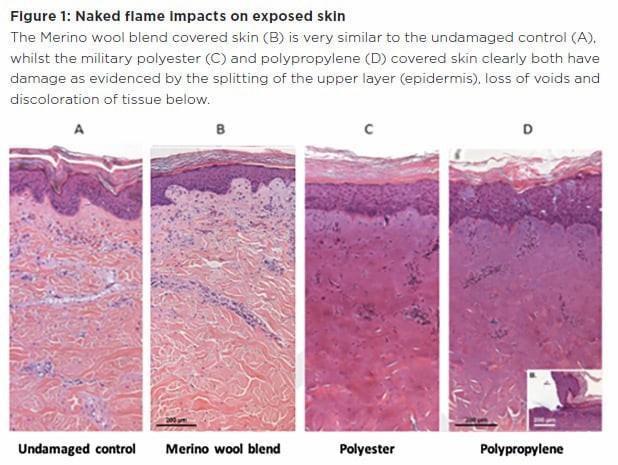
Woolmark summarizes an AgResearch study examining fabrics used in clothing for first responders. The tested set included polypropylene, polyester, several engineered blends, wool with flame-resistant viscose, and Zirpro-treated Merino wool. This was not a comparison of every possible garment within each generic fiber category. The materials had particular structures and treatments, and the source explicitly says their weights differed because matching commercial fabrics were unavailable. That qualification is essential when interpreting the ranking: material composition, construction, treatment, and mass were not all held constant at the same time.
Two exposure scenarios produced comparative results
The account describes testing intended to simulate exposure to a naked-flame ignition source and an accelerant-fueled threat. Woolmark reports poor results for the tested polypropylene and polyester examples, including concern about melting. The treated Merino midlayer performed best overall in the reported comparison, while a double-knit wool-and-flame-resistant-viscose fabric led among the base-layer examples. These findings should stay attached to the tested samples and procedures. They do not establish that an ordinary wool shirt has the same performance as a treated or engineered protective textile, nor that every blend with a similar label is equivalent.
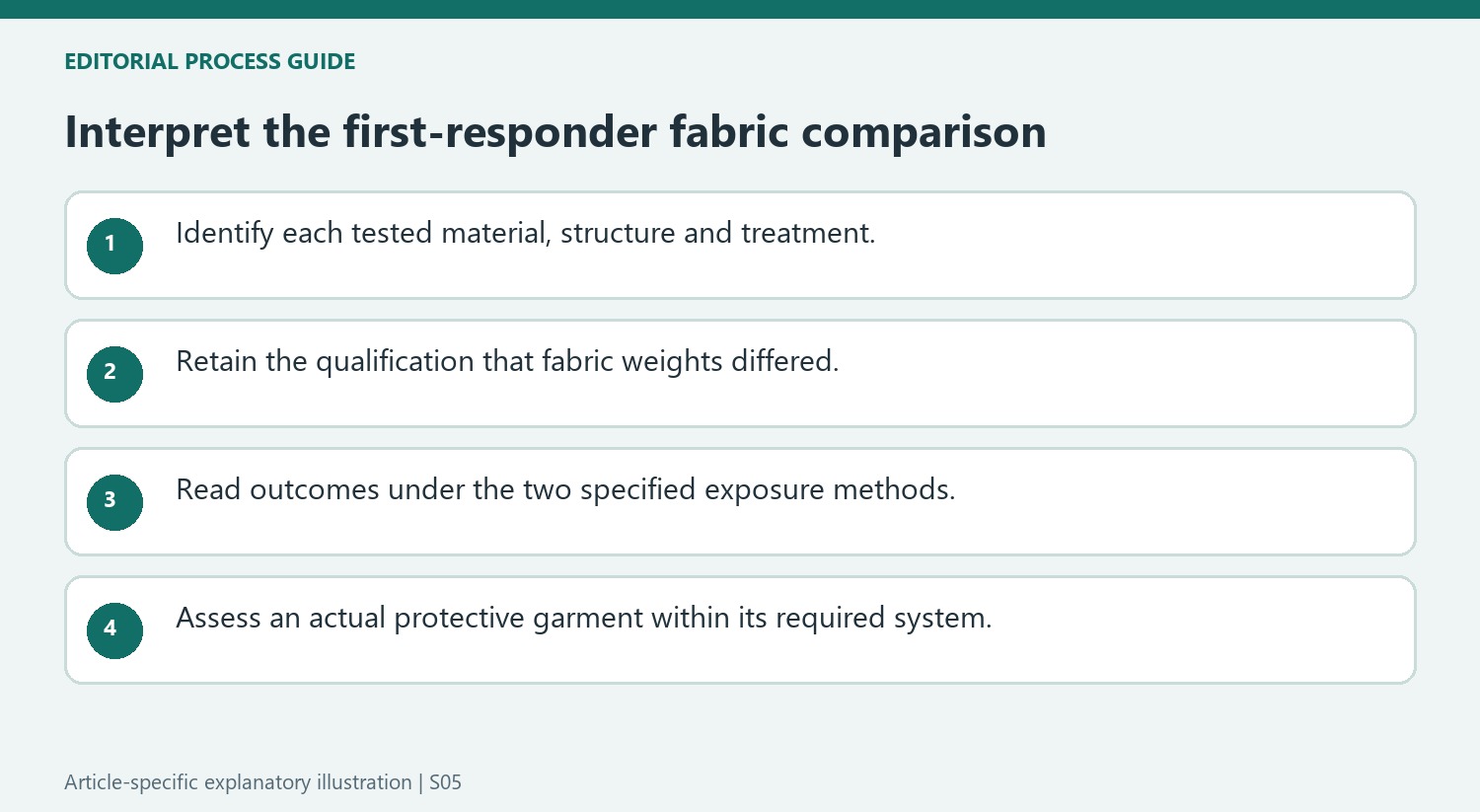
A base layer belongs within a protective system
The source presents wool-rich next-to-skin clothing as relevant to military and emergency-service use, alongside comfort and moisture-management considerations. However, protective clothing is selected for a defined hazard and normally functions as a complete system of layers and components. A research summary is useful evidence about particular materials, not an unrestricted occupational approval. The practical reading is to identify the actual fabric, finish, weight, construction, and applicable test result. Those details allow the study to inform development while avoiding the unsupported transfer of one sample's performance to every garment containing the same broad fiber name.
Weight differences limit a simple fiber-only ranking
The source explicitly notes that commercially available test fabrics could not be matched at the same grams-per-square-meter weight. That means several variables remained in the comparison, including composition, structure, treatment, and mass. The study can still report which tested samples performed better under its procedures, but it cannot be rewritten as though only the generic fiber had changed. A particular treated wool textile and an untreated or differently constructed comparison are defined material systems. Their identities are essential to the result. A careful account should retain the source's qualification beside the ranking, especially when the information may inform development of clothing for a specific occupational hazard.
The strongest overall sample was not simply any base layer
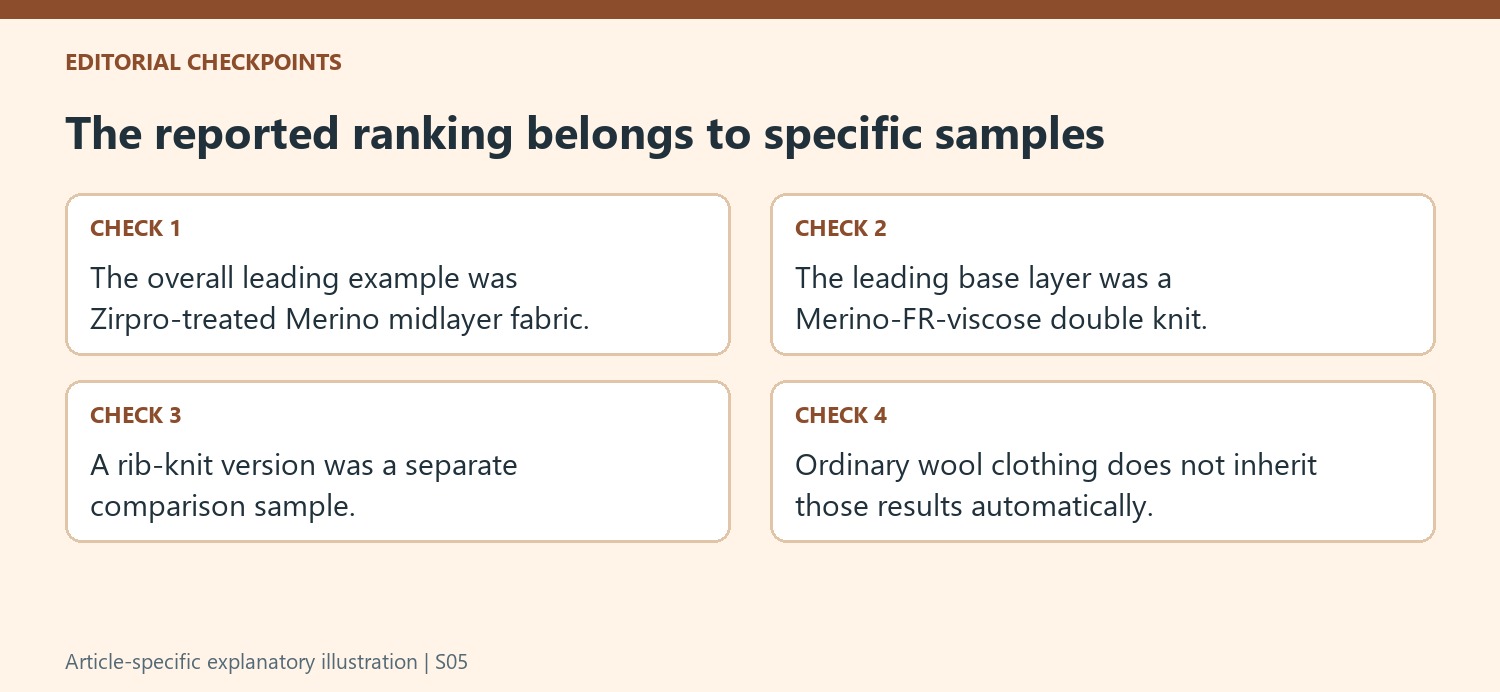
Woolmark identifies a 100 percent Zirpro-treated Merino midlayer as the best overall performer in the described naked-flame and accelerant tests. Among the base layers, it reports a double-knit Merino-and-flame-resistant-viscose sample ahead of a rib-knit version of that blend. These distinctions concern both garment role and fabric construction. It would lose important information to call the result only wool won, because the treatment, blend, structure, and layer category are part of the evidence. The same reasoning prevents an ordinary retail wool shirt from inheriting the performance of the treated sample. A useful specification needs the actual material and applicable test result rather than a shared fiber name alone.
Research findings support development rather than automatic approval
The page places the work in a first-responder and military context, where clothing may need to meet defined protection requirements as part of a layered system. A base fabric is only one component of that system. Seams, closures, fit, other layers, and the intended hazard all remain relevant to the complete garment. Comfort and moisture behavior are useful considerations, but they do not replace evidence about protection. The study summary therefore provides material comparisons to inform further work, not universal occupational approval for every wool-rich article. A purchaser or developer should identify the specific product, its construction and finish, and the documentation appropriate to its intended role before attaching a protective claim.
References
- Science backs wool base-layers for first responder clothing. The Woolmark Company; The Woolmark Company.




Comments
0