 FabricKnowledge Lab
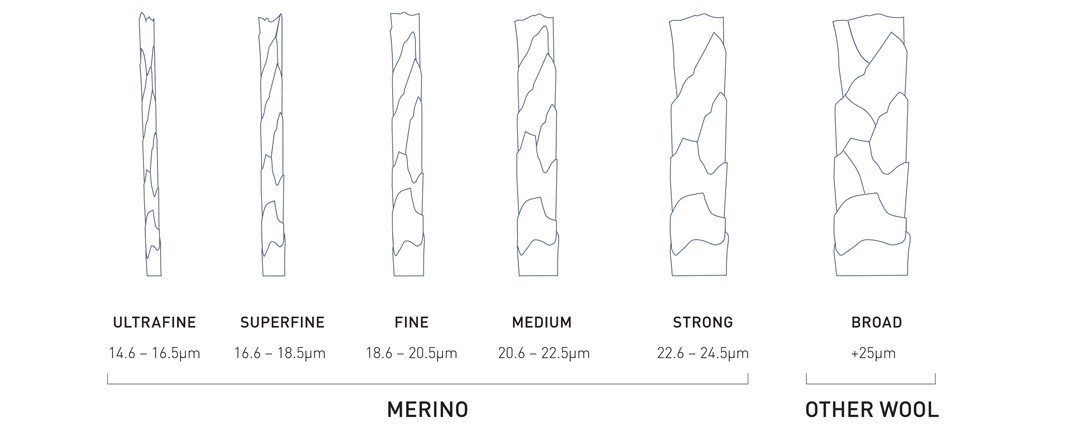
Microns describe the size of individual fibers
Woolmark's softness page places fiber diameter at the center of Merino's next-to-skin reputation. Diameter is measured in microns, with one micron equal to one millionth of a meter. This is a measurement of an individual fiber's width, not the thickness of a sweater or the weight of a fabric. The distinction matters when reading product descriptions: a fine fiber can be assembled into a thick, bulky yarn, while a lightweight cloth can still contain fibers that feel comparatively firm against the skin. Fiber size and fabric size answer different questions.
Bending changes contact with the skin
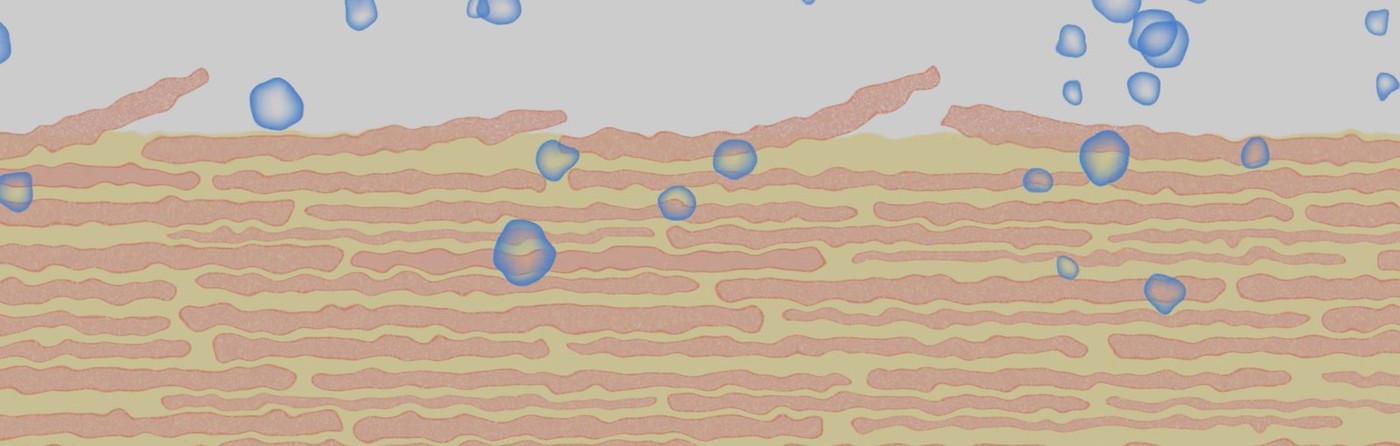
The page explains softness through fine fibers that bend readily rather than pressing rigidly against the wearer. It also identifies wool's crimp as part of the material's structure. A prickly sensation can arise from coarse fiber ends, and Woolmark emphasizes that coarseness is not limited to one generic fiber category. This helps explain why experiences with two wool garments can differ greatly. A rugged outerwear cloth and a fine base-layer knit share a broad material family, but the fibers presented at their surfaces need not make the same kind of contact.
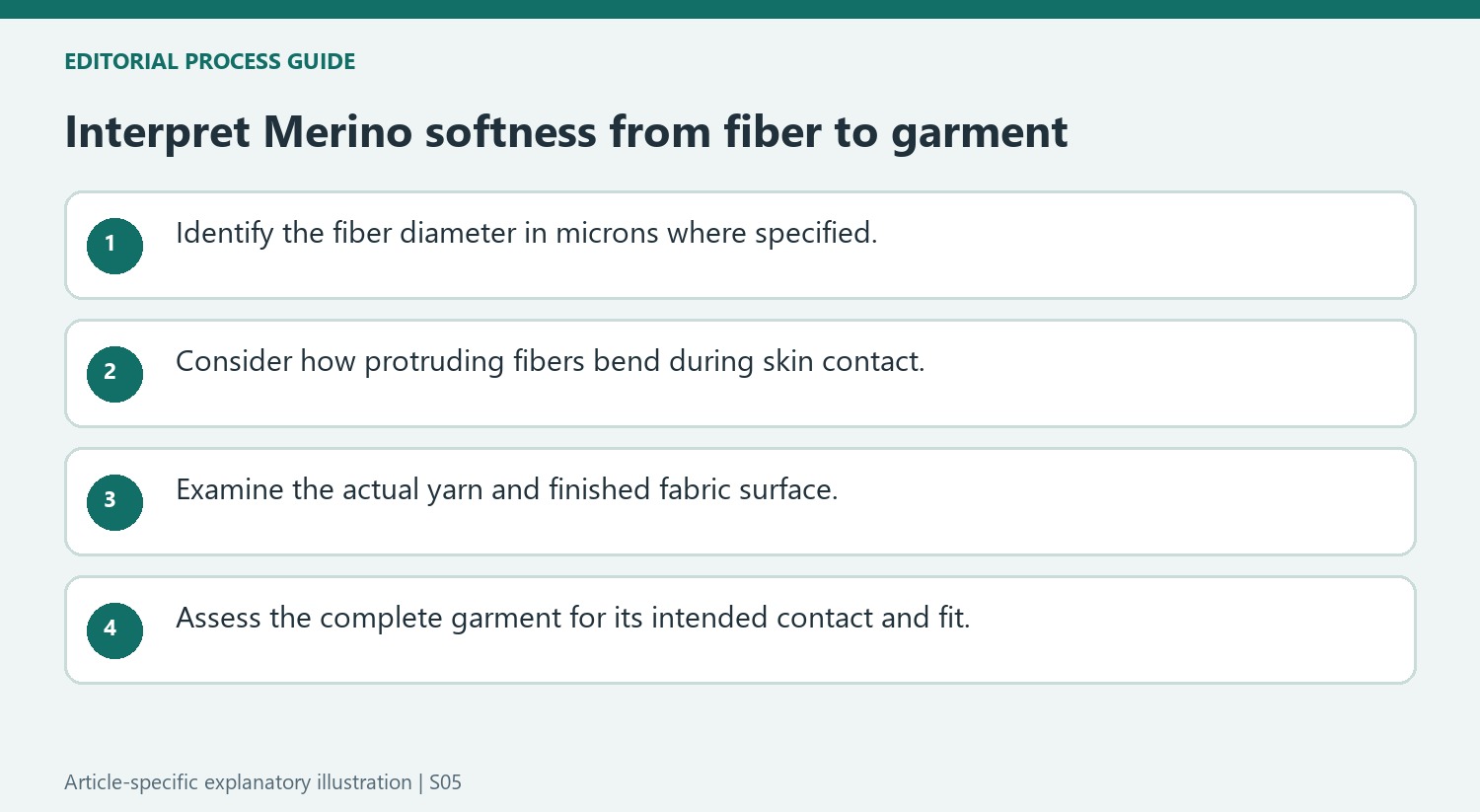
Use the measurement alongside fabric information
A micron figure provides useful information, but it is not a complete description of a finished garment's feel. Yarn construction, surface finishing, seams, and the way the garment sits against the body can also affect contact. The page's general softness explanation is therefore most useful when combined with the actual textile specification. For a close-fitting product, look for the stated fiber diameter where available and examine the finished fabric rather than relying only on the word Merino. The material's fine-fiber potential becomes a particular wearing experience through the yarn, knit or weave, and complete garment design.
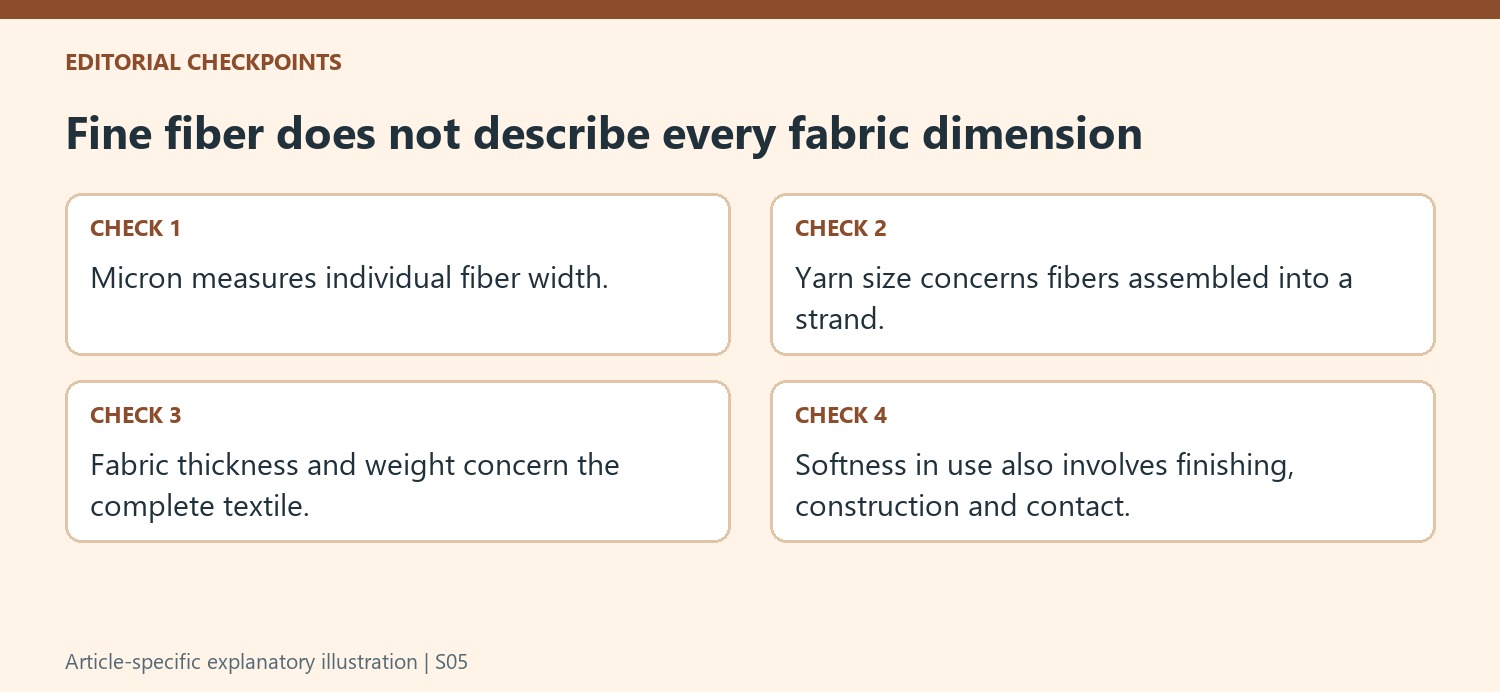
A diameter measurement is not a garment dimension
A micron is one millionth of a meter, and the source uses it to describe the width of a fiber. That scale is quite different from fabric thickness or yarn size. Fine fibers can be brought together into a substantial yarn, and a relatively thin textile can still present firm fiber ends at its surface. This distinction helps a buyer interpret product information without confusing fine with lightweight in every context. The source's explanation of softness concerns individual fibers and their contact behavior. The complete garment then adds yarn construction, knit or weave, surface finish, and fit, all of which remain necessary to understand the object being worn.
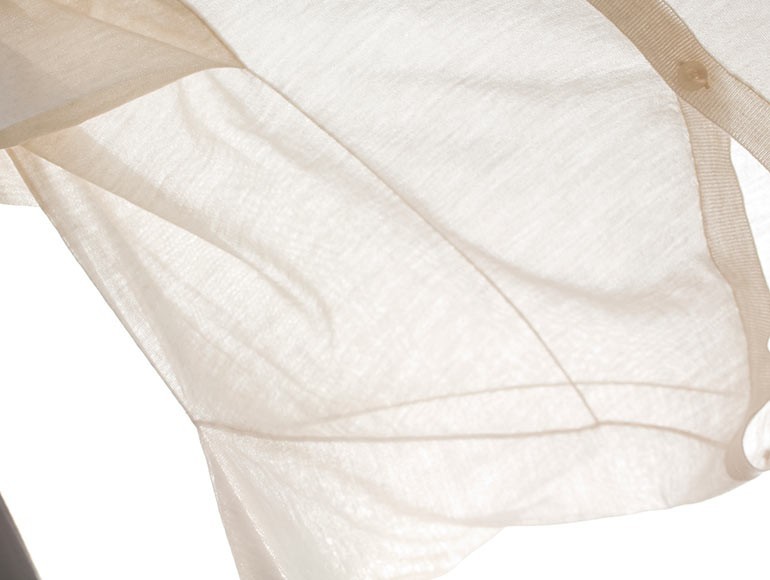
Bending gives a mechanical explanation for different sensations
Woolmark describes finer Merino fibers as flexible enough to bend with contact rather than acting like relatively rigid points against the skin. Its discussion of prickliness therefore concerns the way protruding fibers meet the body. The mechanism can apply across different fiber families, so a rough experience should not be explained solely through a natural or manufactured label. It also shows why one person's experience with a coarse wool item is not a complete assessment of every fine Merino fabric. The explanation is useful material context, but it is not a diagnosis of a particular skin reaction. A finished article can contain other fibers, dyes, finishes, and construction features that also affect comfort.
Use fine-fiber information within the intended application
A close-fitting base layer makes its skin-facing surface especially relevant, whereas an outer garment may normally sit over other clothing. The same broad fiber description therefore occupies different roles in those products. Where a diameter figure is available, it can help narrow a comparison, but the actual sample and complete specification still matter. The source's broad softness language should not replace that product information or establish that every Merino garment is softer than every alternative. A useful selection considers the yarn, construction, surface, and intended contact together. This keeps the measurement valuable without asking it to predict all aspects of drape, thickness, seam comfort, or personal preference in a finished item.
References
- Why is Merino wool so soft?. The Woolmark Company; The Woolmark Company.



Comments
0