 FabricKnowledge Lab
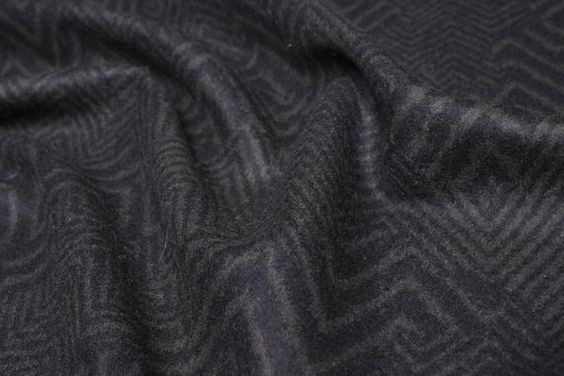
The design is part of the woven structure
Jacquard is associated with controlled weaving that builds a pattern into cloth rather than printing an image onto an already formed surface. Sewport's guide connects the name with Joseph Marie Jacquard's early nineteenth-century development and describes the later move from punched-card control to computerized systems. The manufacturing principle concerns selecting how yarns interlace to create a design. It does not name a single raw fiber. Cotton, silk, wool, and manufactured materials can enter patterned textiles, giving a wide range of weights, textures, and applications under the broader jacquard description.
Yarn and programmed pattern work together
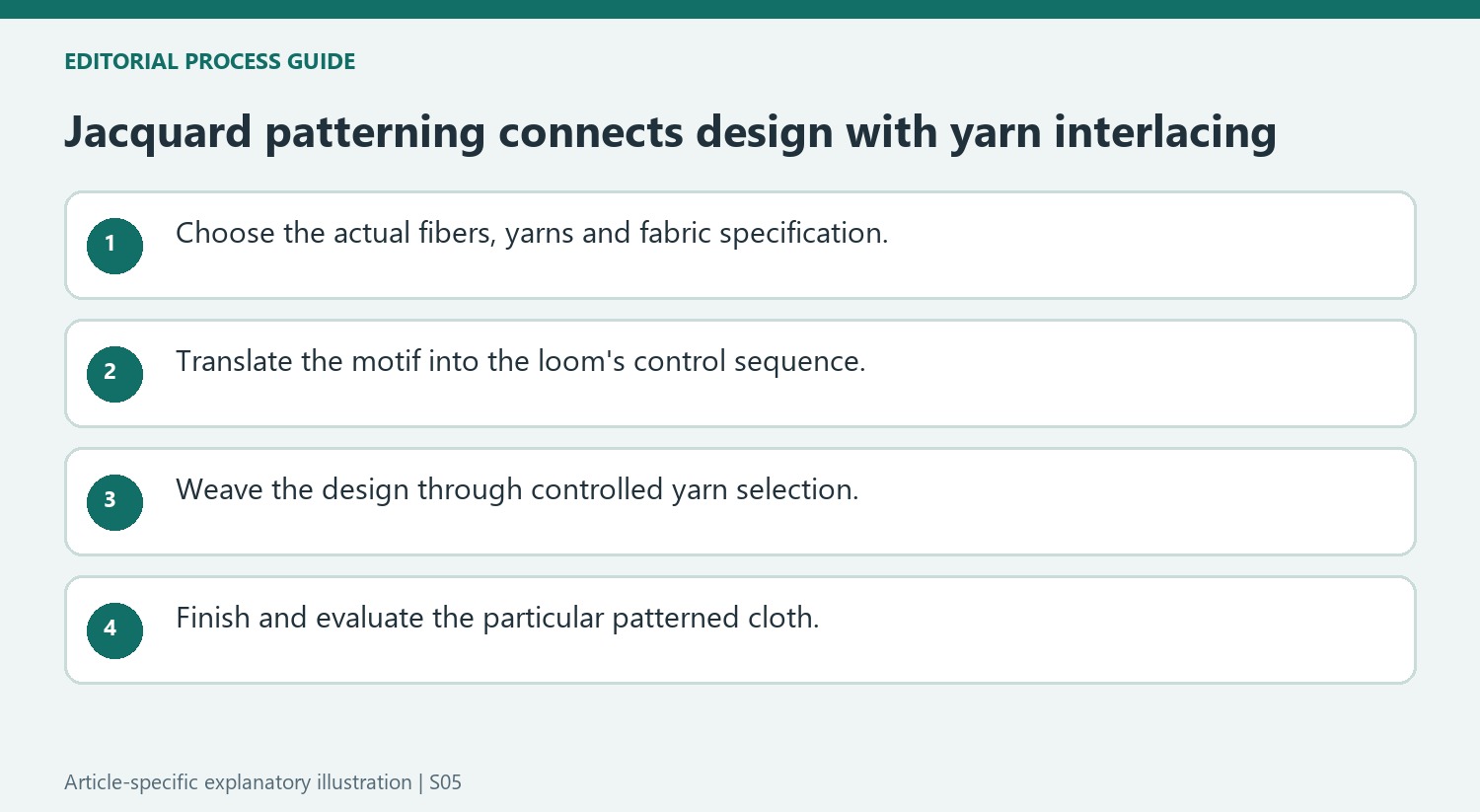
The source outlines acquiring suitable fibers, preparing yarn, selecting a pattern program, and feeding the yarn into the loom. A design must be translated into a sequence the equipment can produce, while yarn thickness, color, and density help establish the final effect. This explains why a complex motif is not simply independent artwork placed over an otherwise unchanged fabric. The motif and the structural arrangement are connected. Finishing can then modify appearance or handle, so a complete specification should identify both the woven design and the materials and treatments used to produce it.
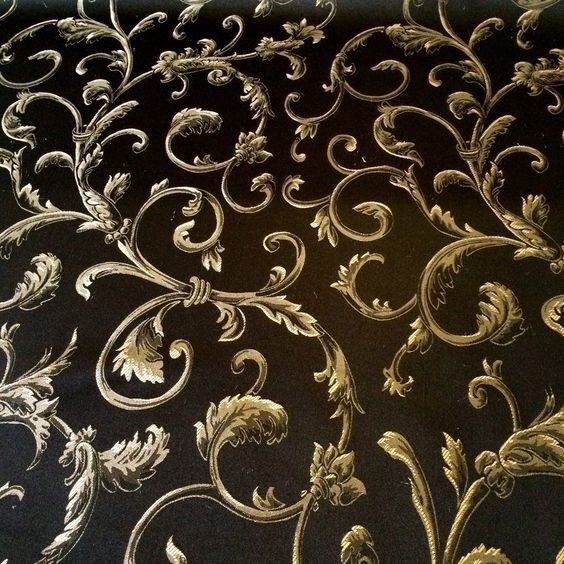
Decoration does not prescribe one performance level
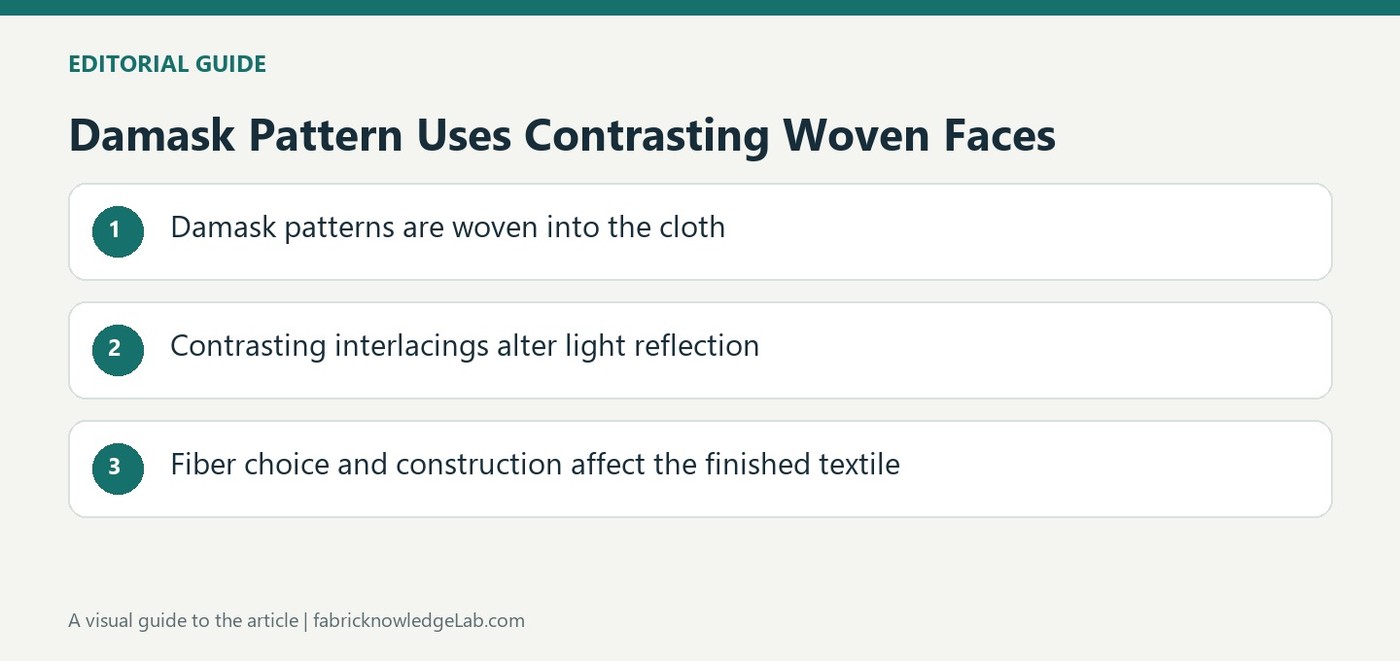
Sewport lists curtains, upholstery, bedding, formal garments, ties, and other accessories among applications. Brocade, damask, and related patterned textiles illustrate different ways of organizing ornament within cloth. Their inclusion does not make all jacquards equally heavy, rigid, durable, or expensive. A decorative dress fabric and an upholstery textile face different demands. For practical selection, examine composition, weight, construction, and intended use alongside the pattern. The jacquard label explains how controlled weaving can create visual complexity, while those additional details determine what a particular cloth is suitable for.
A control system translates an image into interlacing
Sewport describes the historical punched-card approach and its later computerized successors as ways to control patterned weaving. The important link is between the design and the sequence of yarn selections that forms the cloth. A decorative motif is not simply laid over an unrelated base after weaving; it is connected with which yarns appear and interlace in different regions. Modern programming changes how that information reaches the equipment, while yarn size, color, density, and finishing remain material choices. The source's history provides context for mechanized patterning, but the useful manufacturing explanation is the cooperation between a planned design, suitable yarns, and controlled loom operation.
Fiber preparation still depends on the selected input
The guide lists several possible fibers, so a jacquard account cannot have one universal raw-material route. Cotton preparation differs from wool preparation, and manufactured fibers have their own production histories. Once suitable yarns are supplied, they can enter the patterned weaving process, with composition and construction remaining separate parts of the specification. This distinction helps avoid describing jacquard as though it were one polymer or one natural fiber. A wool tailoring textile and a cotton table fabric can both use controlled patterning while differing greatly in weight and handle. Their shared manufacturing vocabulary does not make them identical in warmth, care, or suitability for a particular finished product.
Related ornamental textiles are not one fixed performance class
The source discusses brocade, damask, and other patterned cloths alongside applications including formalwear, upholstery, curtains, and bedding. These are useful examples of decorative weaving, but they should not be read as evidence that every jacquard is heavy, stiff, costly, or durable to the same extent. A dress fabric and a furnishing cloth have different design briefs even if their motifs appear similarly elaborate. For a purchasing decision, retain the full composition, fabric weight, construction, finish, and intended use beside the pattern description. The jacquard name explains a route to visual complexity. A sample also lets the buyer examine the scale of the repeat and the relationship between the motif and its woven ground. The actual material and product specification determine which version is appropriate and how the finished article should be cared for.





Comments
0