 FabricKnowledge Lab
A synthetic rubber with several product roles
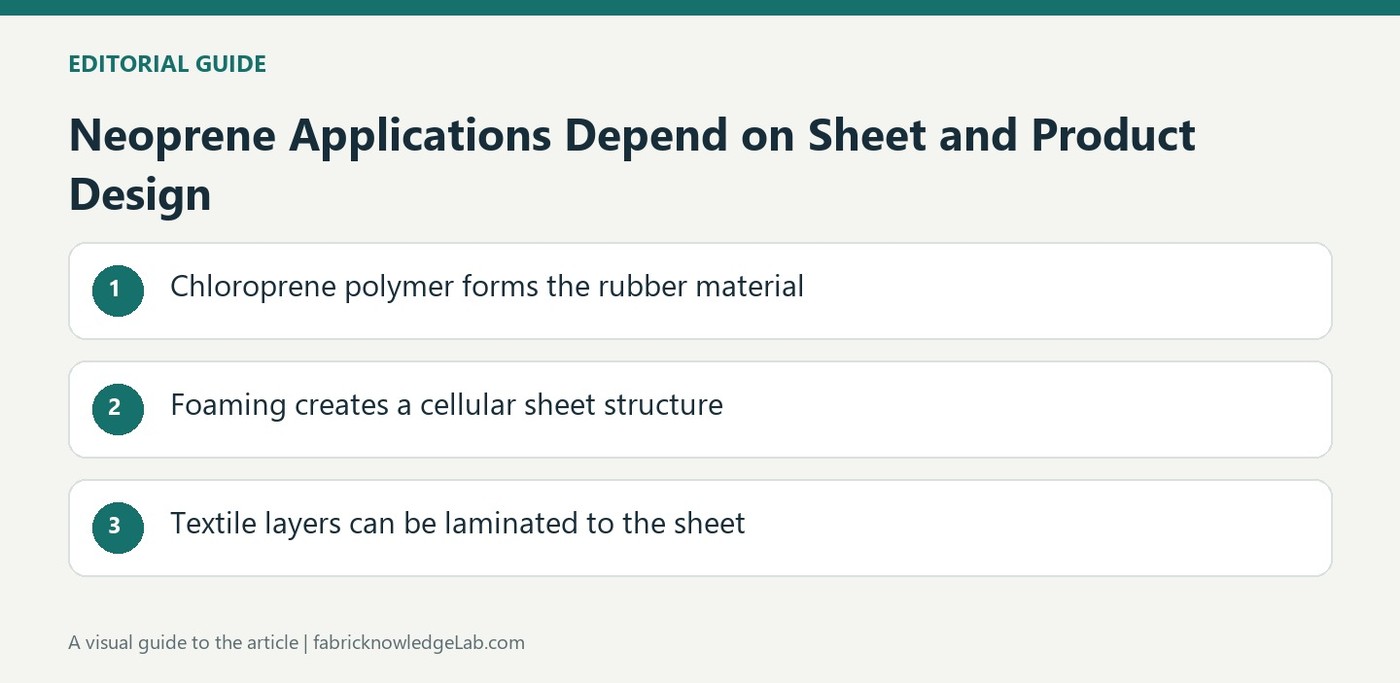
Neoprene is associated with polychloroprene, a synthetic rubber used in consumer and industrial products. Sewport's guide lists wetsuits, protective cases, cushioning, and seals among its applications. The material differs from a yarn spun from short fibers and then woven into ordinary cloth. It can be compounded and formed as a rubber sheet, sometimes combined with textile surfaces. This distinction helps explain why flexibility alone cannot identify a fabric as elastane, neoprene, or a knit. Different material systems can bend or stretch while having very different structures and functions.
Compounding and sheet thickness are design choices
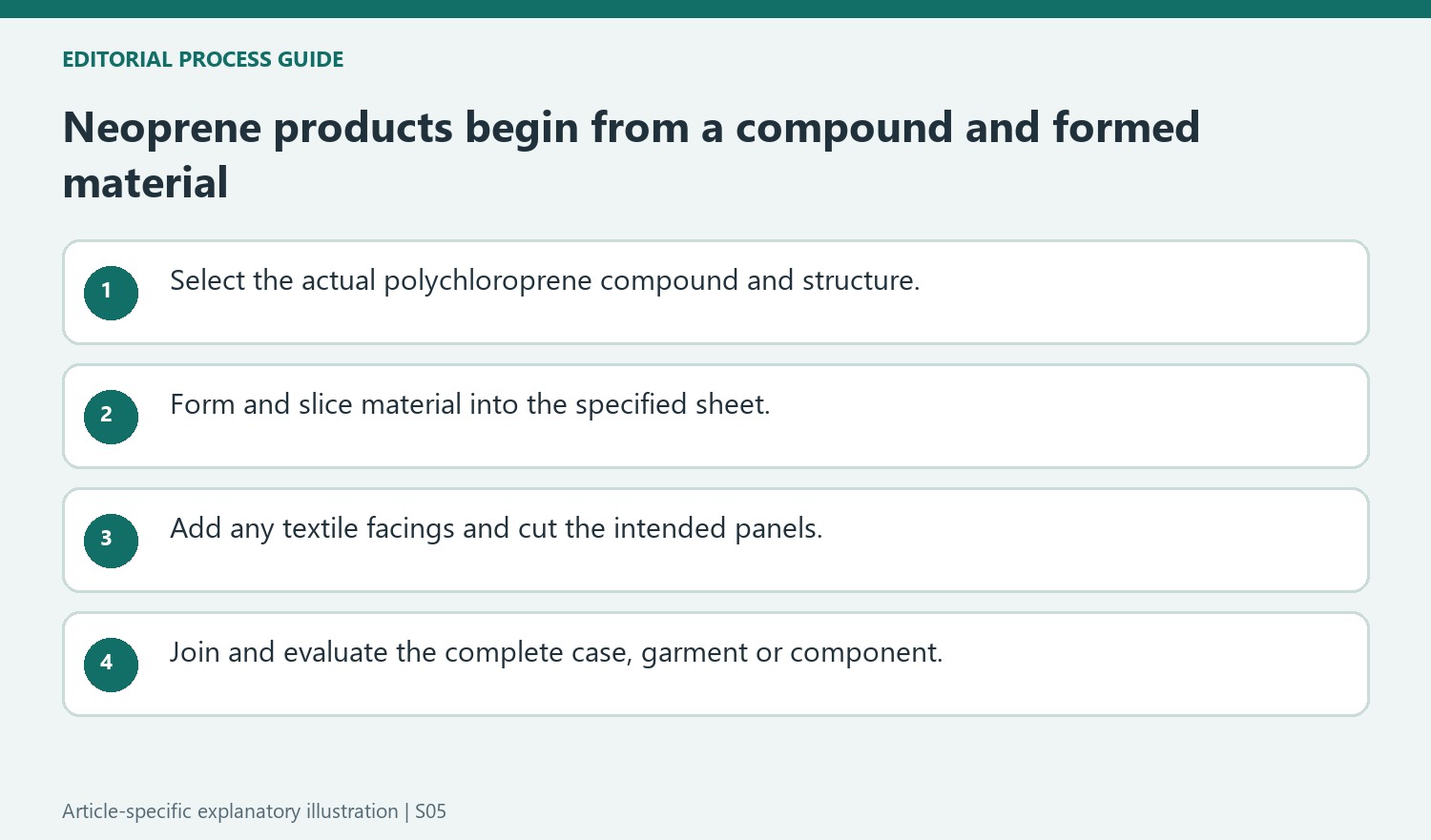
The manufacturing account describes adding ingredients to the rubber compound, forming material, and slicing it into sheets for later conversion. A manufacturer can then mark patterns and cut panels for assembly. The specific compound, foam structure, thickness, surface layers, and joining method affect the finished item. Those details are more informative than assuming that every product sold under the same rubber name has identical insulation or mechanical performance. A thin protective sleeve and a thicker sporting article can use related materials while responding differently to compression, bending, and environmental exposure.
Avoid transferring one application's claims to another
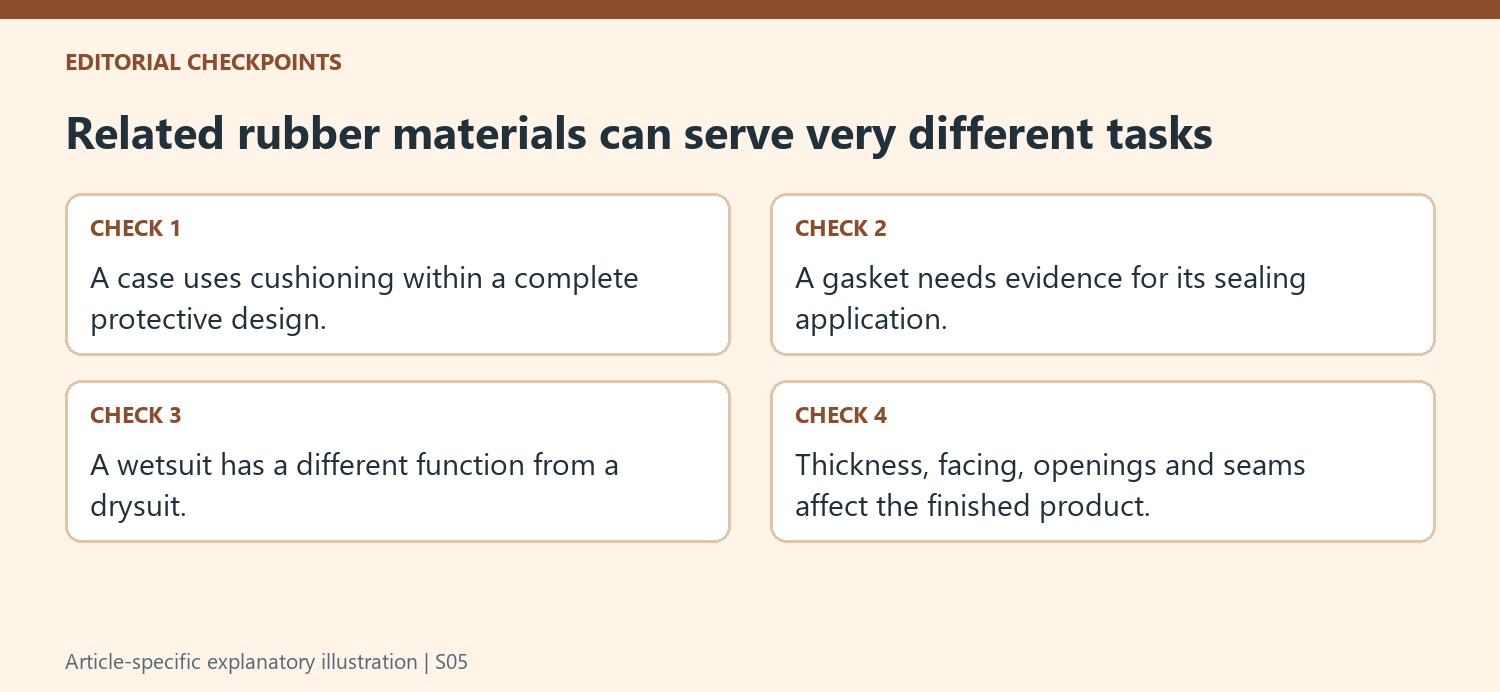
The source's broad application list includes electronic-device cases and industrial components as well as water-sports clothing. A cushioning case is designed for a different task from a gasket that must seal a joint or a garment intended for immersion. The presence of water-resistant rubber does not mean every finished construction keeps the wearer completely dry; openings and seams still matter, and wetsuits have a different function from drysuits. A clear specification should identify the actual material system and intended use, with relevant testing for the complete product. The generic rubber category provides context, while engineering and assembly determine the application.
A rubber sheet is a different starting point from ordinary cloth
The guide's useful manufacturing outline describes compounding and forming polychloroprene material before it is sliced into sheets and converted into products. This is different from preparing short textile fibers, spinning them into yarn, and interlacing that yarn at a loom. Textile layers may still be combined with the rubber, giving the complete material more than one component. A soft or stretchy surface therefore does not by itself identify which structure has been supplied. The exact compound, cellular structure, sheet thickness, and any facing belong in a useful specification. Those details clarify the material route without relying on the source's broader fashion terminology as proof of the composition of every illustrated garment.
Panel conversion adds another level of design
Once sheet material has been made, a producer can mark a pattern, cut pieces, and join them into a selected object. That conversion stage matters because a flat sheet is not yet a complete wetsuit, sleeve, or seal. The source lists consumer and industrial uses with very different requirements, so even a shared rubber category does not establish identical suitability. A cushioning electronics case and a joint-sealing component have different jobs, and an immersion garment has another set of constraints. Joining, openings, dimensions, and how the material is supported all influence the final product. The material account should therefore remain connected to the actual application rather than becoming a universal performance promise.
Water resistance does not make every garment a drysuit
A rubber barrier can resist water passing through the material while the complete product still permits entry through openings or joints. That is why the finished design matters when discussing water-sports clothing. The source's wetsuit examples should not be interpreted as a claim that every wearer stays completely dry, and the rubber name is not a substitute for a product specification or relevant sporting requirements. Likewise, insulation depends on the actual material and construction rather than the word neoprene alone. For selection, identify the intended use, thickness, facing, fit, joining, and supporting test information. This keeps the generic synthetic-rubber explanation useful while leaving the complete item's behavior to its engineering and documentation.








Comments
0