 FabricKnowledge Lab
Protein rather than plant cellulose
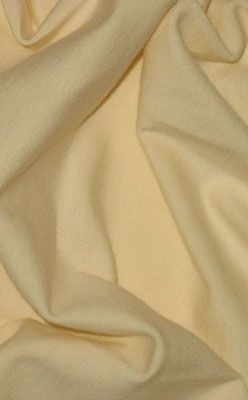
Soy-protein textile fiber begins with a different plant component from the cellulose used for cotton, viscose, or lyocell. Sewport's guide describes isolating soy protein and processing it into a form suitable for making fibers. The distinction is useful because the phrase plant based can cover several materially different routes. It does not establish one chemistry, manufacturing method, or environmental profile. A product advertised as soy fabric may also be blended with cotton, wool, or manufactured fibers, so its full composition is more informative than the marketing name of one ingredient alone.
Preparation precedes extrusion into strands
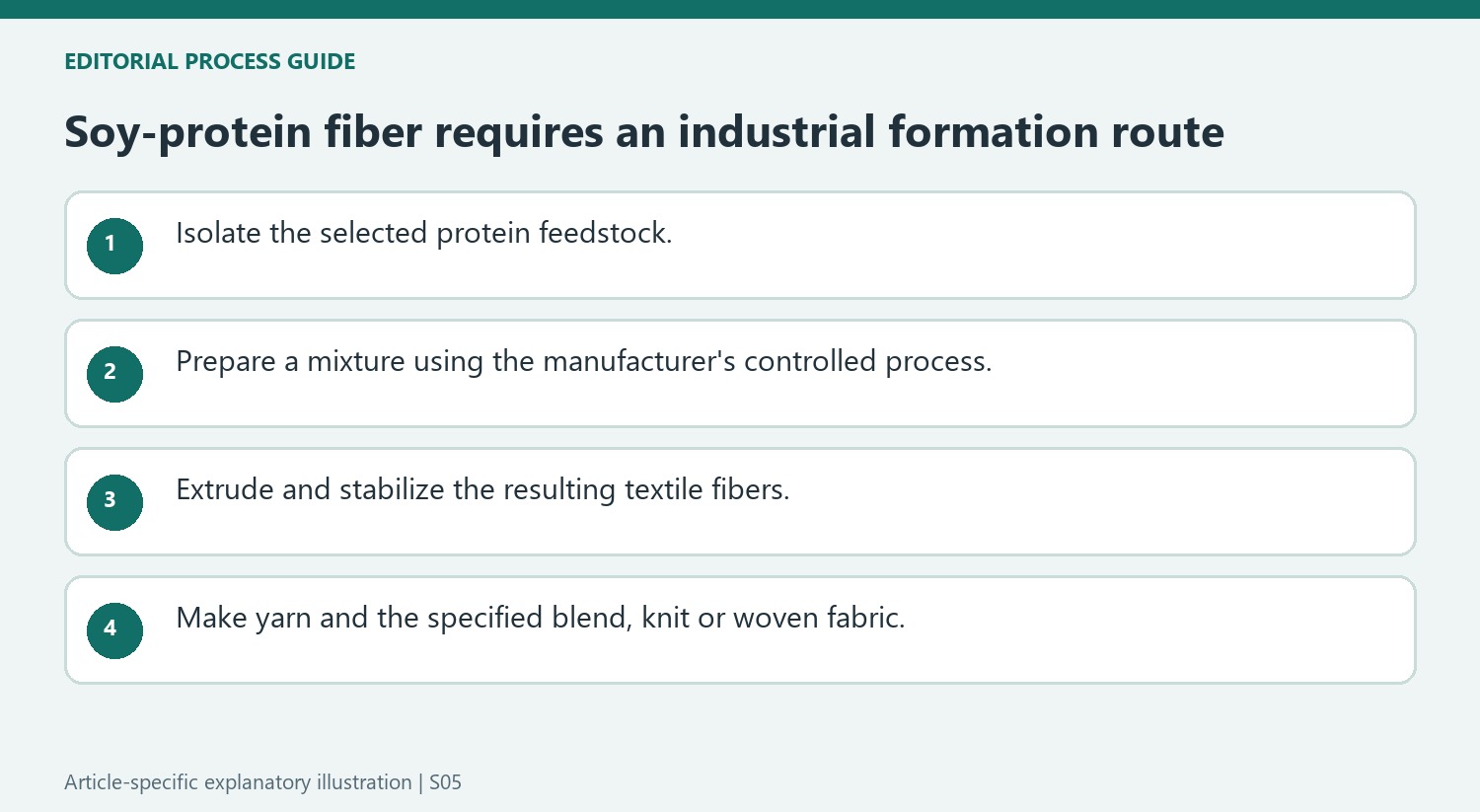
The source outlines modifying the protein through controlled treatments involving heat, alkali, or enzymes before producing a spinning mixture. The prepared material is then extruded through spinnerets to form fine strands, followed by further processing and spinning into yarn. It also discusses variation in post-treatments used by manufacturers. Those stages show why a textile fiber is not obtained simply by collecting an intact thread from a soybean. Feedstock isolation, chemical or enzymatic preparation, fiber formation, and finishing each contribute to the material that eventually reaches a loom or knitting machine.
Softness claims need product-specific context
Sewport lists shirts, dresses, light clothing, bedding, and upholstery among possible applications and compares the touch of soy-containing textiles with familiar soft materials. Those examples indicate design interest rather than proving every proposed benefit for every product. A silky appearance does not establish universal ultraviolet protection, antimicrobial performance, or durability. Likewise, using a food-processing input does not by itself demonstrate low environmental impact. For a useful specification, identify the actual protein-derived fiber content, blend partners, finishing, intended use, and the evidence behind any tested claims. The source route explains the ingredient; the complete textile explains the product.
Plant origin does not identify one textile chemistry
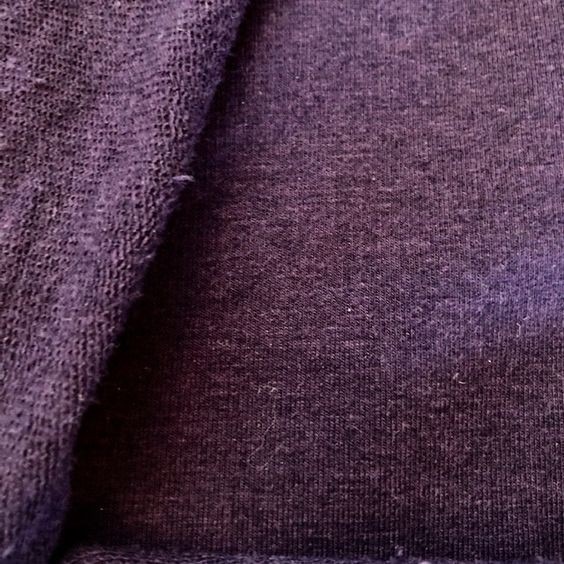
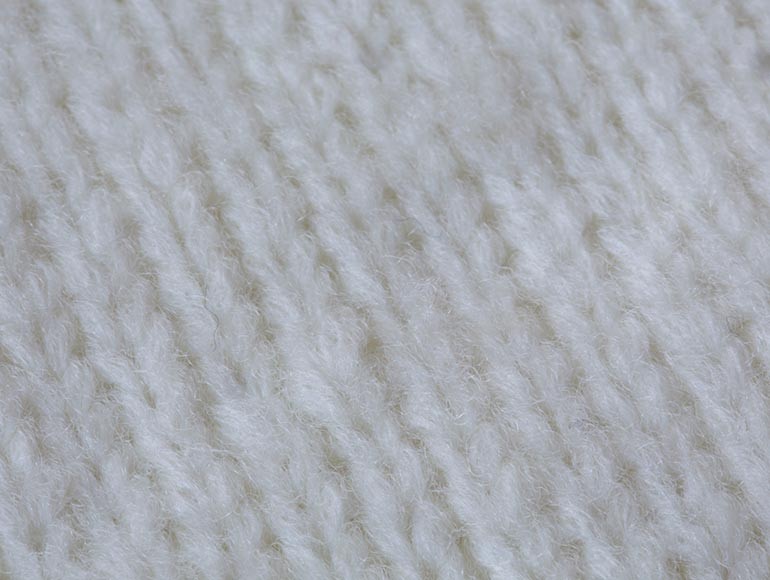
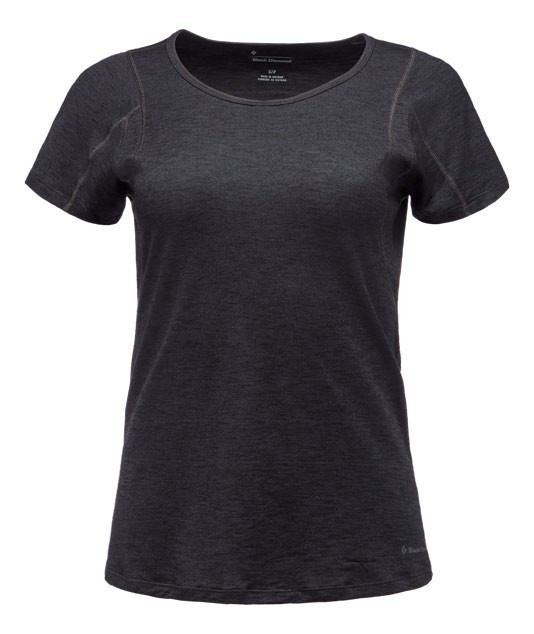
Soy protein and cellulose are different plant-derived inputs. The source's account begins by isolating protein and preparing it for fiber formation, which distinguishes the route from simply harvesting cotton fibers or dissolving cellulose pulp. That distinction matters whenever plant-based language is used to group several textiles together. A shared agricultural association does not establish the same manufacturing steps or finished behavior. The source also shows soy-containing jersey and French terry examples, which are fabric constructions rather than names for the protein itself. A complete description should therefore identify the protein-derived ingredient, any blend partners, and the construction into which the resulting yarn has been made.
The spinning mixture is only one stage in the chain
The guide describes controlled preparation involving heat, alkali, or enzymes before extrusion through spinnerets. It also discusses differences in post-treatment between manufacturers. Those steps explain why the finished fiber needs a production account rather than being described as an intact natural thread taken from a soybean. They do not establish that every producer uses the same treatment or that every mentioned process agent remains in a garment. A careful assessment should identify the actual manufacturer's route, chemical management, final material, and relevant product testing. Following the sequence through fiber formation, yarn, and textile helps prevent a feedstock claim from becoming an unsupported conclusion about all aspects of the finished fabric.
Softness comparisons do not provide a complete performance profile
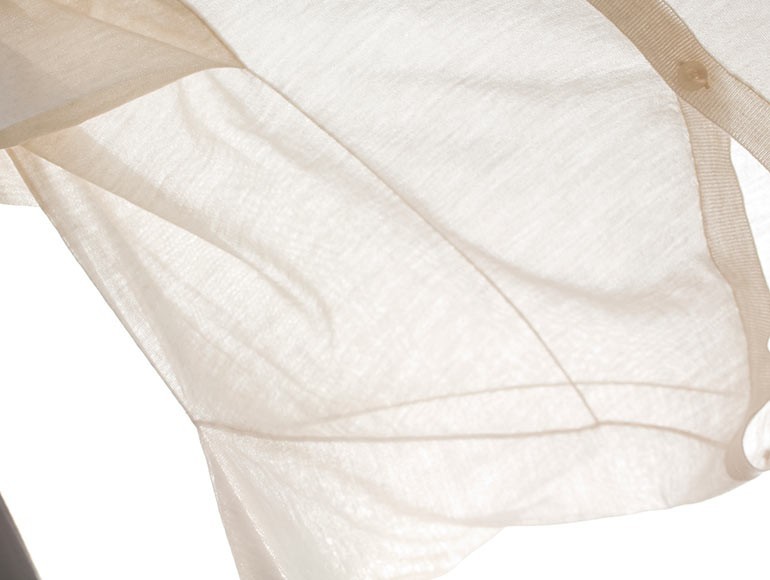
Marketing terms that compare soy-containing fabrics with silk or cashmere draw attention to touch or appearance. They do not make the fibers chemically identical or establish the same strength, cleaning behavior, or durability. Likewise, the source's references to possible clothing and home-textile applications should not be treated as proof of universal antimicrobial or ultraviolet-protective performance. Those claims need evidence for a specified product and test. A buyer can still use the guide as an introduction to a protein-based route, while requesting full composition, weight, construction, finish, and care information for the actual cloth. The more precise those details are, the easier it becomes to compare a soy-containing textile with an alternative intended for the same use.





Comments
0