 FabricKnowledge Lab
Pattern can appear without a printed image
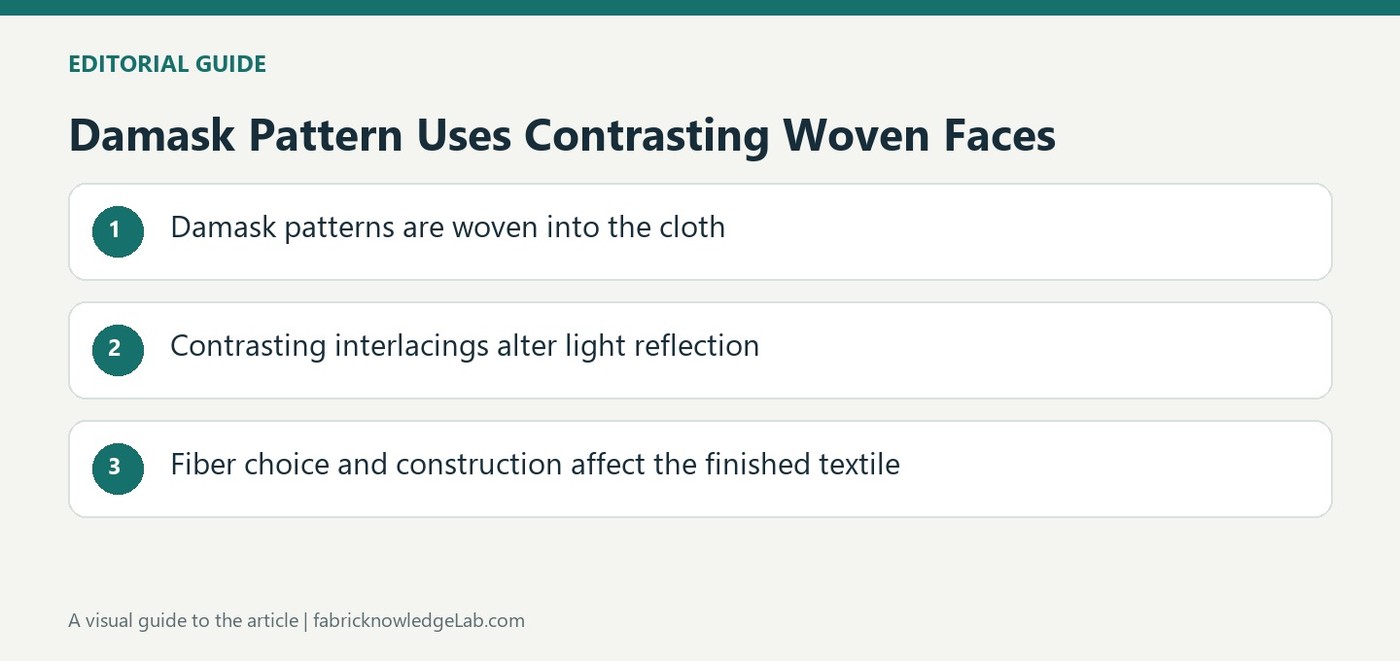
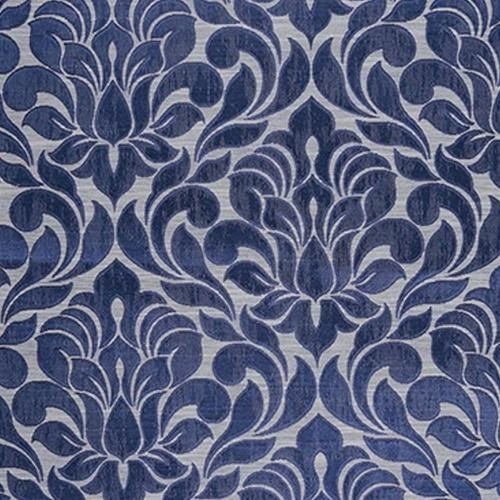
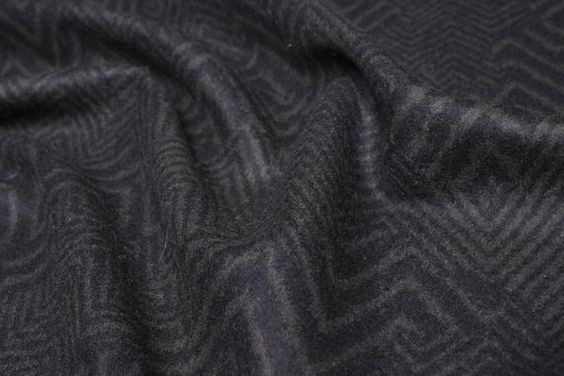
Damask is associated with patterned weaving in which different areas present contrasting faces of the yarn structure. Sewport's guide describes the combination of warp-faced and weft-faced effects, commonly involving satin and sateen. Because those areas reflect light differently, an intricate motif can remain visible even when the yarns are closely related in color. The pattern is therefore more than an image printed over a plain base. Looking from another angle or examining the reverse can reveal the relationship between the woven regions and help explain the characteristic appearance of the cloth.
The material name does not require one fiber
The source lists silk, cotton, wool, and manufactured fibers among damask materials. It also discusses modern computerized jacquard equipment as a way to produce complex designs more efficiently than earlier methods. Fiber choice and patterned weaving are separate decisions: a cotton table textile and a decorative silk garment can both use damask construction while differing in weight, handle, and care. The complete specification should identify the composition and structure rather than assuming that the historical association with silk establishes what a modern product contains or how it should be treated.
A damask-style motif is not always woven damask
Sewport notes that the familiar ornamental vocabulary also appears on wallpaper, cases, and other non-textile surfaces. A visual damask pattern on one of those products does not mean it was made with the same weaving method. Even within textiles, printed imitation and woven structure answer different manufacturing questions. For selection, distinguish the motif from the actual cloth, then consider its intended application. Upholstery, table linens, curtains, and clothing need different fabric properties, so the decorative name should accompany information about weight, composition, construction, and the performance expected from the finished product.
Light reflection can make a same-color design visible
The source describes contrasting woven regions rather than requiring several contrasting dye colors for every damask motif. When warp-facing and weft-facing areas expose the yarns differently, they can reflect light in ways that reveal a pattern. This explains why a single-color cloth can look subtly decorative and why changing the angle may alter which part appears more prominent. The woven reverse is also informative when identifying the structure. The effect should not be confused with a printed image simply because both can depict a similar ornamental shape. In a damask, the arrangement of the cloth is part of the design rather than only a support for an added motif.
Jacquard equipment and damask structure answer different questions
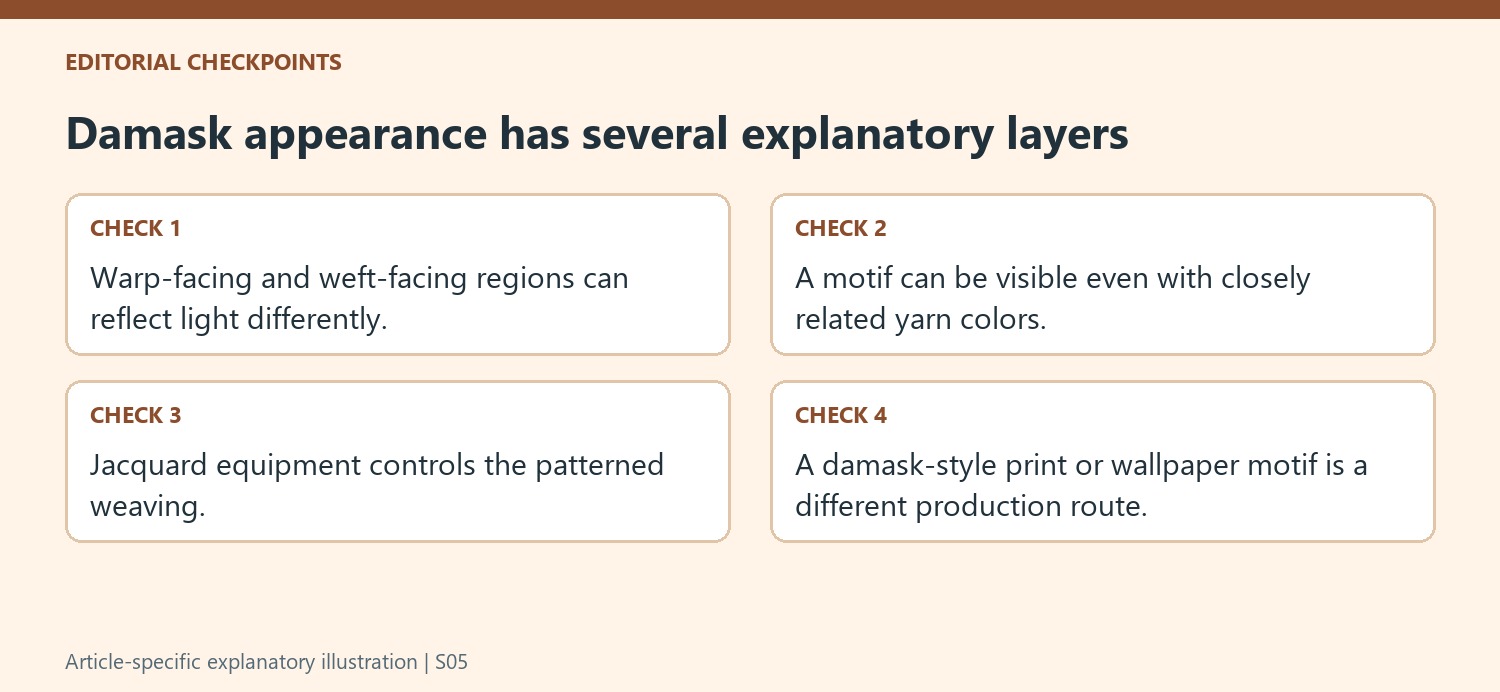
The guide discusses modern computerized jacquard equipment as a route to producing complex damask patterns. The machinery concerns control during weaving, while damask describes the resulting patterned relationship between regions of the textile. Fiber composition is a separate decision again. Silk, cotton, wool, and manufactured materials can therefore produce versions with different handle, weight, and care requirements. A historical association with silk should not become an assumption about a modern tablecloth or furnishing fabric. A complete description can include all three levels: the supplied fiber or blend, the patterned construction, and the relevant manufacturing route. This is more precise than using one familiar decorative name to describe the entire material system.
A familiar motif can appear outside the weaving method
Sewport notes damask-style decoration on non-textile products such as wallpaper. That use concerns the appearance of the motif, not evidence of warp and weft interlacing. The distinction also matters within textiles, where an ornamental image may be printed onto another kind of base cloth. For selection, first determine whether the product is woven damask or a damask-style pattern produced by another route. Then assess the actual composition and weight for the intended task. Curtains, upholstery, table linens, scarves, and dresses do not all require the same material behavior. Their shared decorative vocabulary is useful for appearance, while the actual construction and product requirements establish suitability and care. A photograph of an ornamental motif can help with visual selection, but cannot independently identify those underlying material and construction details.



Comments
0