 FabricKnowledge Lab
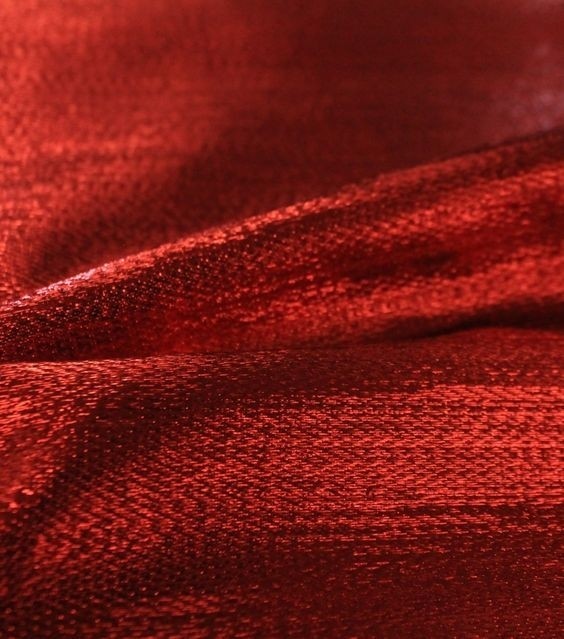
A bright surface with several material routes
Lamé describes a textile associated with metallic yarns and a reflective appearance. Sewport's guide distinguishes historic precious-metal examples from modern constructions using less costly metals and manufactured components. The visible effect therefore does not establish that a fabric contains solid gold or silver throughout. A metallic element can be combined with a supporting core and used alongside ordinary textile yarns. This layered material identity is useful when reading clothing descriptions: shine tells the observer something about the surface, but a composition statement is needed to identify what produces it.
Core, metallic layer, and coating have separate roles
The production account describes thin metallic material being wrapped around a core such as silk, cotton, or a manufactured fiber. It also discusses protective coatings used on some yarns. These components contribute different functions, including support, appearance, and surface protection. The resulting yarn can be incorporated into woven or knitted textiles. A stretch knit and a structured woven eveningwear cloth may therefore both display a metallic effect without having the same handle or extension. Construction and blend details remain important alongside the name of the metallic yarn itself.
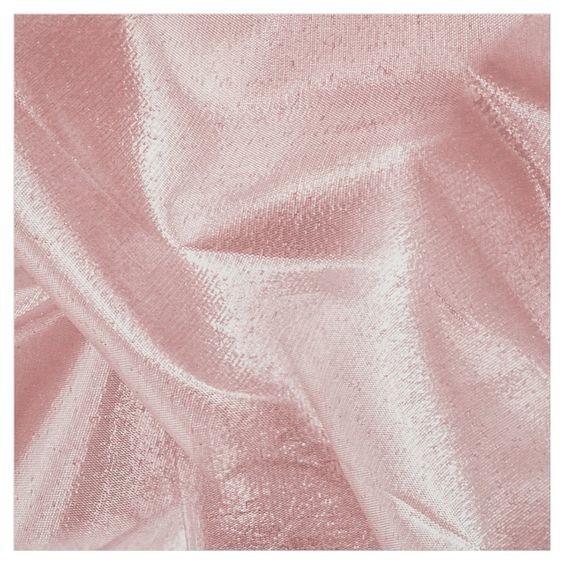
Decorative clothing and conductive equipment are different
Sewport lists evening clothing, accessories, theater costumes, and cosplay among applications. It also mentions conductive garments used in fencing, where electrical behavior has a specific technical function. That specialist use should not be transferred to an arbitrary shiny fashion fabric. A decorative metallic appearance does not independently establish the conductivity or durability required by sporting equipment. For clothing projects, consider drape, backing, surface sensitivity, seams, and the supplied care instructions. For a technical application, use the relevant product specification and testing. The material category introduces a visual effect; the complete construction determines what a particular fabric is designed to do.
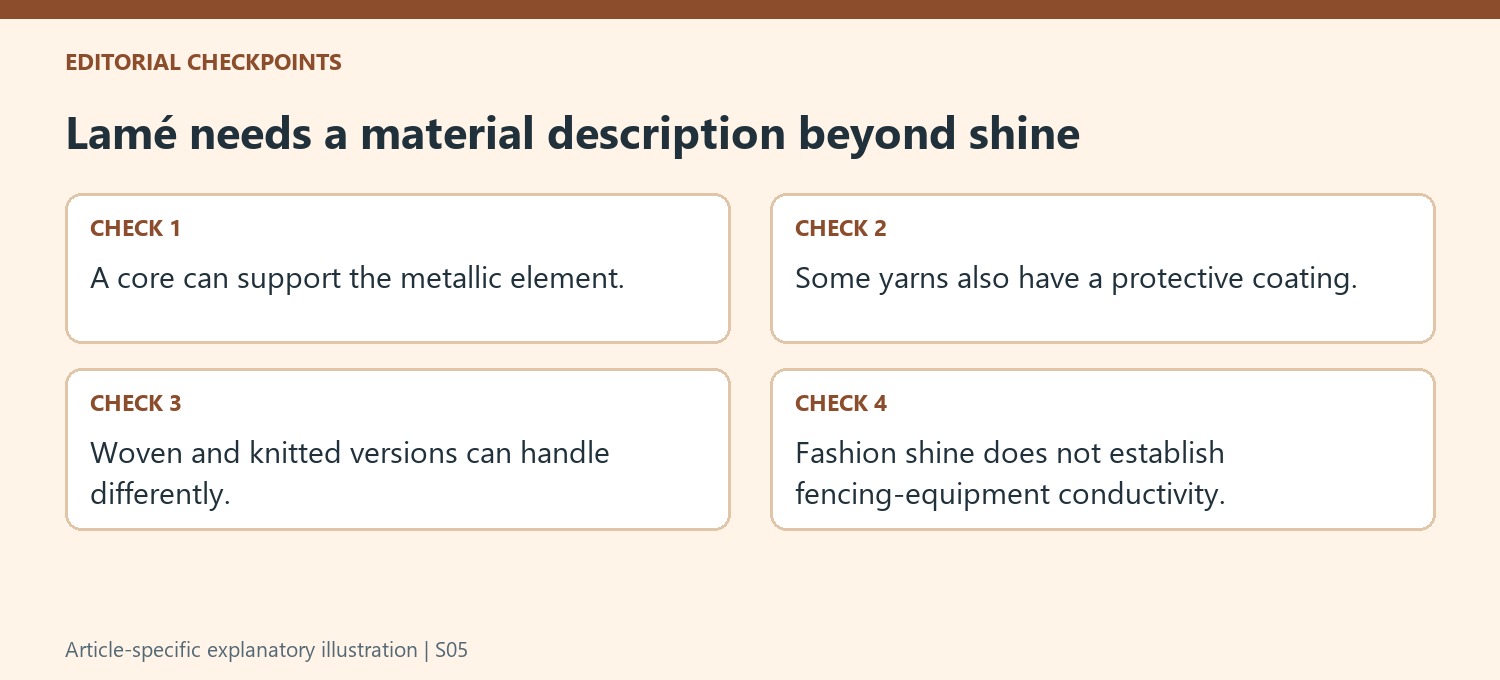
The metallic effect can sit on a supporting core
The guide describes a metallic element wrapped around a textile core and discusses protective coatings used in some constructions. This layered yarn should not be pictured as a garment made from a solid sheet of metal. The core, metallic component, and any coating can each have a distinct purpose, and ordinary yarns may be present alongside the metallic yarn within the fabric. That makes the complete composition more useful than color alone. A gold-looking surface does not establish precious-metal content, just as a silver-looking cloth does not independently identify its coating or backing. The source's historical examples and contemporary lower-cost routes belong within the same broad visual category while using different material systems.
A knit and a weave can produce different handling
Sewport says metallic yarns can be incorporated into woven or knitted textiles. Those structural routes help explain why one lamé may be selected for a flexible costume piece and another for a more defined eveningwear silhouette. A reflective surface is a shared feature, not a guarantee of identical extension or drape. The yarn's support and coating also remain part of the actual material. For a garment project, inspect a sample for the intended shape and how its surface responds to handling, and obtain the supplier's care directions. This is more informative than choosing from a photograph of shine alone or assuming that every metallic fabric follows one universal cleaning rule.
Decorative and electrical functions need separate specifications
The source's fencing example uses the term lamé for conductive equipment, where the electrical response has a specific sporting purpose. A costume material's bright appearance does not prove that it can perform that role. Conductivity, durability, complete construction, and compliance with the relevant equipment requirements need their own evidence. The same care with scope is useful in fashion: a fabric suitable for a decorative accessory is not automatically a specification for a fitted garment or a heavily handled stage piece. Lamé introduces a recognizable effect and a family of material routes. The actual yarns, structure, coating, backing, intended use, and supporting documentation establish what a particular version is designed to do.





Comments
0