 FabricKnowledge Lab
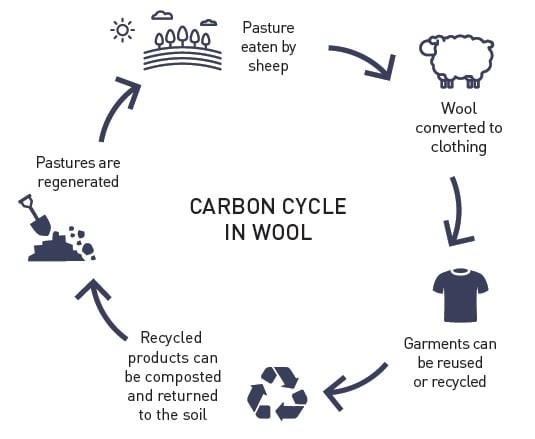
Keratin gives microorganisms a material to break down
Wool is composed largely of keratin, the natural protein also associated with hair. Woolmark's biodegradability page explains that fungi and bacteria can produce enzymes that break down this protein under suitable conditions. This is a biological process, rather than the fabric simply vanishing when it is no longer wanted. The page focuses on wool fibers and 100 percent Merino fabrics. A finished article containing synthetic threads, coatings, fasteners, or blended fibers has a more complex composition, so the behavior of pure wool should not automatically be assigned to every component of the product.
Warmth and moisture influence the rate
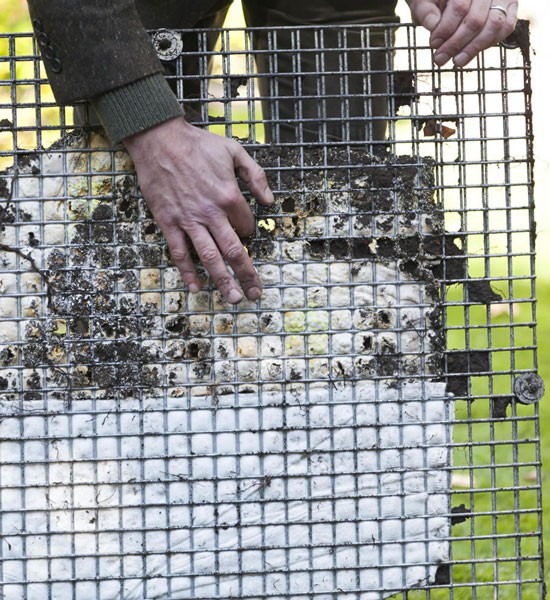
The source reports that a tested Merino fabric could biodegrade substantially during 15 weeks of soil burial, while also stating that the rate varies with soil, climate, and wool characteristics. That qualification is central. Warm, moist conditions encourage microbial activity, whereas clean, dry wool is comparatively resistant to deterioration. The same material can therefore remain useful for a long period under ordinary storage conditions yet break down when placed in a biologically active environment. A laboratory or burial result is evidence for its stated conditions, not a fixed countdown that applies in every landfill, room, or natural setting.
End-of-life claims need a complete composition
Woolmark also discusses research on marine degradation and machine-washable wool treatments. Those findings should be read with their study materials and methods rather than treated as approval for disposing of clothing in the environment. A practical product assessment begins with the complete fiber and component list and the available collection or waste route. Biodegradability identifies a potential material behavior under particular conditions; it does not make all disposal routes equivalent. The source is most useful when its mechanism, tested examples, and environmental qualifications remain together instead of being reduced to an unconditional claim that every wool garment quickly disappears.
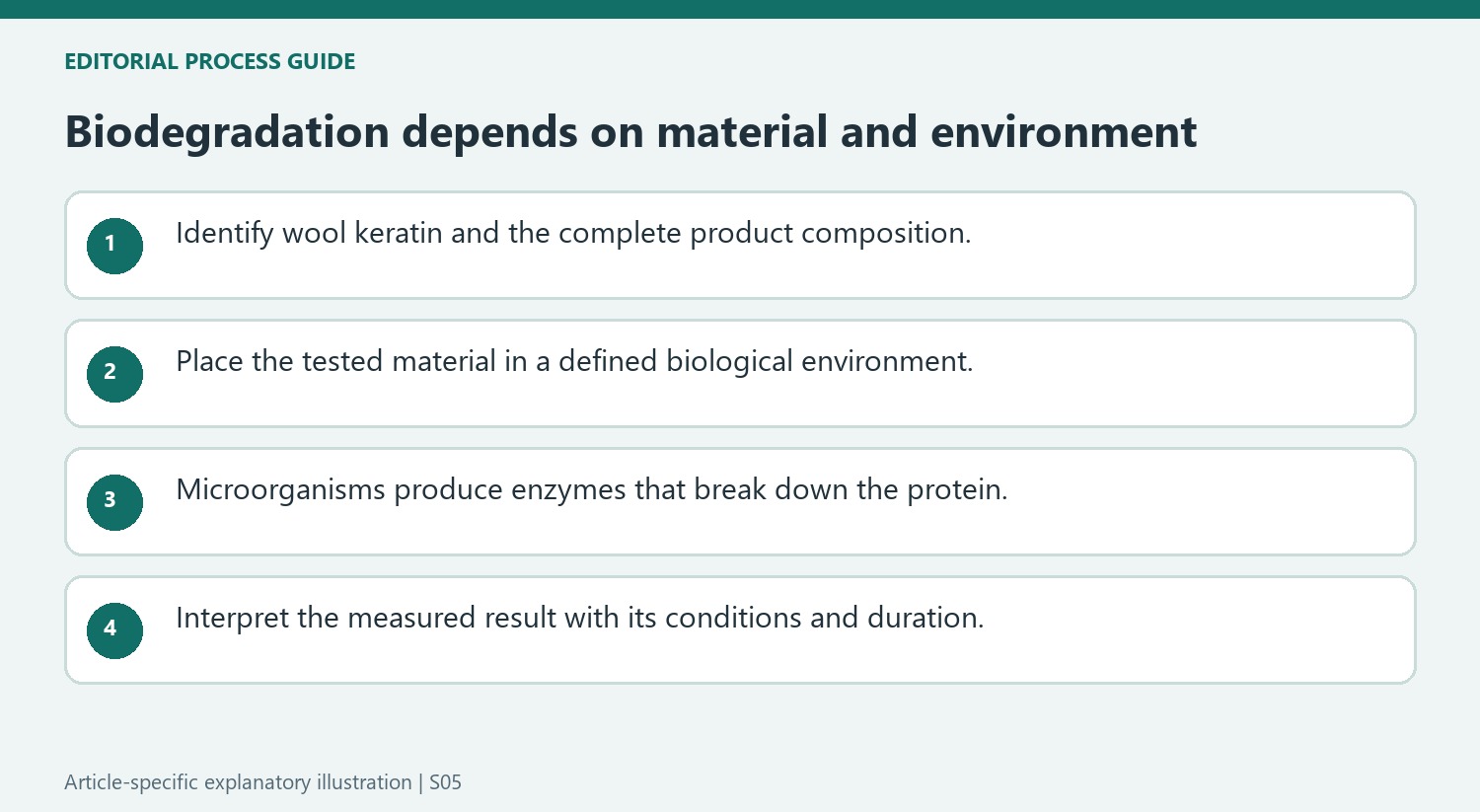
Biological breakdown requires a suitable environment
The source identifies fungi and bacteria as organisms that can produce enzymes capable of breaking down wool's keratin protein. This explains why temperature and moisture belong in the account of biodegradation. A clean, dry wool article can remain serviceable because those ordinary conditions differ from a warm, moist, biologically active burial environment. There is no contradiction between durability in use and the ability to decompose under suitable conditions. The useful distinction concerns the surrounding environment and the material's state. A general statement that wool is biodegradable should therefore remain connected to those conditions rather than interpreted as a claim that a stored sweater will rapidly deteriorate or that every disposal setting produces the same rate.
The fifteen-week example is a tested result with limits
Woolmark reports that a 100 percent Merino fabric could reach 95 percent biodegradation after fifteen weeks of soil burial, while immediately noting variation with soil, climate, and wool characteristics. Those qualifications prevent the example from becoming a universal countdown for all wool products. A different fabric, environment, or test method would need its own evidence. The result also concerns a material identified as entirely Merino, whereas a complete garment may include sewing threads, zips, fasteners, labels, coatings, and other fibers. An end-of-life description should identify those components separately instead of borrowing a pure-wool result for the whole assembled object. The reported mechanism remains useful without requiring that broader and unsupported extension.
Research on treatments should stay attached to the tested materials
The page also summarizes a 2020 AgResearch study addressing marine degradation and machine-washable wool treatment components. That is a specific research reference, not a reason to assume that every resin, finish, or synthetic partner in every wool product behaves identically. The exact study materials and methods matter to interpretation. Likewise, a fiber's potential to break down does not make littering or uncontrolled disposal an appropriate end-of-life route. A practical assessment should start with the complete product composition and the available collection or waste arrangement. The article contributes information about wool's biological behavior; it does not replace decisions about reuse, collection, or the actual handling of an unwanted finished garment.
References
- Wool is biodegradable. The Woolmark Company; The Woolmark Company.



Comments
0