 FabricKnowledge Lab
A treatment applied before the yarn exists
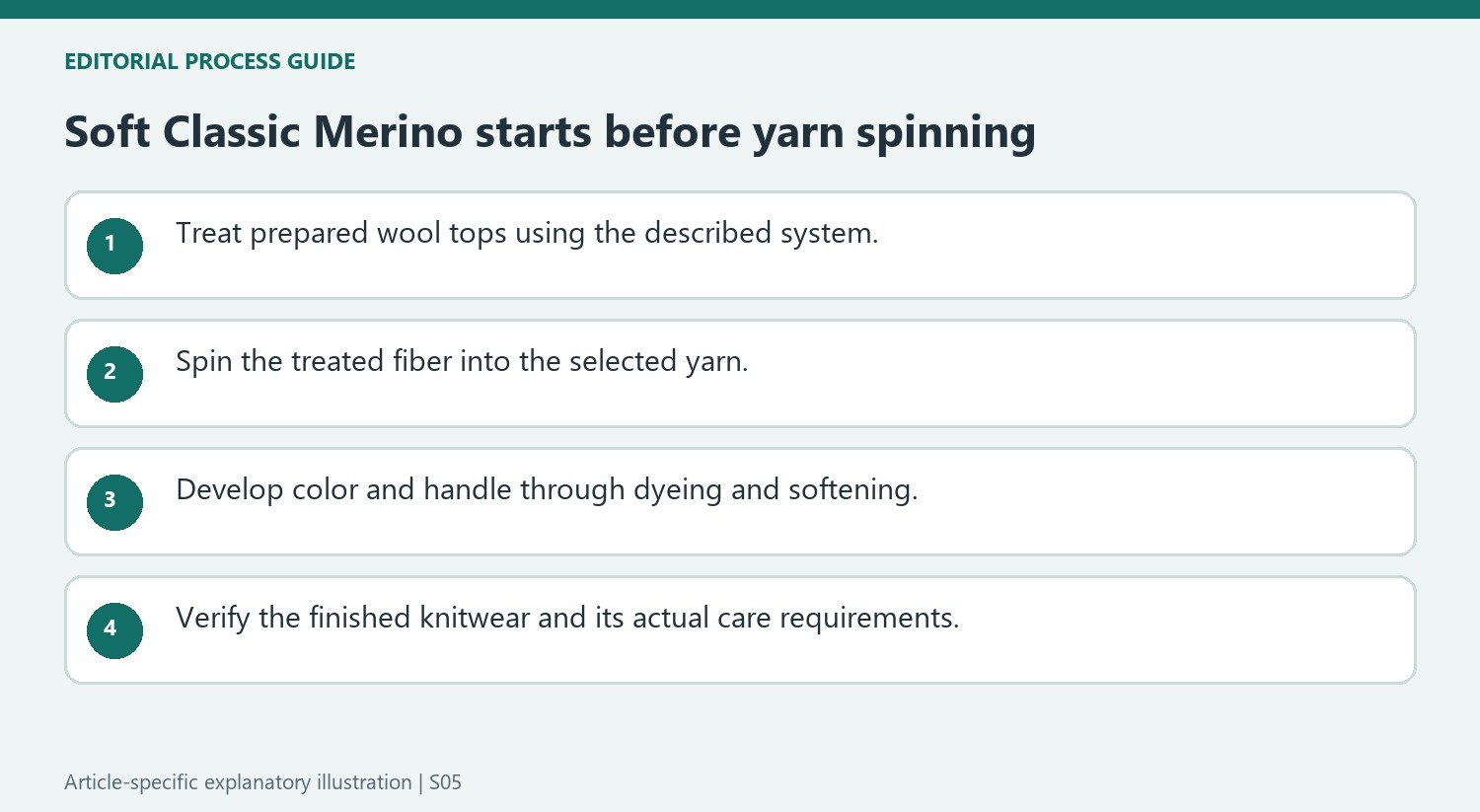
Woolmark's Soft Classic Merino page describes treating wool tops before spinning. A top is an intermediate fiber preparation, so the intervention occurs earlier than finishing an already knitted sweater. The process uses a modified backwasher system and a named chemical treatment, Basolan 88. According to the page, the treatment changes the fiber's internal structure to reduce rigidity and increase its receptiveness to reactive dyes. This timing helps distinguish the method from simply applying a soft surface coating to a finished garment, even though later finishing also contributes to the result described.
Dyeing and softener application complete the effect
The account says the final handle and brightness develop during dyeing and subsequent softener application. It links the treatment with bulkier, softer yarns and brighter shades because the treated wool absorbs the selected dyestuffs well. These are connected stages: preparing the fiber changes how it responds, while dyeing and softening help establish the finished appearance and touch. The page notes availability through worsted spinners and some woollen spinners, indicating that the treatment can enter different yarn-production contexts. It does not identify one universal knit structure or one finished garment weight.
A degree of anti-felting is not a blanket care rule
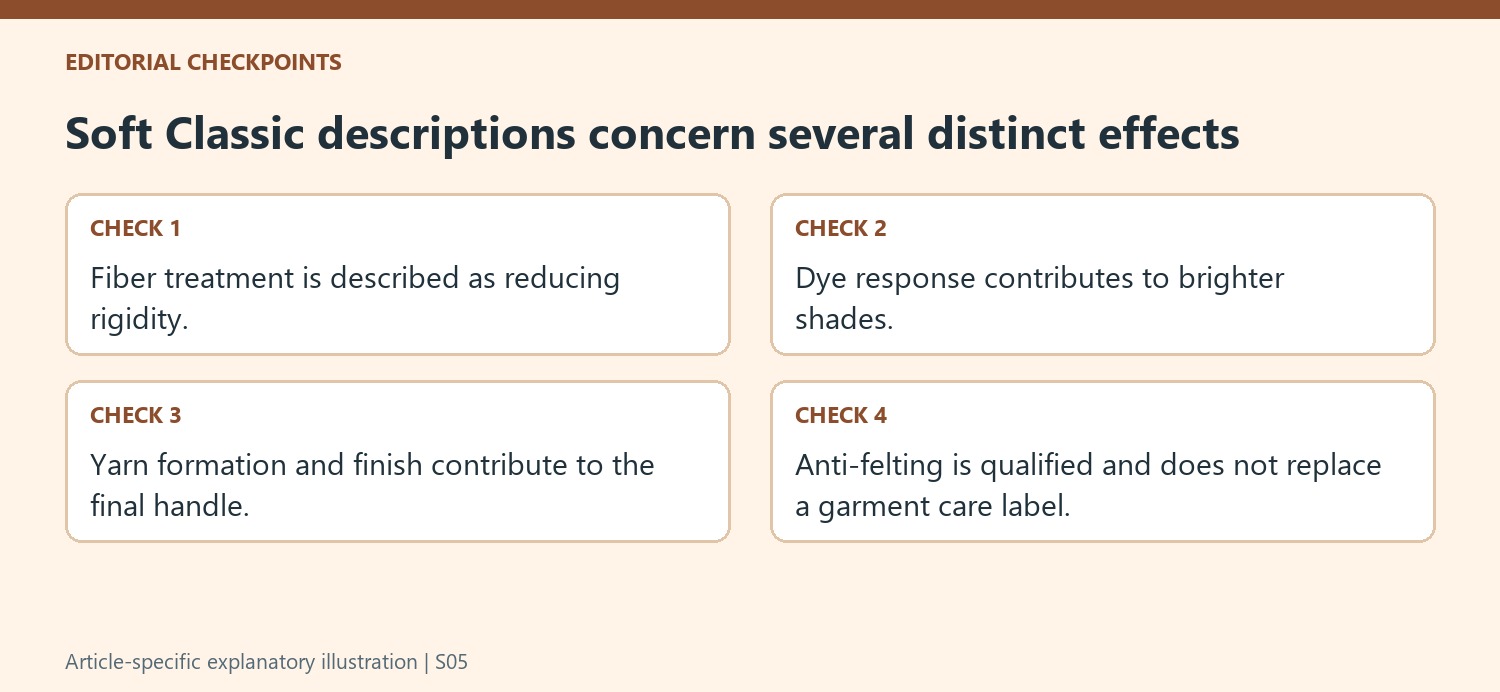
Woolmark also says the process provides some resistance to felting, allowing easy hand washing and, in certain cases, machine washing of knitted garments. The phrase in certain cases is important. It ties care suitability to the actual yarn, textile, finishing, and complete garment rather than to the treatment name alone. A sweater can contain seams, trims, dyes, or other materials that require their own handling. The useful specification therefore combines the pre-spinning process with the finished product's composition and care label, keeping softness, color response, and washing performance as related but distinct characteristics.
The treated top is an intermediate material
Applying the Soft Classic process to wool tops locates the intervention between fiber preparation and yarn spinning. The source names a modified backwasher system and Basolan 88, describing a treatment that reduces fiber rigidity and changes response to reactive dyes. This is more specific than saying a finished sweater has been made soft. It establishes which material is treated and when the treatment enters production. Later yarn formation, knitting, dyeing, and finishing still have their own roles. A product description should preserve that sequence so the pre-spinning operation is not mistaken for a generic softener applied only at the very end of garment manufacture.
Handle and brightness develop through connected stages
Woolmark states that the final touch and brightness emerge during dyeing and subsequent softener application. The initial fiber treatment therefore should not be credited alone with every aspect of the completed yarn or knitwear. Its role is linked with how the treated wool receives dye and responds during later operations. The page associates the system with bulkier, softer yarn and brighter shades, while noting availability through worsted and some woollen spinners. These are several production contexts rather than one universal finished fabric. For comparison, identify the yarn, coloration, knitted construction, and finish together, because the same process name does not establish identical weight, texture, or appearance in every garment.
Anti-felting language contains an explicit qualification
The source describes a degree of anti-felting and says the resulting knitwear can be easily hand-washable, with machine washing possible in some cases. That is narrower than a blanket claim that every treated garment can use any domestic wash cycle. The final item's seams, trims, dyes, construction, and any other materials still belong to its care specification. A supplier making a machine-washability claim should connect it to the actual finished product and appropriate testing. A consumer should follow the garment label. Keeping this qualification visible also separates washing behavior from softness: a pleasant hand and a bright shade do not independently prove resistance to felting under every cleaning condition. The qualified language is part of the source’s explanation and should remain visible in any description of the resulting knitwear.
References
- Soft Classic Merino. The Woolmark Company; The Woolmark Company.



Comments
0