 FabricKnowledge Lab

A prickly sensation is not a diagnosis
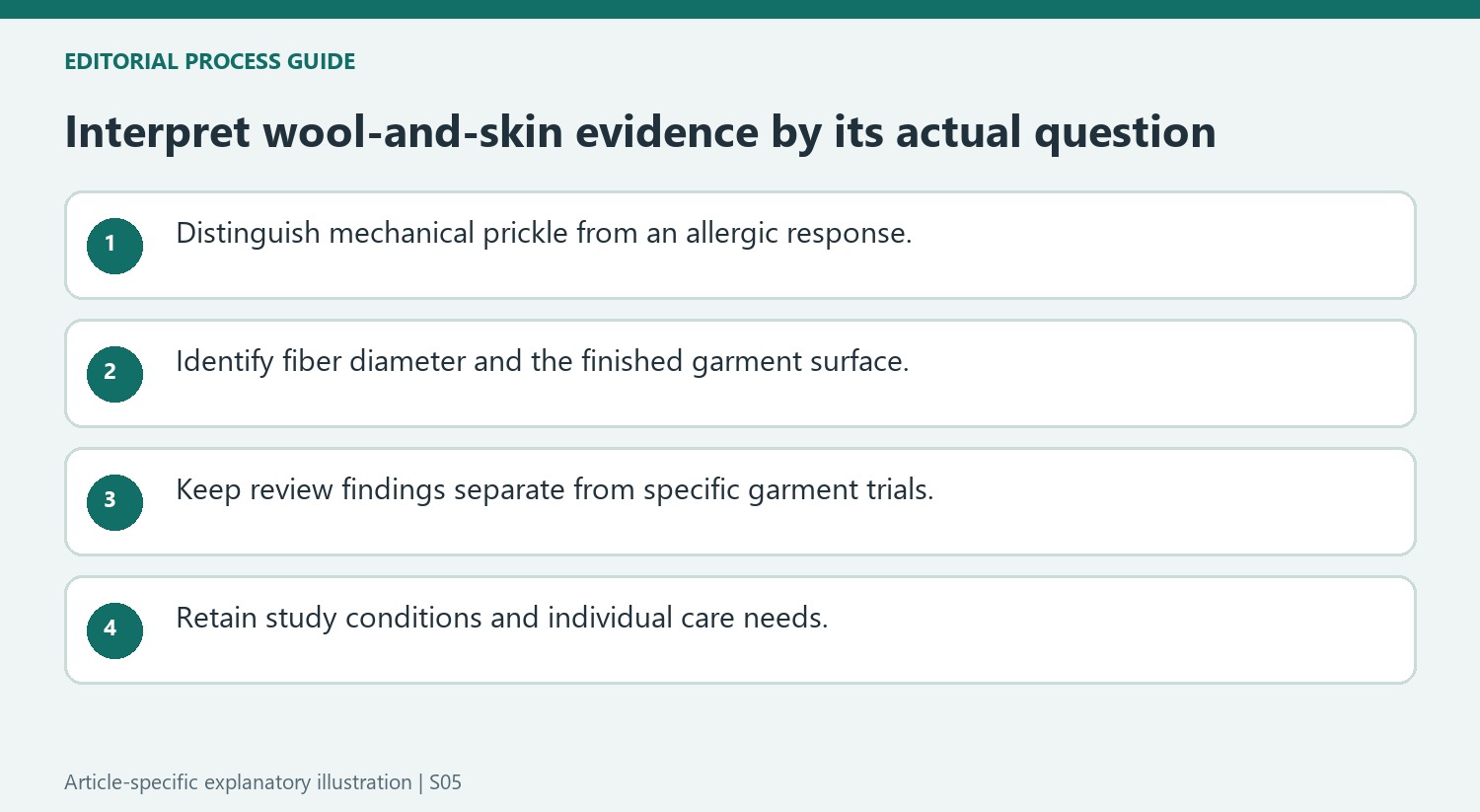
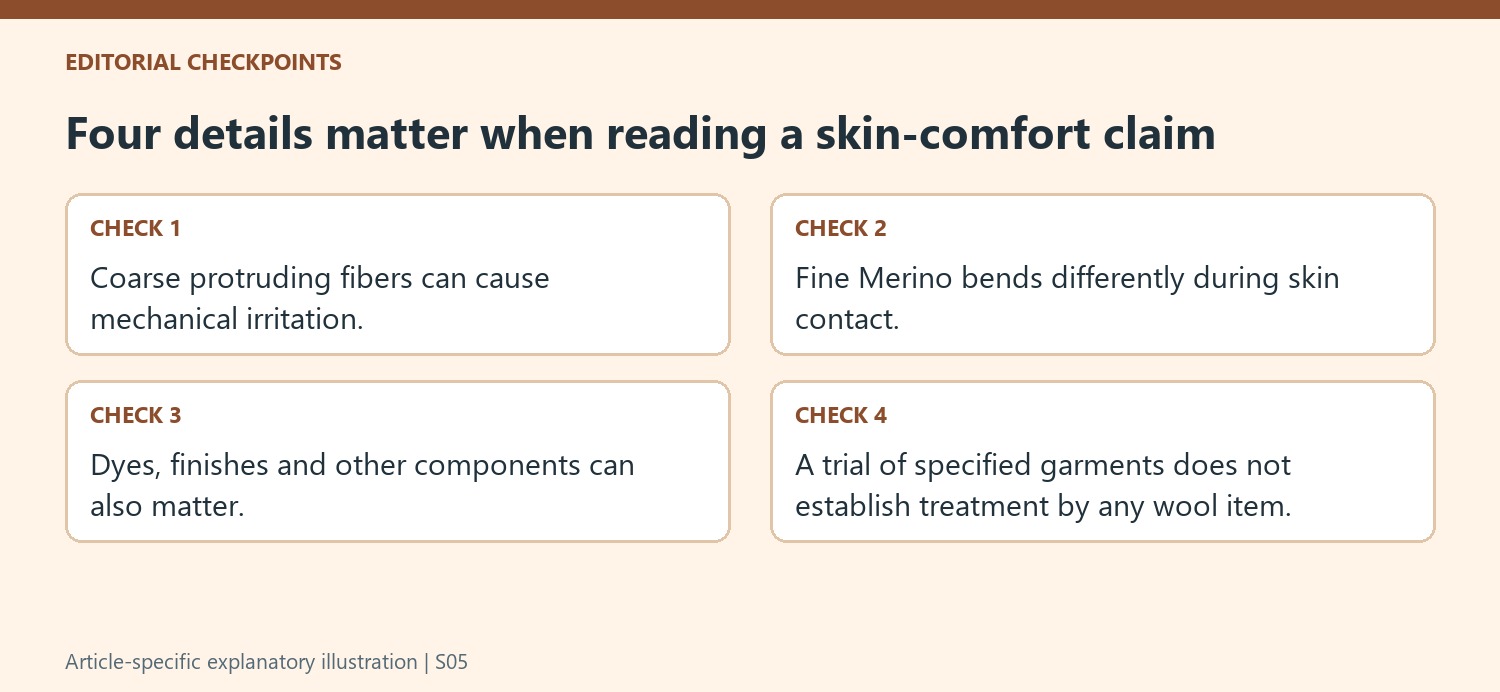
Woolmark's article distinguishes the mechanical irritation caused by protruding coarse fibers from an allergic response. It cites a research review titled Debunking the Myth of Wool Allergy and says the review found no evidence for wool itself acting as an allergen in the studies considered. That finding should be understood as a summary of the reviewed evidence, rather than a diagnosis for every person who develops symptoms while wearing a garment. A textile can include dyes, finishes, seams, and other fibers, and an uncomfortable response cannot be assigned to one cause merely from the word wool on the label.
Fiber diameter changes the contact experience
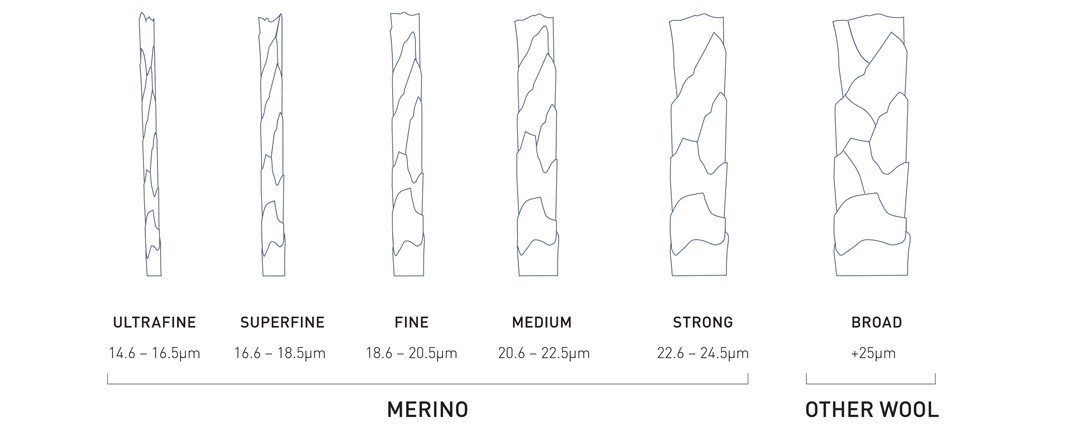
The page explains that coarse fibers can press against the skin and produce irritation regardless of whether their origin is wool or a manufactured material. Finer fibers bend more readily, changing that mechanical contact. Woolmark focuses on superfine and ultrafine Merino rather than treating all wool fabrics as identical. This distinction is useful when comparing a coarse outerwear cloth with a fine next-to-skin knit. Their shared raw-material family does not establish the same surface behavior, and the finished yarn and construction also influence which fiber ends contact the wearer.
Trials concern specified garments and participants
The article describes dermatology trials in which participants with eczema wore superfine Merino garments and reported improvements in certain symptoms and quality-of-life measures. It also discusses moisture buffering near the skin as a possible relevant mechanism. These are findings about the study conditions and materials, not proof that any wool garment treats eczema or replaces an individual's established care. A careful reading keeps the fiber specification, garment type, participant group, and reported outcome together. The useful textile insight is that wool's diameter and construction deserve attention instead of relying on a single blanket judgment that every wool fabric is equally itchy.
Mechanical prickle is a particular contact mechanism
The article explains irritation from coarse fibers protruding from a textile and pressing against the skin. It says this can occur with manufactured fibers as well as wool, making diameter and contact behavior more relevant than a simple natural-versus-synthetic distinction. Finer fibers bend more readily, which is the reason the source focuses on superfine and ultrafine Merino for next-to-skin use. This explanation should not be expanded into a diagnosis of any individual rash. The same garment may contain finishes, dyes, other fibers, and seams, and the material overview cannot determine which factor caused a particular response. It offers a useful mechanism for comparison rather than a complete account of every skin symptom.
The research review and garment trials answer different questions
The review titled Debunking the Myth of Wool Allergy addresses evidence about wool as an allergen. The dermatology trials discussed later concern the experience of participants wearing specified superfine garments. Those are related topics, but they are not identical studies with identical questions. A lack of evidence for wool itself as an allergen does not establish that every garment is comfortable for every person, and a reported symptom improvement in a trial does not prove that all wool clothing treats eczema. Keeping the type of study, material, participant group, and measured outcome visible makes the article more informative than treating its various findings as one blanket statement about wool and skin.
Superfine describes a narrower material choice
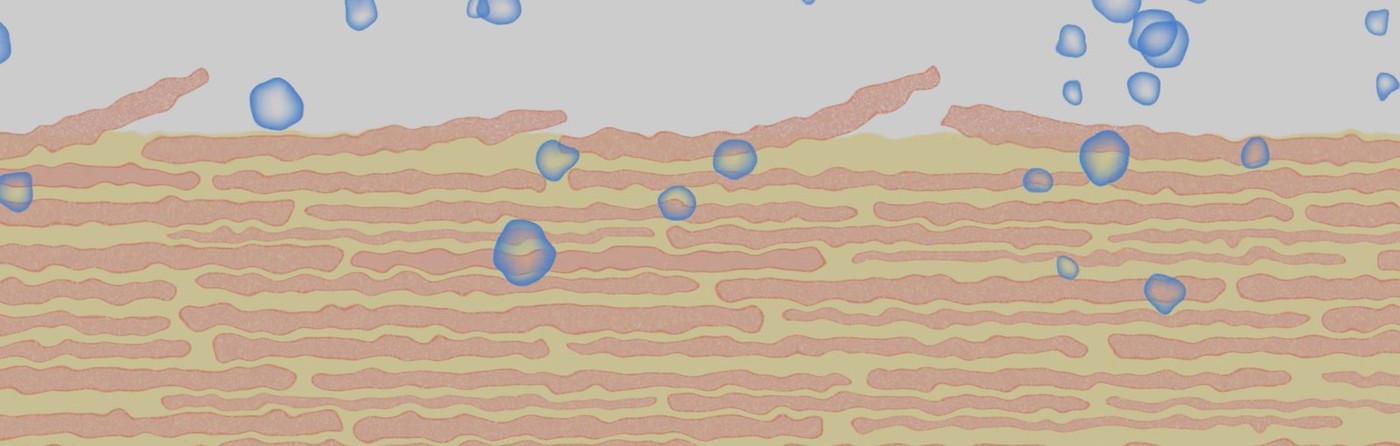
The page uses a threshold of 17.5 microns or less in its discussion of superfine Merino available for direct skin contact. That is a more specific description than an ordinary wool label, but the finished fabric still depends on yarn and construction. An outerwear cloth and a fine base layer can therefore belong to the same broad fiber family while offering different surfaces against the skin. The source also discusses moisture buffering as a possible contribution to comfort. These points can guide textile comparisons without replacing an individual's established eczema care or assessment of persistent symptoms. The article's strongest practical lesson is to examine the precise material and garment, while keeping research findings within the conditions in which they were reported.
References
- Are you allergic to wool?. The Woolmark Company; The Woolmark Company.




Comments
0