 FabricKnowledge Lab

Selected gases are the subject of the research
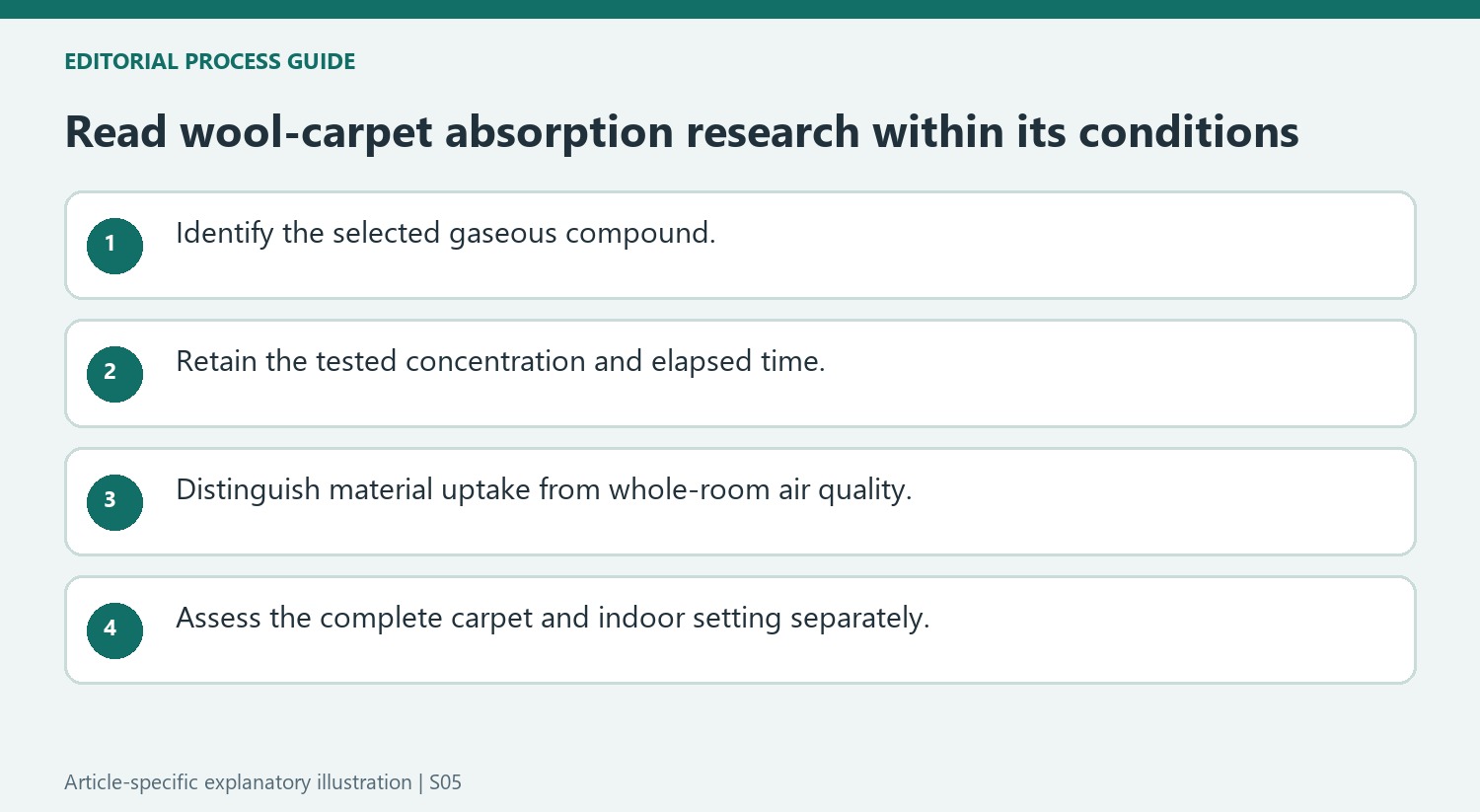
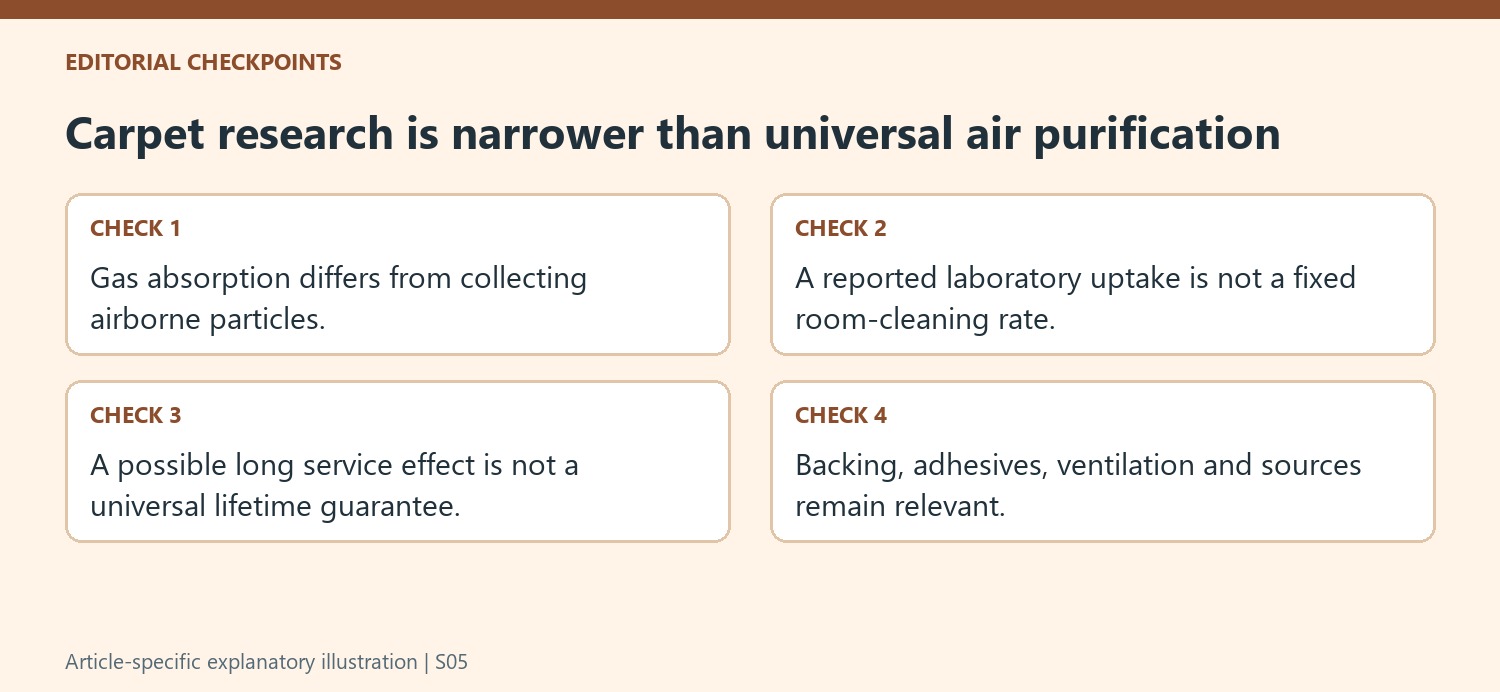
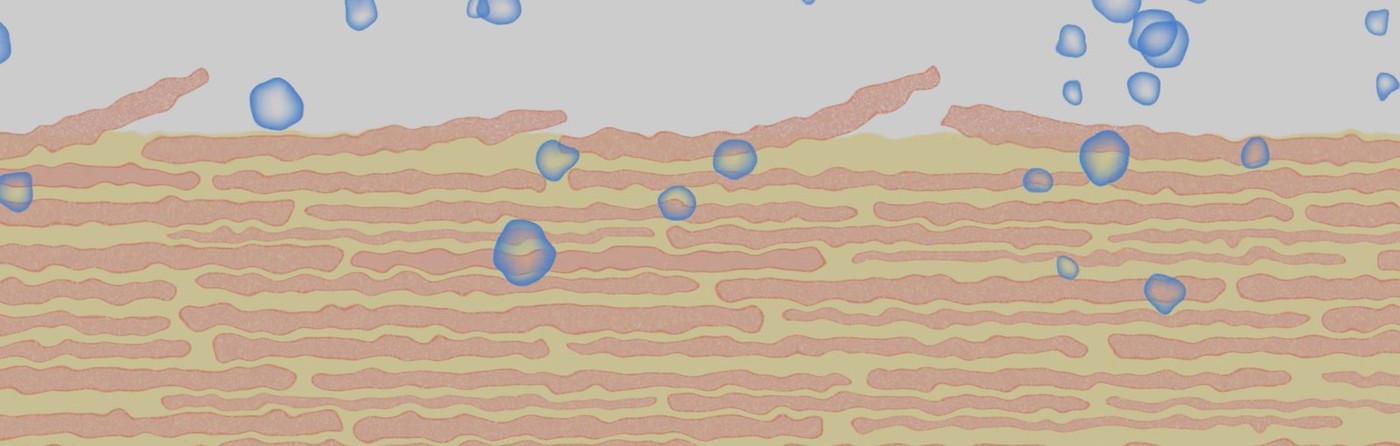
Woolmark's indoor-air article summarizes research attributed to AgResearch on wool carpet absorbing selected gaseous compounds. The listed substances include formaldehyde, sulphur dioxide, and nitrogen oxides. This is a specific material interaction, not a statement that carpet removes every kind of indoor pollution. Gas uptake also differs from filtering airborne particles or controlling the source of emissions. Keeping those distinctions clear makes the research easier to interpret. The page concerns what wool fibers can absorb under the reported conditions, rather than establishing that installing a carpet independently guarantees a healthy indoor environment.
Reported comparisons depend on their conditions
The article describes laboratory comparisons involving wool, nylon, and polyester and reports faster or more complete uptake by wool in the examples given. It includes formaldehyde tests at stated concentrations and elapsed times. Those details matter because laboratory concentration, exposure, available material, and time all affect what a result means. The page also discusses retention of absorbed contaminants and a possible long service period for the effect. Those statements should remain attributed to the research summary rather than converted into a fixed purification rate or guaranteed lifetime for every carpet in every occupied room.
A finished room is a broader system
The source connects indoor air with occupant comfort and notes wool's ability to buffer moisture changes. However, a room contains many factors beyond its carpet fiber, including other materials, ventilation, emissions, and patterns of use. A carpet may also include backing, adhesives, dyes, and treatments with their own specifications. The practical value of the article is its account of a particular absorption mechanism. Assessing an actual installation requires information about the complete product and indoor setting, so the material finding should complement rather than replace attention to the wider conditions that determine indoor air quality.
The named contaminants define the subject of the finding
The summary discusses formaldehyde, sulphur dioxide, and nitrogen oxides as selected gaseous compounds that wool can take up. That is narrower than a claim about eliminating all indoor pollution. A material absorbing a gas is not the same mechanism as a mechanical filter collecting dust, and neither statement establishes removal of every odor or microorganism. The distinction matters when interpreting a broad expression such as air purification. Woolmark attributes the research to AgResearch and reports comparisons with other carpet fibers. An accurate account should retain the substances and conditions considered, so the result remains a material interaction with a defined subject rather than an unrestricted promise about the quality of any indoor space.
Concentration and elapsed time belong beside the result
The page gives formaldehyde examples at 300 parts per million and at 5 parts per million, with different elapsed periods reported for uptake. In one account, wool reduced the higher level to virtually zero over four hours; in the lower-level example, the reported period was thirty minutes. Those are different test descriptions, not a single rate that can be applied to every room. The amount of exposed material, enclosure conditions, and starting concentration would all matter to interpretation. The summary does not turn those laboratory examples into a guaranteed result after a fixed number of minutes in an occupied building. Keeping the original concentration and time together prevents that misleading transfer.
A long-term possibility is not a maintenance guarantee
Woolmark says the effect may continue over a long service period and discusses retention of absorbed compounds. That language should remain attributed to the research summary, including its conditional wording, rather than becoming a promise that every carpet will provide thirty years of measurable purification. A real carpet includes a backing and may include adhesives, dyes, and other treatments, while a room has ventilation, sources, and changing patterns of use. Those additional factors do not negate a reported fiber mechanism; they define the broader setting in which it would operate. The practical reading is to consider the complete product and room conditions alongside the absorption finding, without substituting a carpet choice for evaluation of the indoor environment.
References
- Wool carpets improve air quality. The Woolmark Company; The Woolmark Company.




Comments
0