 FabricKnowledge Lab
Compression is a garment-design feature
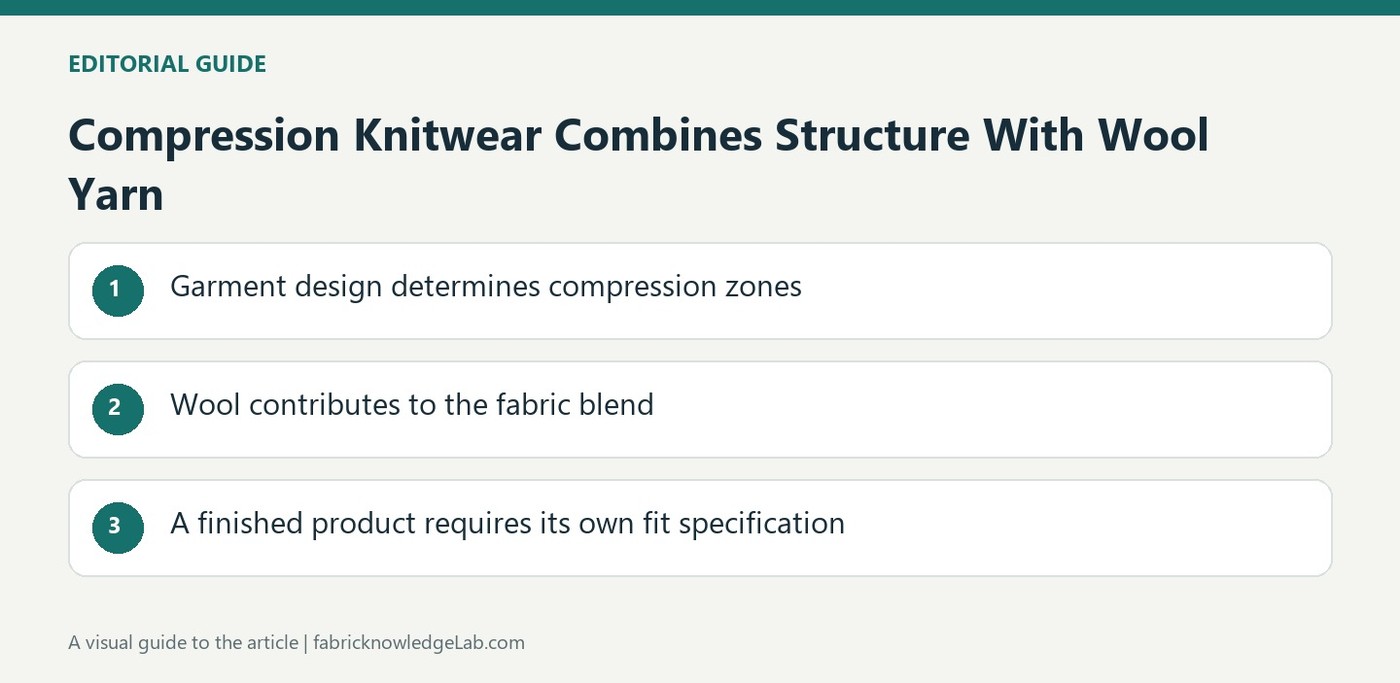
Woolmark's compression-clothing page discusses close-fitting sportswear that combines wool yarn with engineered knit structures. The central textile idea is to control extension and recovery so a garment moves with the body while maintaining its intended shape. This is different from assuming that wool fiber alone creates a specified pressure. Fit, dimensions, stitch arrangement, and any accompanying elastic material all influence the result. A general description of compression clothing therefore does not identify the pressure delivered by a particular garment or establish that two similar-looking leggings will behave the same way.
Body mapping assigns different structures
The page describes body mapping and identifies warp knitting as one possible construction route for wool-rich compression fabrics. Integrated knit zones can be selected for different body areas rather than using an identical structure everywhere. Woolmark connects the wool component with moisture-vapor absorption, temperature-related comfort, softness, and reduced clammy contact. Those are material considerations that may help explain design choices. They remain separate from the mechanical action of the compression structure and from any claimed effect on exercise outcomes. Evaluating the finished garment requires both the textile construction and the intended fit to be specified.
A named collection illustrates the approach
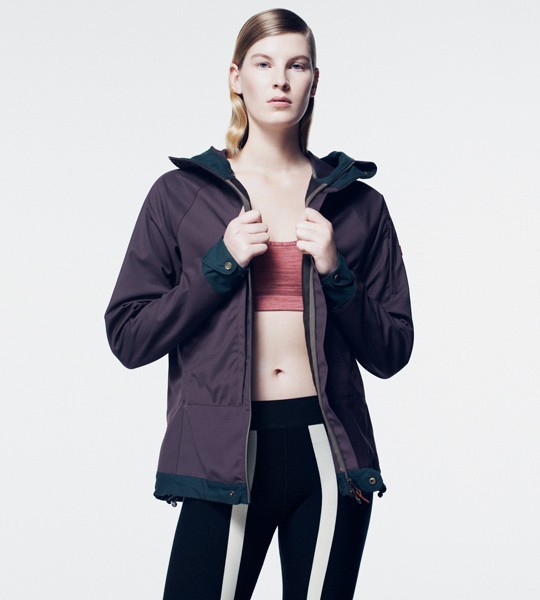
The source describes P.E. Nation's six-piece Merino collection, including high-rise seamless leggings and a crop top with a compression-knit structure. These are product examples within the page's broader account. Although the page promotes benefits involving blood flow, performance, and recovery, it does not provide detailed clinical evidence or a pressure specification for every item. Such outcomes should not be promised universally from a wool label. The most concrete lesson is how yarn selection and engineered knitting are combined: the wool component contributes its characteristics, while the garment construction determines where and how the close-fitting structure acts.
Compression must come from the finished construction
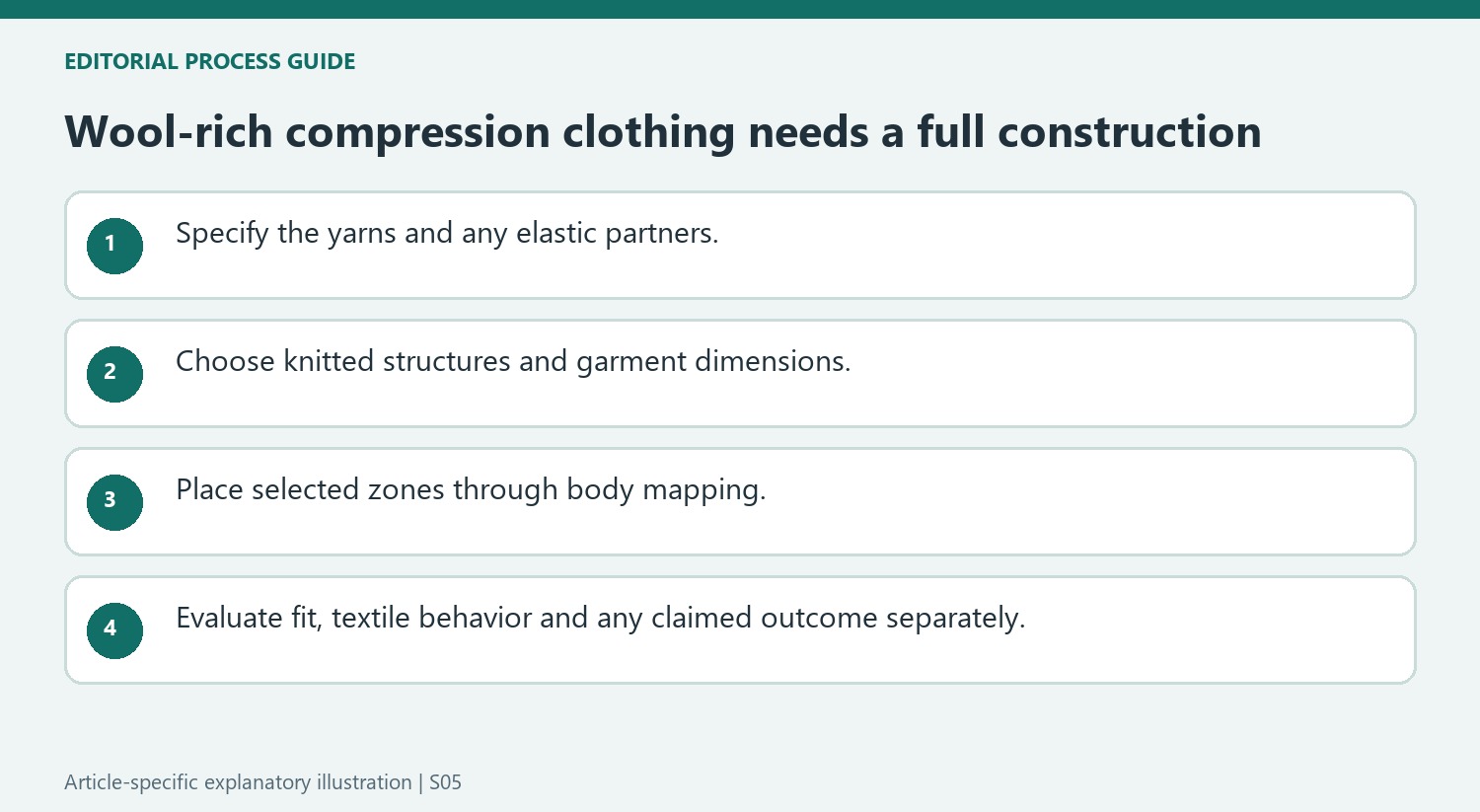
A close-fitting garment is an engineered arrangement of yarn, stitch structure, dimensions, and any elastic partner. Woolmark's account describes combining that arrangement with wool to create sportswear that extends and recovers. The wool contributes material characteristics, while the complete textile and fit determine how the garment acts on the body. A familiar legging silhouette does not establish a quantified pressure, and the word compression does not itself provide a medical classification. A useful specification would distinguish the intended close fit from any separately measured pressure claim. This keeps the textile explanation grounded in the actual article rather than turning a fiber description into a universal statement about circulation or recovery.
Body mapping is a placement strategy
The page describes integrated knit structures selected for different body regions and names warp knitting as one possible way to construct a wool-rich compression fabric. The design task is therefore not simply to choose one yarn and repeat a uniform structure everywhere. Local stitch arrangements and garment shaping can be coordinated with the intended movement and fit. Woolmark connects next-to-skin wool with moisture-vapor handling and reduced clammy contact, giving one reason to consider the material in such a system. Those comfort-related contributions should remain separate from compression's mechanical role. An assessment of the actual product needs both its full composition and its construction, including which regions use which structures and how the item is intended to fit.
The collection example does not settle every outcome claim
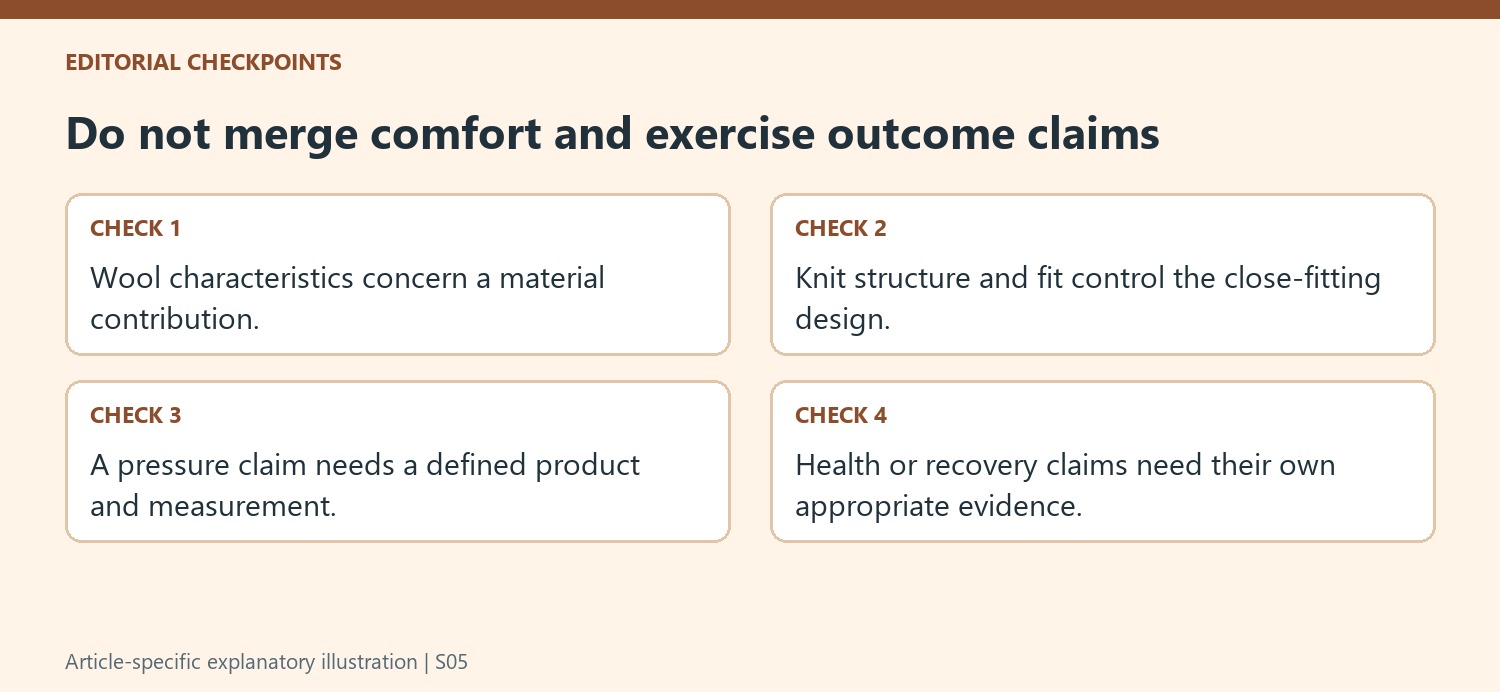
P.E. Nation's six-piece collection is presented as an example of applying technical Merino fabrics to activewear, including seamless leggings and a crop top with compression knitting. The source promotes exercise-related benefits but does not provide the clinical study details or pressure measurements needed to promise those outcomes for every wearer or product. Reporting the collection as a design example preserves its useful information without extending that promotional language into a universal health claim. A buyer can still evaluate the concrete features: composition, structure, fit, stretch, recovery, and care. Any stronger assertion about injury prevention, blood flow, or post-exercise recovery needs evidence appropriate to that assertion and the actual garment, rather than support inferred only from wool content.
References
- Compression wool clothing. The Woolmark Company; P E Nation co-founder Pip Edwards.



Comments
0