 FabricKnowledge Lab
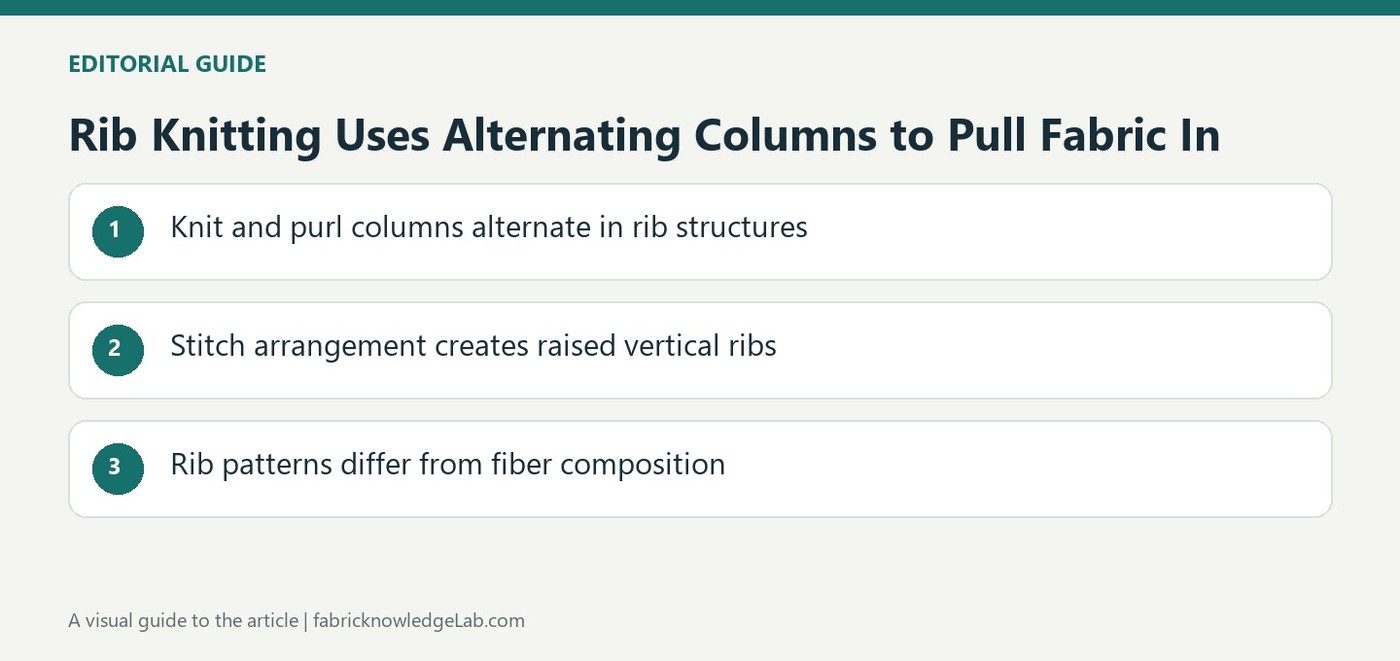
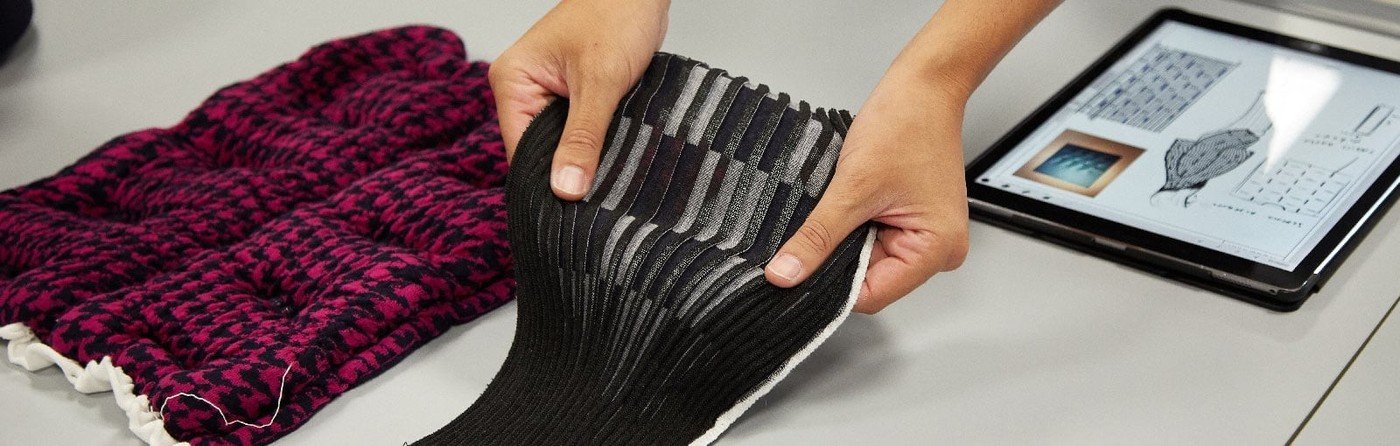
Alternating columns create the ribbed surface
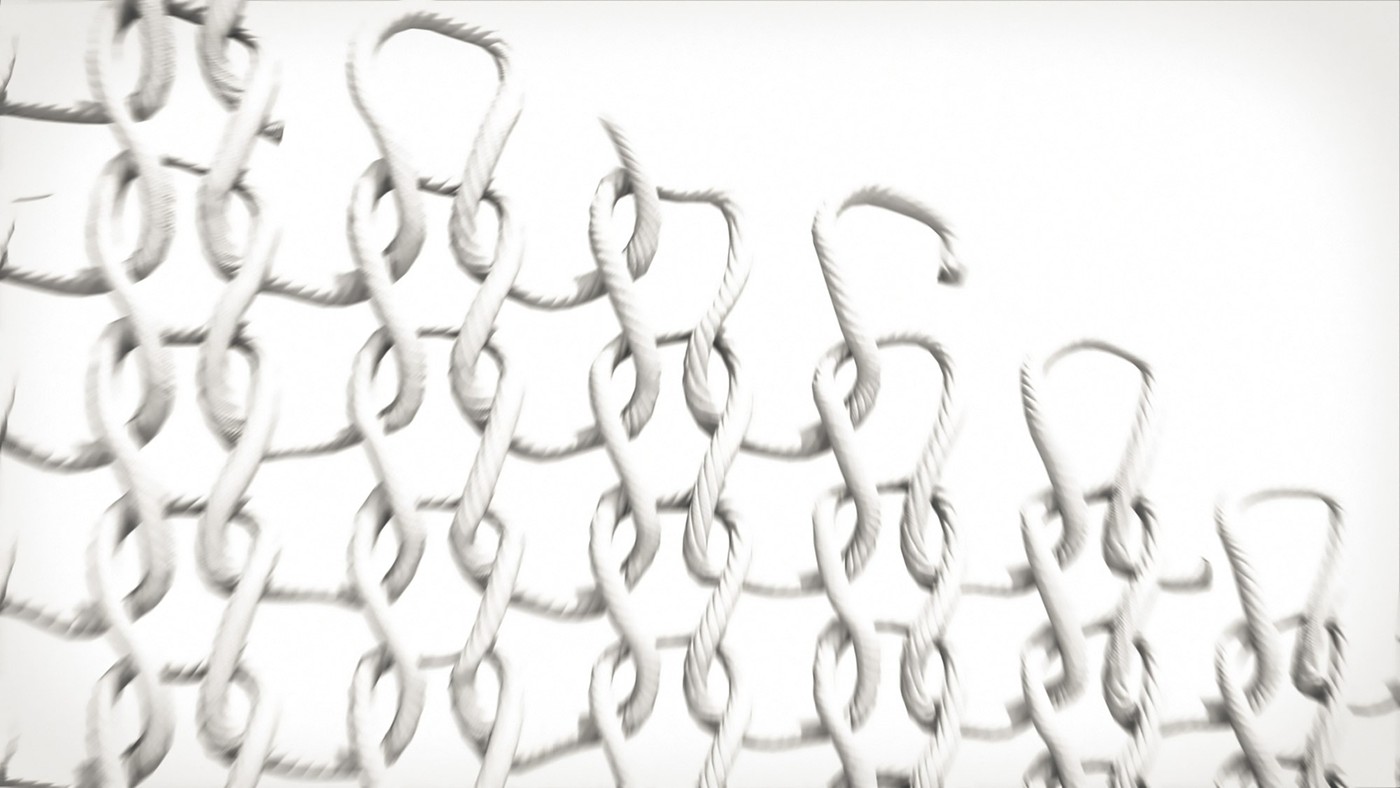
Ribbing is a knitting pattern built from vertical columns that show knit and purl faces. The reference explains the familiar arrangement as alternating stockinette and reverse-stockinette stripes. In a one-by-one rib, one knit stitch alternates with one purl stitch across the row; in a two-by-two rib, the groups contain two stitches each. The notation describes stitch organization rather than fiber composition. Wool, cotton, or a blended yarn can all be arranged in a rib pattern, so the visible ridges alone cannot establish what material a garment contains or whether it includes an added elastic fiber.
The folds explain its close-fitting uses
The article describes ribbing's tendency to contract sideways, with purl columns receding and knit columns coming forward. These small folds provide room for the structure to open when stretched. That helps explain common uses at sweater cuffs, hems, and other edges intended to sit closer to the body. The source links elasticity with the frequency of transitions between knit and purl sections. However, the finished result still depends on yarn, gauge, and the surrounding fabric. A rib border can even flare relative to a strongly contracting cable pattern rather than automatically pulling every edge inward.
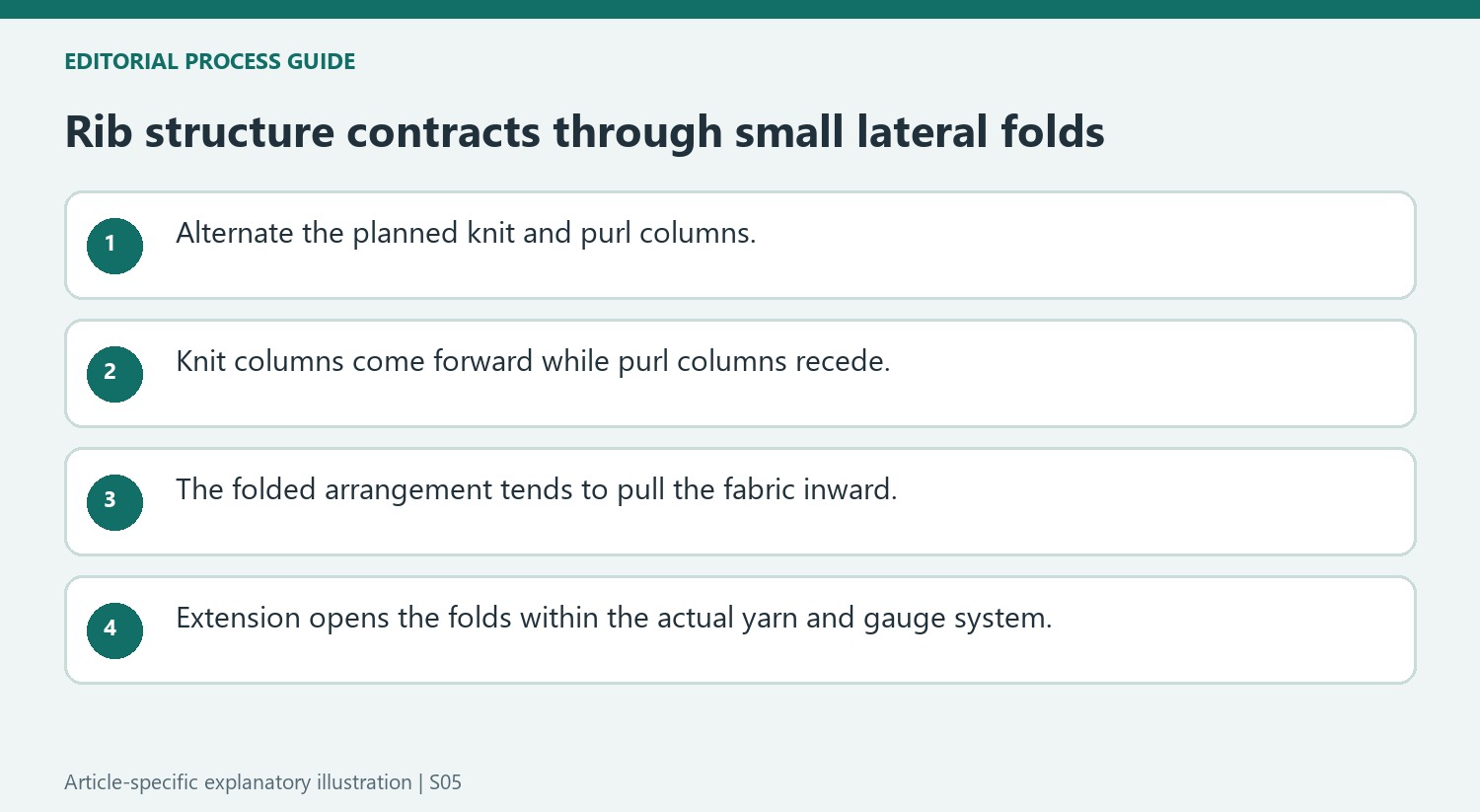
Rib structures can carry decoration too
The reference notes that balanced knit and purl sections can reduce the curling associated with plain stockinette and may look similar on both sides. It also describes using slip stitches to emphasize selected columns and adding cables, bobbles, lace, or color motifs. These options show that ribbing is more than a utilitarian cuff finish. The structural pattern can become part of the main fabric design. For a sewing or knitting specification, identify the rib arrangement alongside yarn and gauge, then evaluate the actual swatch instead of assuming that every raised stripe provides the same extension or recovery.
The stitch notation describes a repeat across the row
One-by-one rib alternates a knit stitch with a purl stitch, while two-by-two rib places two of each together. Following those repeats across successive rows creates the vertical columns seen in the finished fabric. The notation says nothing about whether the yarn is wool, cotton, or a blend. It also does not establish the needle size or the dimensions of the finished cuff. This is why two pieces bearing the same rib notation can look different in scale. A useful knitting description keeps the repeat alongside yarn and gauge, so the visible arrangement can be understood as a structure rather than a complete material specification.
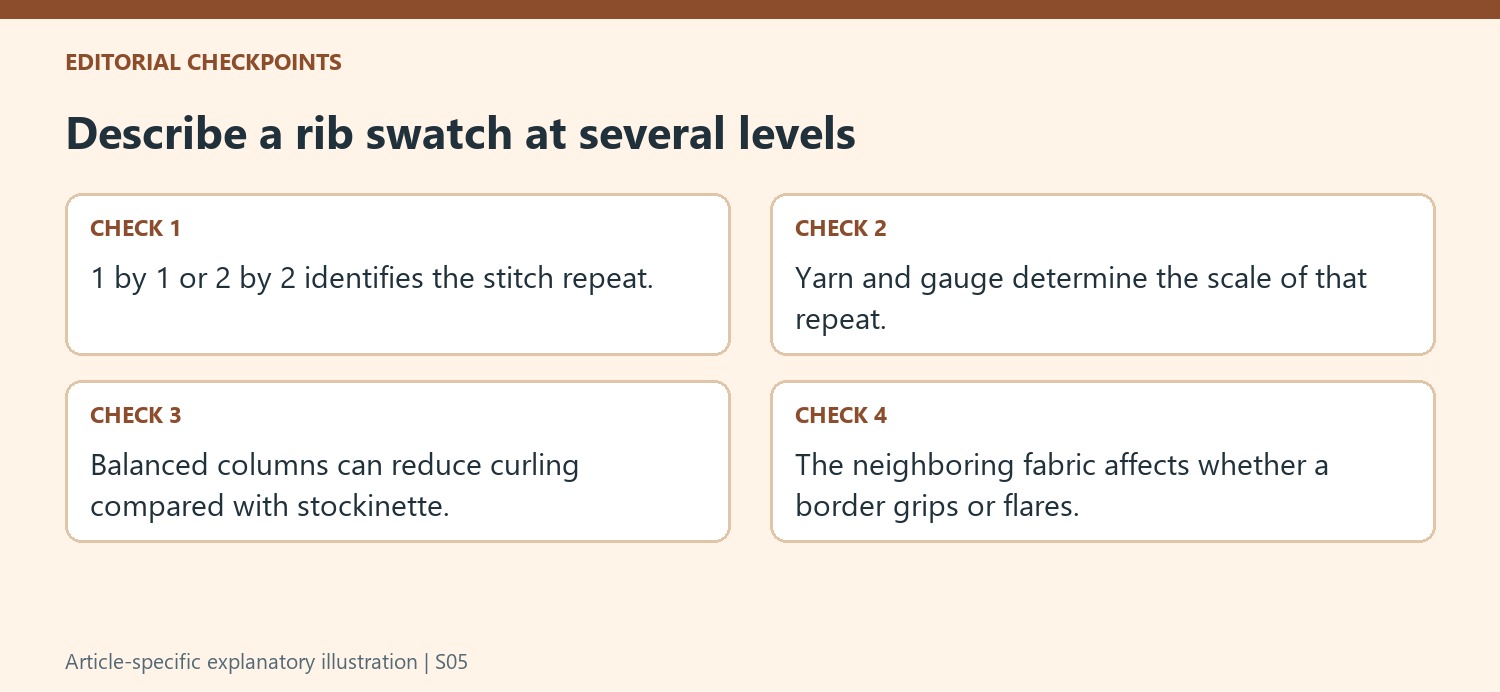
The surface opens as its small folds spread
The reference describes knit columns coming forward and purl columns sitting back, producing small pleats that pull the fabric laterally inward. Extension opens that folded arrangement, providing a structural explanation for its common use on cuffs and hems. The source links the frequency of knit-to-purl transitions with the degree of elasticity, while also noting that some cable structures can pull in more strongly. A ribbed edge attached to such a fabric may flare instead of gripping more closely. This exception is useful because it shows that the border must be compared with the adjacent material. The rib's behavior is relative to the whole construction, not a guarantee that every ribbed edge will be narrower.
Balanced columns and decoration add other options
When the knit and purl groups are balanced, the reference describes a fabric that can look alike on both sides and avoid the curling associated with stockinette. That makes ribbing useful beyond a hidden cuff finish, including items where both faces are seen. The page also discusses slip stitches to emphasize particular columns and decorative possibilities such as cables, lace, bobbles, and color motifs. These additions change the visual language without making the original structure irrelevant. Before using a pattern in a complete garment, examine an actual swatch with the intended yarn and dimensions. That provides direct evidence of surface, contraction, and relationship to neighboring fabric instead of relying solely on a generic rib name.
References
- Ribbing (knitting). Wikimedia Foundation, Inc..





Comments
0