 FabricKnowledge Lab
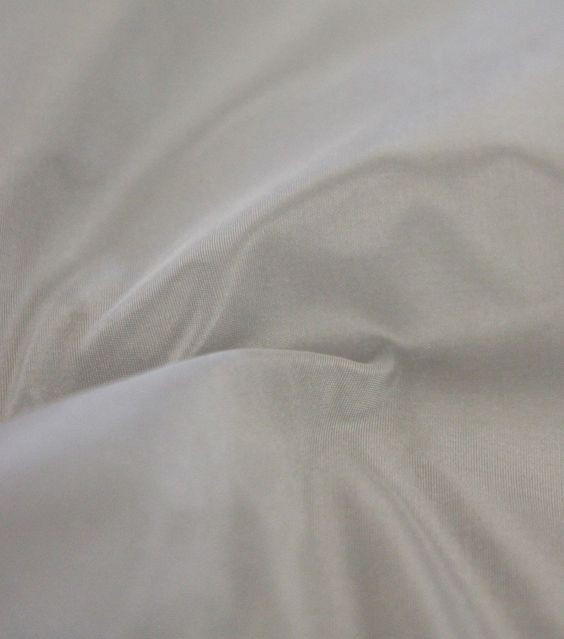
A fabric identity beyond silk
Taffeta is commonly associated with a smooth, crisp woven surface and clothing that holds a defined silhouette. Sewport's guide identifies silk, rayon, and polyester among the possible materials. The name therefore does not establish a single fiber composition or price level. A silk eveningwear fabric and a polyester costume textile can both be described as taffeta while having different handling and care requirements. The guide emphasizes the fabric's rustling character and shape-retaining quality, which help explain its use in full skirts, structured dresses, and other designs where a very fluid drape is not the only objective.
Weave and color create different effects
The source describes taffeta as plain woven and discusses dyeing either the yarn before weaving or the completed cloth afterward. A shot effect uses differing colors in the yarn directions to create a changing appearance as the fabric or viewing angle moves. That visual behavior comes from the textile arrangement, rather than requiring a printed color-shifting coating. Fiber preparation also varies with the raw material: silk filament and manufactured polyester yarn reach the loom through different production routes. A useful specification should therefore include composition and coloring method alongside the taffeta name.
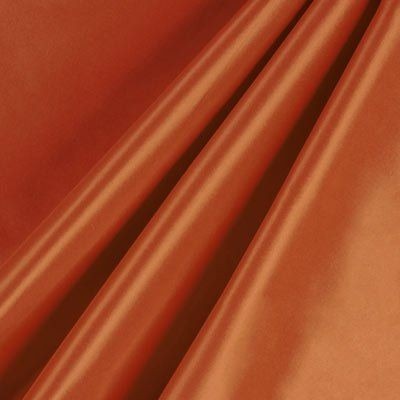
Applications range from occasionwear to lining
Wedding gowns, evening clothing, party costumes, stage garments, and some linings appear in Sewport's application list. The different roles require different fabric weights and finishes. A decorative outer layer that needs crisp volume is not automatically interchangeable with a softer lining textile. The source also mentions non-apparel applications, but a broad fabric name alone does not verify suitability for a specialist use. For garment selection, inspect the actual handle, opacity, thickness, and full composition, then follow the finished product's care instructions. Its recognizable surface introduces the fabric; those additional details define the particular version.
Crispness is a design property rather than a fiber name
The guide emphasizes a handle that can help a garment hold a defined form. That explains interest in taffeta for occasionwear where volume, folds, and a clear silhouette are part of the design. It is a different objective from choosing a fabric solely for a soft, flowing fall. The source also associates the material with an audible rustle as it moves. These descriptions concern the experience of a particular textile, not a guarantee that every silk, rayon, or polyester taffeta has identical stiffness. A designer should therefore handle the actual sample, consider the intended garment shape, and keep composition and finish visible alongside the familiar fabric name.
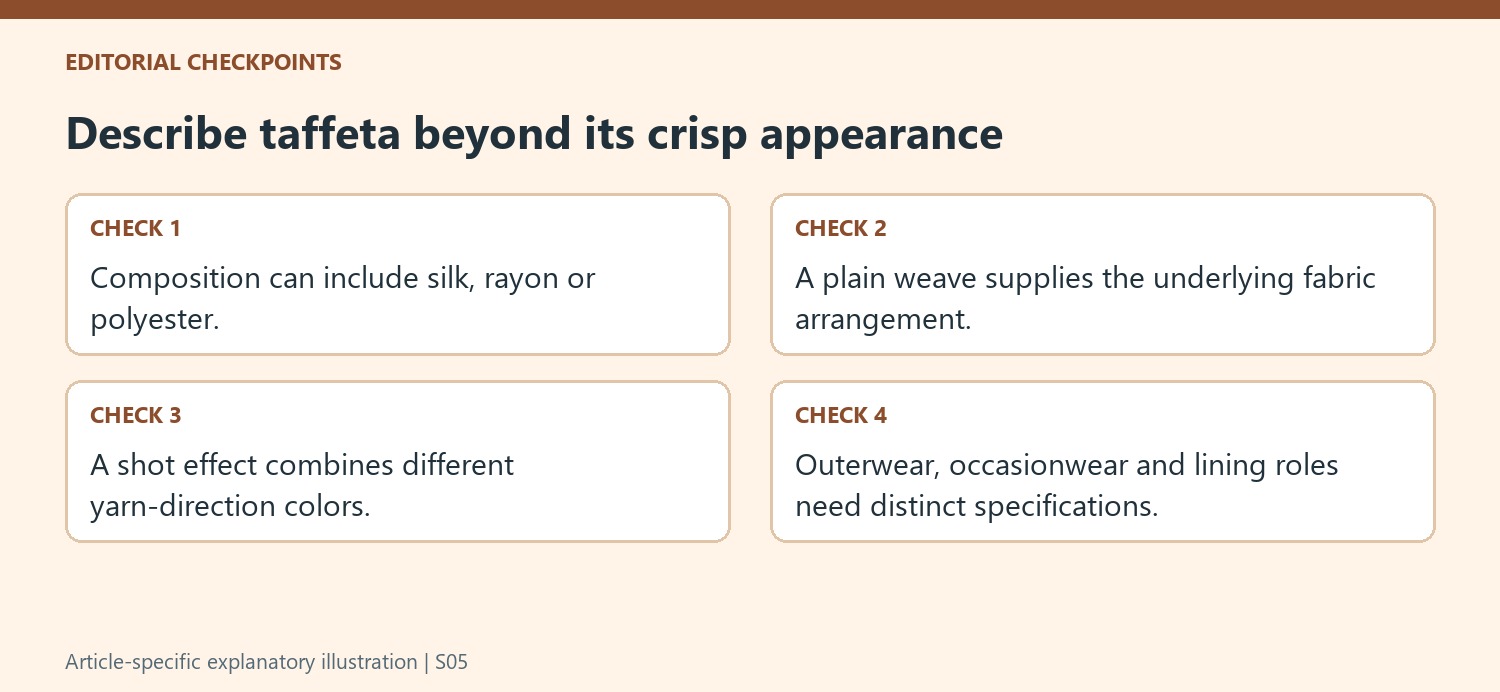
A shot color effect uses the two yarn directions
The source distinguishes color introduced into yarn before weaving from dyeing an already woven piece. In a shot effect, different colors in the two yarn directions contribute to a changing visual impression as the cloth moves or the viewing angle changes. That is a textile arrangement rather than proof that the fiber itself changes color. A checked or striped example represents another way to organize appearance. Keeping coloring method and weave separate helps a buyer describe the desired result more precisely. Two taffetas can share a plain-woven structure but differ substantially in surface color, overall tone, and the way light reveals their yarns during movement.
An outer layer and a lining are not interchangeable tasks
Sewport includes both elaborate dresses and lining applications in its discussion. A crisp outer layer may be chosen to support a full skirt, while a lining occupies a different position in the garment and may be selected with a different handle in mind. That range explains why the taffeta name does not provide a ready-made specification for every purchase. Thickness, opacity, surface, and fiber content should accompany the intended role. The source also lists specialist non-apparel contexts, but those examples do not certify an ordinary dressmaking cloth for technical equipment. For a finished garment, the manufacturer’s care directions remain the practical guide to treating its particular combination of fabric, finish, lining, and decorative components.










Comments
0