 FabricKnowledge Lab
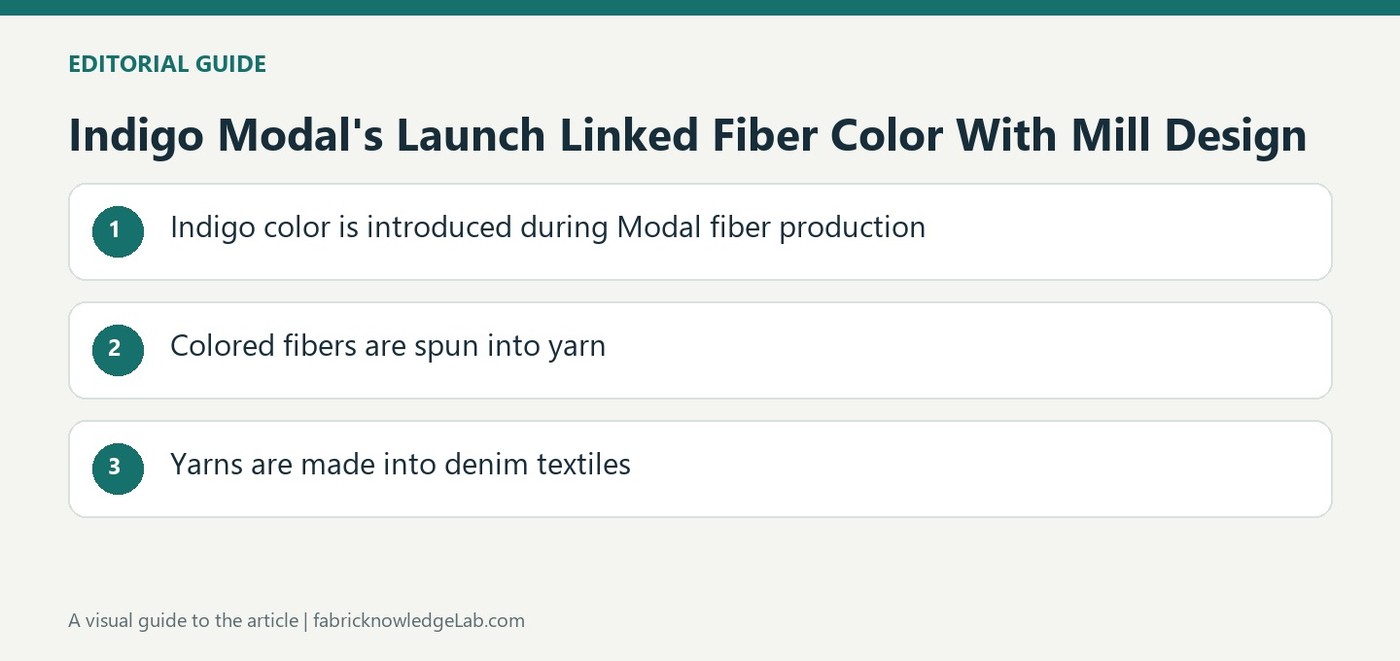
Color is introduced before fabric manufacture
Lenzing's launch announcement describes adding indigo pigment directly during TENCEL Modal fiber production. The resulting colored fiber can then enter yarns and textiles without relying on the same sequence as conventional indigo yarn dyeing. The company says the fiber was produced in Austria, predominantly from beech-derived cellulose, and positions it as a material option for denim development. This is a change to the coloring route within a particular fiber product. It does not mean every fabric using the fiber has the same blend, weave, weight, or finished appearance as a traditional cotton denim.
Color retention and deliberate fading are different
The announcement reports improved resistance to color transfer in dry and wet rubbing compared with conventional indigo dyeing. It also says commercial laundry techniques can create wash-down effects. These statements describe two different concerns: unwanted transfer during use and intentionally designed finishing effects during production. A fabric can be developed to retain color in ordinary use while still allowing specialist processing to alter its appearance. The exact result depends on the fabric and treatment. The source's claims should therefore remain connected to the tested fiber and specified process rather than becoming a universal promise about all indigo garments.
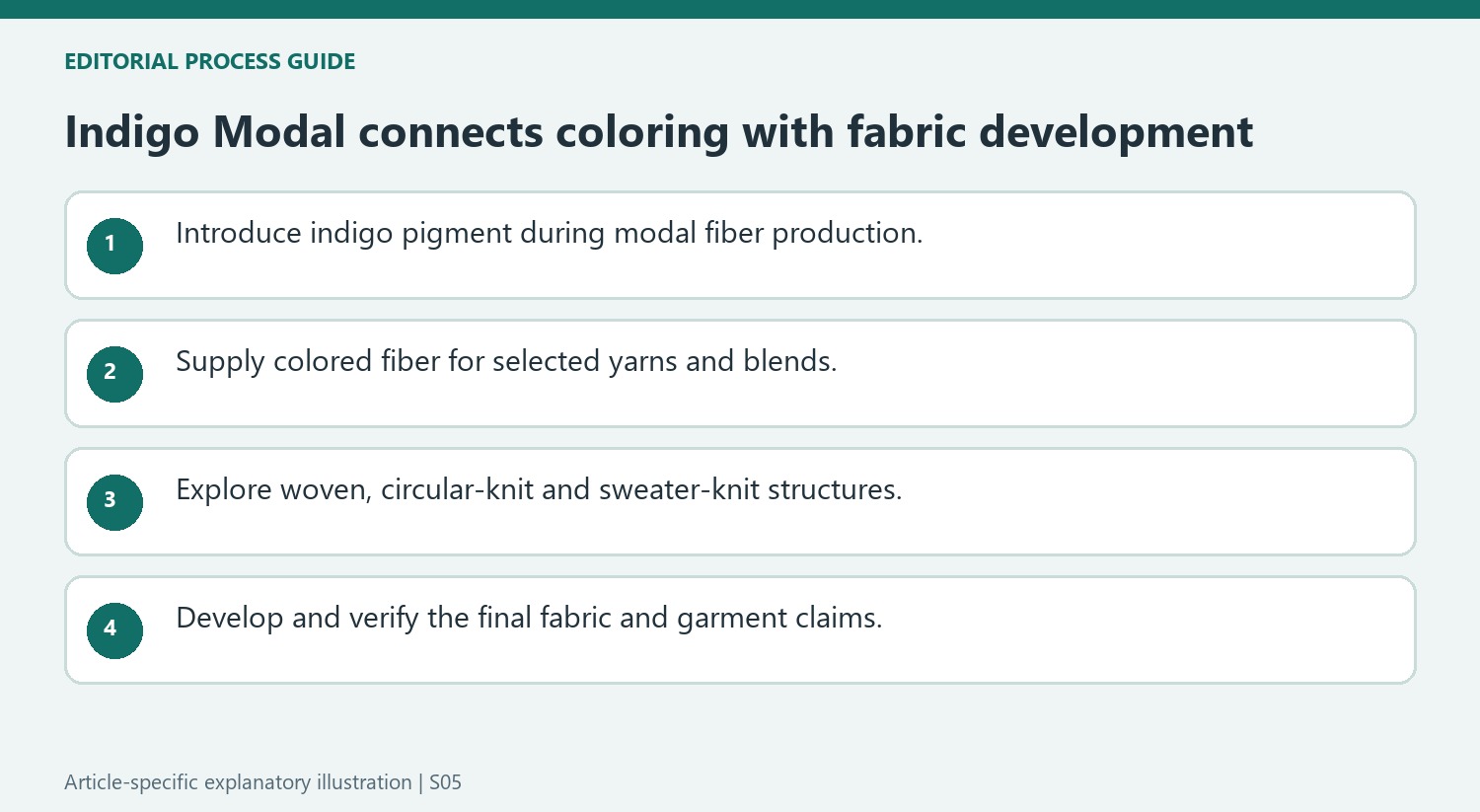
Partners explored several textile constructions
The report names Adriano Goldschmied's House of Gold among early collaborators and describes a Seed of Joy capsule involving woven, circular-knit, and sweater-knit fabrics. It also identifies partners including Candiani, Cone Denim, Blue Diamond, In The Loop, and Shima Seiki. These examples show the development extending across more than one textile structure. The launch is useful as a record of how a colored-fiber platform entered mill and design work. Environmental comparisons and certification statements still need their stated boundaries, while the complete finished product requires its own material and performance description.
The launch involved a chain of different capabilities
The collaborators named in the announcement occupy different places in textile development. House of Gold contributed a design direction through the Seed of Joy concept, while the account also identifies mills and machinery expertise. Woven, circular-knit, and sweater-knit fabrics appear together in that concept, demonstrating that the colored fiber could be explored through several structures. This is a more specific story than simply introducing a blue ingredient. It connects the fiber's production route with decisions about yarn, machinery, fabric, and garment expression. The collaboration list should still be read as a launch account, rather than proof that all those businesses supplied identical fabrics or that every later indigo-modal product follows the same development path.
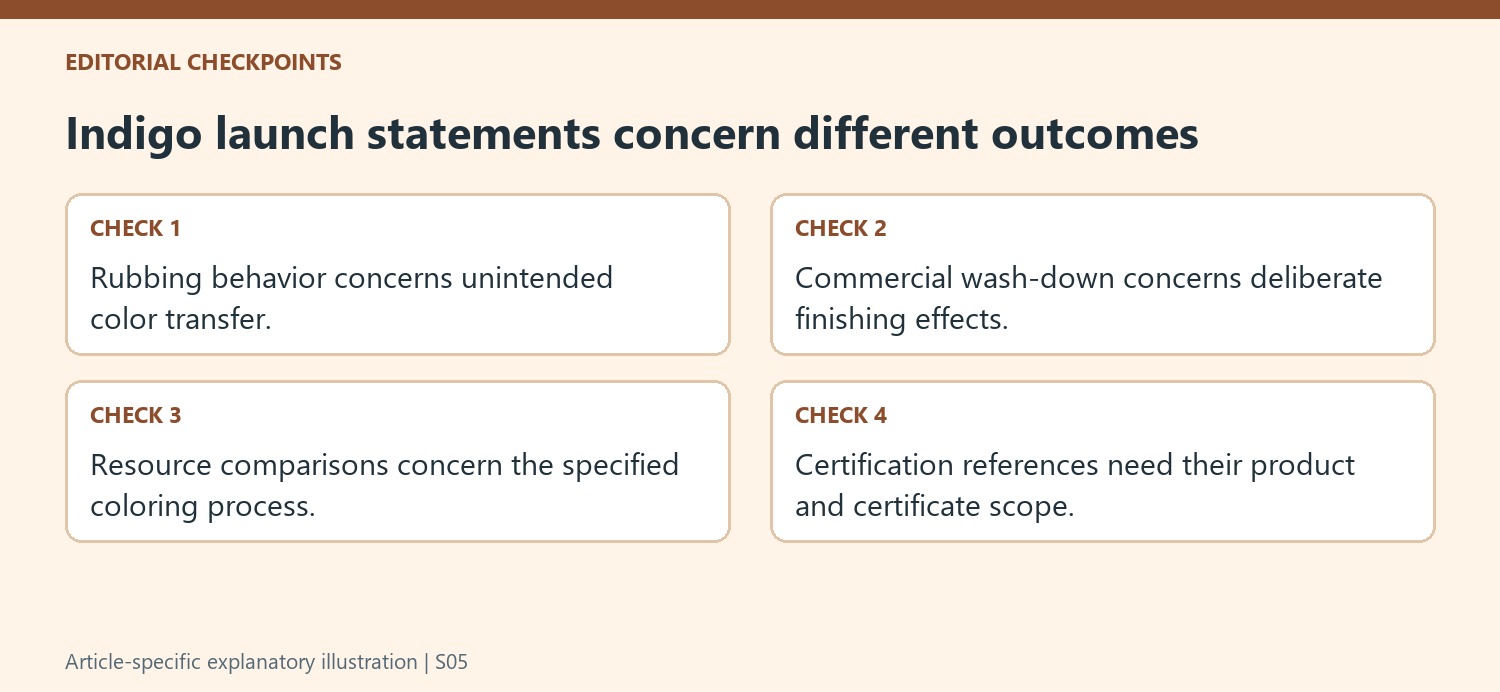
Rubbing performance is not the same as an intended wash-down
The source distinguishes unwanted color transfer during dry or wet rubbing from the deliberate effects created by commercial laundering. That separation helps explain why color retention and designed fading can appear in the same product announcement without necessarily contradicting each other. One concerns behavior under specified use or test conditions; the other concerns a controlled manufacturing treatment chosen for appearance. A mill would still need to establish the response of its particular blend and construction. The announcement supports the possibility of exploring washes and effects, but does not provide a universal finishing schedule for every fabric. Its environmental comparisons likewise belong to the described process and should not be converted into an unsupported total for a finished garment.
Certification references must remain attached to their subject
The launch associates the fiber offering with the EU Ecolabel and discusses a specially commissioned DyStar pigment in relation to STANDARD 100 by OEKO-TEX. Those are specific statements about the offering and its inputs at the time of launch. They are not an automatic certificate for every garment containing the fiber. The release's own footnote also distinguishes the textile-products ecolabel scope from single-use end products, which need their applicable assessment. A producer repeating a claim should verify the actual supplied material, relevant certificate, current validity, and intended use. Keeping those boundaries visible allows the historical launch to remain informative without implying that the supplier's material overview replaces documentation for a complete new product.











Comments
0