 FabricKnowledge Lab

A coordinated kit with several constructions
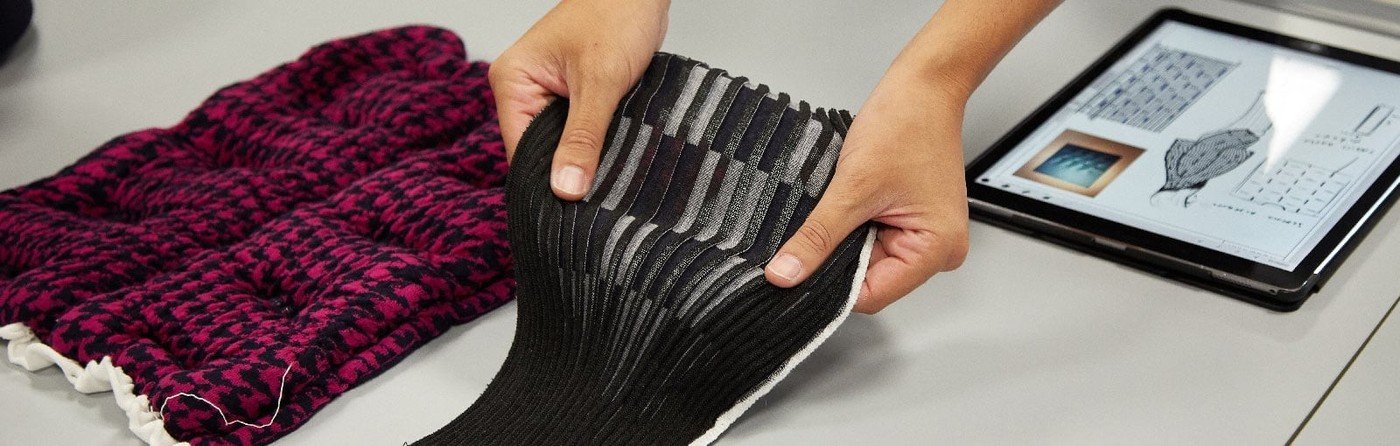
Woolmark describes a prototype women's cycling collection designed by Studio Eva x Carola using Südwolle Group yarns and Santoni knitting technology. The kit includes a bib, short-sleeve jersey, arm warmers, and socks. Rather than applying one uniform textile across all four products, the development assigns different knitted structures and features to each garment. The bib combines shaping with mesh areas and a leg-opening grip. The jersey adds a half zip, rear storage, and a hem grip. These details show the interaction between fiber selection, knitted geometry, and the practical design of cycling clothing.
Merino yarn is not the complete composition
The page names several Merino yarns and explains that they are knitted together with nylon-and-elastane core-spun yarn. The bib's identified Hildago yarn itself includes Merino wool and nylon. This matters when describing the collection: a reference to a 100 percent Merino component yarn does not make the complete garment exclusively wool. Blend and plating choices help produce the required extension and structure. Woolmark also describes a finer knitting gauge than the comparison commonly used in the market, with stitch zones intended for ventilation, compression, or loft depending on their position.

Assembly and reflective details add further functions
The account identifies bonded seam finishing developed with MACPI and reflective elements created with S.E.C. Accessories. The socks use reflective detail knitted into the cuff rather than simply applied over the surface. These are separate design features with distinct roles, not benefits that arise automatically from Merino content. Woolmark reports testing for burst strength and abrasion resistance, while the collection remains described as a prototype. The useful lesson is the specificity of the development: yarn composition, body mapping, joining methods, pockets, grips, and visibility details together define the kit's intended function.
Body mapping assigns structures rather than one uniform fabric
The bib uses zoned construction, including shaped support around the upper body, mesh through the torso and legs, and a grip at the leg opening. The jersey combines a different mesh arrangement with a half zip and rear storage. These details explain body mapping as the deliberate placement of structures and functions rather than a claim that all parts of the kit have one density. The source identifies Santoni Top2 Fast equipment at E32 gauge, compared with the E28 reference it describes as common in the market. That machine detail is part of the prototype specification. It does not replace information about the individual yarns, stitch zones, garment dimensions, or finished construction.

Component yarn percentages should not become garment percentages
The Hildago yarn named for the bib is described as 83 percent Merino wool and 17 percent nylon, and the page then says it is knitted together with nylon-and-elastane core-spun yarn. Other items identify a 100 percent Merino component yarn but also use an additional core-spun yarn. These statements cannot be reduced to a claim that the whole jersey, arm warmer, or sock is exclusively wool. They describe ingredients entering a combined textile. A complete composition would need the proportions in the finished product. Keeping component yarns distinct also prevents the fiber-level environmental language elsewhere on the page from being applied automatically to the entire kit and all its added materials.
Visibility and joining details have their own development work
The socks' reflective element is knitted into the cuff rather than applied as a print or bonded layer, while the jersey and arm warmers use other reflective and finishing details. Woolmark identifies work with S.E.C. Accessories on heat-transfer visibility elements and with MACPI on bonded joining. Those features serve different roles from the yarn's softness or moisture behavior. The page also reports burst-strength and abrasion-resistance testing without supplying one universal result for all Merino sportswear. The collection remains a prototype account. Its value is the concrete combination of body mapping, material blends, grips, pockets, reflective placement, and assembly, each of which can be examined rather than folded into a general performance claim based only on wool content.
References
- Seamless Merino wool cycling kit. The Woolmark Company; Eva de Laat.












Comments
0