 FabricKnowledge Lab
Start with a surface changed by milling
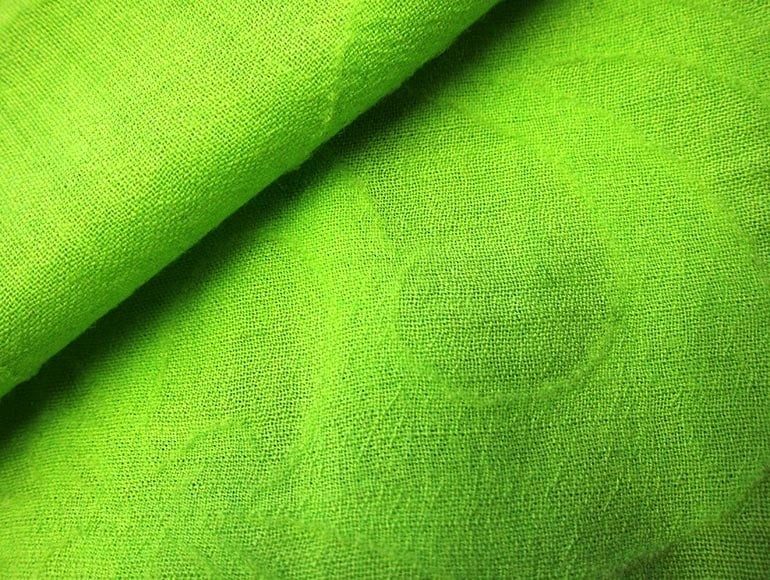
Woolmark's 3D Merino woven technique uses the contrast between a raised, milled surface and the woven structure beneath it. Milling is a controlled felting treatment that makes the original weave less visible and creates a familiar flannel-like finish. The innovation does not begin by weaving every part of a picture into the cloth. Instead, it applies a later treatment to selected areas of an already produced wool textile. That sequence gives the method a different design role from a jacquard pattern built through yarn arrangement during the weaving stage.
A laser removes selected raised fibers
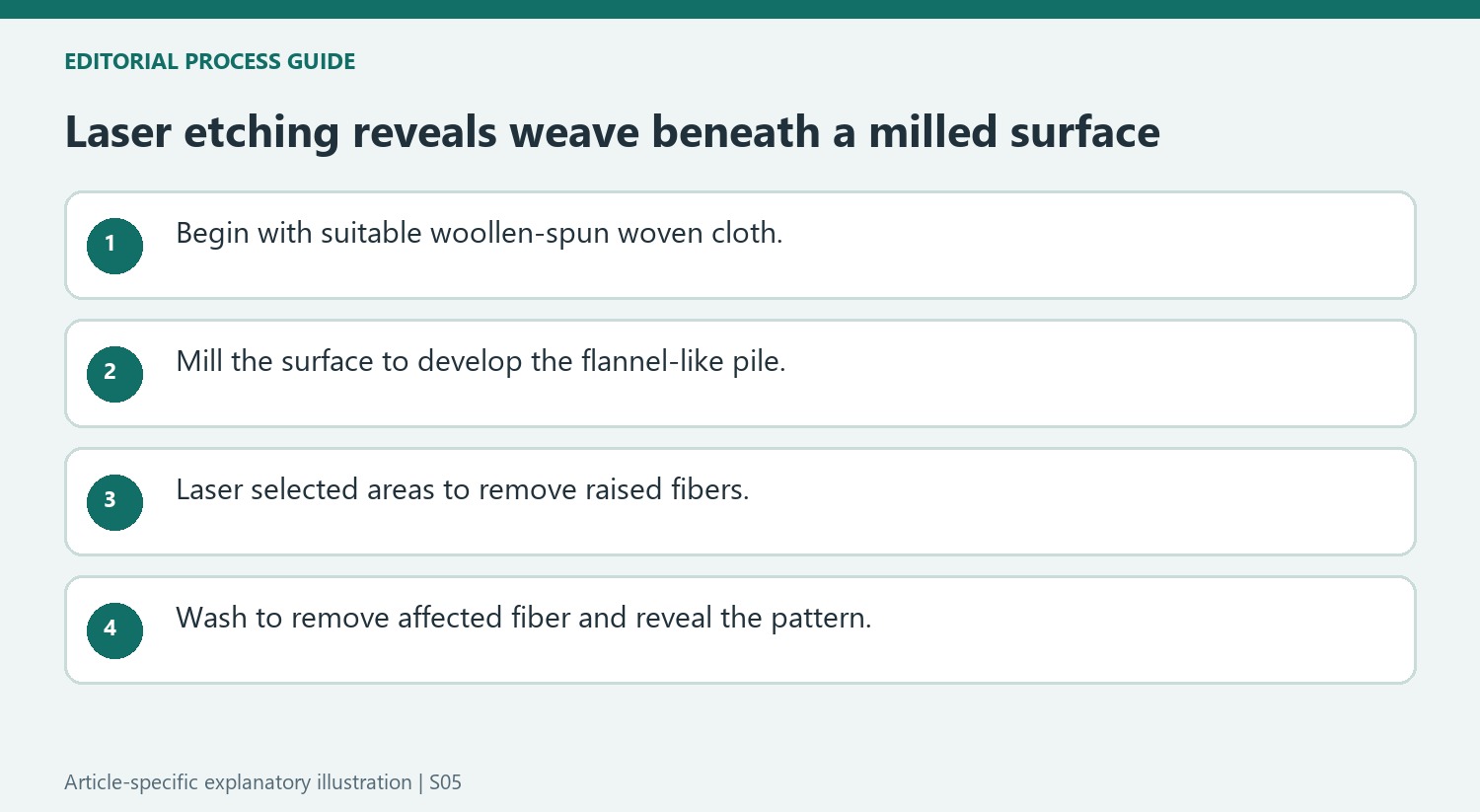
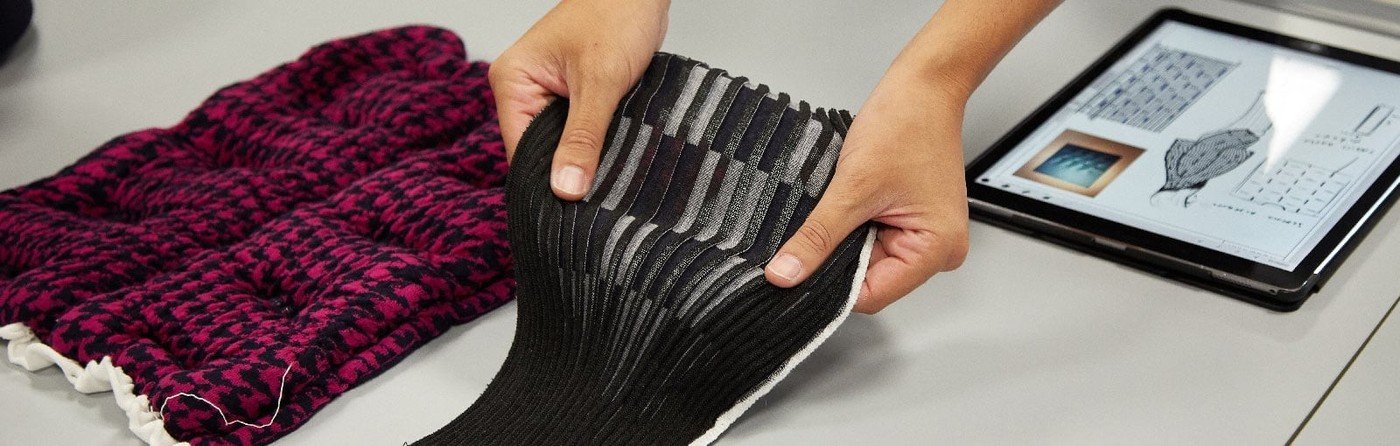
The page describes carbon-dioxide laser engraving being used to remove portions of the pile created during milling. Where the raised fibers are taken away, the underlying weave becomes visible again. A digital design controls which areas are treated, allowing intricate contrasts between exposed and milled sections. After engraving, the fabric is washed to remove the affected loose fibers. These stages explain the three-dimensional visual effect without implying that the cloth is printed with a separate raised material. The pattern comes from selectively changing the surface already present on the woven textile.
Late-stage patterning offers a distinct workflow
Woolmark identifies flannels and drawn-pile coating fabrics as suitable contexts and highlights the ability to make design decisions late in production. That can separate the choice of base cloth from the choice of surface image. However, the technique still depends on a suitable wool fabric, controlled milling, laser settings, and subsequent cleaning. The page's performance statements describe the innovation being presented, rather than certifying every possible treatment on any wool cloth. A production specification should identify the base material and finished pattern process so the intended appearance and fabric performance can be evaluated together.
The pattern reveals a layer that was already present
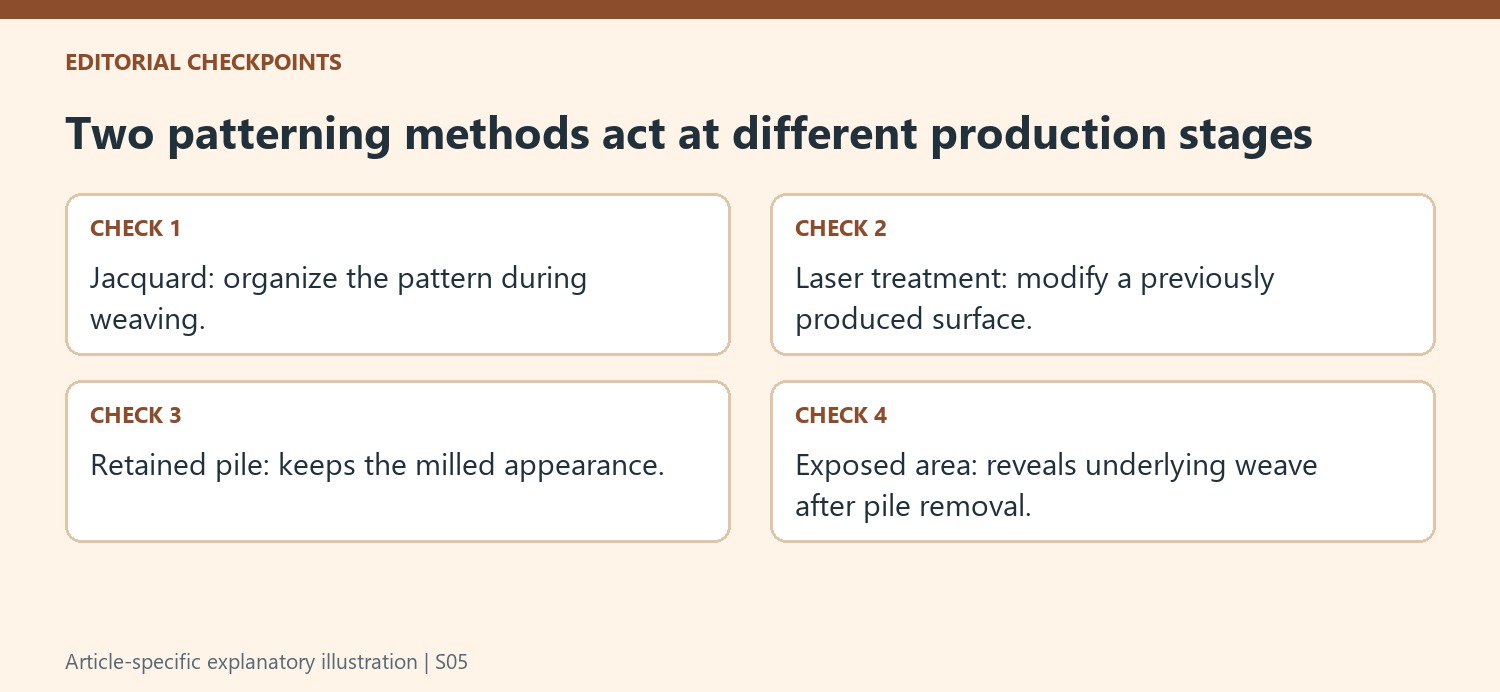
Milling changes how clearly the woven arrangement can be seen by developing a felted, raised surface. The laser treatment then selectively removes that surface to expose the underlying structure. The visual contrast is therefore between two conditions of the same base cloth: an area retaining its milled pile and an area where that pile has been removed. This is different from adding a separately made motif, applying an embossed coating, or weaving the entire image through yarn selection. The source's description is useful because it explains both the raised and exposed areas through one sequence of operations. The base textile remains central to the effect rather than serving only as an anonymous background.
Digital control changes when an image can be selected
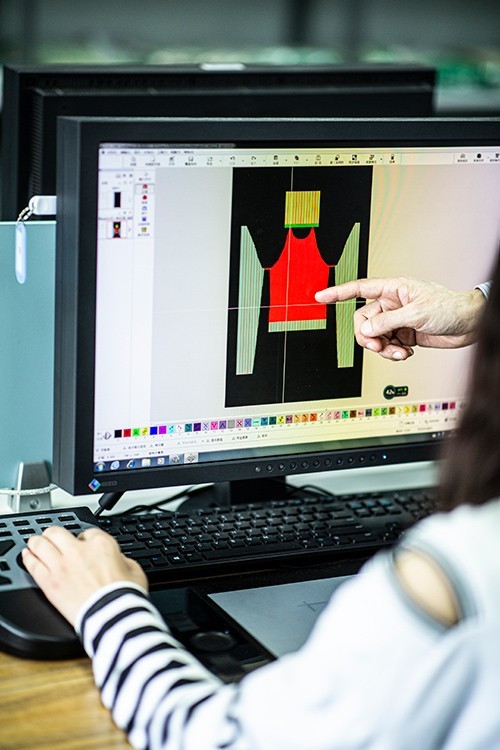
Woolmark highlights intricate digital designs and late-stage decisions as advantages of the approach. A producer can first establish a suitable woven and milled cloth, then choose where the laser will reveal its structure. That shifts the image-selection task later than a design built into the weave itself. The account compares this freedom with the limitations of traditional jacquard patterning, but it does not imply that the two methods create identical surfaces. One organizes yarns during fabric formation; the other changes an existing finish. For a designer, that distinction can guide whether the desired effect depends on woven color and structure or on a contrast between retained pile and exposed weave.
Washing completes the described surface treatment
After engraving, the source specifies washing to remove the affected fibers. That step belongs to the production sequence rather than optional consumer care advice. It also shows why a photograph of a laser pattern tells only part of the story: the final textile depends on the base cloth, milling, selective treatment, and cleaning. Woolmark identifies flannels and drawn-pile coating fabrics as relevant contexts and states that the innovation can preserve fabric strength. That performance statement should stay attached to the developed process and suitable materials. It does not establish that any digital image, laser setting, or arbitrary wool fabric will produce the same outcome. A finished sample and its production specification remain necessary for evaluation.
References
- 3D Merino (Woven). The Woolmark Company; The Woolmark Company.







Comments
0