 FabricKnowledge Lab
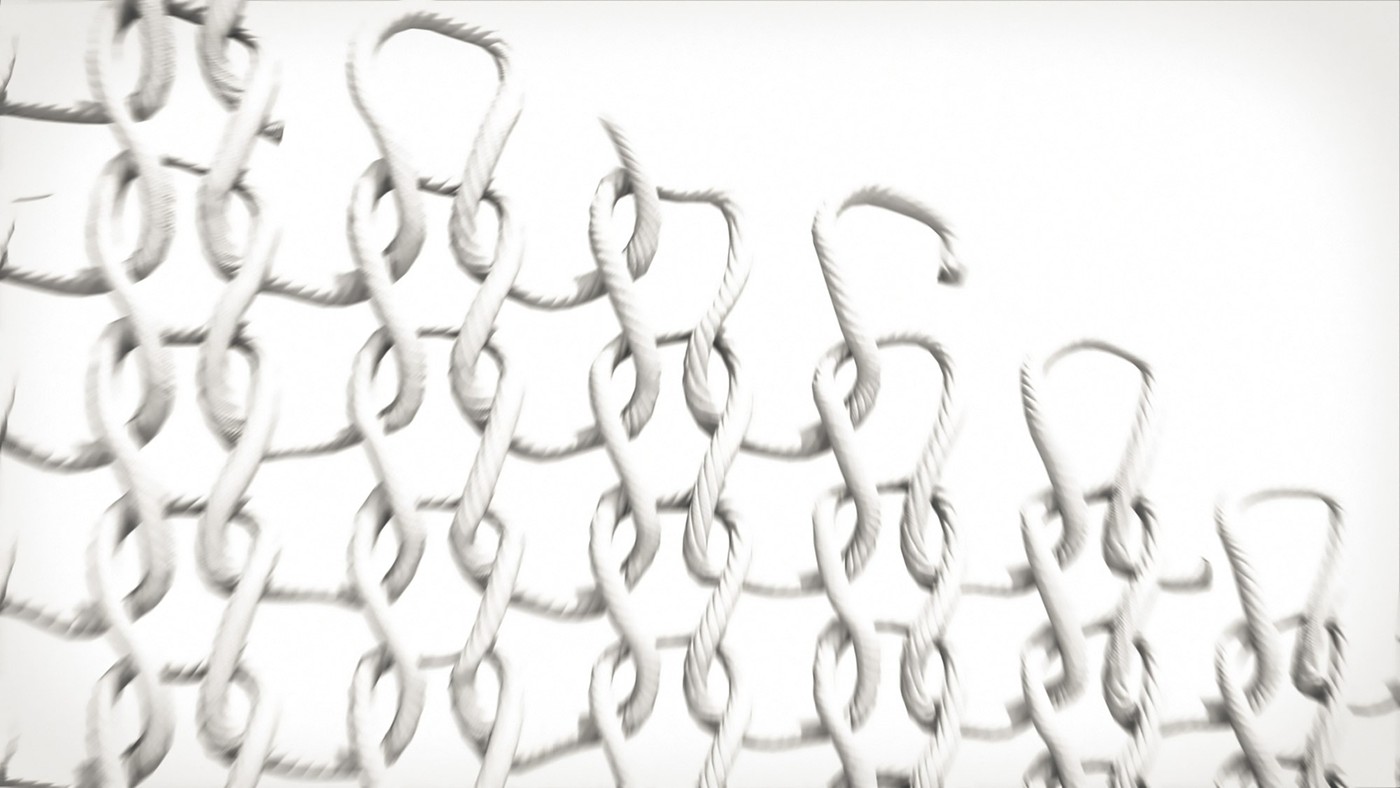
Panel shape is created during knitting
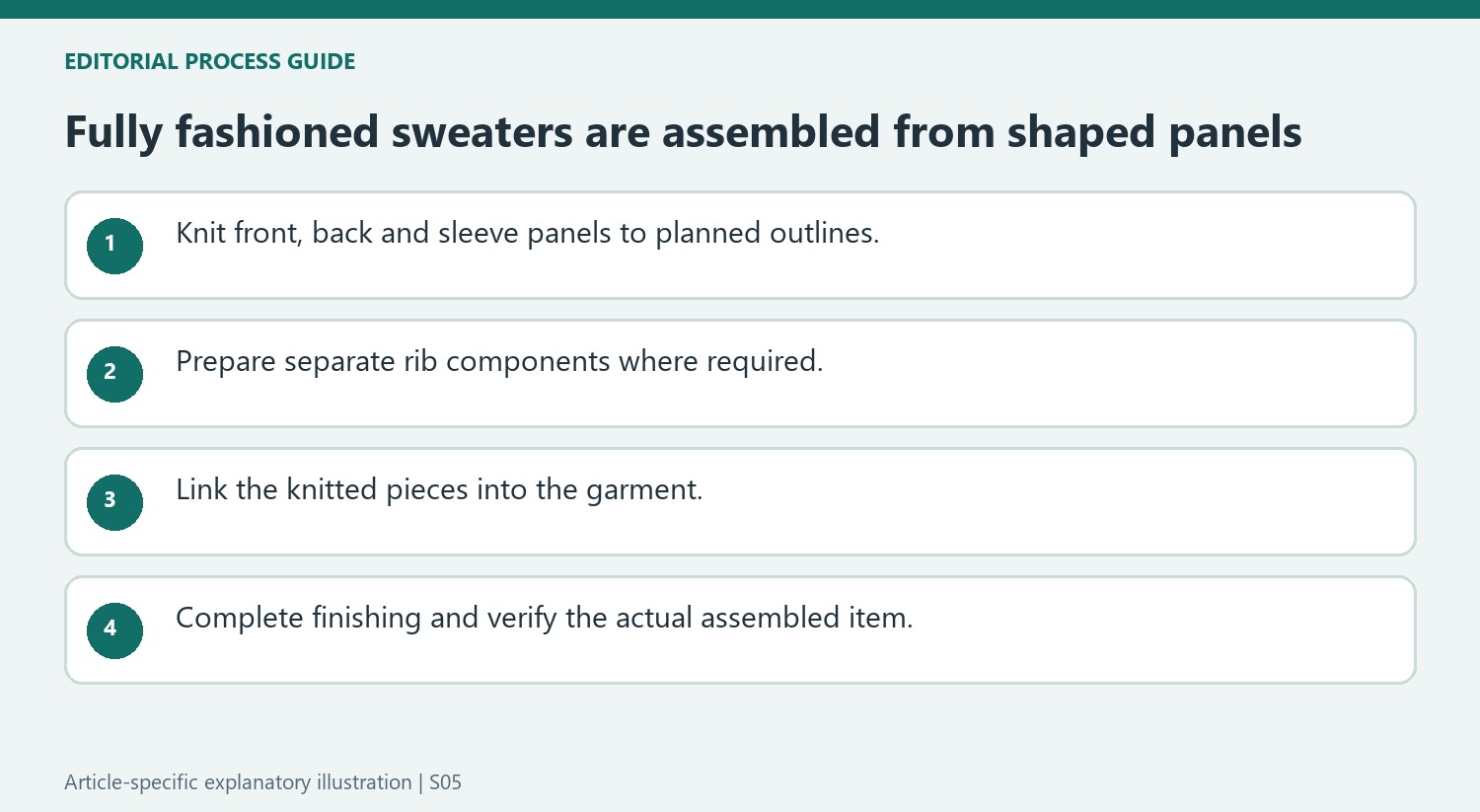
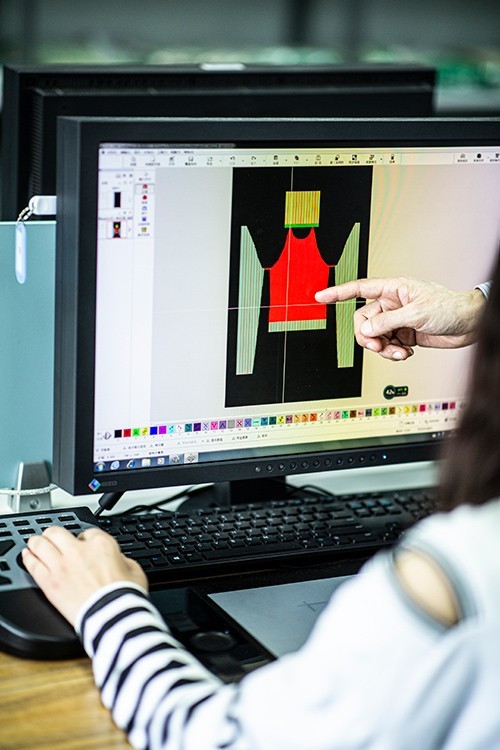
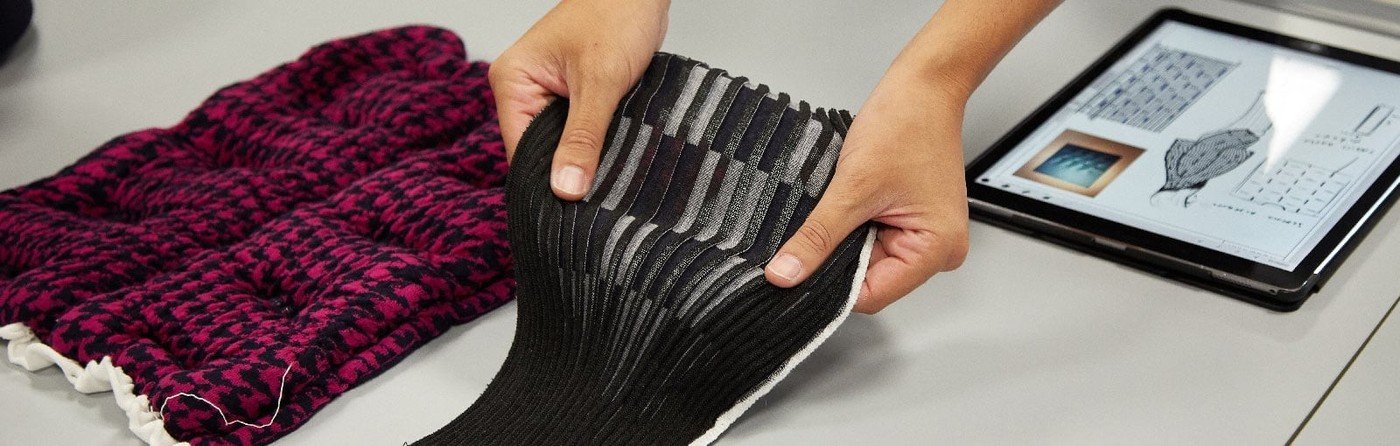
Woolmark's woollen-knitting guide describes woollen-spun yarns being used for sweaters made on fully fashioned or flat-bed machines. In the fully fashioned route, the front, back, and sleeve panels are knitted to predetermined shapes and sizes. They are then joined by linking. This differs from cutting every panel from a broad sheet of fabric after textile formation. The shaping takes place while the panel is being made, and the finished garment often shows fashioning marks running near the seams. Those marks reflect a manufacturing method, rather than an applied decorative stripe or evidence that the material has been cut incorrectly.
Machine names do not identify the fiber
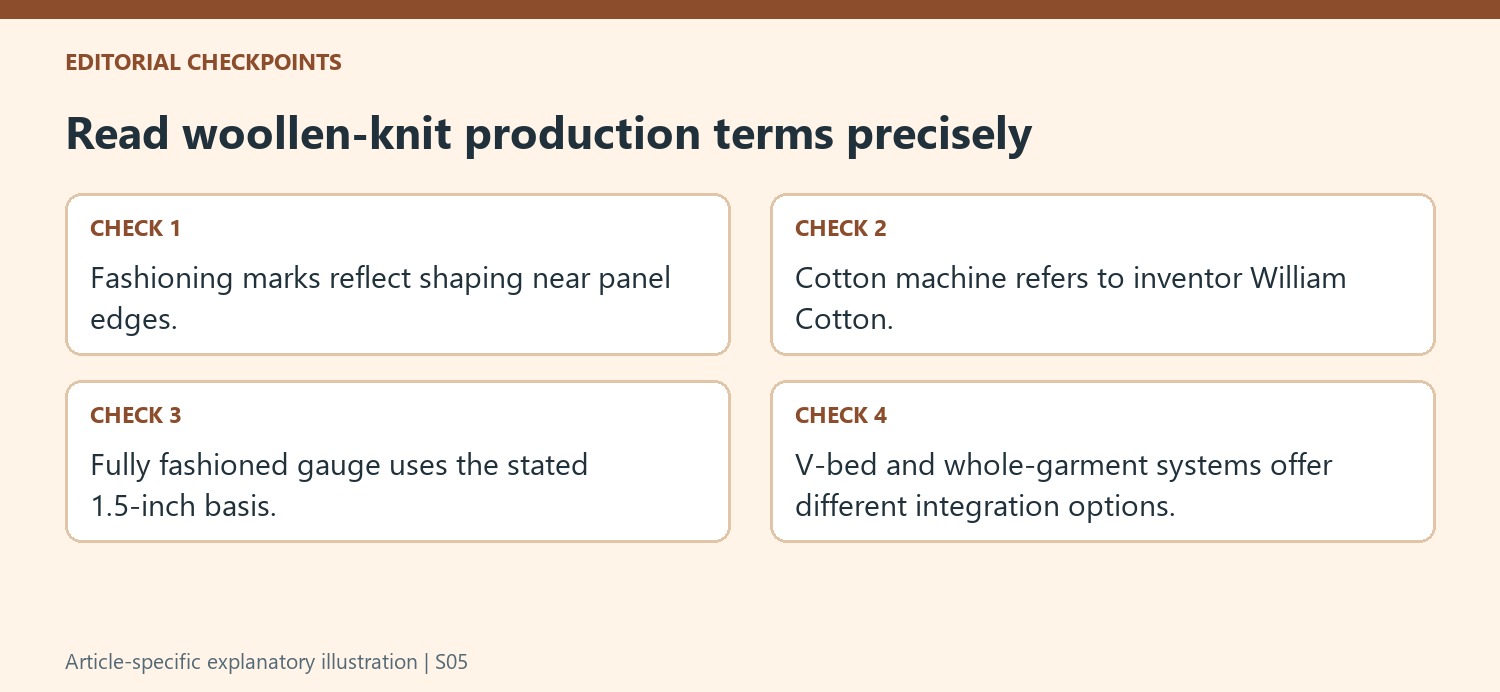
The guide notes that fully fashioned machines are sometimes called straight-bar or cotton machines. In this context, cotton refers to inventor William Cotton, not a requirement that the machine use cotton fiber. This naming point is useful when reading technical descriptions of wool knitwear. The page also discusses the limitations of traditional fully fashioned equipment for rib structures, explaining that welts and cuffs may be produced on separate ribbing machines and linked to the main panels. Thus, a sweater can combine separately knitted components even when its body and sleeves are shaped during knitting.
Flat-bed equipment offers another arrangement
Flat-bed or V-bed machines use two opposing needle beds arranged like an inverted V. A carriage moves across them, supplying yarn and selecting needles. Woolmark highlights stitch transfer and the possibility of knitting details such as pockets and trims as part of a panel. More advanced equipment can form whole garments with little later joining. These are related but distinct production options. A useful specification should identify the machine route and assembly method alongside the yarn, because the phrase knitted wool sweater alone does not explain how its shape and details were produced.
Shape is determined before the panels are linked
In the fully fashioned route, each panel has an intended size and outline while it is being knitted. The assembly stage then links front, back, and sleeves instead of first cutting all those shapes out of broad finished fabric. This relationship between panel formation and joining explains why the fashioning marks near a seam can be informative manufacturing evidence. They are not necessarily a separate decorative treatment. A garment can also have panels formed this way while still requiring several later operations, including attaching separately knitted details. The source therefore supports a more precise description than either an ordinary cut-and-sew sweater or a finished seamless garment emerging in one operation.
Separate rib components explain part of the assembly
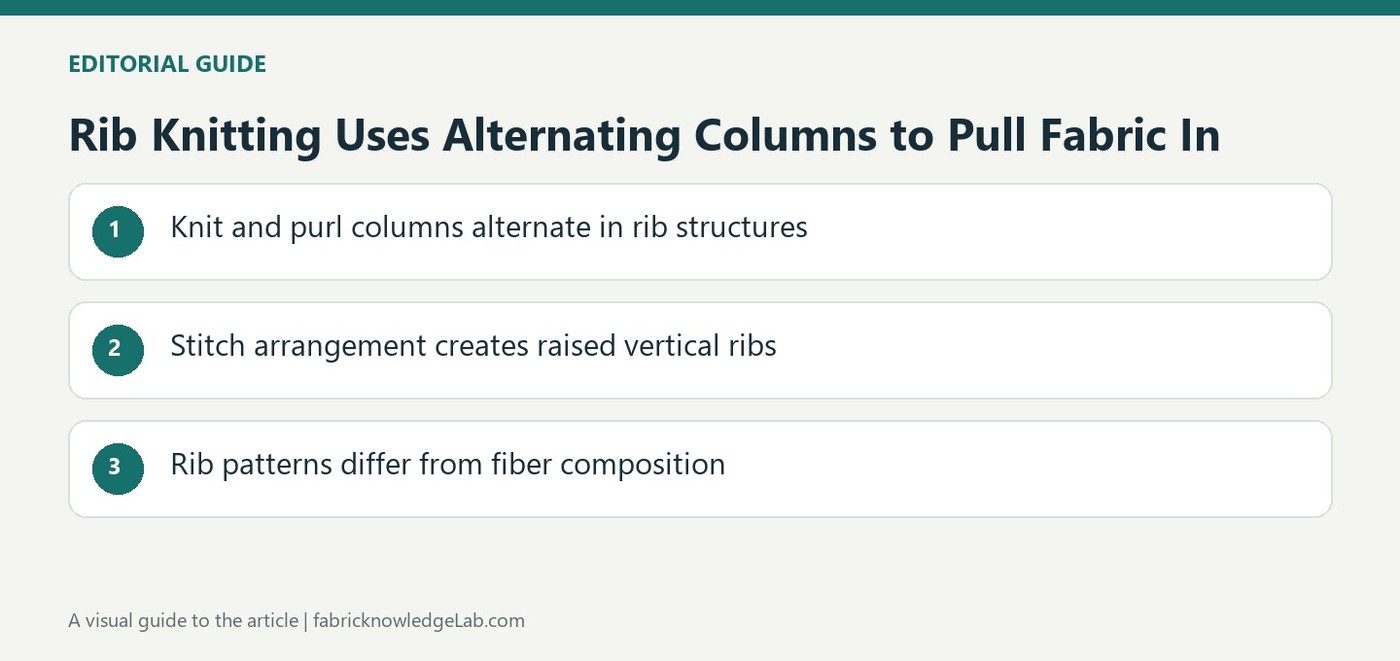
Woolmark describes traditional fully fashioned equipment as principally producing plain-knit constructions, with some machines offering stitch transfer for effects such as intarsia. Rib cuffs and welts may be produced on separate ribbing equipment and then linked to the main panels. These details show why machine capability matters when interpreting a sweater's different zones. The body, cuff, and hem need not have been formed by the same arrangement or at the same time. The source's gauge range of 9 to 33 also uses a one-and-a-half-inch needle-count basis for fully fashioned machines, rather than the one-inch convention common elsewhere. Comparisons between gauge numbers therefore need the machine type and measurement basis attached.
V-bed development offers another way to integrate details
The guide's flat-bed description uses two needle beds facing each other in an inverted V, with a carriage moving across to feed yarn and select needles. Transferring stitches between beds supports varied structures and patterning, while some pockets and trims can be made as part of a panel. Advanced whole-garment machines can take integration further and reduce subsequent linking or sewing. These are related options within knitwear development, not evidence that every flat-bed sweater has identical assembly. A production account should state which details are integrated and which are added later. Yarn, machine route, stitch structure, panel shaping, and joining together explain the finished article more accurately than the broad phrase woollen knitted sweater.
References
- Knitting. The Woolmark Company; The Woolmark Company.





Comments
0