 FabricKnowledge Lab
A historical rib within a plain weave
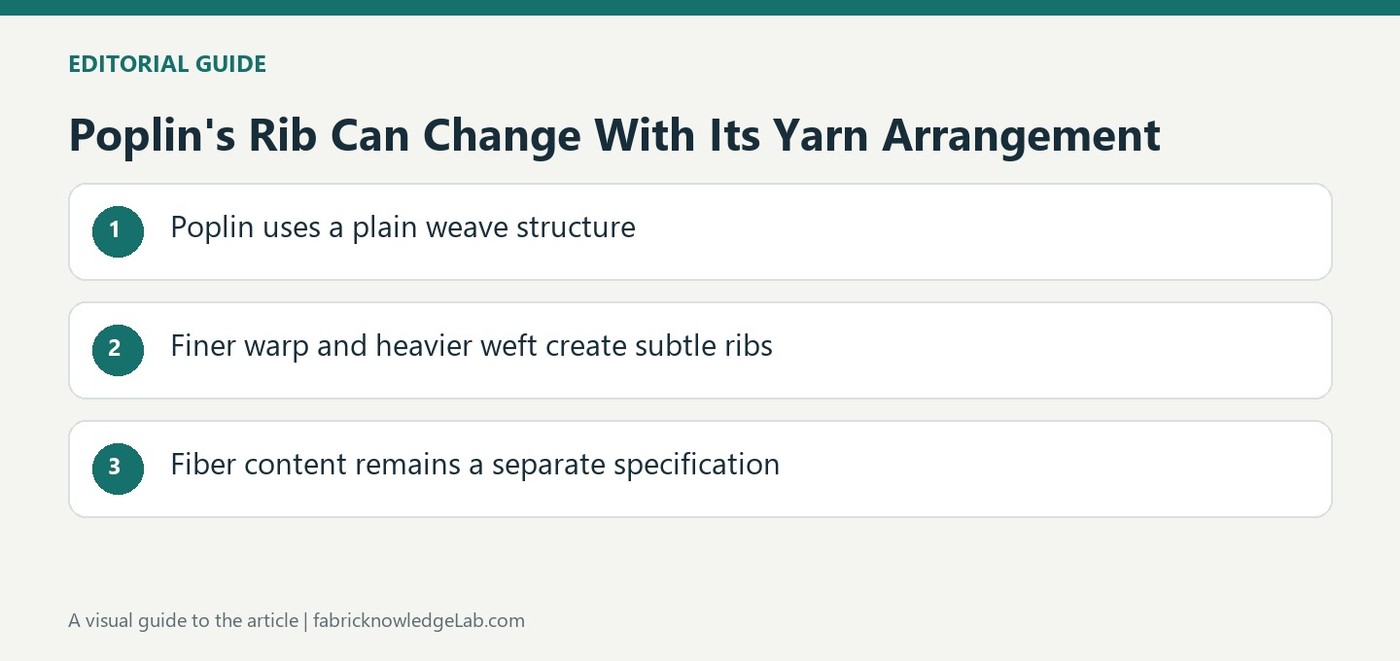
The reference account describes poplin as a plain-woven textile associated historically with a crosswise rib. In an older combination, a silk warp was paired with a heavier worsted weft, creating a pronounced difference between the two yarn directions. The thicker filling helped form ridges across the cloth. This is a useful construction explanation because the surface effect depends on the relationship between yarns, rather than on the word poplin alone. A cloth made with similarly sized warp and weft yarns can have a much less obvious rib while still being sold within the modern poplin category.
Modern compositions cover several fibers
The article lists cotton, wool, silk, rayon, polyester, and mixtures among poplin materials. That range shows why the name cannot establish one level of warmth, weight, or care requirement. A lightweight cotton shirt and an older, heavier dress fabric can share a textile term while using different yarns and serving different purposes. The plain under-and-over interlacing provides a structural starting point, but yarn thickness, density, and finishing influence the actual cloth. To compare products, identify the fiber breakdown and inspect the fabric rather than assuming a single modern example represents the entire history of the name.
Regional terminology can create confusion
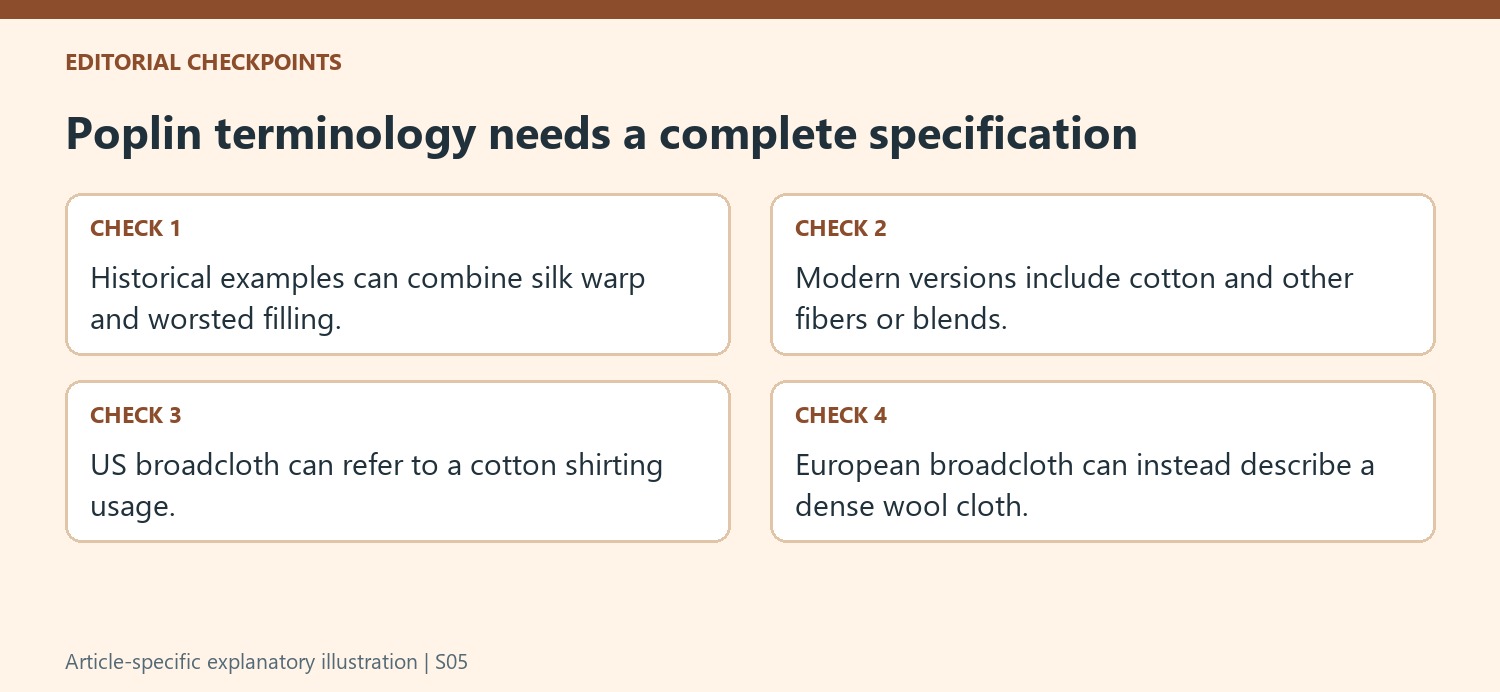
The reference also explains that some cotton shirting introduced to the United States as poplin became known there as broadcloth. In European usage, broadcloth often refers instead to a dense wool fabric with a smooth finish. These naming differences make a technical specification more reliable than a familiar trade term by itself. For a purchase or sewing project, combine the commercial name with composition, weight, yarn arrangement, and intended application. That approach preserves the useful vocabulary while reducing the chance of selecting a materially different cloth because a supplier uses the same word in another regional sense.
The two yarn directions explain the crosswise effect
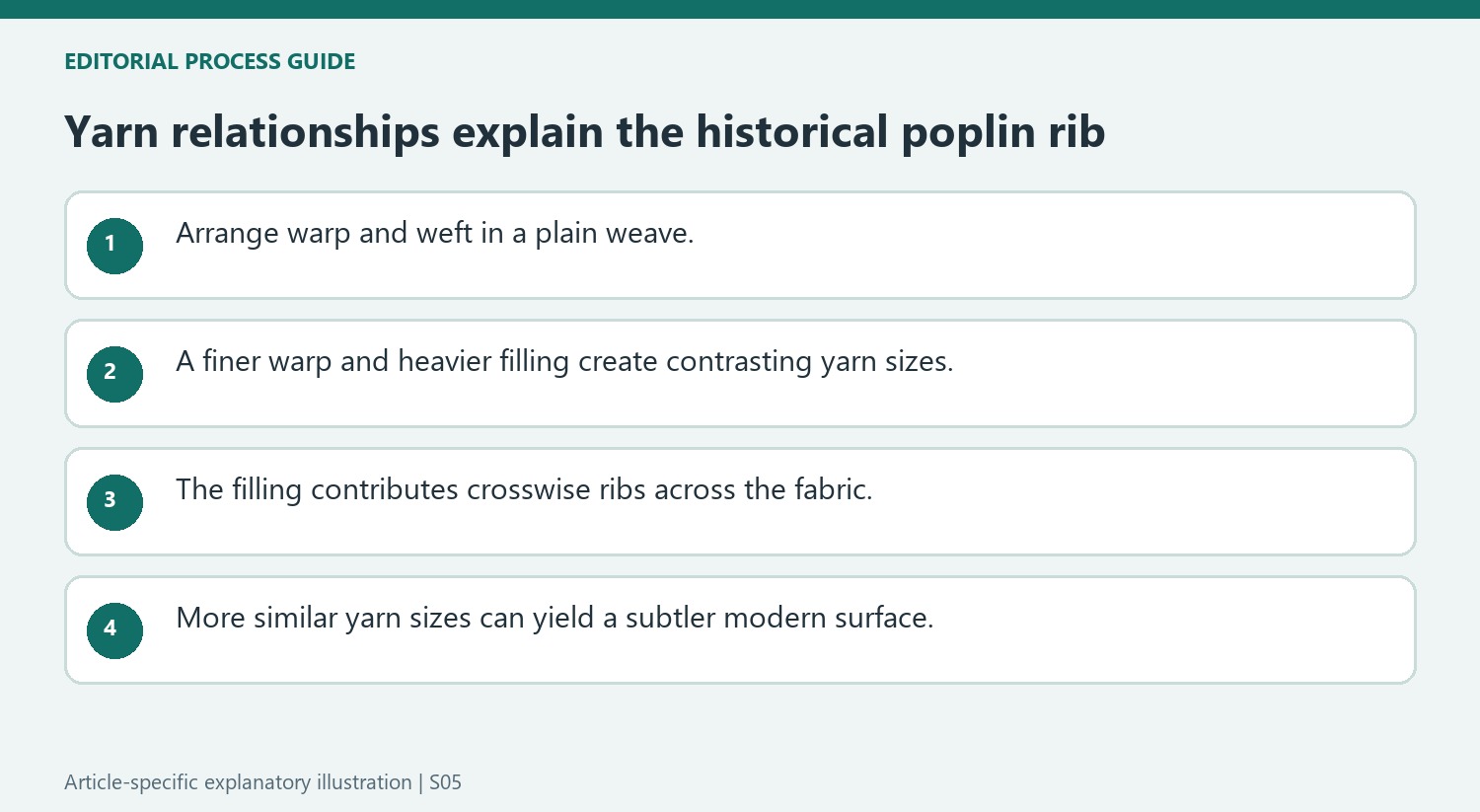
The historical construction described in the reference combines a silk warp with a more substantial worsted filling. Because that filling occupies more space than the warp yarn, the cloth develops a crosswise rib running across its width. The important relationship is between the two yarn directions, not merely the presence of silk or wool. The same reference notes that yarns of similar material and size can give a much plainer surface within modern poplin usage. This explains why a buyer should not reject a contemporary shirt fabric solely because its rib is subtle. The construction family and the relative yarn sizes provide a more informative account than expecting every product to resemble an older silk-and-wool example.
A trade term can move between markets and periods
The reference traces a shift from heavier dress fabrics toward familiar cotton shirting and describes the United States use of broadcloth for some of that material. It also warns that European broadcloth can mean a dense wool textile. These are not simply different spellings for one universal recipe. A supplier and buyer may use a familiar word while picturing different composition, weight, and surface. For an order, the practical response is to put those details in writing beside the commercial name. That preserves useful traditional vocabulary without asking it to perform the entire job of a specification. A sample can then confirm whether the intended rib, handle, and density match the described fabric.
Appearance, intended use, and care remain separate questions
The article lists dress purposes and upholstery alongside the modern shirting discussion. These applications show why poplin is broader than a single lightweight cotton shirt cloth. A heavier furnishing material may share a basic interlacing idea while serving a different function. Likewise, a plain-woven appearance alone does not establish fiber content or a universal wrinkle response. To choose a fabric, identify the full composition, weight, relative yarn sizes, finish, and intended role. For a completed item, follow its own care directions rather than assuming that a general historical description governs cleaning. This approach lets the familiar name introduce the material while the actual product information establishes what has been supplied.
References
- Poplin. Wikimedia Foundation, Inc..









Comments
0