 FabricKnowledge Lab

Lightweight structures and integrated insulation
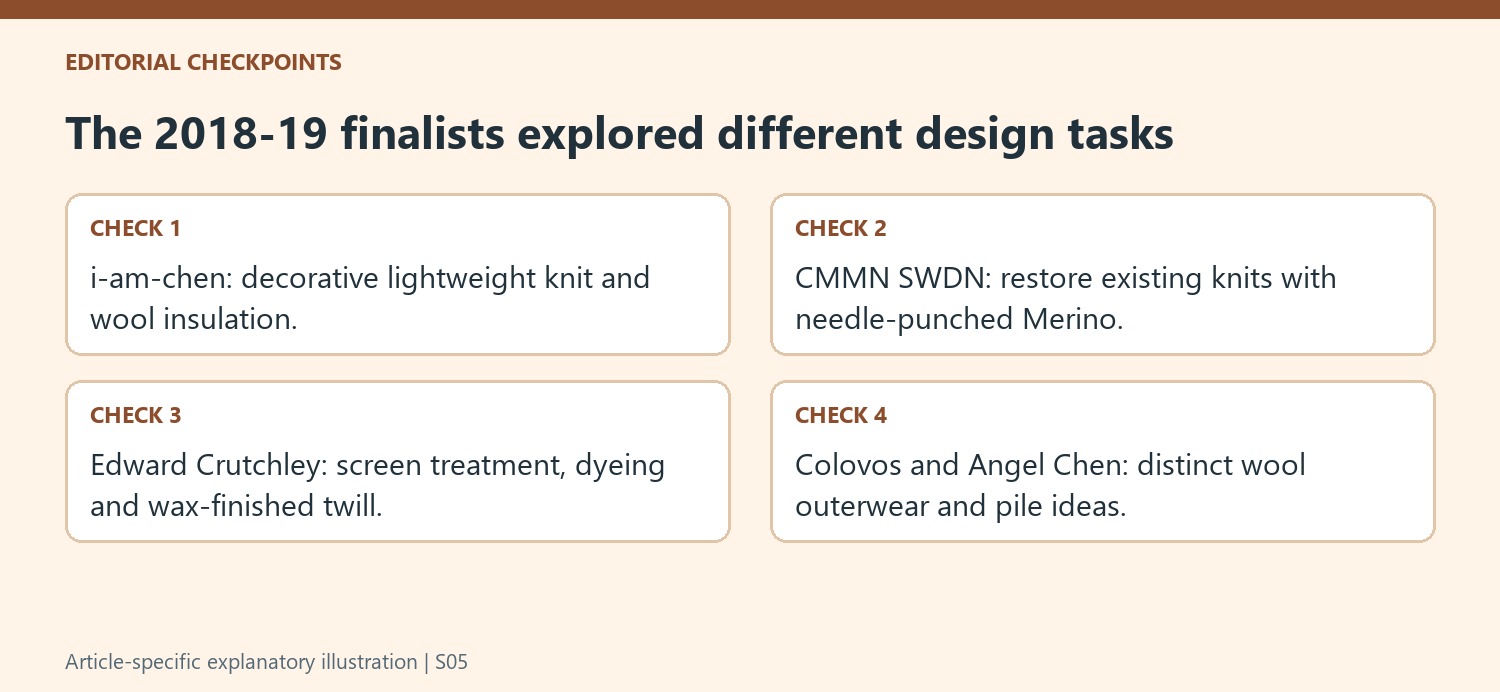
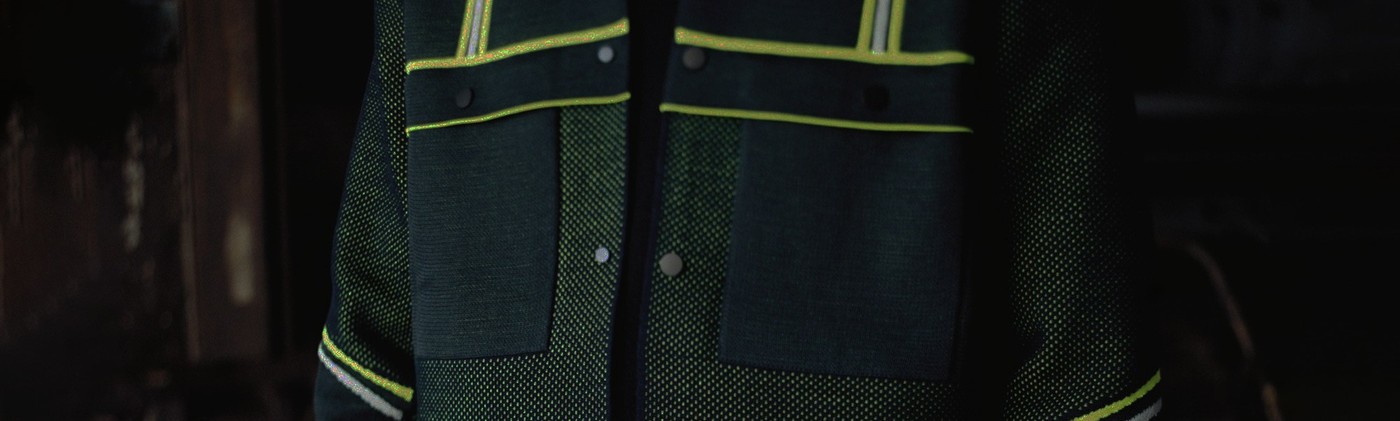
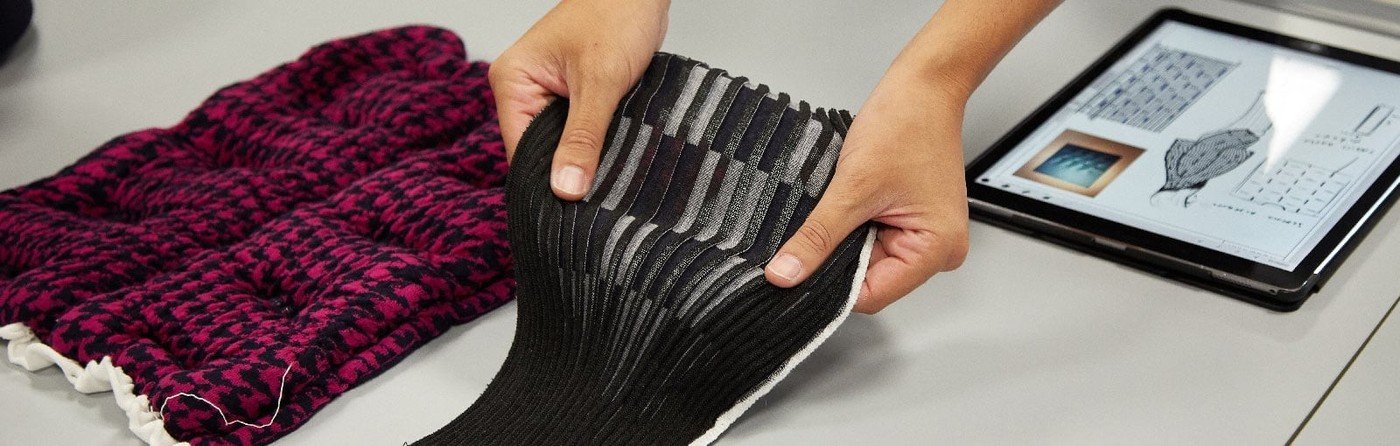
Woolmark's review of 2018/19 International Woolmark Prize finalists documents several approaches to using wool rather than one shared fabric recipe. Hong Kong label i-am-chen floated superfine Merino yarn over a monofilament structure to create a shirt reported to weigh 60 grams. The same designer explored a flat-knitted puffer coat with wool in both the insulation and the outer structure. These examples address different goals: reducing the weight of a decorative surface and building an insulating garment. Their inclusion together shows how yarn arrangement can change wool's role without turning every knitted item into the same product.
Repair and surface design take different routes
CMMN SWDN used discarded and previously worn knitwear, needle-punching new Merino material into areas being restored. The review describes made-to-order pieces and new garments developed with a related distressed-and-repaired appearance. Edward Crutchley's work took another direction, using screen printing and a protein-dissolving treatment to create a lace-like effect in woven wool. These methods should not be collapsed into a generic recycling claim. One works with existing garments, while the other changes a textile surface through a specialized production process, each requiring its own account of materials and handling.

Outerwear experiments combine material and construction
The review also describes Colovos garments using wool insulation and traceable outer fabrics, an OPTIM wool parka, and Angel Chen's multicolored wool pile coat. Crutchley explored wax-finished cavalry twill for forms associated with leather clothing. The common thread is experimentation with specific textile properties and garment functions. The review records designer examples from a particular competition period, not universal performance for all wool products. Its most useful detail lies in identifying what each designer changed: fiber placement, yarn structure, surface treatment, restoration method, or the construction of the finished garment.
Material placement changes what a garment can do
The i-am-chen examples use wool in very different positions. In the lightweight shirt, superfine Merino yarn floats decoratively over a monofilament support; in the puffer proposal, wool is used in both the insulating interior and the knitted outer construction. Colovos also explores wool insulation, but pairs it with a separately specified outer fabric and a convertible way of carrying the jacket over the shoulder. These are useful distinctions because insulation, visible texture, and garment adaptability are different design tasks. The reported 60-gram shirt weight belongs to that particular example, not to every shirt knitted from superfine wool. The review's specificity lies in describing where each material or construction feature was placed.
Restoration and simulated restoration should be identified separately
CMMN SWDN's account includes previously worn knitwear that receives new Merino material through needle punching. It also mentions new garments intentionally distressed and restored in a related style. Both can produce a visibly repaired language, but only the first necessarily begins with an existing worn item. This distinction matters when explaining reuse to a customer. A restored appearance is not sufficient evidence that a garment was recovered from an earlier owner or diverted from waste. The review describes made-to-order development and collaboration with Stoll's Knit Design Centre, giving a concrete context for the technique. A clear product account should preserve the starting material and actual intervention rather than relying solely on the resulting look.
Color and surface treatments create another set of experiments
Angel Chen's six-tone wool pile coat explores a multicolored fur-like effect without animal hide, while Crutchley's printed wool experiment uses a specialized treatment to create lace-like openings and a scalloped edge. Another Crutchley example applies wax to cavalry twill for garment forms usually associated with leather. These are separate processing choices with different materials and purposes. The review also describes Arashi Shibori applied to knitted cloth, extending a dyeing approach through a particular collaboration. Together the examples show why innovation cannot be reduced to one preferred fiber. The useful question is what changed in each design: the support structure, insulation, starting garment, color system, surface, or finishing route.
References
- Thoughtful design at the International Woolmark Prize. The Woolmark Company; The Woolmark Company.








Comments
0