 FabricKnowledge Lab
A denim-like look for knitted garments
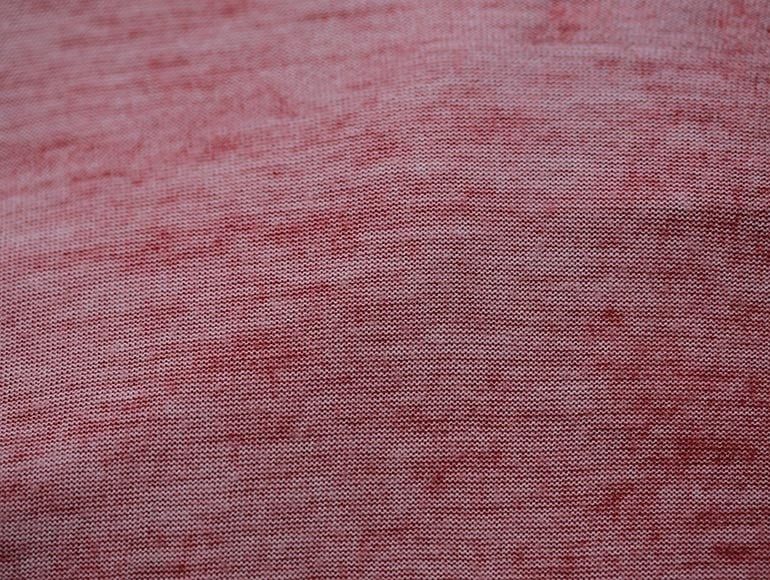
Lenzing's announcement describes an approach that combines yarn pretreatment with knitting technique to create faded or wash-down aesthetics in ready-to-wear and knit clothing. The method is intended for TENCEL Lyocell and lyocell made with REFIBRA technology. Its focus is the appearance and processing of the textile, rather than converting a knit into a traditional woven denim. This distinction matters because a garment can borrow denim's visual language while using a different structure and fiber composition. The announcement presents another route to that appearance without requiring the same sequence of intensive dyeing and bleaching operations.
One coloring round replaces repeated stages
The company says the approach can achieve the intended look with one round of dyeing and reports reductions of up to 50 percent in water, 40 percent in energy, and 90 percent in chemical use against the stated conventional approach. These figures belong to Lenzing's process comparison. They should not be treated as guaranteed savings for every garment or as a complete life-cycle result. The practical development question is whether the chosen yarn, fabric construction, pretreatment, and color target can deliver the desired appearance under the mill's actual processing conditions.

Compatibility matters to mill operation
The announcement says the method can work with existing equipment and dyes used by yarn producers and fabric mills. It also describes reduced dye residue on machinery as a way to simplify switching between color lots and limit downtime. Those operational details help explain why a mill might consider the approach alongside its appearance and resource claims. A successful fabric still requires a defined recipe and appropriate testing for the intended product. The method expands design options, but colorfastness, handle, and final performance should be assessed for the particular textile rather than inferred solely from the fiber's brand name.
The appearance borrows from denim without changing the knit
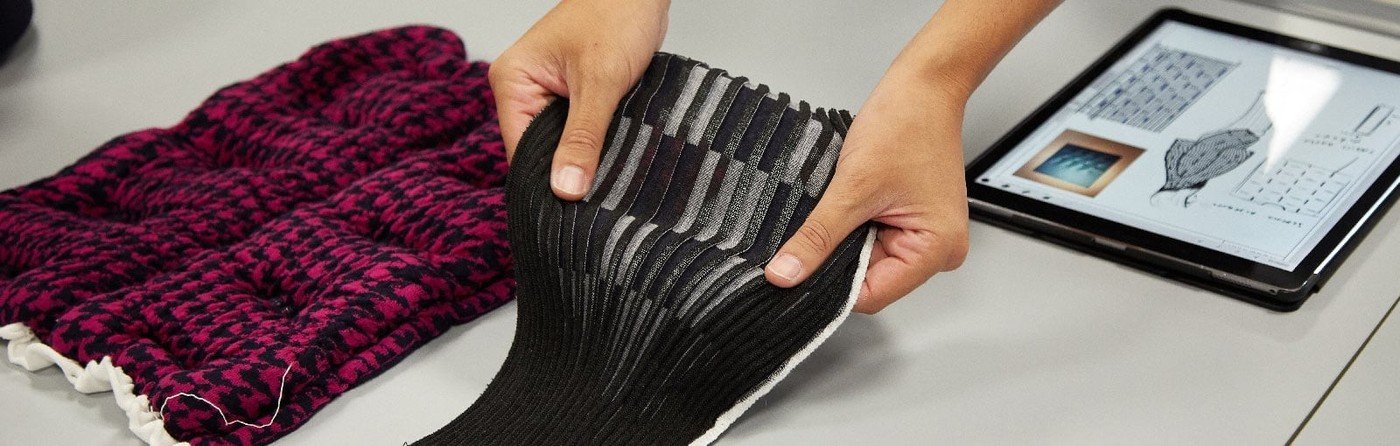
A vintage or washed-down effect is a visual goal, whereas a knit is a structural description. Lenzing's announcement keeps both in view by targeting ready-to-wear and knitted garments that resemble familiar faded denim looks. The method combines yarn pretreatment with knitting choices, followed by a coloring round suited to the developed material. It therefore should not be described as making any knit into traditional woven denim. The source also mentions different color shades, showing that the approach is not limited to one blue appearance. For a designer, the useful opportunity is to combine a selected knitted structure with a deliberately developed surface effect, while retaining an accurate description of the actual fiber and fabric.
The quoted savings are separate process measurements
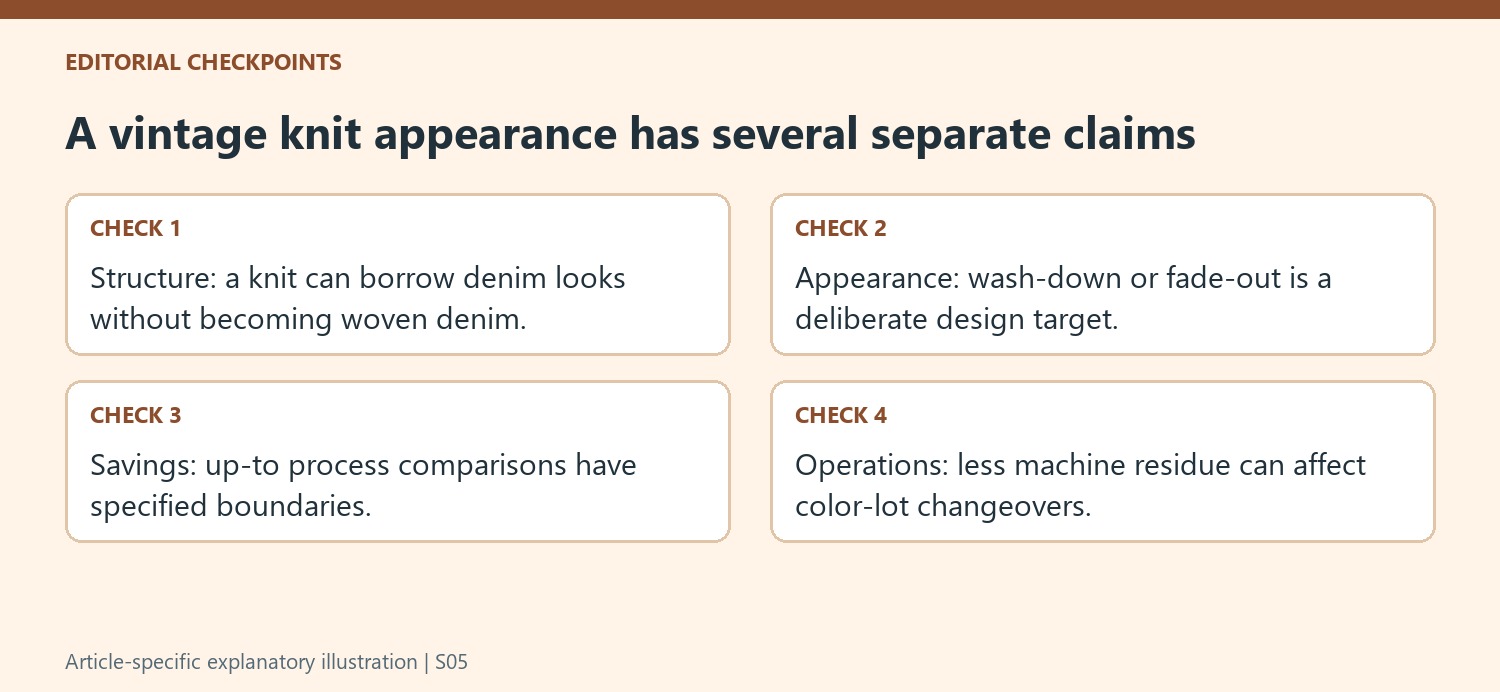
The announcement gives maximum reductions of 50 percent in water, 40 percent in energy, and 90 percent in chemicals for its stated comparison. The different percentages concern different inputs and should not be added into one overall saving. They also remain up-to figures, rather than fixed outcomes promised for every color, construction, and factory. The source's explanation points to replacing repeated coloring and washing operations with one dyeing round for the desired effect. That provides the process logic behind the comparison. A mill assessing adoption would still need to establish its own baseline, selected recipe, material, equipment, and output before presenting a result for a particular production run or finished garment.
Color changes matter to production planning
Lenzing says the approach is compatible with existing dyes and equipment and describes less residual dye on machinery as an advantage when switching between color lots. This is an operational claim about changeovers, separate from the final garment's appearance. It helps explain why the method might interest a mill that produces several colors rather than only a single long run. The announcement does not provide a universal changeover time or cost calculation for every facility. Such a calculation would depend on the actual process. Keeping efficiency, appearance, and resource use as related but distinct questions gives a clearer account of the development than assuming a branded fiber alone guarantees all three outcomes.















Comments
0