 FabricKnowledge Lab
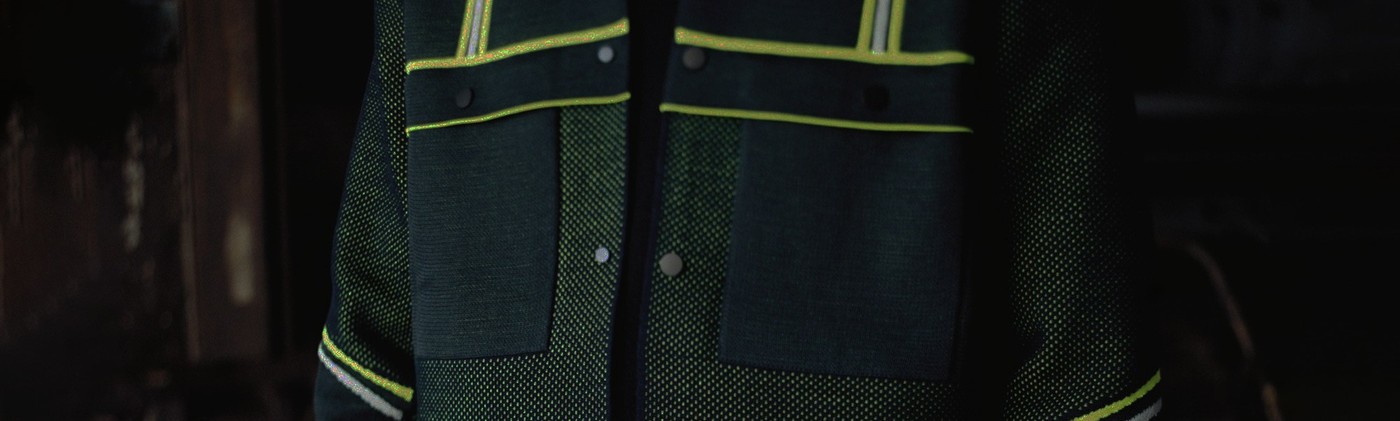
Comfort and protection are different requirements
Woolmark's workwear overview discusses Merino in base layers, insulating garments, uniforms, and specialist protective textiles. It connects moisture handling, temperature-related comfort, odor resistance, and resilience with the demands of long working periods. These are useful material considerations, but workwear covers very different risks and activities. A hospitality uniform, a firefighter's protective layer, and an industrial molten-metal fabric cannot be assessed through one generic comfort description. Where protection is required, the complete fabric and garment must be matched to the relevant hazard and evidence rather than selected solely because wool has favorable natural characteristics.
Named products use different material systems
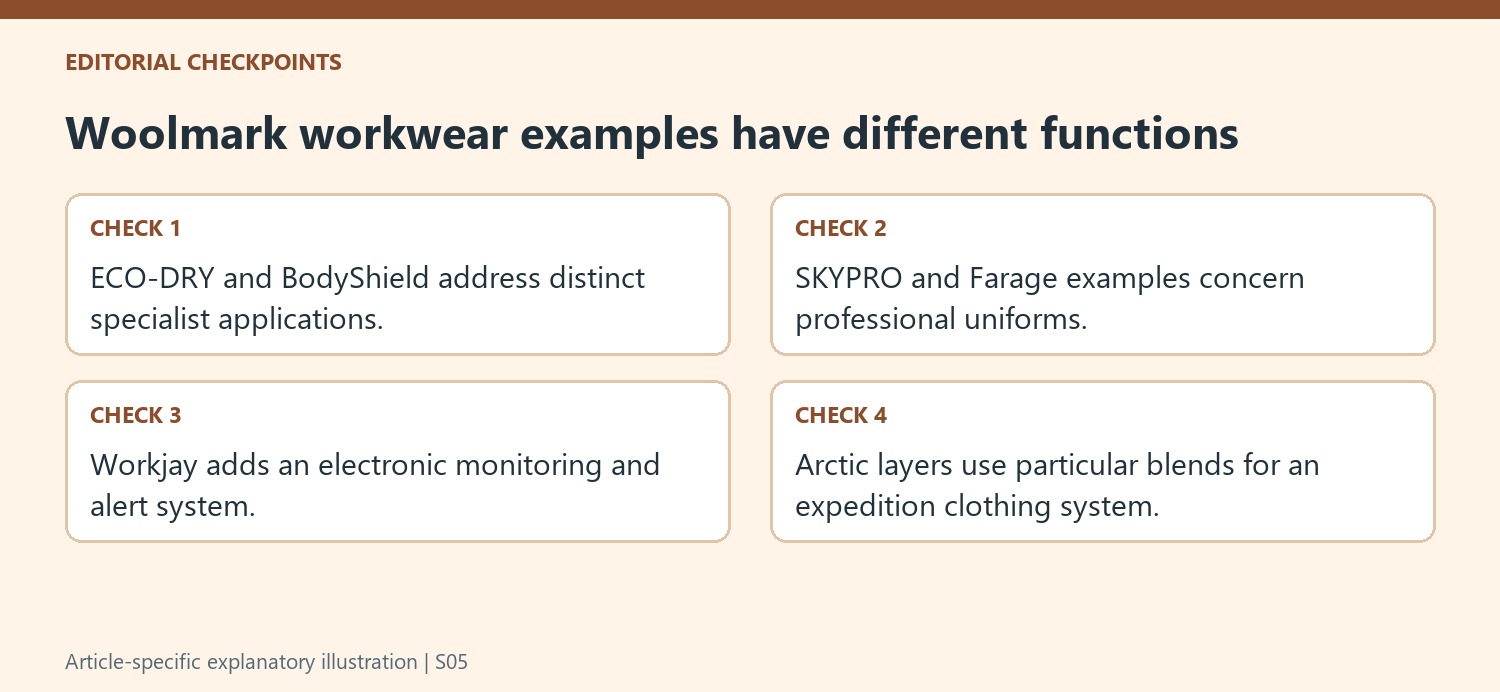
The page describes Hainsworth ECO-DRY as a wool-based blend developed for firefighters and Burlington BodyShield as a Merino fabric for heavy industry, with a stated ISO 11612 rating for particular molten-metal tests. Those are product-specific examples. The same overview also discusses SKYPRO knitted uniforms and a Farage dress for Australian Defence Force personnel using a 40 percent wool blend. The range illustrates how composition and construction change with the job. A rating or feature attached to one named fabric should not be transferred to the other garments merely because they also contain Merino.

Sensors add a separate technical function
Another example is Workjay's smart shirt, which integrates monitoring of heart rate and movement and can trigger alerts with location information. The sensing system performs a role distinct from the textile's moisture or thermal behavior. Woolmark also describes an Arctic layering collection using technical fiber blends. Together, these examples show that workwear development combines materials, garment design, and sometimes electronics. A clear description should identify the actual product, complete composition, intended task, and relevant test or system capability. Merino content is one part of that specification, not an all-purpose certificate of occupational protection.
The hazard defines which evidence matters
The source covers occupations with very different demands, from hospitality and aviation to emergency services and heavy industry. That breadth makes the intended task a necessary starting point. A professional uniform may prioritize appearance, movement, and easy care, while a specialist protective textile must address a defined hazard through appropriate testing and garment design. Merino's comfort-related characteristics can be relevant in both settings without making the requirements interchangeable. Woolmark's named examples should therefore retain their individual identities. A favorable rating for one molten-metal fabric cannot establish a firefighter ensemble's performance, and a comfortable knitted uniform does not become protective equipment merely because it shares a wool ingredient with those other products.
Named blends demonstrate different engineering choices
Hainsworth ECO-DRY is described as combining wool with Lenzing FR through a particular fiber-positioning approach, whereas the BodyShield example is identified as a Merino fabric for heavy industry. The Farage General Duty dress uses a 40 percent wool blend, and the Arctic layering account includes wool with manufactured-fiber partners. These are not minor variations on one uniform recipe. Their compositions and construction choices reflect different garment roles. The source's discussion of moisture behavior, resilience, or odor resistance can help explain material interest, but the complete blend remains necessary for a product description. That also prevents a statement about natural wool from silently becoming a claim about every component in an assembled uniform or layer.
Electronics perform a function that the fiber does not
The Workjay example uses sensors to monitor movement and heart rate, with alerts and location information described as part of the system. Those functions come from an electronic and communications arrangement, rather than from Merino's moisture or thermal characteristics. A smart garment therefore needs two kinds of description: the textile and fit on one hand, and the actual sensing, alerting, and operating requirements on the other. Neither replaces the other. Woolmark's overview records the combined development but does not supply universal emergency-response reliability for any shirt containing sensors. Similarly, the Arctic comparison figures belong to the stated collection and reference gear, not a general promise that every wool layer will reproduce those measured improvements.
References
- Merino Wool in Workwear. The Woolmark Company.







Comments
0