 FabricKnowledge Lab
Make the garment while forming the knit
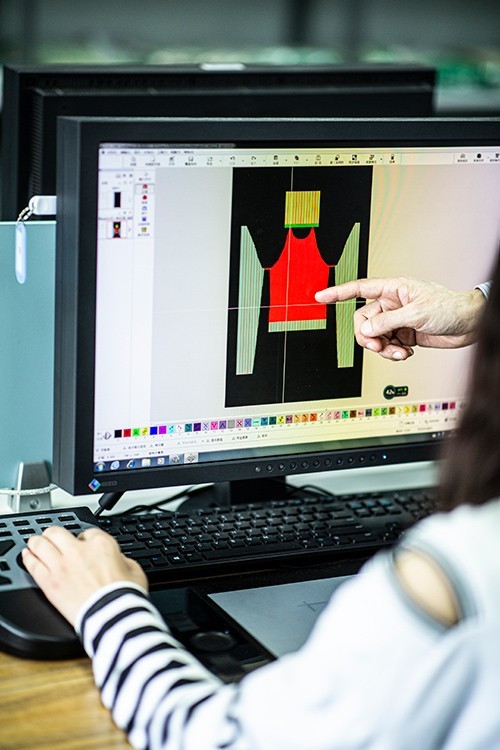
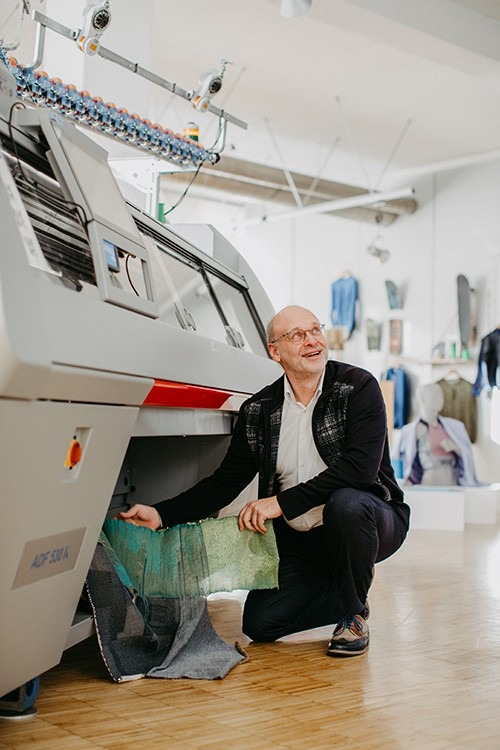
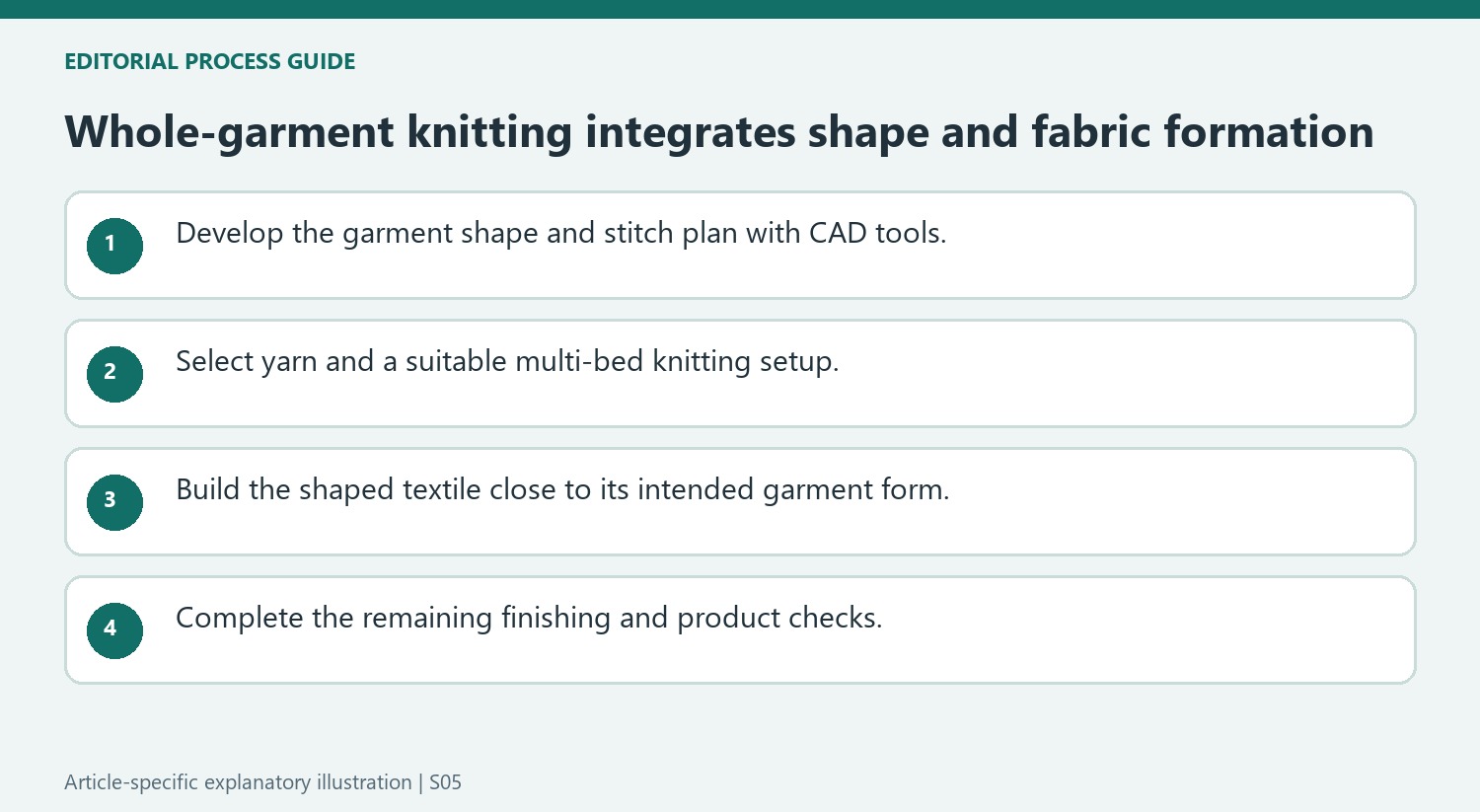
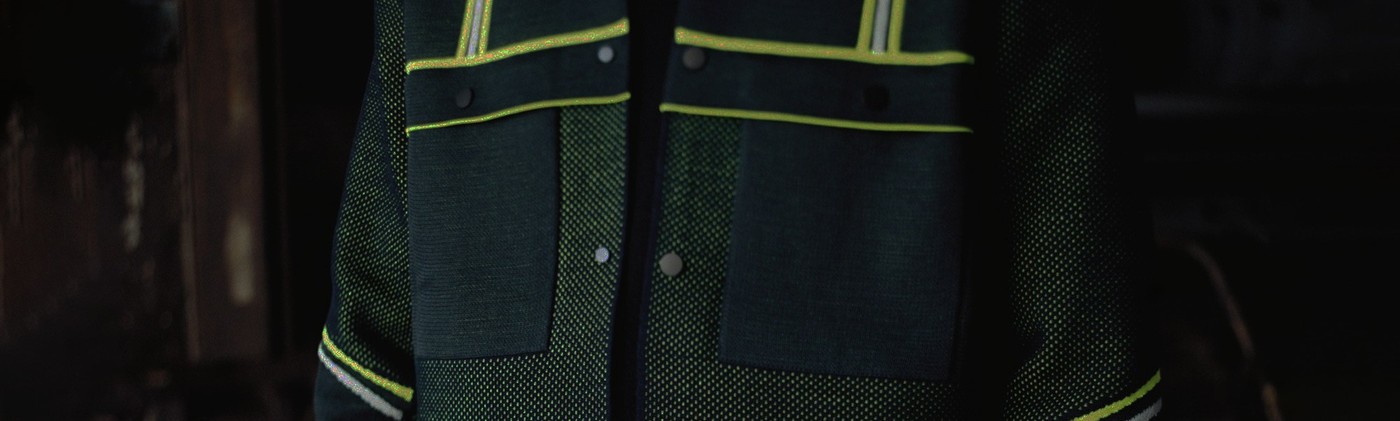
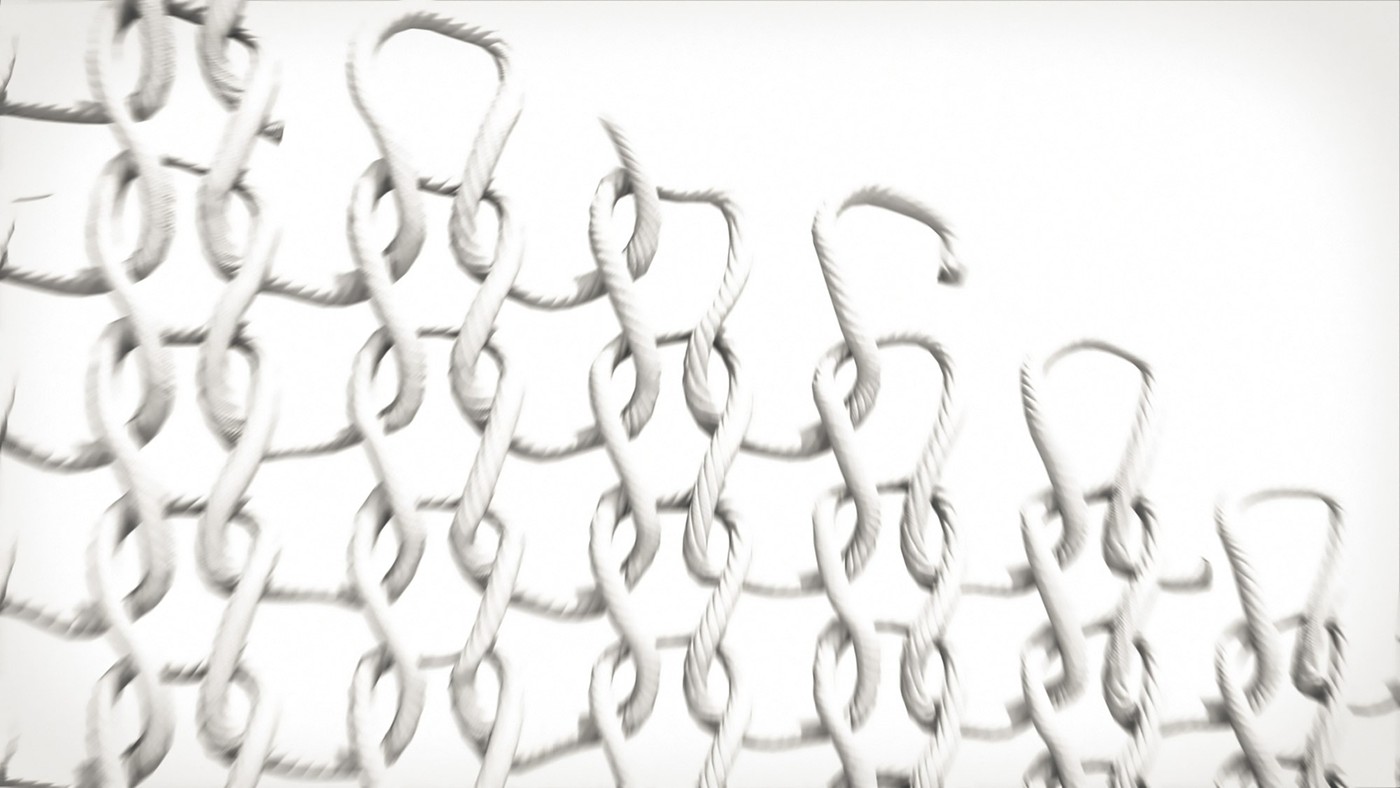
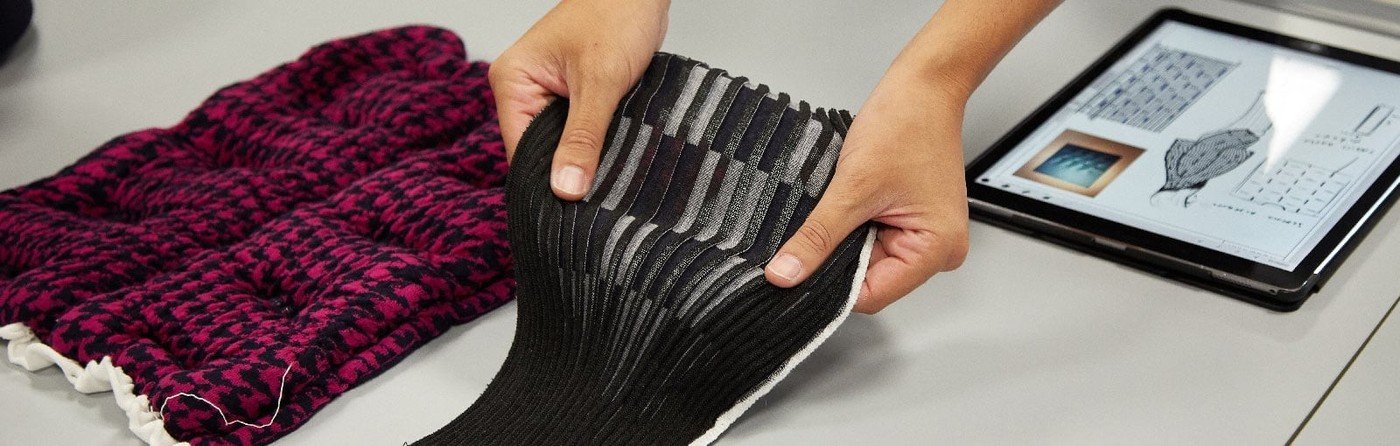
Whole-garment knitting brings fabric formation and garment shaping into the same manufacturing sequence. Woolmark describes modern machines developed from V-bed equipment, using multiple needle beds arranged in a V formation. Yarn travels across the machine bed while selected needles build the textile. Instead of producing a large flat fabric that is later cut into all its components, the machine can form a garment close to its intended shape. This changes the relationship between knitting and assembly, making the design of the textile structure part of the design of the garment itself.
Computer control supports complex shapes
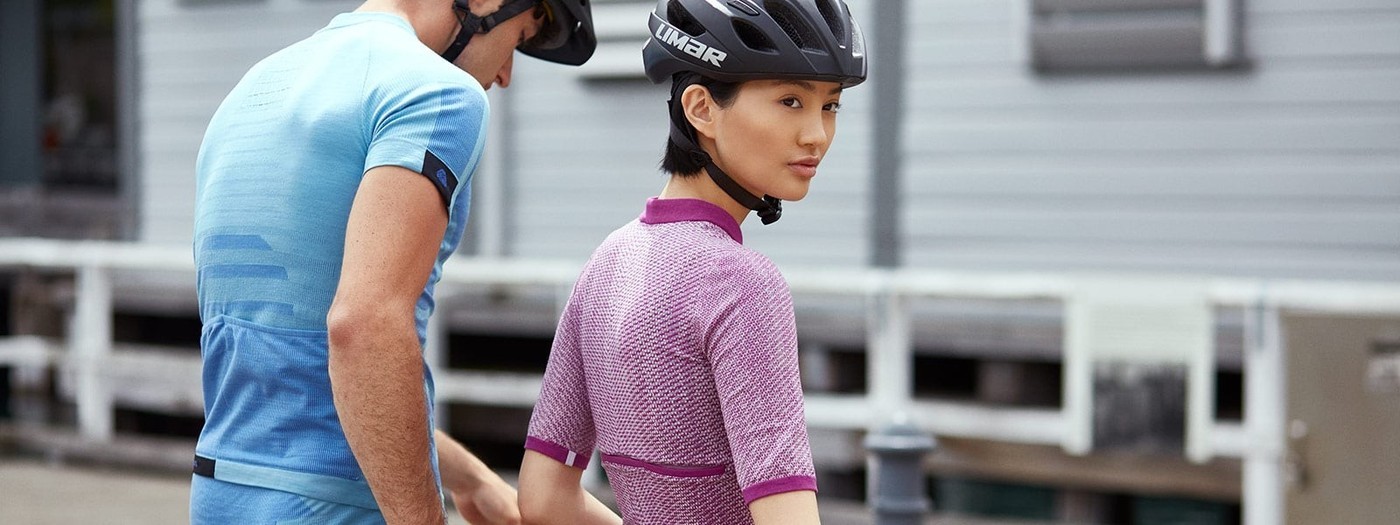
The page connects the process with computer-aided design for both development and production. It describes options ranging from structured casual clothing to less structured sportswear, with the possibility of seam-free garments. Removing a seam can change appearance and next-to-skin contact, but it does not mean every product made on such equipment has an identical fit or structure. The yarn selection, stitch pattern, shaping instructions, and machine capabilities remain central. The technology offers ways to create and connect forms during knitting; the actual design determines which of those options are used in a particular article.
Reduced cutting is a specific production benefit
Woolmark identifies reduced cut-and-sew requirements as a route to minimizing textile waste and names partners including Shima Seiki and STOLL. The benefit concerns how much material must be removed and how much later joining is needed. It should not be interpreted as proof that production has no waste or environmental impact. Yarn production, machine operation, finishing, trims, and product lifetime still contribute to the complete article. A useful account of whole-garment knitting therefore explains both the integrated shaping method and the remaining stages required to turn the knitted form into a finished, wearable product.
Design instructions become part of textile formation
Computer-aided tools are used for both design and production in Woolmark's account. The intended shape is therefore connected to instructions about where and how the machine knits, rather than being left entirely to a later cutting stage. Modern equipment developed from V-bed machines uses multiple needle beds, while the yarn crosses the working bed to build the garment. This makes shaping and stitch arrangement part of the same development problem. A designer still has to choose the yarn, structure, fit, and details that suit the intended item. The technology offers an integrated route, but it does not independently decide what a comfortable or attractive garment should be.
Removing a seam changes one aspect of the product
The page highlights possible improvements in appearance and next-to-skin comfort when a garment is made without conventional joining seams. That is a specific design contribution, not proof that all seam-free garments fit equally well. A tight or loose silhouette, local stitch structure, fabric weight, and yarn selection remain relevant to how an item feels in use. Likewise, the source's range from structured casual clothing to less structured sportswear shows that the equipment can serve different objectives. A buyer comparing garments should inspect the actual construction and size information rather than treating the machine family as a universal comfort rating. The useful question is which seams and assembly operations the particular design removes.
Material savings should be tied to the manufacturing boundary
Avoiding the production of large cloth pieces that are later cut away can reduce cutting waste. Woolmark presents that as a major benefit of whole-garment development, alongside reduced finishing and joining. It does not follow that yarn preparation, machine operation, subsequent finishing, or the manufacture of trims has no impact. A complete production comparison should identify what is included and what remains outside its boundary. The same care applies to waste language: using material close to the intended garment form is more specific than claiming that every stage is waste-free. The source explains a valuable manufacturing option while leaving the actual item, process settings, quality requirements, and full product life cycle to be assessed separately.
References
- Whole Garment Knitting Technology. The Woolmark Company.





Comments
0