 FabricKnowledge Lab

A casual silhouette with a different interior
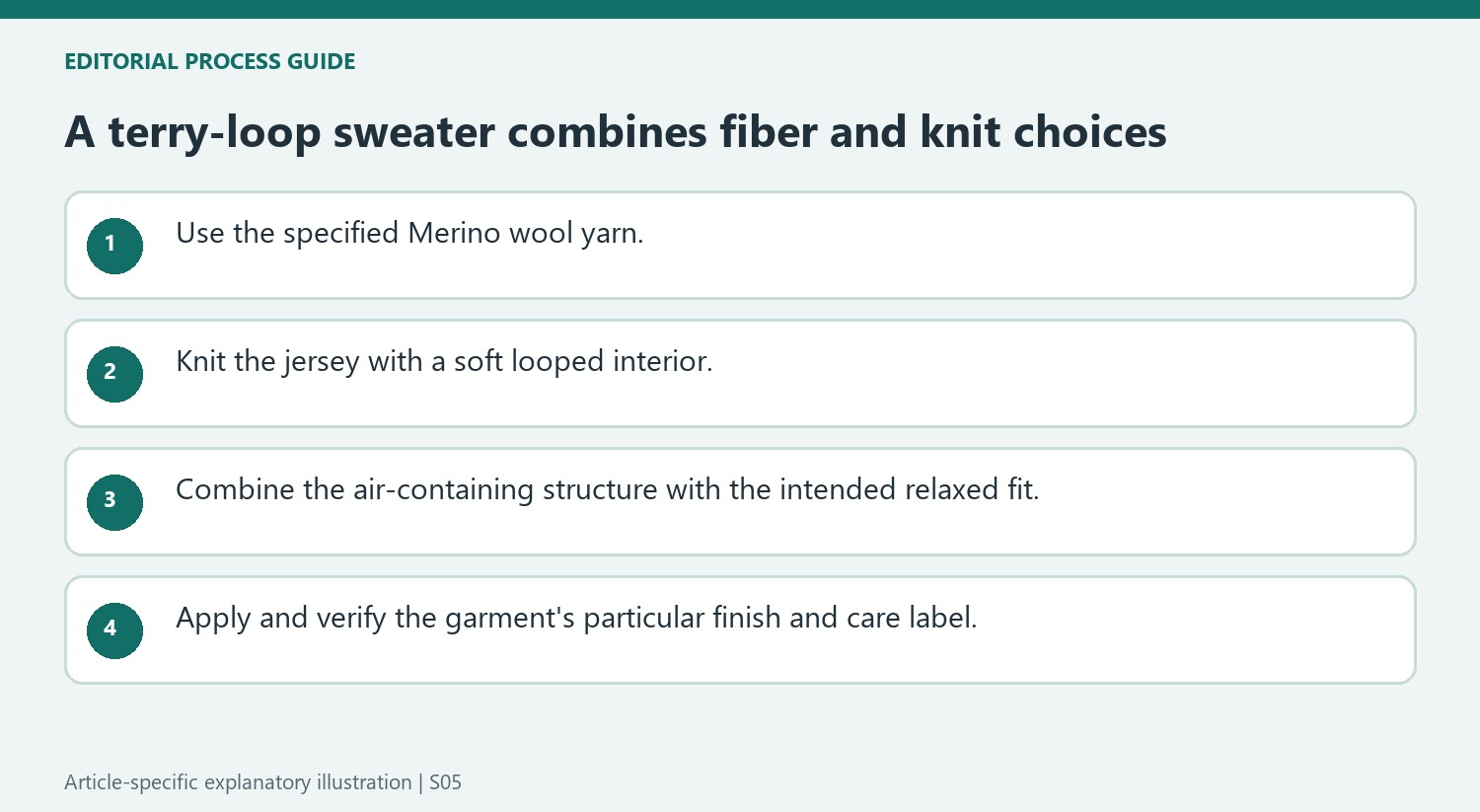
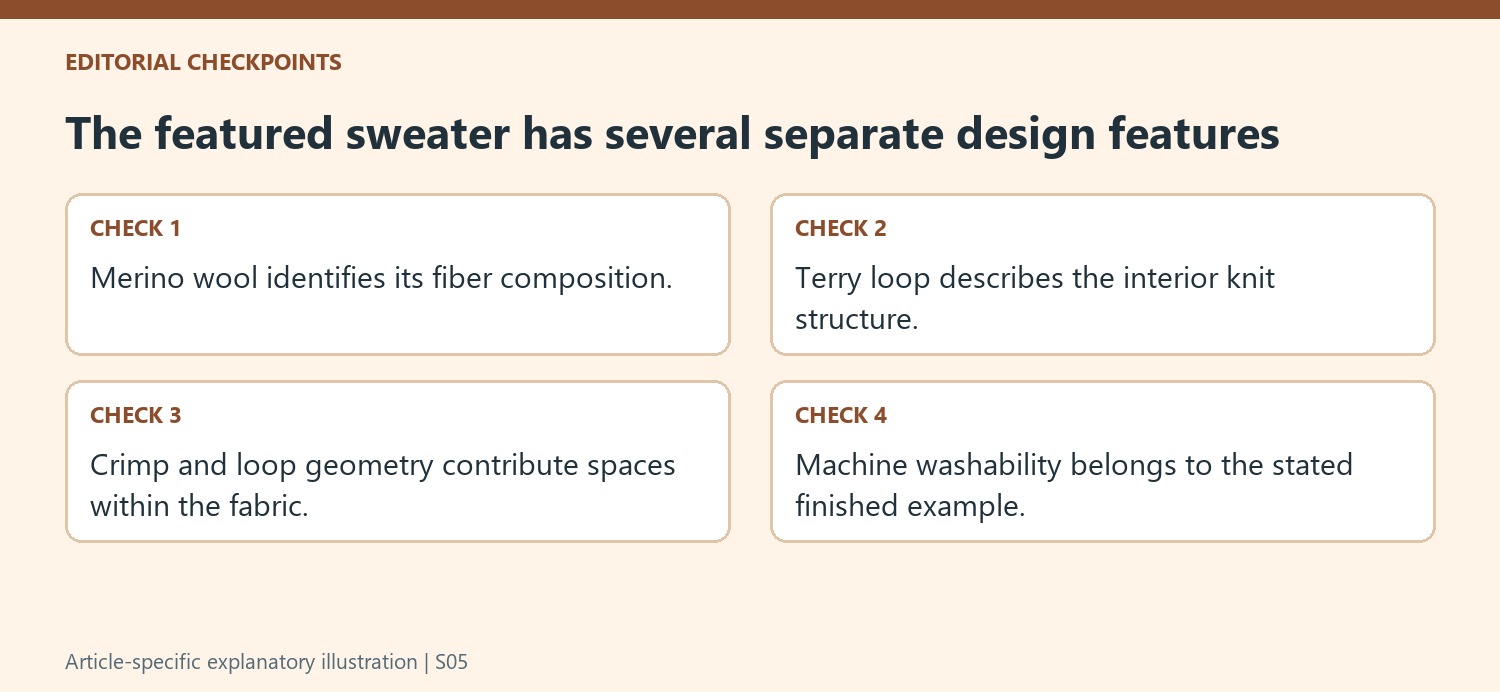
Woolmark describes a sweater knitted from 100 percent Merino wool terry-loop jersey. From the outside, the relaxed garment belongs to a familiar casual clothing category. The technical interest sits inside the fabric, where soft loops create a terry-like backing. This is a construction choice as well as a fiber choice: naming Merino identifies the raw material, while terry loop describes how yarn is arranged within the textile. An ordinary smooth jersey and a loop-backed jersey can therefore use the same fiber without having identical surfaces or the same amount of air within their structures.
Loops and crimp contribute to the structure
The source links the interior loops with air pockets that support insulation and moisture management. Wool's natural crimp also helps maintain spaces within the material. The point is not simply to make a sweater heavier; the arrangement aims to provide warmth through the fabric's internal geometry. Woolmark also describes wool's capacity to absorb moisture vapor and release it toward the surrounding air. Those material characteristics provide context for the design, but the complete garment's comfort still depends on its weight, fit, layering, and the conditions in which it is worn.
The example includes a specific finishing choice
The page names specialist knitter Marback Tricot, based in Sweden and Estonia, and says the featured garment was finished to be machine washable. That statement belongs to the example described. It should not be treated as an instruction to machine wash every Merino terry garment under the same conditions. A finished product may include trims, seams, dyes, or other materials that alter its care needs. The practical lesson is to read the fiber, knitted construction, and finishing information together: each explains a different part of how this particular loop-backed sweater was developed.
Fiber and knit architecture contribute in different ways
Merino identifies the fiber used in the featured sweater, while terry-loop jersey describes its yarn arrangement. The source links wool's natural crimp with small air spaces and describes the looped interior as another way to create an insulating structure. These are complementary ideas rather than alternative names for the same feature. A smooth jersey made from Merino need not have the same interior as this loop-backed example, and a terry construction made from another fiber would not automatically have every wool characteristic described. Reading both levels together gives a clearer explanation of the garment: the fiber supplies one set of material traits, while the knit organizes that material into the intended surfaces and spaces.
The inside surface is part of the design
The visible casual silhouette does not communicate every detail of the textile. Woolmark places the technical emphasis on the fluffy loop structure inside, where the fabric arrangement is intended to support warmth and moisture management without relying simply on extra bulk. That makes an interior view or construction description valuable when comparing sweaters. A heavier-looking exterior is not the only way to design for insulation, and surface softness is not a direct measurement of warmth. The described garment combines a relaxed fit with a slightly stretchy knit, but those choices should be assessed together with actual weight and layering. The source offers a specific example of construction-led development rather than a universal rating for all wool sweatshirts.
Moisture behavior should be read within a complete garment
The page describes wool absorbing moisture vapor and releasing it toward the surrounding air. It uses that behavior to explain interest in the fiber for a warm, comfortable loop-backed sweater. The explanation is different from promising that the wearer will remain dry in every activity or weather condition. Fit, layers, exposure, and the surrounding environment remain part of the experience. Similarly, the stated machine-washable finish is a feature of the example developed with specialist knitter Marback Tricot. A customer should follow the actual garment's care label rather than applying the source's general wording to any Merino terry item. Construction, finishing, and the complete assembled product all belong in a useful description.
References
- Wool terry loop back sweater. The Woolmark Company.








Comments
0