 FabricKnowledge Lab
Three fiber sizes with a shared purpose
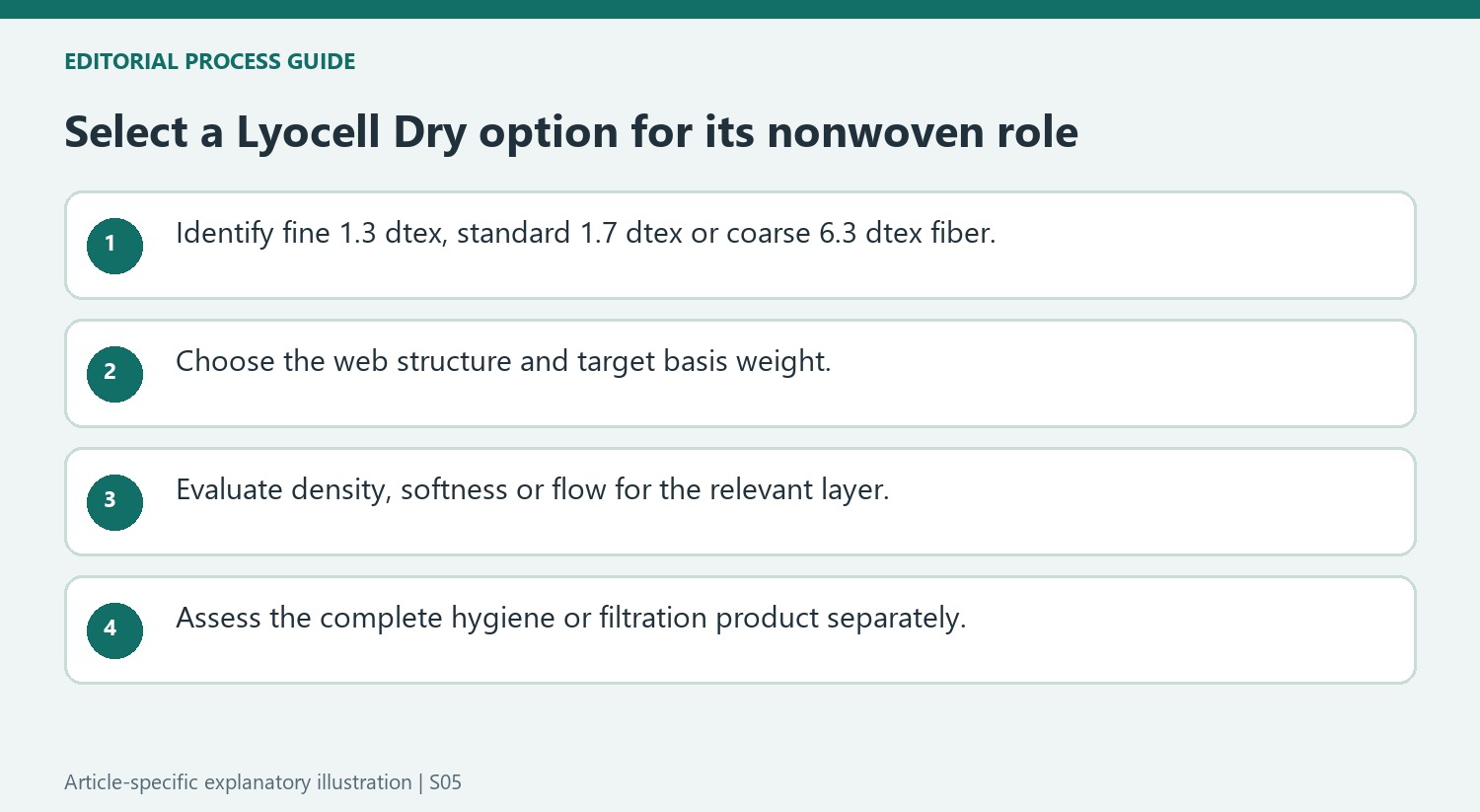
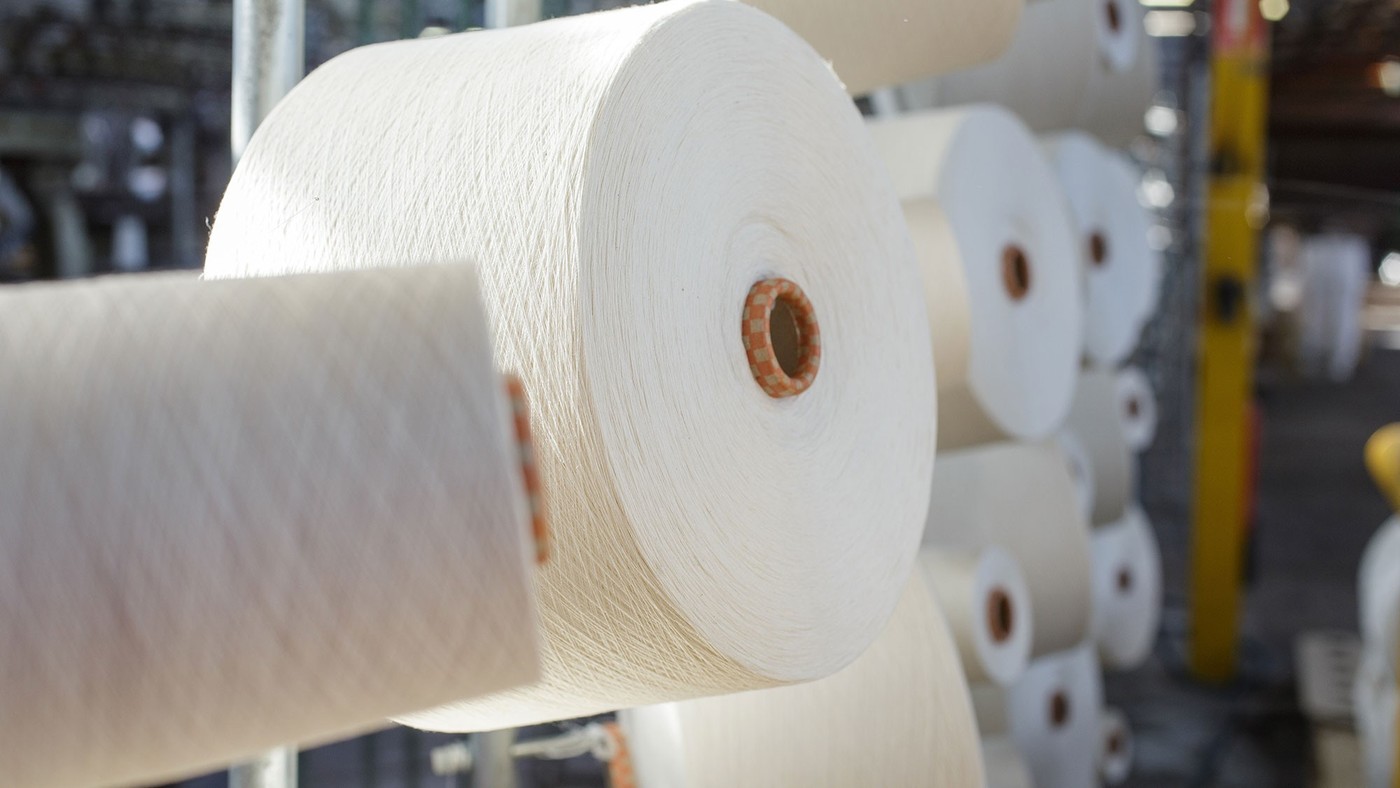
Lenzing's announcement expands its Lyocell Dry range with fine and coarse options alongside the existing standard fiber. The company describes all three as hydrophobic cellulosic fibers for nonwovens, a combination intended to support liquid-management applications. The listed linear densities are 1.3 dtex for fine, 1.7 dtex for standard, and 6.3 dtex for coarse. These numbers identify different fiber fineness levels, rather than finished-fabric thicknesses. Their importance lies in how many fibers and how much open space a nonwoven can contain when its structure and basis weight are selected for a particular function.
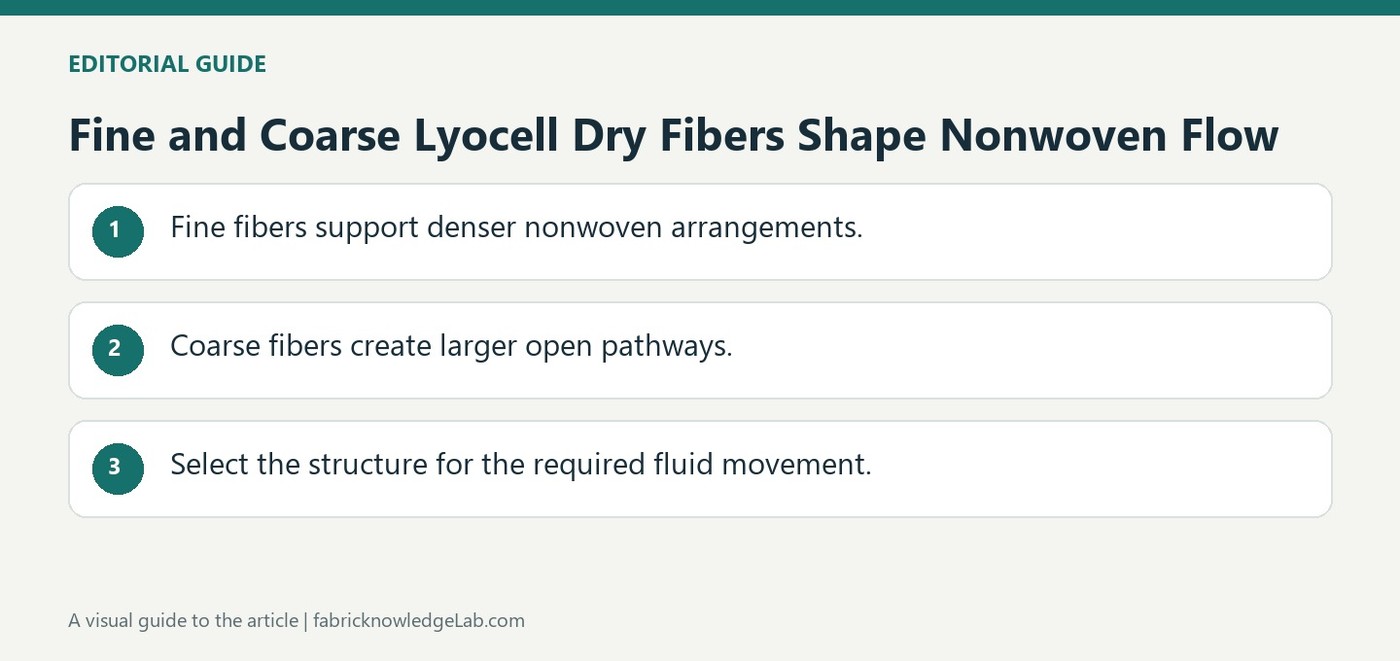
Fine fibers support a denser arrangement
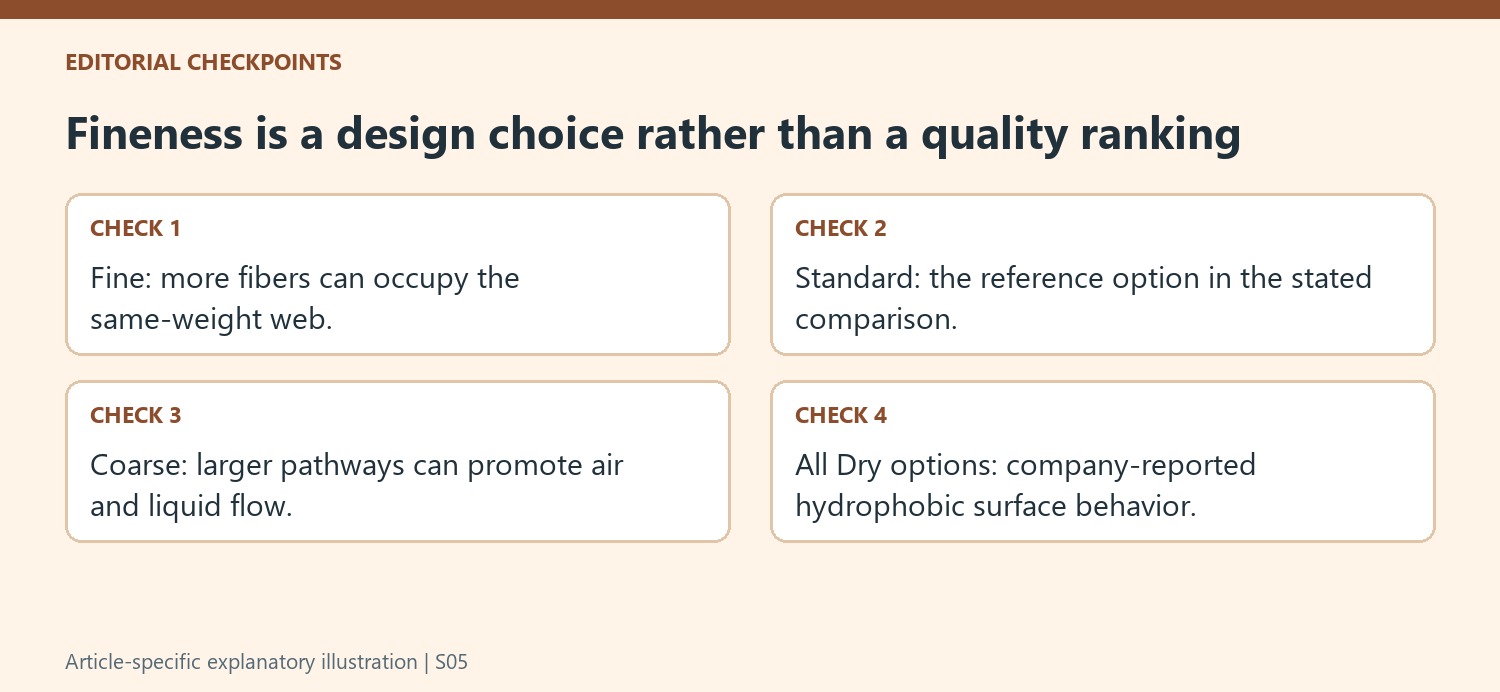
The announcement says the fine option can create a nonwoven with up to 30 percent more fibers in the same space than the standard version at the same basis weight. Lenzing connects this arrangement with strength and softness and identifies diapers and sanitary pads as possible applications. The comparison is between specified fiber options, not a guarantee that every fine-fiber fabric will outperform every standard-fiber fabric. Processing and web structure still matter. The useful principle is that reducing individual fiber size changes the number of strands available within a fixed quantity of material.
Coarse fibers leave larger pathways
The coarse option is described as creating a more open fabric because its larger fiber diameter increases the spaces between fibers. Lenzing highlights acquisition-and-distribution layers in hygiene products and exploration of industrial filtration. In those uses, passage of liquid or air can be a central design requirement. This differs from simply maximizing the density of a soft surface. The range illustrates how one cellulose-fiber platform can be adjusted for different roles. Finished-product performance and any biodegradability claims still require the relevant construction details, test conditions, and certification scope rather than relying on fiber size alone.
Linear density and basis weight describe different levels
The announcement gives fiber linear densities in dtex and uses an example fabric basis weight of 50 grams per square meter. These measurements concern different things: one identifies the fineness of an individual fiber, while the other describes the mass of a given fabric area. Holding basis weight constant makes the fine-versus-standard comparison easier to interpret, because the claimed increase concerns the number of smaller fibers within that material arrangement. It does not mean the fine fabric must contain 30 percent more total material by weight. The distinction is useful for nonwoven design, where changing fiber size can alter a web's internal structure without simply increasing the mass of every square meter.
Flow can be a design goal rather than a defect
The coarse option is associated with larger spaces between fibers, allowing more air or liquid to pass through the resulting structure. In an acquisition-and-distribution layer, the intended role differs from that of a dense, soft contact layer. Lenzing's range therefore illustrates a design trade-off rather than a ranking in which finer always means better. The company also describes industrial filtration as an area being explored, which should remain distinct from an independently established approval for every filter application. A developer needs the finished web's structure and relevant performance evidence to decide whether a particular fiber option suits a specified flow requirement.
Hydrophobic behavior and cellulose origin can coexist
Lenzing describes the Dry family as cellulosic and hydrophobic, reporting a water-drop contact angle above 100 degrees after one hour for all its Dry fibers. That is the stated measurement behind the surface-behavior description, not a complete liquid-management test for every assembled hygiene article. The page separately discusses wood sourcing, selected biodegradability certifications, and the fibers' treatment under the EU Single-Use Plastics Directive. Those statements answer different questions and should retain their own scope. A diaper or sanitary pad contains a complete construction with other components. Its overall performance, composition, and end-of-life claims therefore require assessment beyond the identity or test result of one fiber supplied for one layer.











Comments
0