 FabricKnowledge Lab
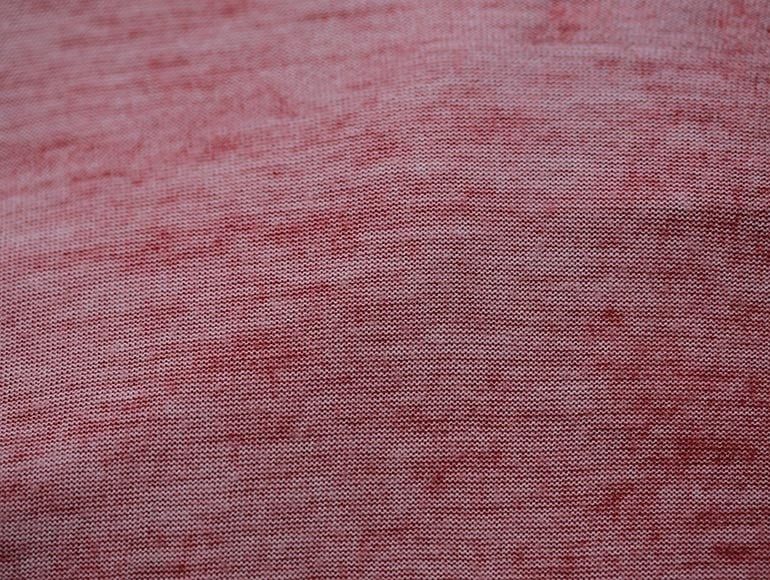
A faded look begins before the garment wash
Woolmark's Merino Vintage Yarn page describes a route to a worn-in appearance that starts with yarn dyeing. The aim is to give machine-washable Merino yarn an ability to develop a faded surface during a later, controlled finishing stage. This differs from applying a pigment-and-binder system to the outside of an already made fabric or garment. The distinction concerns where the color treatment enters production. It also helps explain why a vintage appearance need not be evidence that an item is old: a manufacturer can deliberately create that effect through a specified textile process.
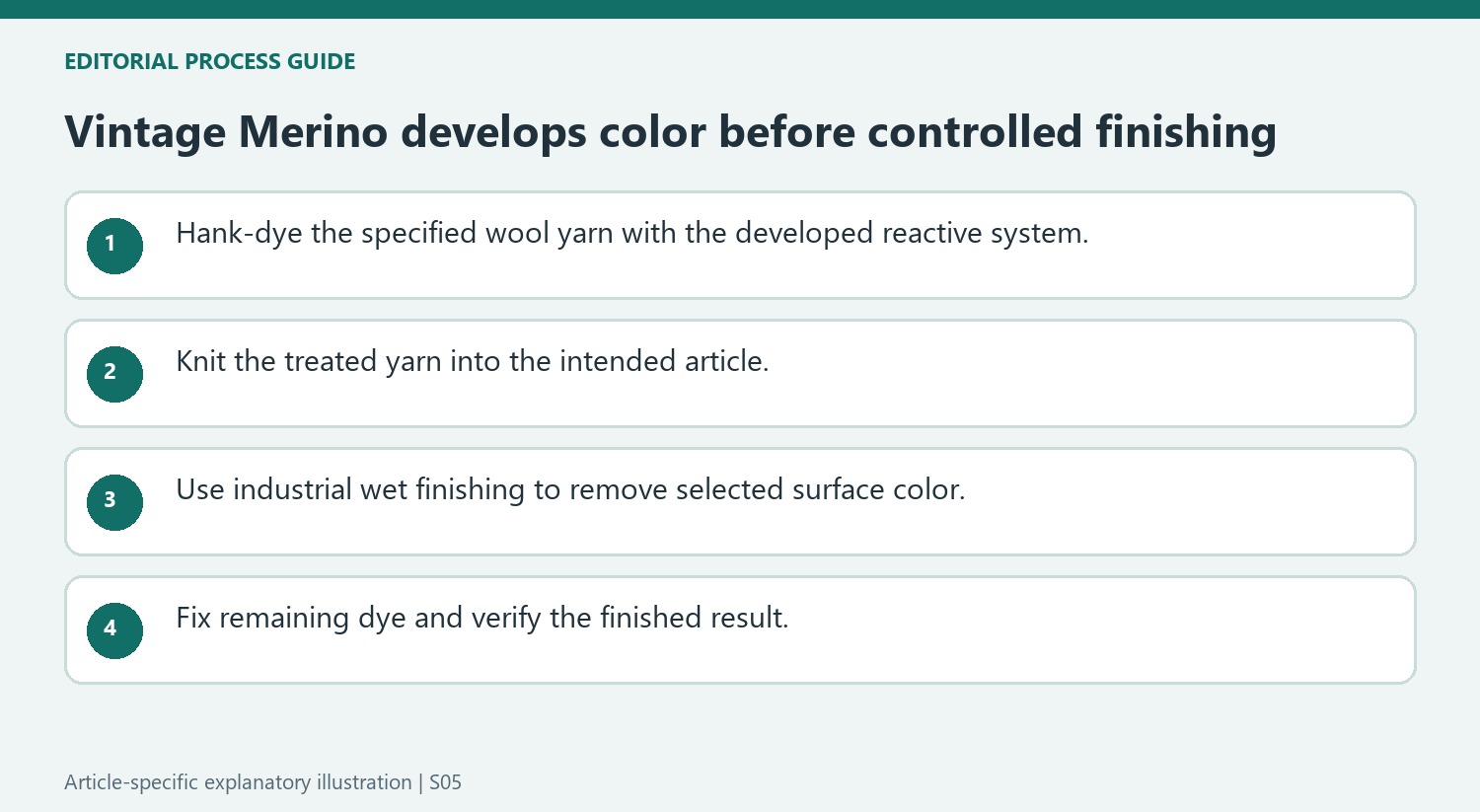
Special dyeing precedes selective color removal
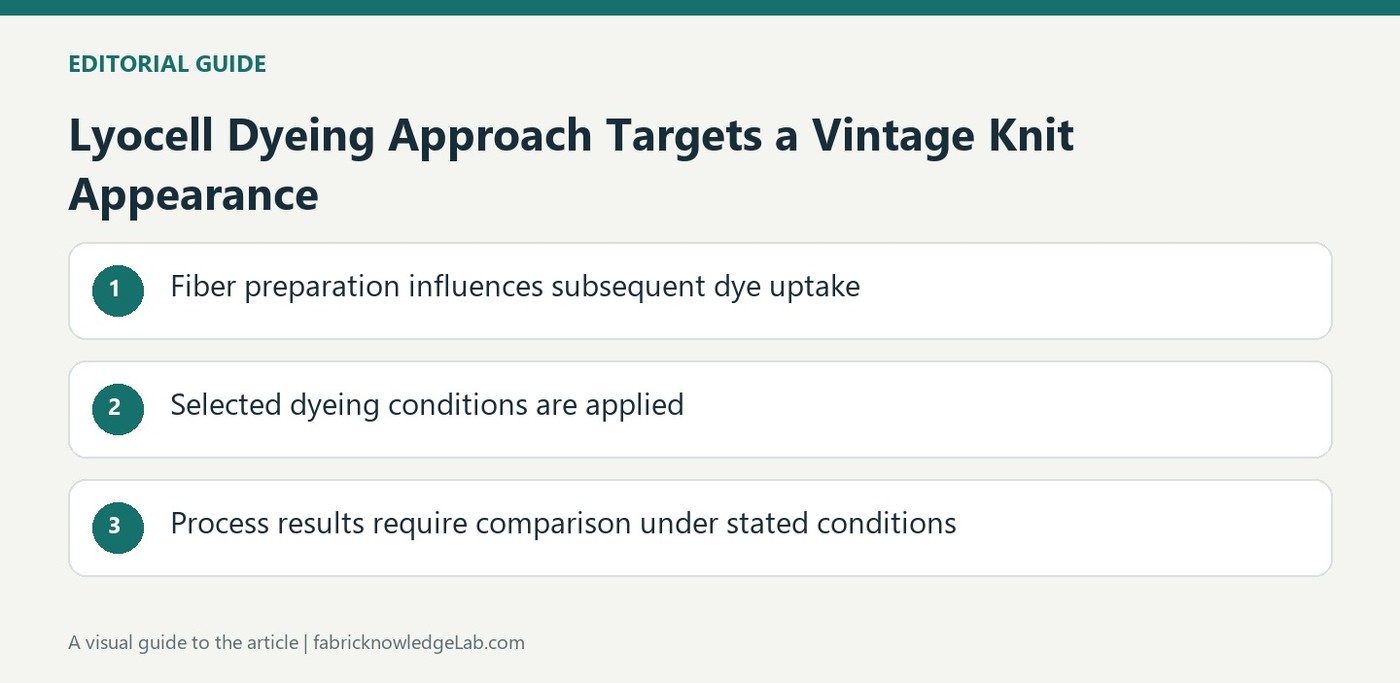
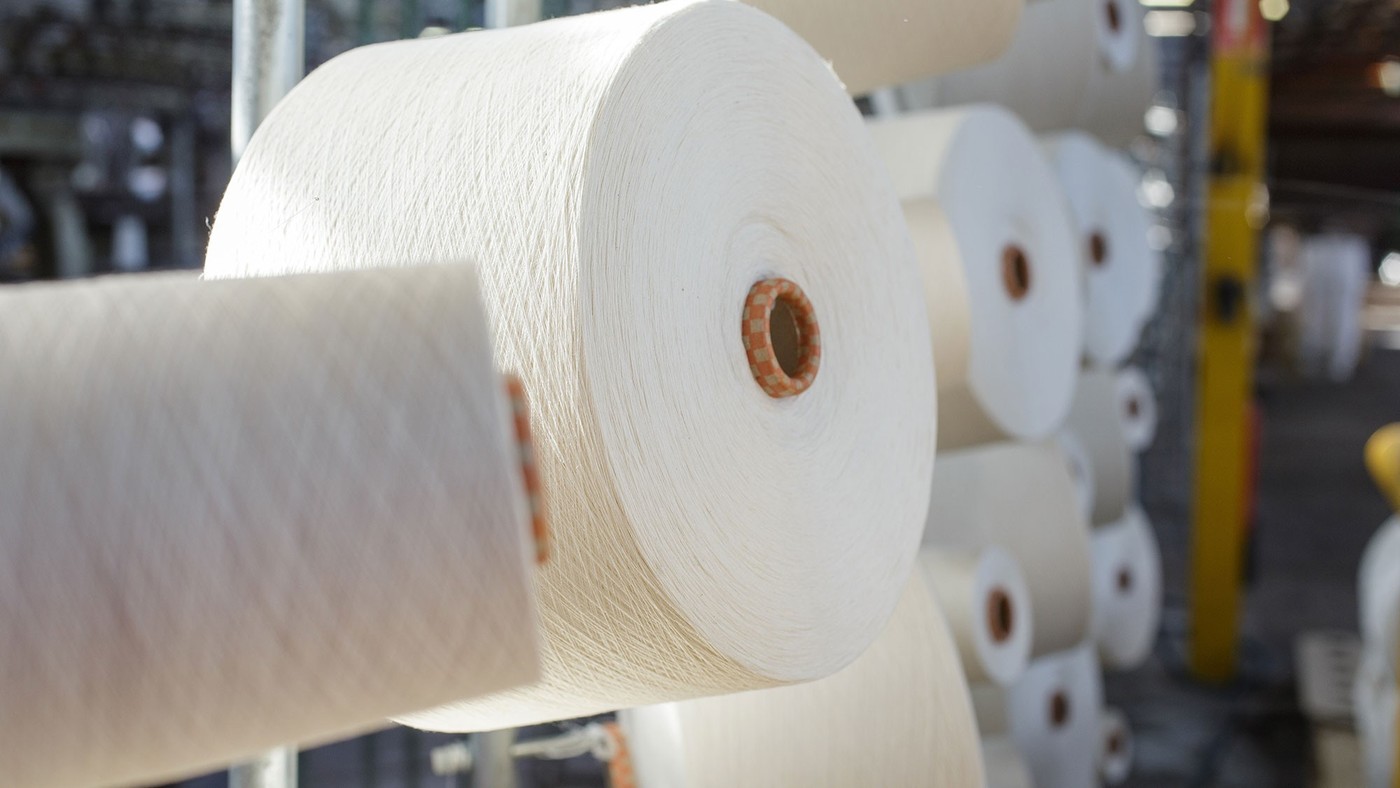
The account describes low-temperature hank dyeing with special reactive dyes that enter the wool fiber. The yarn can then be knitted normally. During subsequent wet finishing, some color is removed from the fiber surface, producing an antique or frosted effect. Remaining dye is fixed to maintain colorfastness. These are coordinated stages rather than a recommendation to experiment with an ordinary finished sweater at home. The dye system and the industrial finishing treatment are designed together so the desired appearance can be created while retaining the required handling and use properties.
Binders and colorfastness remain part of the comparison
The page contrasts this route with pigment systems that use binders and can affect handle or rubbing behavior. It says the vintage yarn is offered hank-dyed in two-fold form for bulk and softness and refers to Woolmark requirements for machine-wash and dry-rubbing colorfastness. Those details define the development more clearly than simply calling the result faded wool. A production specification should identify the yarn, controlled finishing recipe, and resulting test performance. The deliberately aged surface is an aesthetic outcome, while resistance to unintended color transfer and appropriate garment care remain separate practical requirements.
The dye route begins with yarn rather than a finished garment
The described process uses a low-temperature hank-dyeing system and special reactive dyes before the yarn enters ordinary knitting. This means the potential for a faded effect is built into an upstream input. Later wet finishing is designed to remove some color from the fiber surface and reveal the intended vintage appearance. That sequence distinguishes it from placing a pigment-and-binder system onto an already formed textile. It also explains why two garments with similar washed-out looks may have reached that appearance by different routes. The visual result alone cannot identify whether color was introduced at yarn level, applied later to a fabric, or developed through a particular industrial finishing operation.
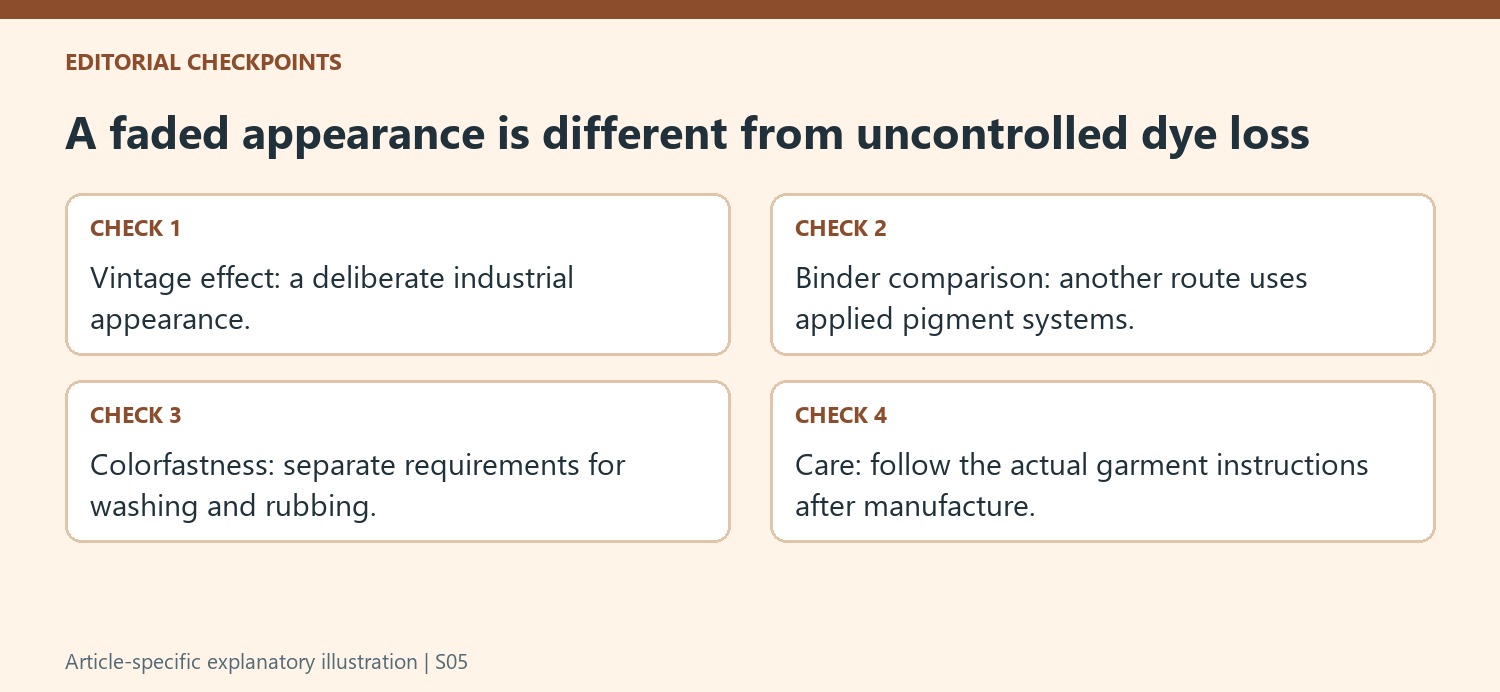
A deliberately aged look is not uncontrolled color loss
Woolmark describes remaining dye being fixed after the controlled surface-color removal. The desired result is a selected antique or frosted appearance alongside the required colorfastness, rather than indefinite fading every time a customer washes the garment. The source explicitly refers to machine-wash and dry-rubbing requirements, showing that appearance and unwanted color transfer are separate evaluation questions. A production team should retain the yarn identity and treatment sequence when discussing the effect. A consumer should follow the actual garment's care instructions. The industrial finishing description is not a recommendation to use an ordinary home wash, improvised bleach, or an unrelated treatment to reproduce the developed look on any wool sweater.
Binder-free development addresses a particular comparison
The source contrasts the new route with conventional pigment systems that rely on binders, noting possible limitations in handle and rubbing fastness for those systems. It presents the vintage yarn as maintaining knitting efficiency and soft handle without using that binder approach. The offered hank-dyed two-fold form is another specific part of the material description, associated with bulk and softness. These details make the account more useful than a broad claim that faded textiles are always environmentally or technically superior. A fair comparison should identify the actual alternative, process, and finished result. The innovation concerns how the yarn and finishing stages cooperate to create a chosen effect, with performance still established for the particular developed textile.
References
- Merino Vintage Yarn. The Woolmark Company; The Woolmark Company.









Comments
0